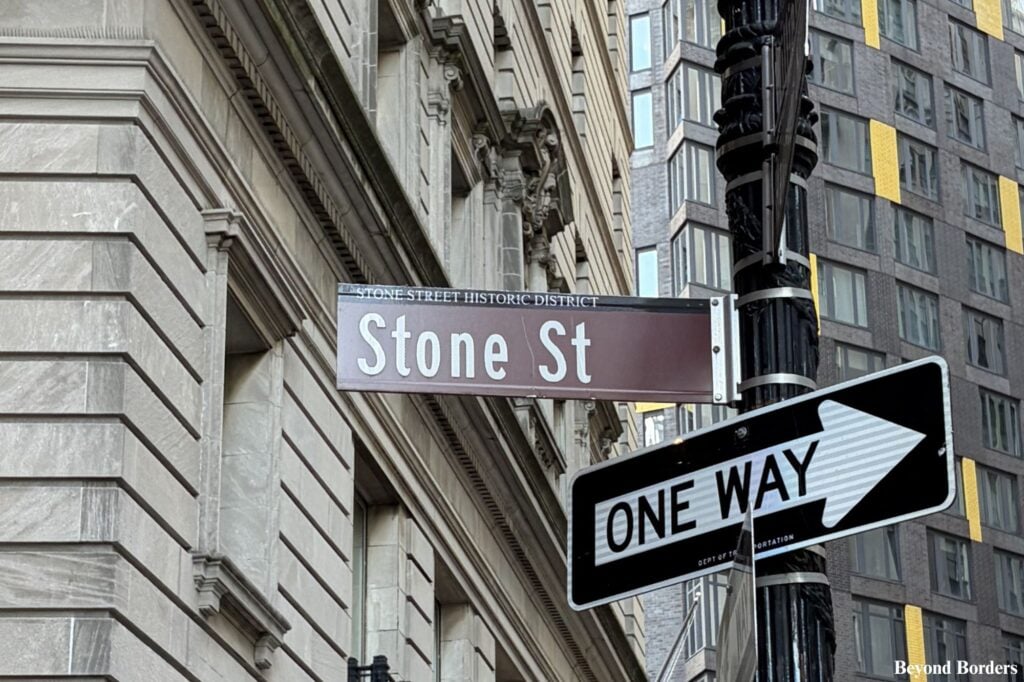
Is Stone Street NYC a Tourist Trap?
Yes, if you sit down for an expensive, mediocre meal during the chaotic after-work rush…but no, if you treat it as an outdoor architectural museum. As someone who has visited the Financial District and Stone Street several times, my experience has taught me that to visit Stone Street NYC as a hidden gem rather than a tourist trap, you need to:
- Arrive just after 4:00pm (or earlier) for unobstructed photos of the 17th-century Dutch-revival street grid.
- Pay a “visual tax” by grabbing a single draft beer to enjoy the cobblestone atmosphere.
- Go elsewhere for dinner before the “finance-bro” corporate crowds hit and so you don’t pay tourist trap prices.
Introduction: Is Stone Street NYC a Tourist Trap?
If you search for things to do in Lower Manhattan and the Financial District, Stone Street NYC is almost always listed as a “must-visit historic gem.” Tucked away amid the towering glass skyscrapers of the Financial District and a 5-minute walk from Battery Park, this is the oldest street in NYC (dating back to the 1620s), and its narrow, European-style cobblestones promise old-world charm and a vibrant outdoor dining scene. But if you talk to locals or seasoned travelers, you’ll hear a completely different story: complaints about overpriced pub food, sluggish service, and overwhelming corporate crowds that completely swallow the historic atmosphere.
So, which side is right? The truth is, it depends entirely on how you visit. Yes, it is a tourist trap if you sit down for an expensive, mediocre meal during the chaotic after-work rush… but it’s not, only if you treat it as an outdoor architectural museum. This guide shows you exactly how to visit and go home wanting to return rather than regretting visiting in the first place.
Jump to my Quick-Reference FAQs ↓ at the bottom of this guide if you have a specific question!
Stone Street NYC: Expectation vs. Reality
Here is a quick breakdown of what to skip and what to actually see and do:
| What to Avoid | What to Do Instead |
| Sit-down dinner menus ($30+ generic pub entrees) | Eat lunch or plan dinner elsewhere; treat Stone St strictly as an outdoor museum lobby. |
| Premium cocktails ($18–$22 heavy markups) | Order a drink, but I highly recommend arriving just after 4:00pm sharp before tables fill. |
| 6:00pm corporate crowds (A literal sea of finance bros) | Limit your stay to exactly 30–45 minutes, then plan to leave. |
When to Arrive (Timing & Logistics)
A standard travel review will just say, “Go after work.” But treating a notorious tourist trap like a generic happy hour spot is how you end up frustrated and over budget. To extract the maximum aesthetic value from this historic street without the headache, you have to plan your arrival to avoid the “tourist trap” feeling.
The 45-Minute Window
If you want pristine architecture photos without a sea of finance-bro button-downs blocking your frame, your feet must hit the cobblestones between 4:15pm and 4:45pm on a weekday. By 5:15pm, the outdoor seating density triples, the noise level skyrockets, and your views of the historic Dutch-revival lofts are harder to see.
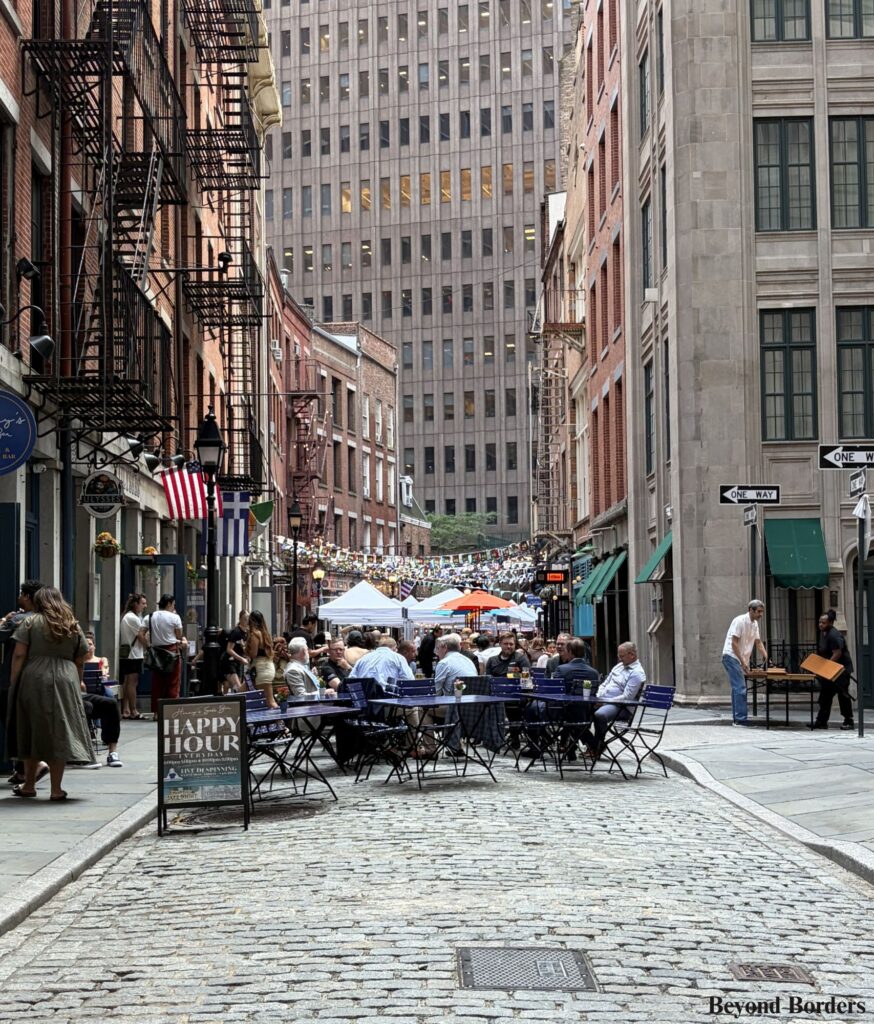
I arrived at Stone Street around 4:40pm on a weekday, and it was already packed. Not all tables outdoors were full, but the post-work rush had taken over, making it difficult for me to navigate the already-thin sidewalks. Based on my experience, try to get there just after 4pm or a bit earlier.
The Arrival Checklist
To execute this without issues, follow these 3 steps:
- Step 1: The Transit Exit — Take the subway to the Wall St station on the 2 or 3 lines and take the exit stairs at Wall St and William Street SW corner, or take the subway to the Whitehall St station on the R or W lines and take the exit stairs at Whitehall St and Water St SW corner. Both leave you a 2-minute walk from the western entrance of the block.
- Step 2: Secure a Standing-Room Perimeter Spot— Do not ask to be seated at a picnic table; doing so hooks you into full table service and an expensive tip. Instead, claim a standing spot along the perimeter near the old custom house side where you have maximum visual range.
- Step 3: Place a “Low-Risk” Order— Order a standard draft beer, a hard cider, or a cheap drink. Treat this strictly as a “visual tax” for sitting and enjoying the 1600s atmosphere. Avoid the $18+ specialty cocktails, which are mediocre and heavily marked up.
The Stone Street Architecture Scavenger Hunt (What to Look For)
To truly appreciate this historic street, you have to look past the neon bar signs and look upward. What you are standing on is a living architectural timeline. Instead of reading a dry history book, use this quick, 3-step visual guide to spot the hidden layers of Stone Street’s history in NYC.
Step 1: Stand at the Intersection of Stone Street and Coenties Alley
What to do: Stand right at the corner where the two lanes meet and look up at the long, sweeping curve of the brick facades.
The Insider Secret: That curve isn’t accidental. It perfectly mirrors the original 17th-century Dutch street grid from when the lane was known as Hoogh Straet. Weary residents complained so loudly about the mud and filth here that in 1658, it became the very first street paved with stone in New Amsterdam, giving the road its permanent name in 1794.
Step 2: Move Mid-Block and Examine the Storefront Bases
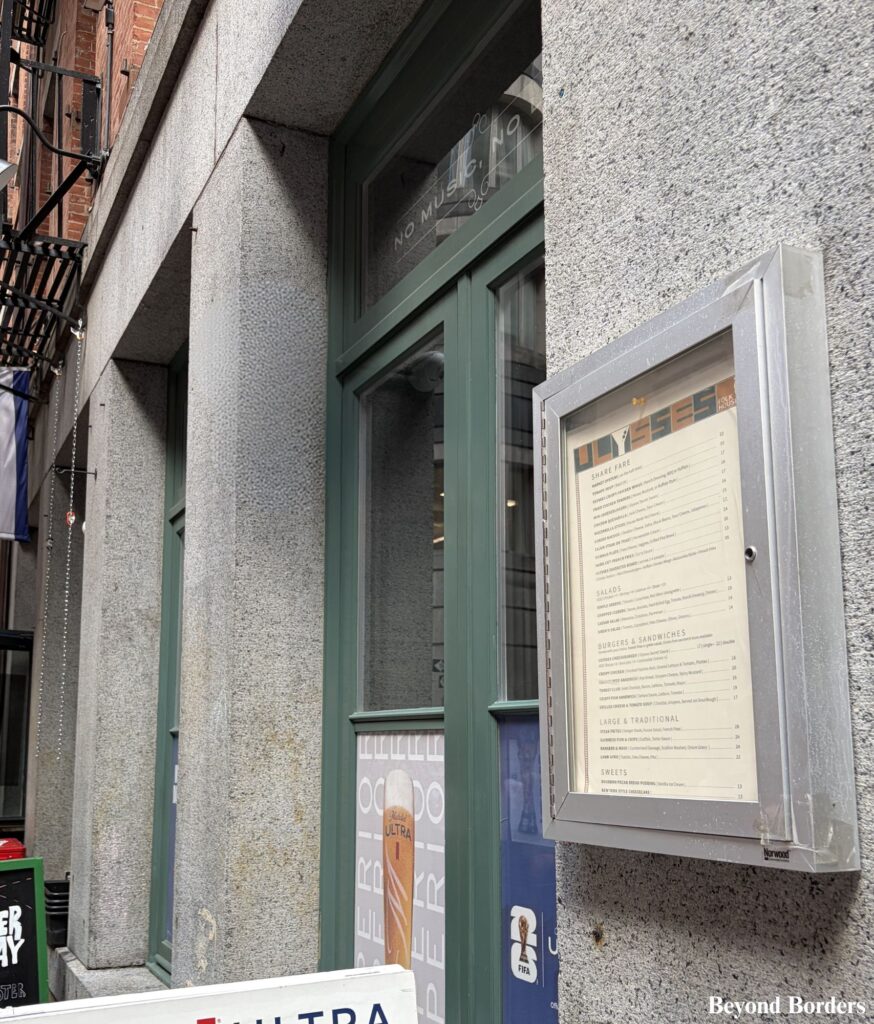
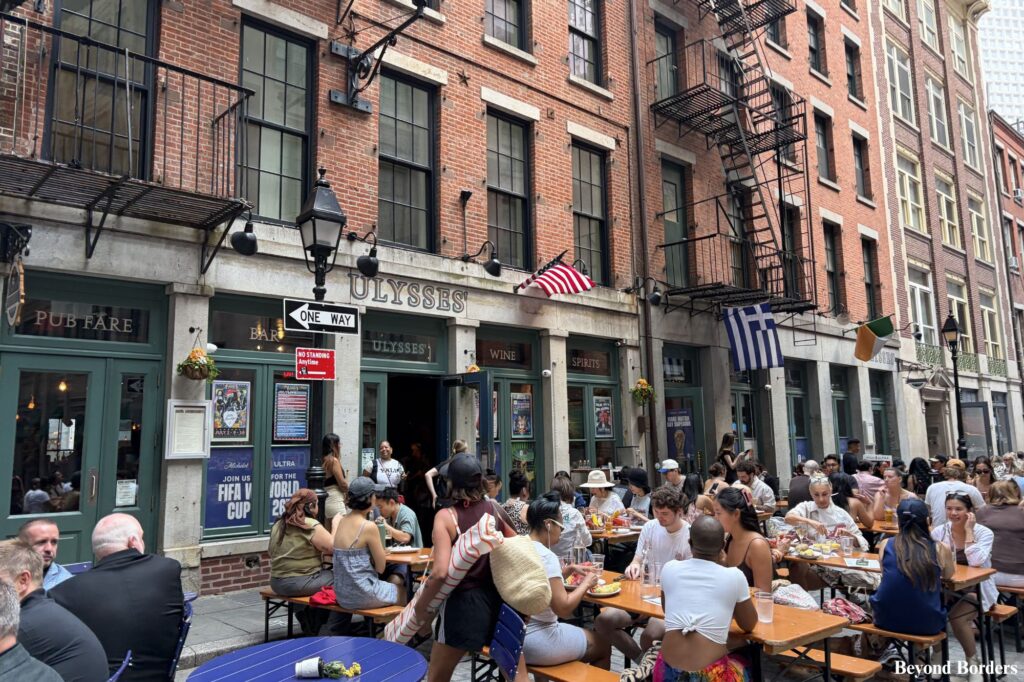
What to do: Walk into the center of the cobblestone block and look closely at the massive, quarried gray granite piers framing the pub doors and windows (like the ones at Ulysses’ in my photo above).
The Insider Secret: This is what is left of the Great Fire of New York in1835, which completely leveled this entire corridor. When the street was rebuilt in the late 1830s, it shifted from a residential lane into a bustling commercial trading hub. These heavy granite blocks are classic Greek Revival mercantile architecture, built specifically to handle heavy merchant goods and shipping barrels–not happy hour picnic tables.
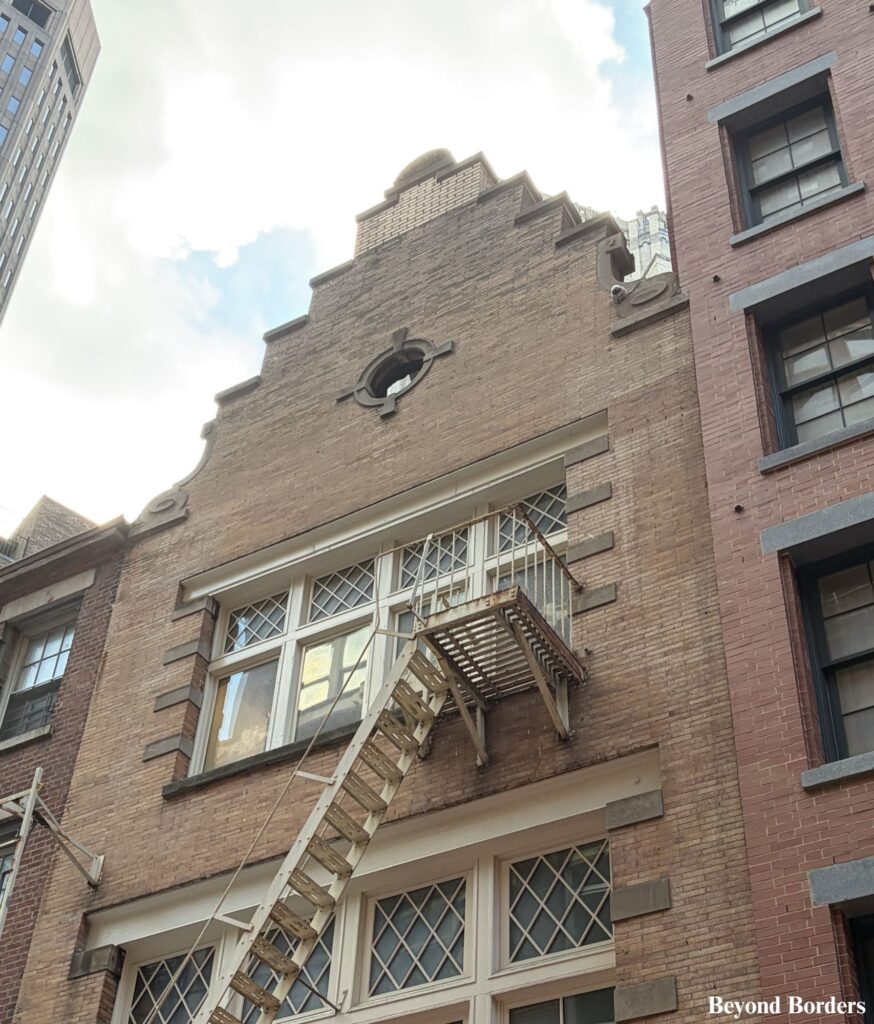
The Optical Illusion: While walking, look up at #57 Stone Street. You’ll see a beautiful, stepped-gabled brick roofline that looks straight out of Amsterdam. This is actually a clever historical fake built in the early 1900s during a wave of Dutch nostalgia to mimic the lost 17th-century houses.
Step 3: Walk to 85 Broad Street for the “Hidden” Archaeology
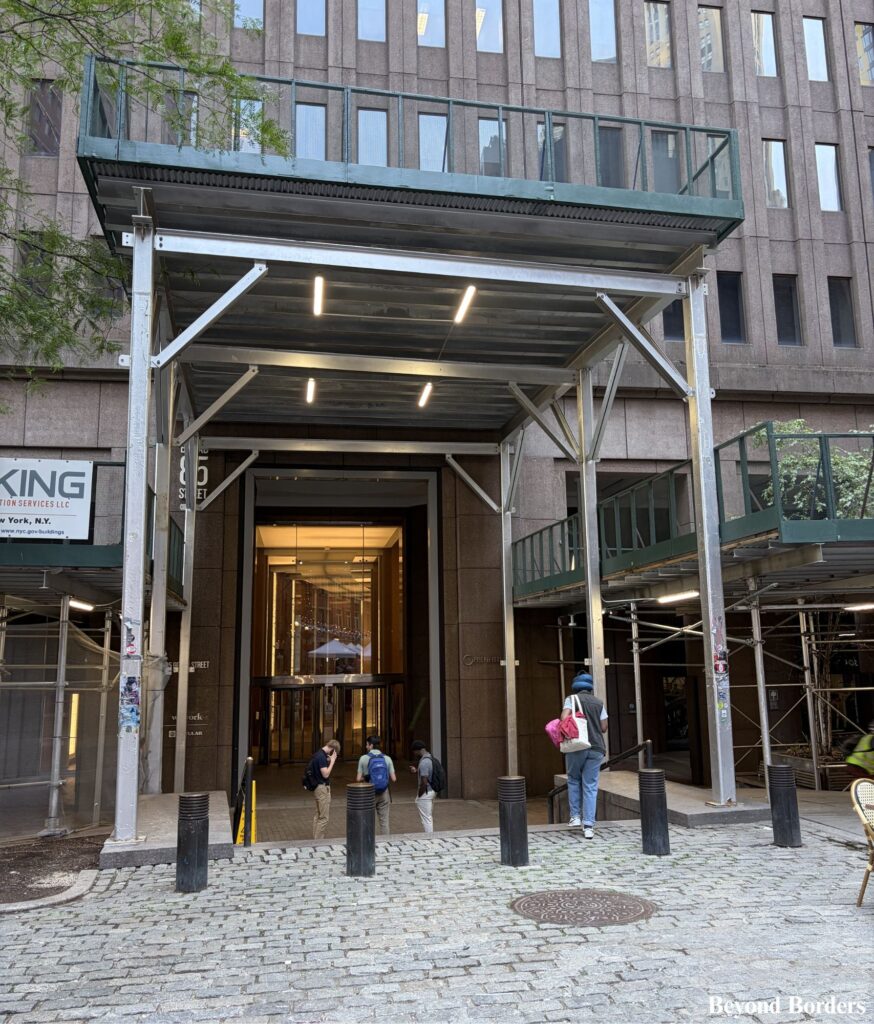
What to do: Walk to the western end of the cobblestones and step onto the concrete plaza of the massive corporate skyscraper flanking the street (85 Broad Street). Look down at your feet for brass map set directly into the sidewalk.
The Insider Secret: When crews dug up this plaza in the late 1970s, they uncovered a goldmine of urban history. The brass outlines trace the exact foundations of the 1641 Dutch City Hall (Stadt Huys).
A couple of steps to the left of this brass map, you will see a brown panel that stands out on the sidewalk. Decades of heavy foot traffic, weather, scratches, and condensation trapped underneath have turned what used to be a clear, transparent window into a completely opaque, solid-looking plate. It is notoriously cloudy now, which is exactly why thousands of people walk right past it every single day without realizing what it is.
Before it became opaque, people could look through the window down at the actual excavated stone ruins of the 1670 Lovelace Tavern buried beneath the modern city. Even if you can’t see perfectly through the glass today, you are standing directly over the exact spot where colonists were drinking ale in 1670!
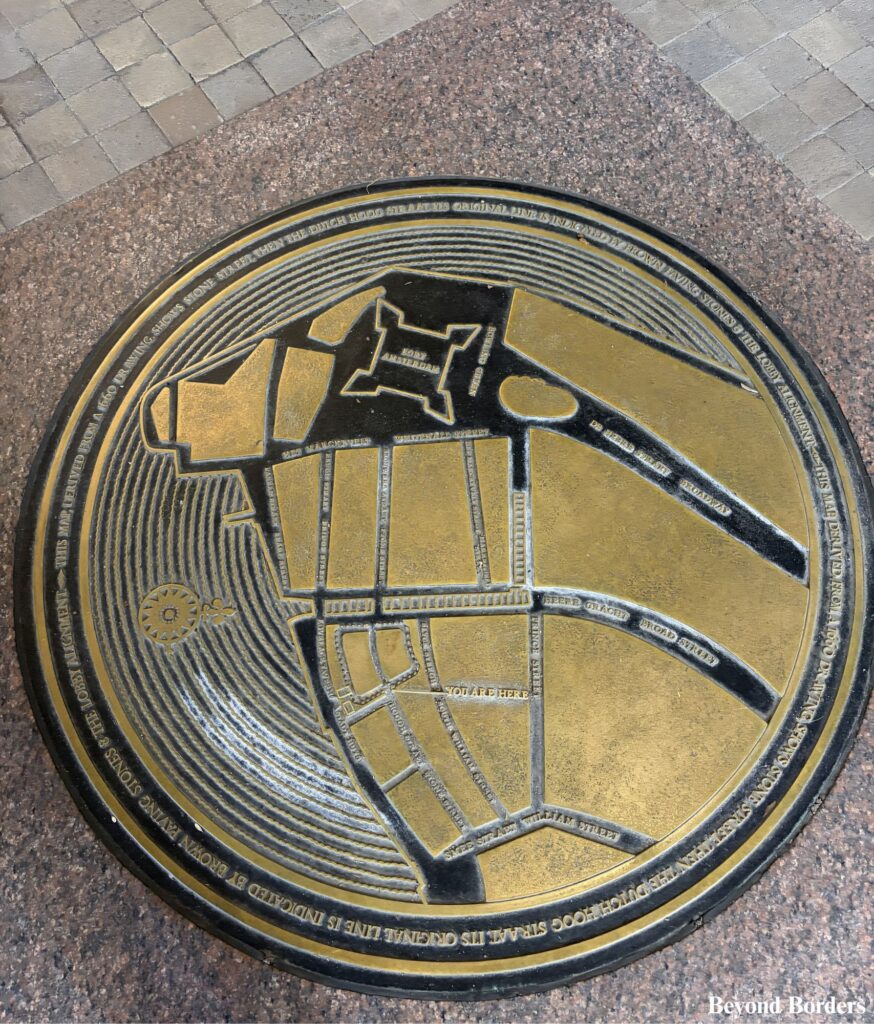
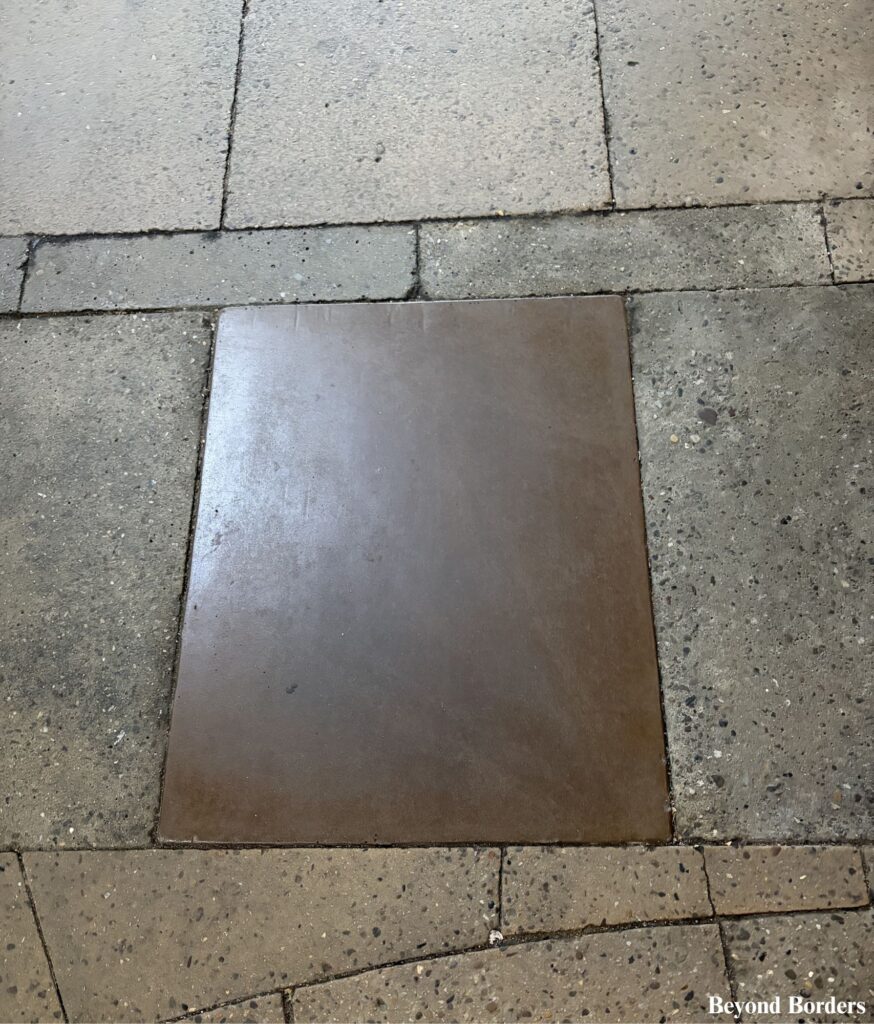
Photo Pro-Tip:
Before the crowds block your views, stand near the Broad Street side looking east down the curve. Position your camera to capture the old-world brick steps of #57 cutting a sharp, dramatic contrast against the massive, modern glass skyscrapers towering directly behind them.
Where to Get Your “Low-Risk” Drink
You aren’t here for a five-star culinary experience; you are here for the historic atmosphere. To experience Stone Street’s restaurants, bars, and pubs without falling into a financial trap, you need to know which physically anchor the cobblestones and exactly what to order to keep your stakes low. Here are the two heavy-hitters to look for, plus another option nearby. You can also read more about all of these options in my Downtown Manhattan walking tour itinerary!
The Open-Container Privilege: What makes the Stone Street experience worth a 45-minute visit to explore and get a drink isn’t the restaurant menus, it’s the rare New York City legal loophole. Because the street is closed to traffic, it functions under a special district rule that allows legal, European-style outdoor street drinking within the pedestrian barriers. Enjoy the novelty, take your photos, and get ready to move.
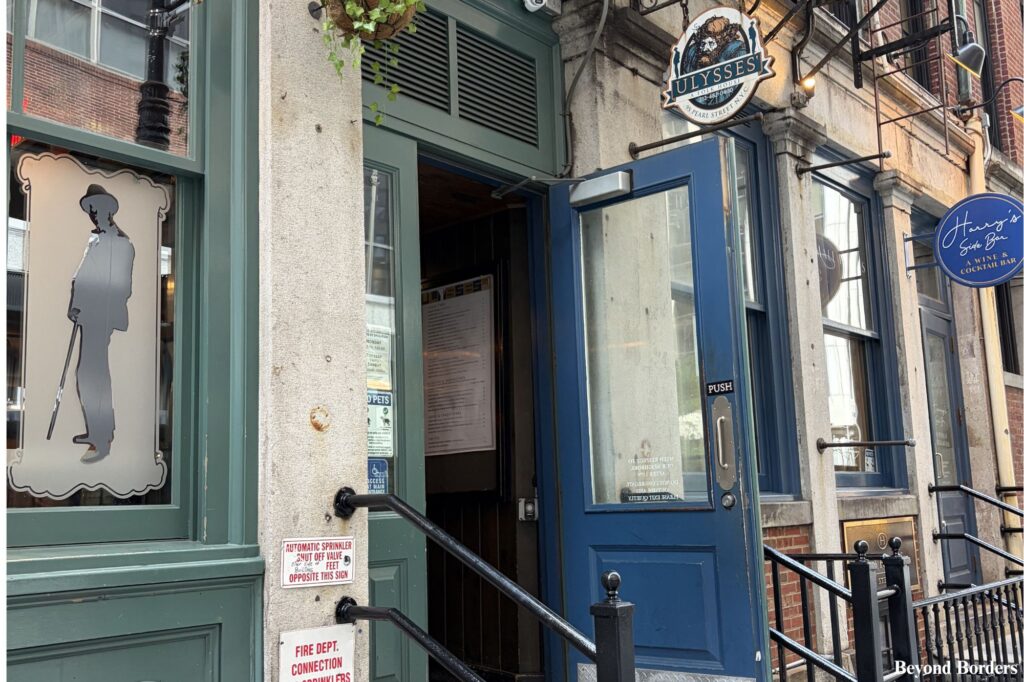
1. Ulysses’ Folk House (The Cobblestone Anchor)
- The Vibe: This massive Irish-ish pub at 58 Stone Street is the literal heart of the street. It single-handedly sparked Stone Street’s outdoor dining renaissance in the early 2000s. It’s loud, sprawling, and owns a massive chunk of those communal outdoor picnic tables.
- What to Order: A standard draft Guinness or a local craft beer. The draft lines move fast here because of the sheer volume of corporate crowds, making beer a safe, fresh, and predictable option.
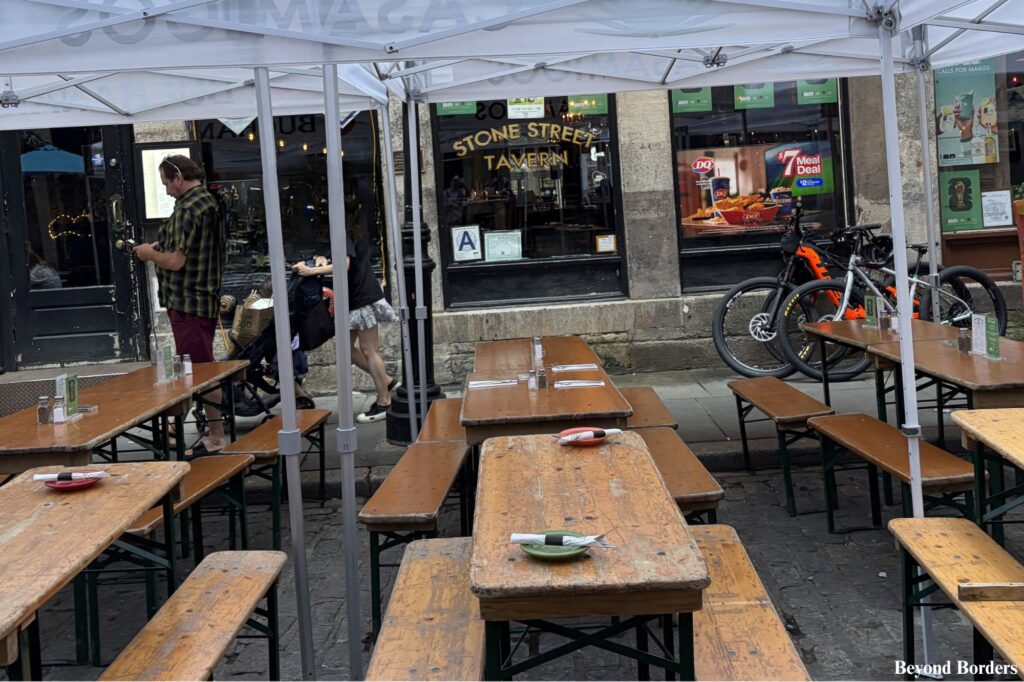
2. The Stone Street Tavern
- The Vibe: Located right in the middle of the block (52 Stone Street), this spot leans heavily into classic rustic tavern aesthetics. It’s got great outdoor real estate, but the indoor seating fills up instantly with corporate happy hours.
- The Low-Risk Order: A standard highball (like a gin and tonic or vodka soda) or a canned cider. Stick to simple, two-ingredient drinks that are impossible to mess up and don’t carry the premium price tag of their specialty menu.
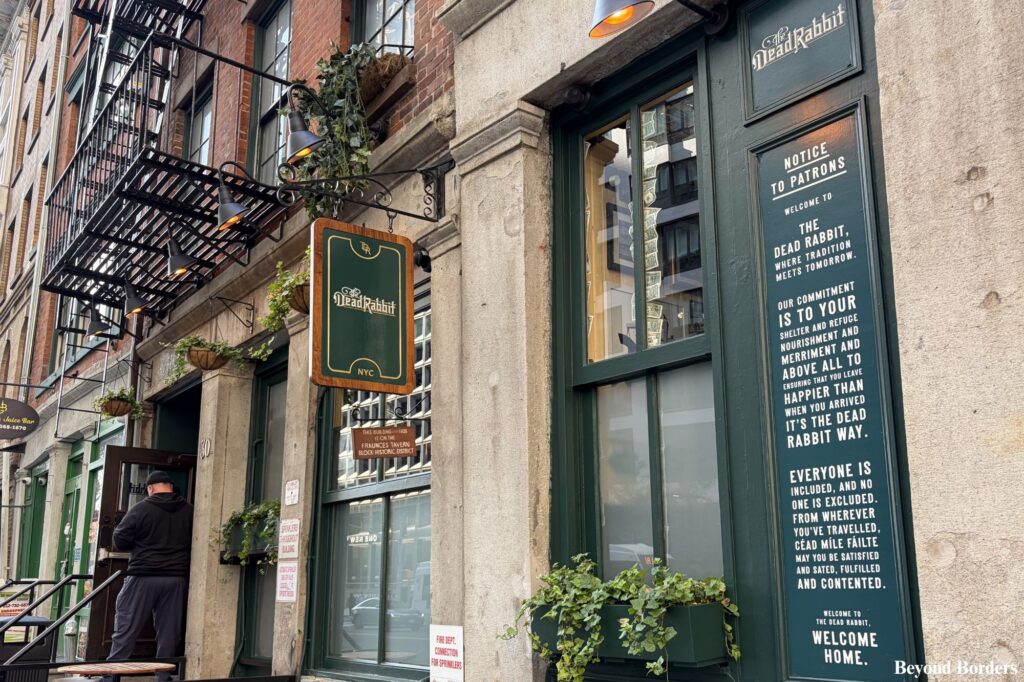
3. Alternative Option: The Dead Rabbit
- The Vibe: If you reach your 45-minute mark and decide you do actually want to spend $20+ on an elite, world-class cocktail, do not order it on the cobblestones. Instead, execute an immediate pivot. Walk just a minute around the corner to 30 Water Street.
- What to Order: Nothing here is low-risk for your wallet, but it is low-risk for your palate. This is a multi-time winner of “World’s Best Bar.” Order an authentic Irish Coffee or a bespoke craft cocktail from their seasonal menu. You are still paying premium Manhattan prices, but here, the quality actually matches the price.
Where to Eat Dinner Instead (Without the Tourist Markup)
Right around 5:30pm, when the corporate crowd ends their workday, it is time for your exit strategy. Do not get sucked into ordering a mediocre $35 burger on Stone Street. Instead, use your phone, close your open tab, and pivot to one of these superior downtown dining tracks.
Option 1: Stay in FiDi
If you aren’t ready to leave the Financial District just yet, skip the pub food and pivot to the elite spots featured in my Downtown Manhattan walking tour itinerary:
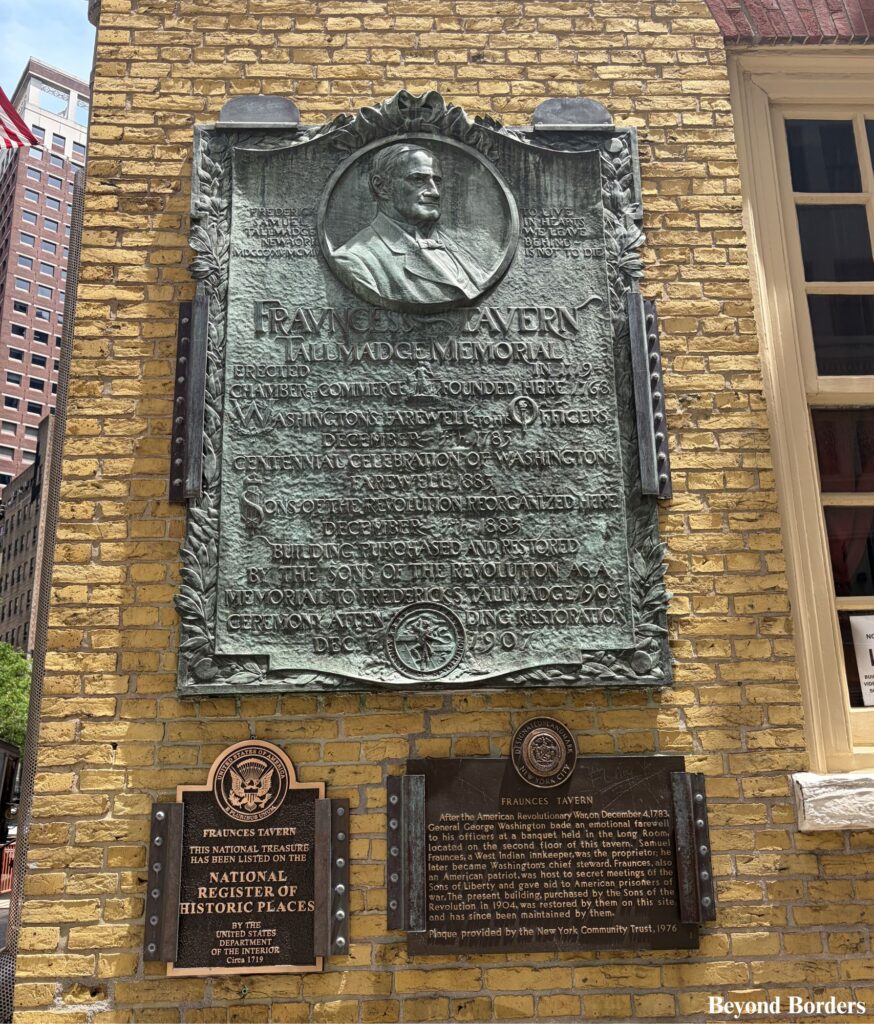
- Fraunces Tavern (54 Pearl St): Walk just two blocks south. You get an even deeper layer of authentic Revolutionary War history than Stone Street offers, paired with a vastly superior dining menu. It is also the oldest building in Manhattan!
- Au Cheval (33 Cortlandt Alley): Head over to the Cortlandt Alley area for a masterclass in diner-style luxury. Their famous double-cheeseburger easily outclasses any pub food on the cobblestones.
- Manhatta (28 Liberty St, 60th floor): If you want a complete aesthetic 180, head up sixty floors. Instead of looking up at skyscrapers from a crowded alley, you can look down at the entire city skyline while enjoying high-end spirits and small plates.
Option 2: Go North (Still in Lower Manhattan)
If you are ready to leave the Financial District behind for your main meal, hop on the subway and head slightly further uptown to these legendary culinary heavyweights:
- Wo Hop (17 Mott St, Chinatown): Head straight to Mott Street. This iconic, no-frills basement staple serves up legendary, comforting old-school NYC Chinese-American classics that cost a fraction of a Stone Street bill. Read more about Wo Hop in my guide on how to beat the wait at top Chinatown restaurants.
- Katz’s Delicatessen (205 East Houston St, Lower East Side): If you want a true New York rite of passage, head to East Houston Street. Skip the tourist-trap pub food and spend your money on a massive, legendary pastrami on rye instead. Make sure to read my step-by-step guide on how to order at Katz’s Deli to make sure you know exactly how the ordering lines work and avoid losing your ticket (which comes with a cash fine).
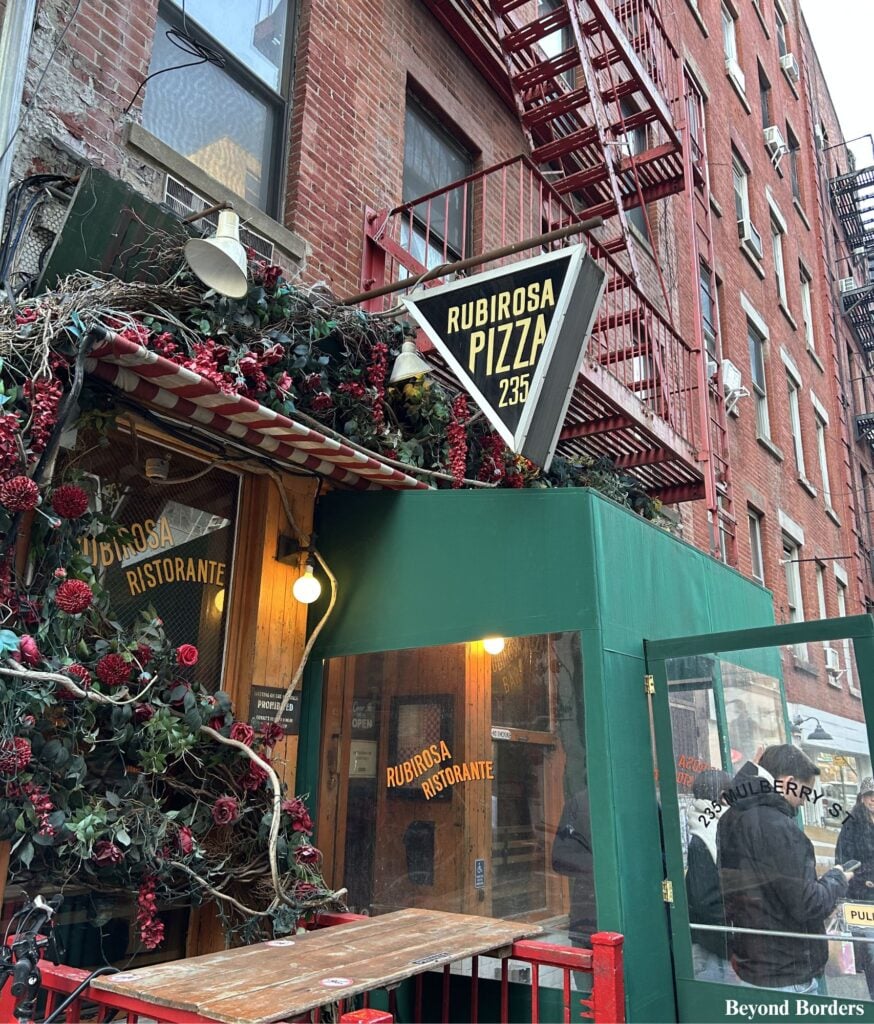
- Rubirosa (235 Mulberry St, Nolita): If your vibe leans toward an incredible sit-down dinner, head to Mulberry Street. Secure a spot for their famous, thin-crust tie-dye pizza–it is the ultimate reward after your military-precise 45-minute architectural walkthrough. If you want to eat here, make sure to read my guide on how to secure Rubirosa reservations, as tables book out completely within minutes of dropping on Resy each week.
Seasonal Event Exception
Keep in mind that the “Optimal Window” above completely goes out the window during major seasonal events. A few times a year, the entire street joins forces to host massive, neighborhood-wide block parties. If you plan your visit during these windows, expect absolute wall-to-wall gridlock:
- St. Patrick’s Day (March): The street transforms into a massive sea of green with outdoor taps pouring continuous Guinness.
- Cinco de Mayo (May): A massive, block-wide outdoor fiesta that pulls in massive happy hour crowds starting early in the afternoon.
- 4th of July (July): A vast, neighborhood-wide Independence Day block party. It gets incredibly lively here as crowds flood the historic district for outdoor drinks and patriotic street vibes before heading to the waterfront for the fireworks.
- The Oyster Festival (September): A lively nod to the neighborhood’s historic maritime past, featuring outdoor oyster-shucking stations and live music.
- Oktoberfest (September/October): One of the largest traditional German beer garden celebrations in NYC, stretching across multiple weekends with massive communal tents.

Pro-Tip:
These celebrations are highly weather-dependent, and the exact weekend blocks change slightly every year. If you want to intentionally join the chaos or verify the schedule before you head down, keep tabs on the official Stone Street NYC Events Calendar to see exactly when the street closures and outdoor festival tents are officially set up.
FAQs: Stone Street NYC
The Verdict: Is Stone Street NYC Worth It?
Ultimately, Stone Street is a classic piece of Lower Manhattan history that is absolutely worth a spot on your itinerary, but only if you know what to do and look for. If you treat it like an outdoor museum, arrive at 4:30pm sharp to capture your architectural photography, and keep your beverage stakes low, it is an unbeatable 45-minute afternoon pitstop.
But once the clock hits 5:30pm and that sea of finance bros starts rolling in, stick to your exit strategy. Close your tab, leave the tourist prices behind, and head out to explore your vast downtown dinner options. You get the perfect historic photos, the legal open-container novelty, and an incredible dinner elsewhere–without a single ounce of post-trip financial regret.