At a Glance: Is South Street Seaport Worth Visiting?
- The Short Answer: South Street Seaport is worth visiting only for its views and history rather than its expensive dining scene.
- Top Things to Do: To maximize your trip, I recommend visiting the Pier 17 rooftop for panoramic harbor views, taking iconic photos of the Brooklyn Bridge from the Heineken Riverdeck, and exploring the South Street Seaport Museum to tour its fleet of historic 19th-century ships. Feel free to visit the Fulton Stall Market when it’s open.
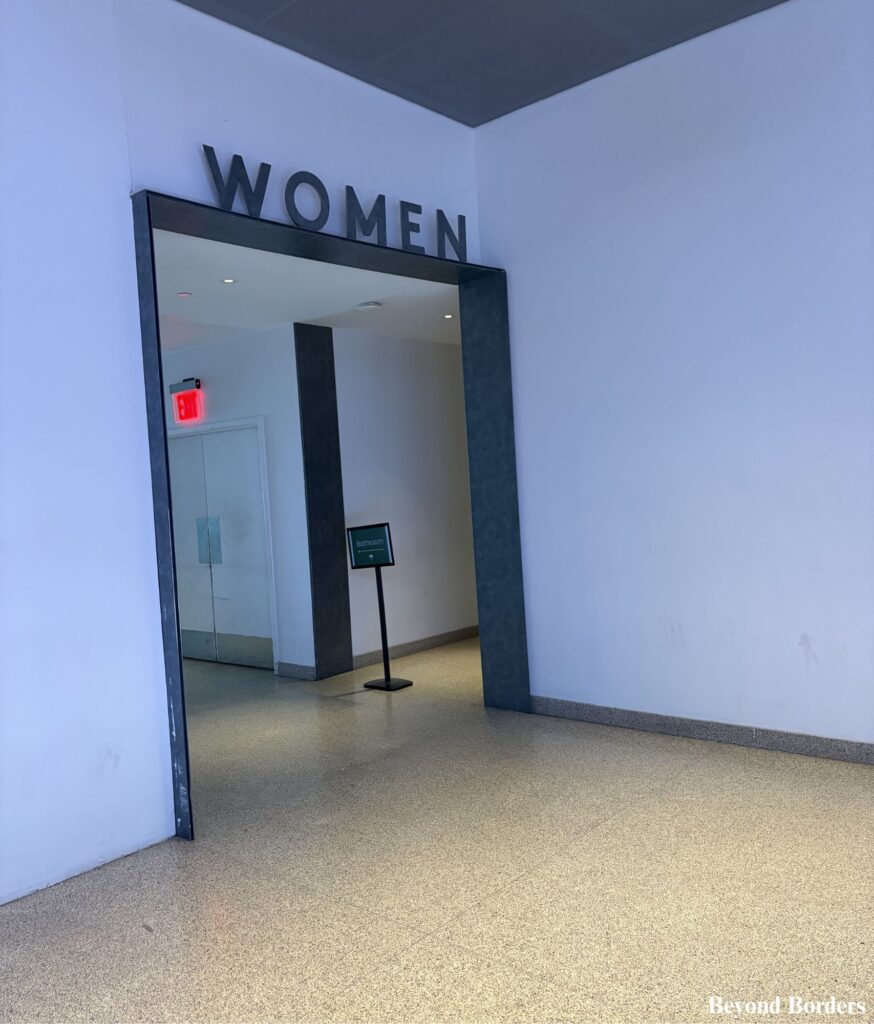
- My insider advice: Use the free public restrooms on your way up the escalators to the rooftop!
- The Verdict: While parts of the district can feel corporate and commercialized, its free maritime history, authentic cobblestone streets, and exceptional viewpoints make it a highly worthwhile 1-hour stop on a visit to Lower Manhattan.
Introduction
When you are planning your Lower Manhattan itinerary, it’s tempting to include the city’s historic waterfront. But before you add it to your schedule, you have to ask yourself the critical question: is South Street Seaport worth visiting, or is it just an overpriced, corporate-sponsored tourist trap?
On one hand, you have cobblestone streets, 19th-century maritime history, and some of the best free views of the Brooklyn Bridge in the city. On the other hand, you’re looking at pricey menus, heavily commercialized piers, and an identity crisis so real that its $200-million luxury food hall just closed down to make way for a ticketed Balloon pop-up museum. I headed down to South Street and Fulton Street to see the area for myself–here is what’s actually worth your time, what you should skip, and how to visit the Seaport the right way.
Jump to my Quick-Reference FAQs ↓ at the bottom of this guide if you have a specific question!
Pro-Tip: Planning Your Downtown Route?
If you’re building a broader Lower Manhattan trip, check out my step-by-step 1-day Financial District itinerary to see how to navigate the 9/11 Memorial and Museum, Trinity Church, sunset harbor views, and more in one continuous loop.
Understanding the Seaport’s Identity Crisis
To figure out whether visiting the Seaport is right for you, you first need to understand the weird dual identity it’s dealing with. Walking through this neighborhood feels like stepping into two entirely different eras at once. On one block, you’re standing on historic 19th-century cobblestones surrounded by old brick architecture; on the next, you’re looking at a sleek, glass-and-steel mega-structure wrapped in corporate sponsorships. It feels like it’s in a constant tug-of-war between preserving authentic NYC history and manufacturing high-end tourist entertainment.
Why People Call the Seaport a Tourist Trap
The biggest argument against visiting the Seaport is its aggressive corporate commercialization, which often feels like it’s trying to price out average travelers while also showing visitors that the Seaport struggles to find a balance between authentic NYC culture and highly commercialized tourist entertainment.
The Shocking Price Tag
If you are visiting NYC on a budget, the food and beverage scene here will shock you. With $24 cocktails, expensive food on the water, and pricey corporate-sponsored spaces like the Heineken Riverdeck dominating Pier 17, casual wandering can quickly turn into a very expensive visit if you buy anything.
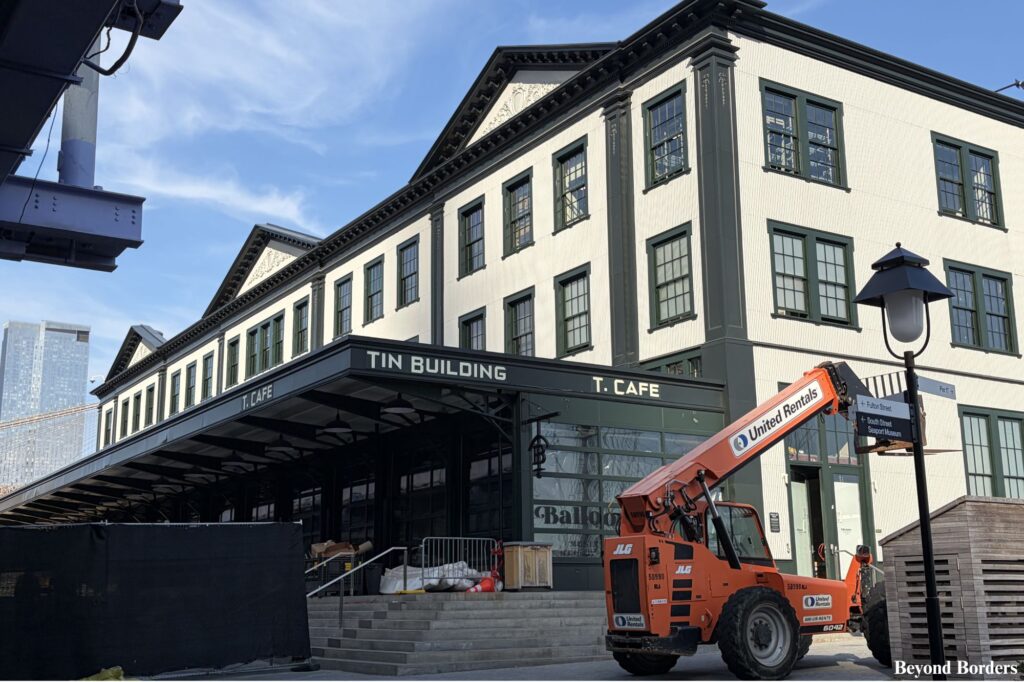
The Tin Building: From $200M Food Hall to Balloon Museum
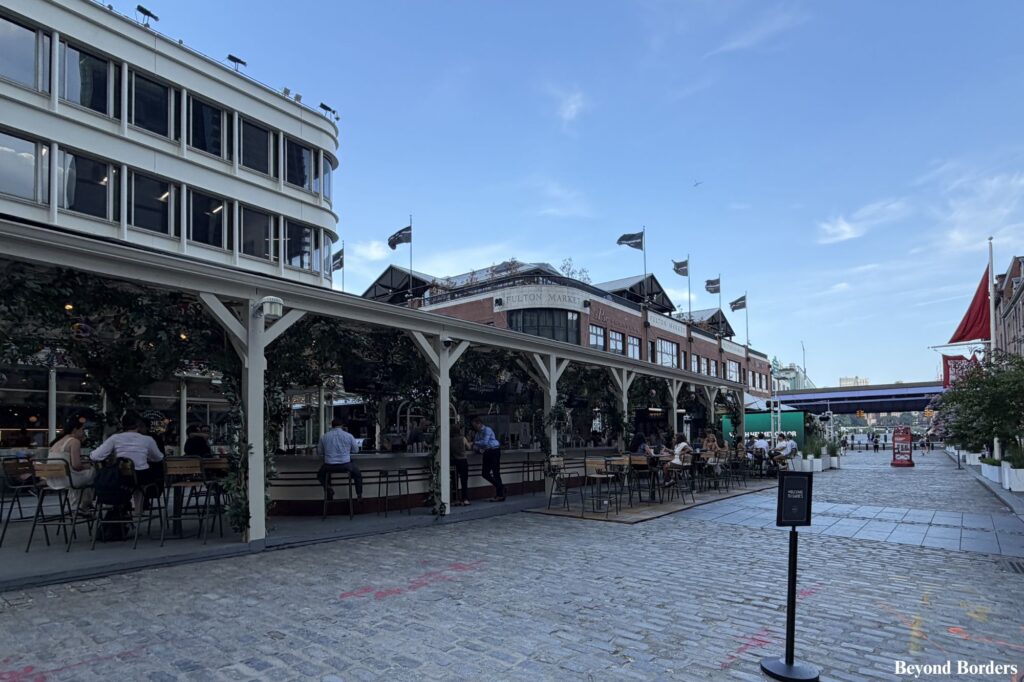
Look no further than the massive, $200-million culinary marketplace backed by Michelin-starred French-American chef Jean-Georges in the Tin Building food hall; it permanently shut down in late February 2026 after only three years in business because it simply couldn’t sustain the high-end foot traffic. Food magazines noted that the 53,000-square-foot marketplace was shut down after $100 million in losses, averaging around $100,000 a day! Today, that same empty building is being converted into a ticketed, Instagram-centric Balloon Museum flagship.
I actually wanted to include the Tin Building in my guide on how to visit NYC’s top 5 food halls as a luxury option, but after reading that it had closed, I had to choose an alternative.
Why It’s Worth Visiting: Actual NYC History (That’s Free to See)
While the high prices and corporate sponsorships can make the Seaport feel artificial, the neighborhood does have plenty of things to do that make it worth visiting because it sits on some of the most historic ground in Manhattan. Unlike manufactured tourist destinations, the Seaport has a deep maritime history if you know where to look, and is completely free. The same goes for visiting Stone Street, a 10-minute walk farther south, closer to Battery Park.
The Living Museum at Pier 16
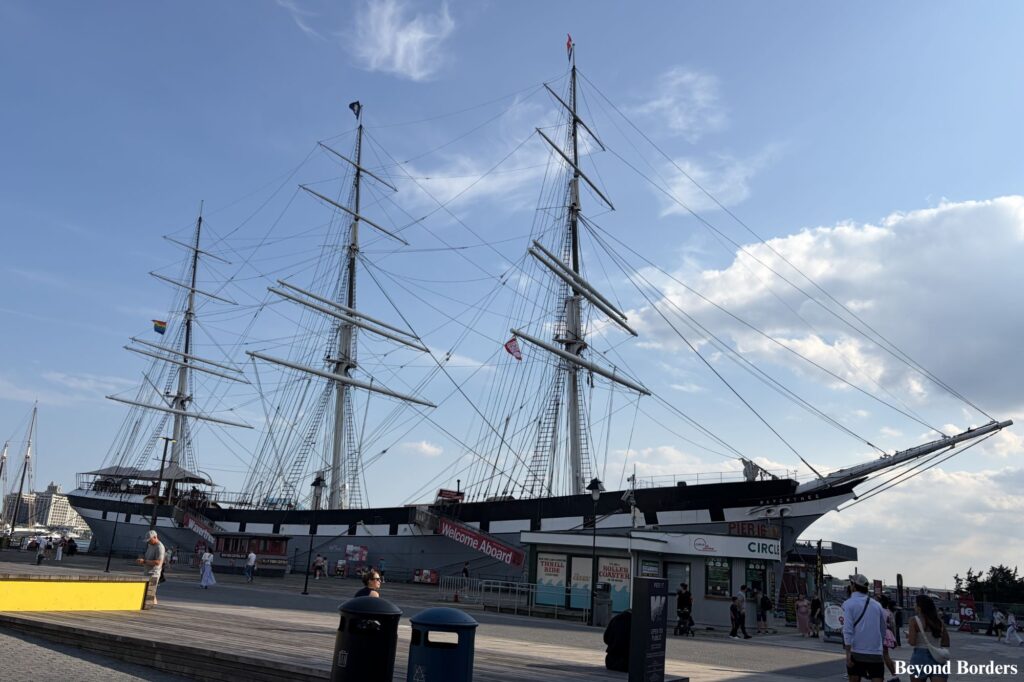
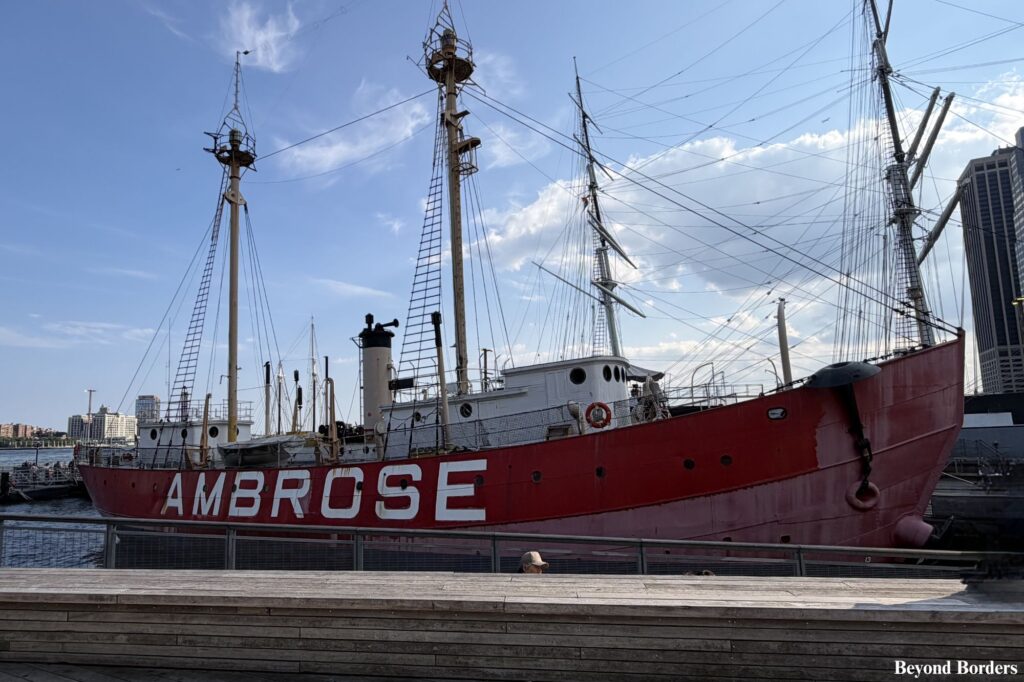
Long before it became an upscale entertainment area, it was the bustling “Port of New York.” At Pier 16, you can stand right next to incredible historic vessels like the Wavertree (a cargo ship from 1885) and the Ambrose lightship. Seeing the rigging of these massive, century-old ships contrasted against the sleek skyscrapers of the Financial District is easily one of the coolest visual experiences in lower Manhattan. Learn more about visiting the Wavertree and Ambrose ships on the official museum website.
The South Street Seaport Museum & Schermerhorn Row
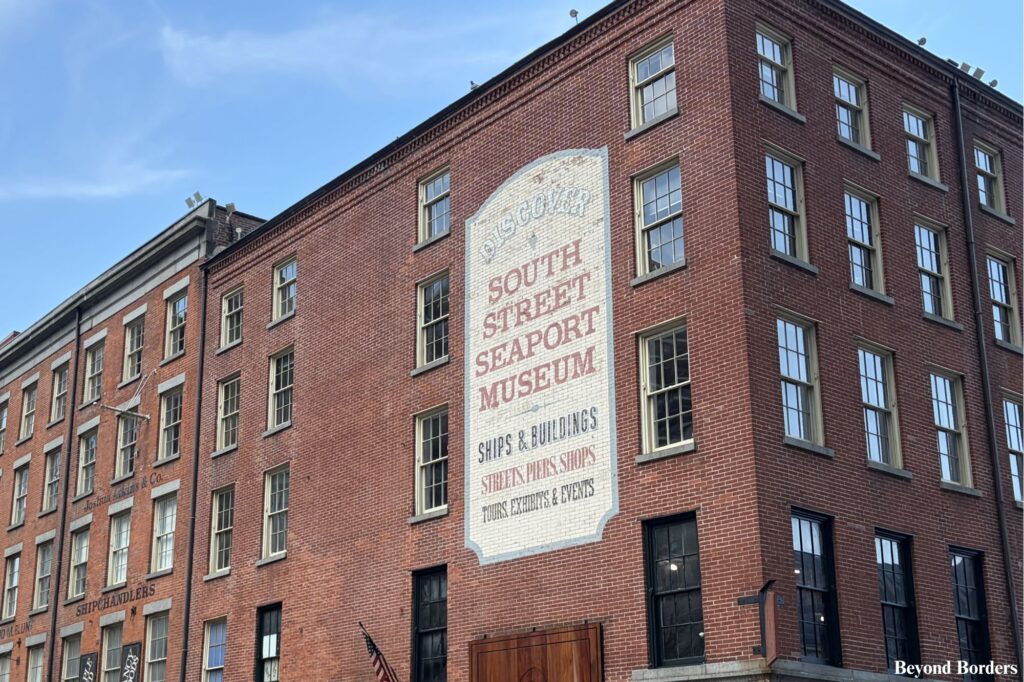
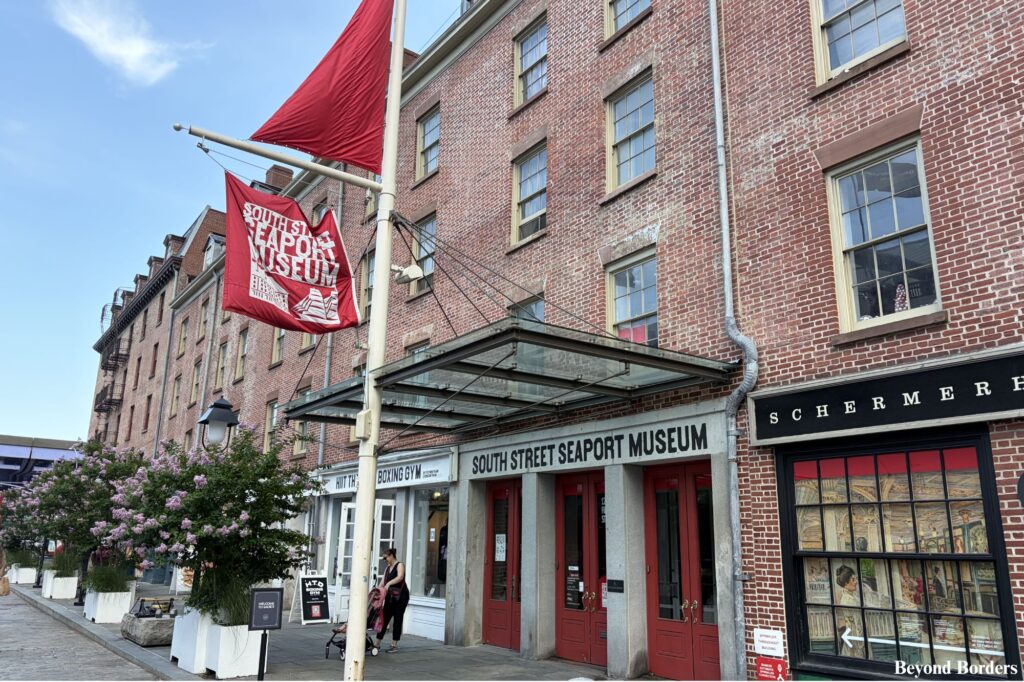
If you want to experience what New York looked like in the early 1800s, walk past the luxury storefronts and find Schermerhorn Row on Fulton and Water Streets. These low-rise brick buildings are original 19th-century counting houses. The South Street Seaport Museum preserves this legacy, reminding visitors that this neighborhood was once the economic heartbeat of the city. It’s a striking reminder that Lower Manhattan handles its old-world architecture in very different ways. You can book tickets online in advance to visit the South Street Seaport Museum on its official website, or buy tickets in person. The museum is open from Wednesday to Sunday from 11am-5pm. The last entry to the museum is at 4:30pm.
Fulton Stall Market
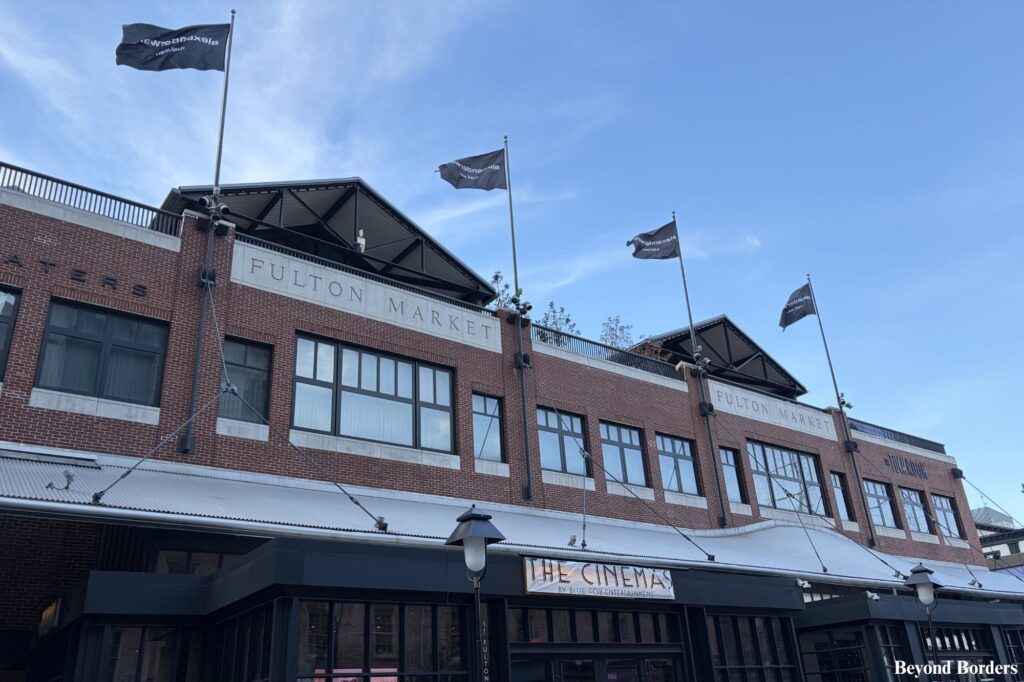
If the $24 cocktails at the Heineken Riverdeck and the empty shell of the Tin Building leave you craving something real, walk a few blocks away from the water to 91 South Street between Fulton and John Streets. This is where you’ll find the Fulton Stall Market, a fantastic 501(c)(3) nonprofit indoor marketplace that acts as the ultimate antidote to the Seaport’s tourist-trap vibes.
While the rest of the neighborhood leans heavily into high-end commercialization, this indoor boutique grocery shop connects Lower Manhattan directly with over 100 regional family farmers and small-batch artisan producers. It is open Monday through Saturday year-round. To learn more about Fulton Stall Market, visit the official website.
Pro Tip:
If you want a phenomenal lunch that won’t blow your daily budget, walk inside Fulton Stall Market and visit their Farm-to-Fork Kitchen. They prepare fresh, daily take-out items like quiches, seasonal soups, and sandwiches made entirely from the high-quality products supplied by their local farms. It is easily the most authentic, affordable, and delicious way to eat in the entire district while directly supporting regional agriculture!
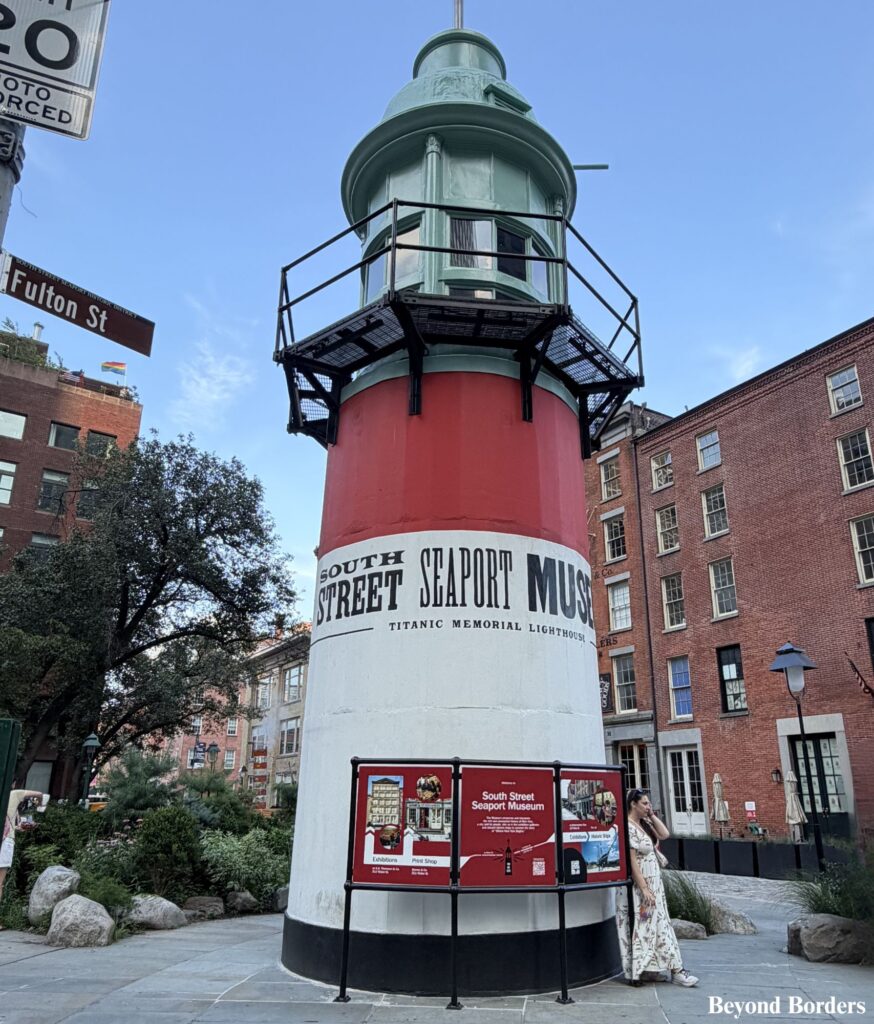
The Titanic Memorial Lighthouse
Located right at the intersection of Pearl and Fulton Streets, this is a historic gem most tourists walk right past without realizing what it is. Built in 1913, this lighthouse monument was erected to honor the passengers, officers, and crew who died on the Titanic. It’s a quiet, sobering piece of real history tucked into a busy modern intersection.
Where the Seaport Redeems Itself: The Pier 17 Rooftop
If there is one thing that completely saves the Seaport from being a total tourist trap, it’s the layout of Pier 17 itself. You don’t have to spend $24 on a cocktail at the bars below to enjoy the absolute best feature of the neighborhood: its unparalleled access to the water.
The Ultimate Free NYC Viewpoint
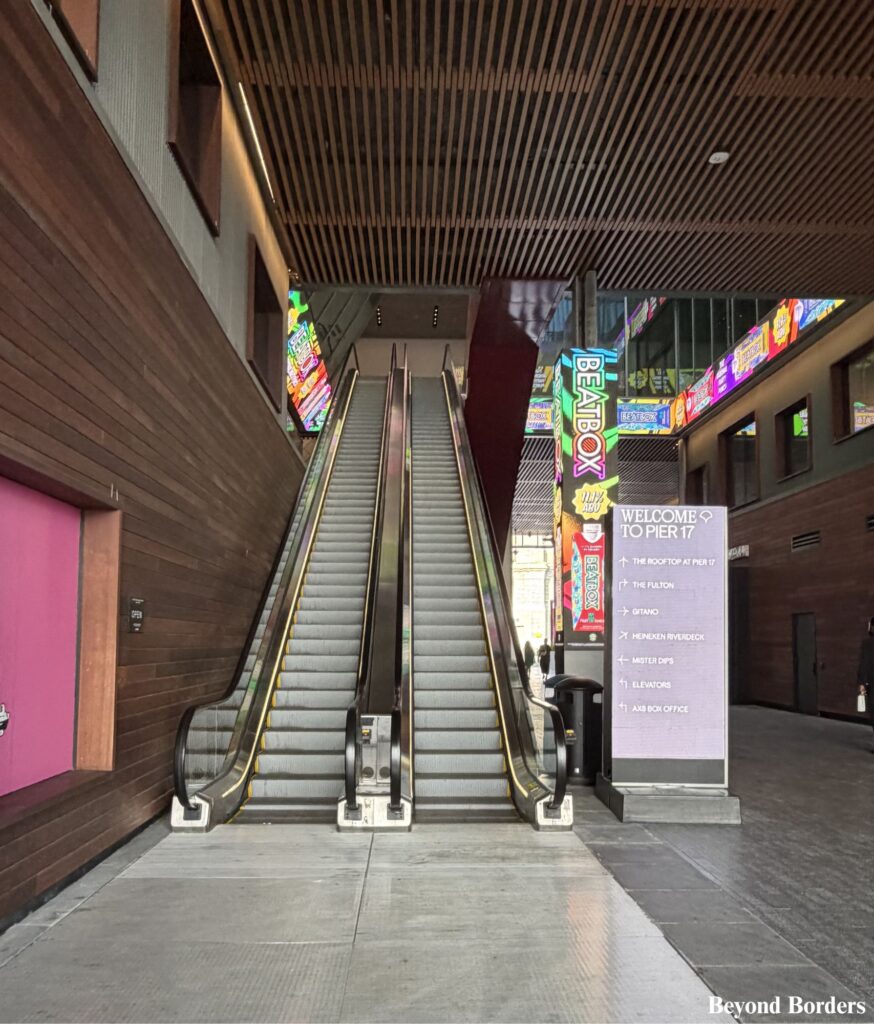
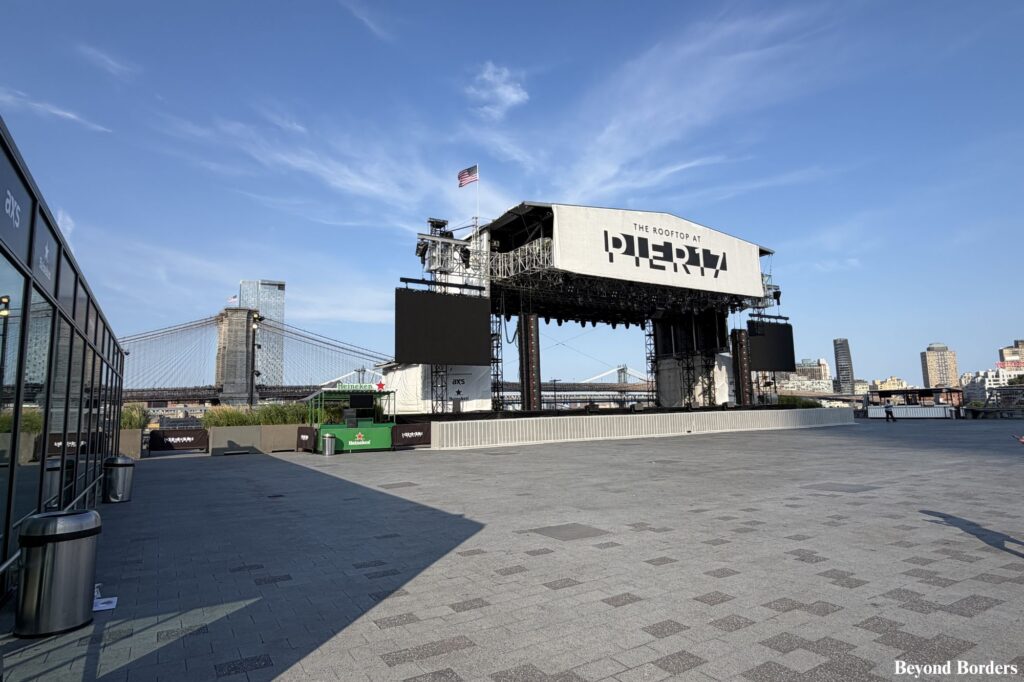
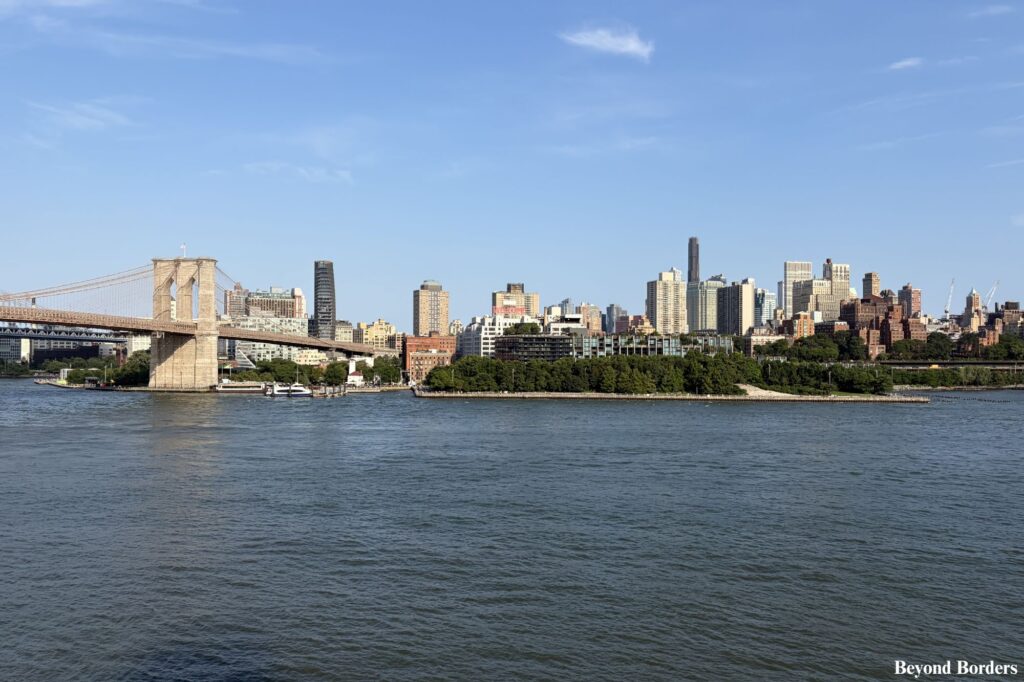
Take the escalators all the way up to the Pier 17 Rooftop. While this space transforms into one of the city’s premier ticketed concert venues on summer nights, during the day it serves as an open, public space that is entirely free to access. Walking out onto the deck gives you a massive, open-air platform five stories above the East River with the entire downtown skyline towering behind you and DUMBO in Brooklyn in front of you.
My Insider Secret:
As you take the escalators up to the Pier 17 rooftop, feel free to use the free bathrooms!
The Best Brooklyn Bridge Shot in Manhattan
From this elevated vantage point, you get what is arguably the single best, most unobstructed view of the Brooklyn Bridge in all of Manhattan. Because the pier juts out into the river, you are practically eye-level with the bridge spans without any traffic or fences blocking your frame. If you want a postcard-perfect photo of NYC’s most iconic bridge without fighting the aggressive walking crowds on the bridge itself, this rooftop alone makes the trip to the Seaport worth it.
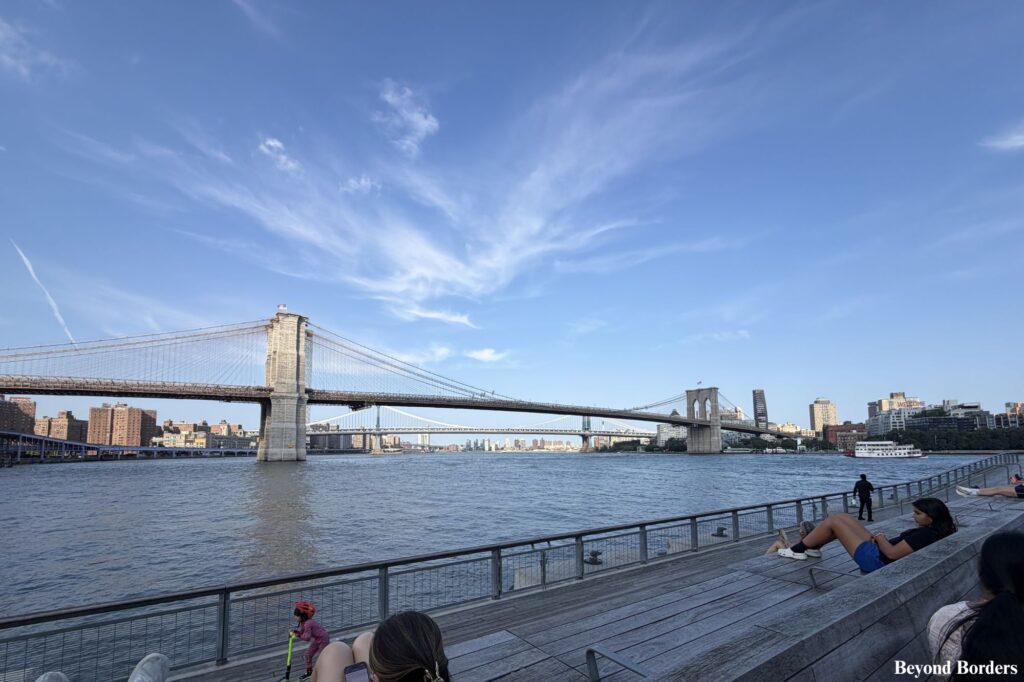
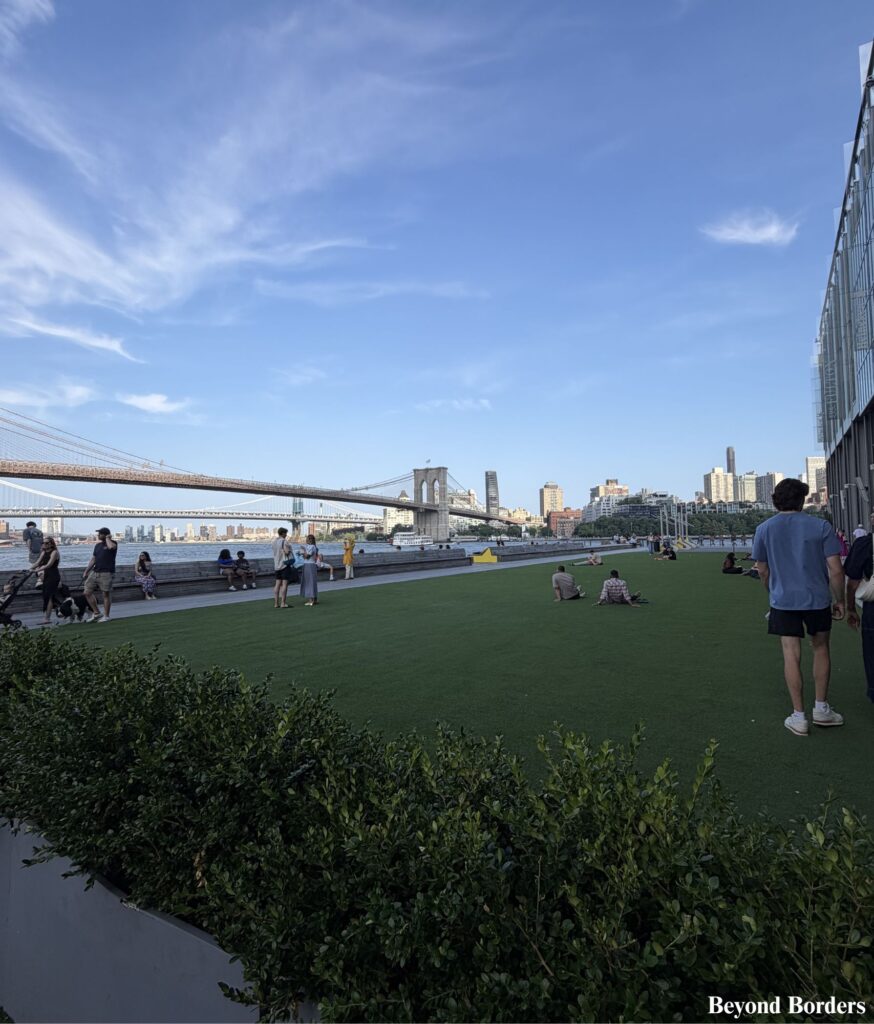
While the Heineken Riverdeck does scream corporate sponsorship, you do get amazing views of the Brooklyn Bridge here too. Before heading up the escalator to the Pier 17 rooftop, walk past it towards the riverdeck and take photos of the bridge and the river while relaxing on the benches.
FAQs: Visiting South Street Seaport
Conclusions: Is NYC’s South Street Seaport a Tourist Trap?
So…what’s the consensus? In my opinion, the Seaport is a partial tourist trap with a major saving grace. If you go there expecting a cheap night out, an authentic local food market, or a gritty, untouched slice of old New York, you will likely walk away disappointed by the corporate branding and high price tags.
However, because the maritime history is entirely free to explore (besides the museum) and the Pier 17 rooftop offers some of the best unobstructed views in Manhattan without costing you anything, it avoids being a total scam.
How to Visit
- Skip the overpriced sit-down dining: Eat here only if you are looking to splurge on a specific waterfront dining experience.
- Go for the visuals: Use it as a scenic, 45-to 60-minute walking stop to tour the historic ships, see the Titanic Lighthouse, and walk to the Heineken Riverdeck and/or head up to the Pier 17 rooftop to take beautiful photos of the Brooklyn Bridge and East River.
- Make it a double feature: Pair it with a walk down the historic cobblestones of Stone Street to get two entirely different experiences of Lower Manhattan’s history in a single afternoon. Read my guide on how to see Stone Street so you visit as a historic architectural museum rather than as a tourist trap.