
The Best Streets in Montreal To Visit At a Glance:
The top streets to explore in Montreal for culture, dining, and architecture include:
- Rue Saint-Paul: Best for Old Montreal cobblestones, European charm, and souvenir boutiques.
- Rue Notre-Dame: Best for antique shopping, historic landmarks like Notre-Dame Basilica, and trendy dining.
- Rue Saint-Jacques: Best for magnificent 19th-century Victorian architecture and former financial district history.
- Saint-Laurent Boulevard: Best for colorful murals, multicultural eateries, and iconic delis.
- Rue Sainte-Catherine: Best for major brand shopping, underground city access (RÉSO), and vibrant energy.
- Sherbrooke Street West (Bonus): Best for luxury boutiques, historic Golden Square Mile mansions, and fine art museums.
Introduction
Montreal is the most populous French-speaking city in North America, and its unique charm shines across its distinct, vibrant neighborhoods. To truly experience the city’s culture, navigating the best streets in Montreal is essential. From historic cobblestones and iconic architecture to bustling boutique shopping and lively nightlife, these famous streets in Montreal each offer a completely different experience for foodies, shoppers, and history lovers alike.
If you are looking for the top Montreal streets to explore, this guide covers five iconic thoroughfares that capture the true pulse of the city. These locations are also highlighted in my full 3-day Montreal itinerary, making this the perfect place to start planning your first (or next) trip.
Jump to my Quick-Reference FAQs ↓ at the bottom of this guide if you have a specific question!
Map
My custom map features all 6 streets and key attractions and places to eat along each street, plus another bonus street (besides Sherbrooke St West) packed with more things to do! Enter your email below to save the interactive map overlay directly to your Google Maps app.
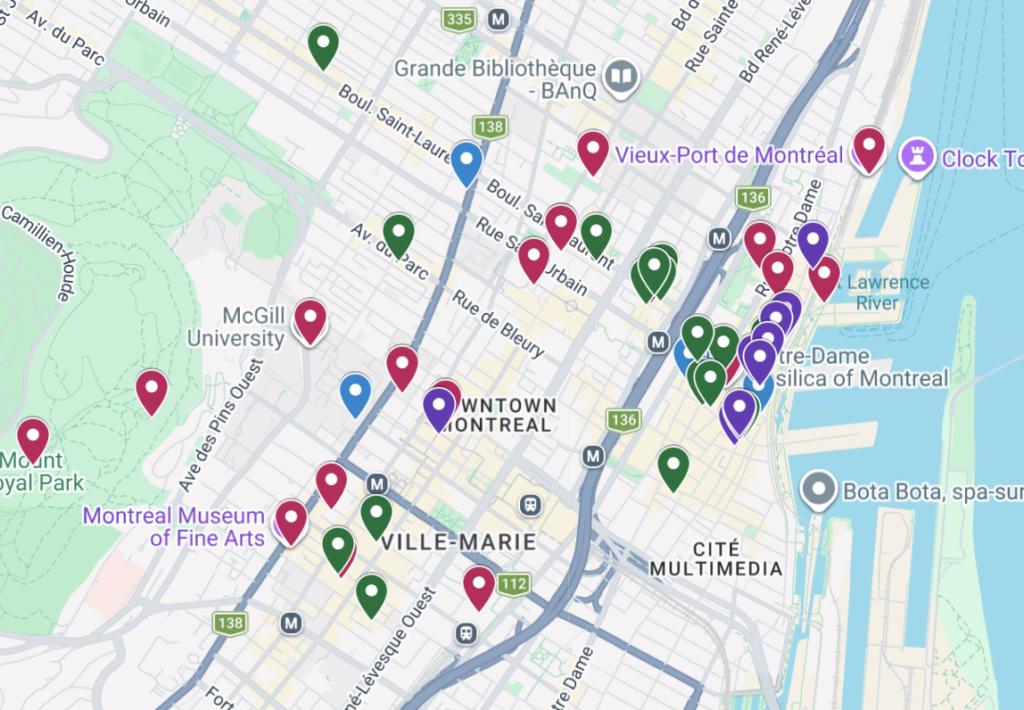
Map data © 2026 Google
Enter your email below to get the private, interactive Montreal Google Map saved directly to your Google Maps app for easy navigation!
How To Use This Interactive Map
To make exploring Montreal’s best streets as seamless as possible, you can save my custom interactive map directly into your Google Maps app for on-the-go navigation:
- Get the Private Link: Enter your email in the box above. Check your inbox for your confirmation email and click the button to unlock the interactive map.
- Save to Your Profile: Simply open the map link while logged into your Google account. Google will automatically attach the map to your Google Maps profile–no extra saving required!
- Access on the Go: Open the Google Maps app on your phone, tap the Saved (or “You”) tab at the bottom, scroll down to Maps, and select “Montreal Streets to Explore” to view all my pinned photo spots, historic stops, and recommended eateries while walking!
- Pro-Tip: Download the Montreal city area for offline use in your Google Maps app settings before heading out. That way, you will have turn-by-turn walking directions even without cellular data!
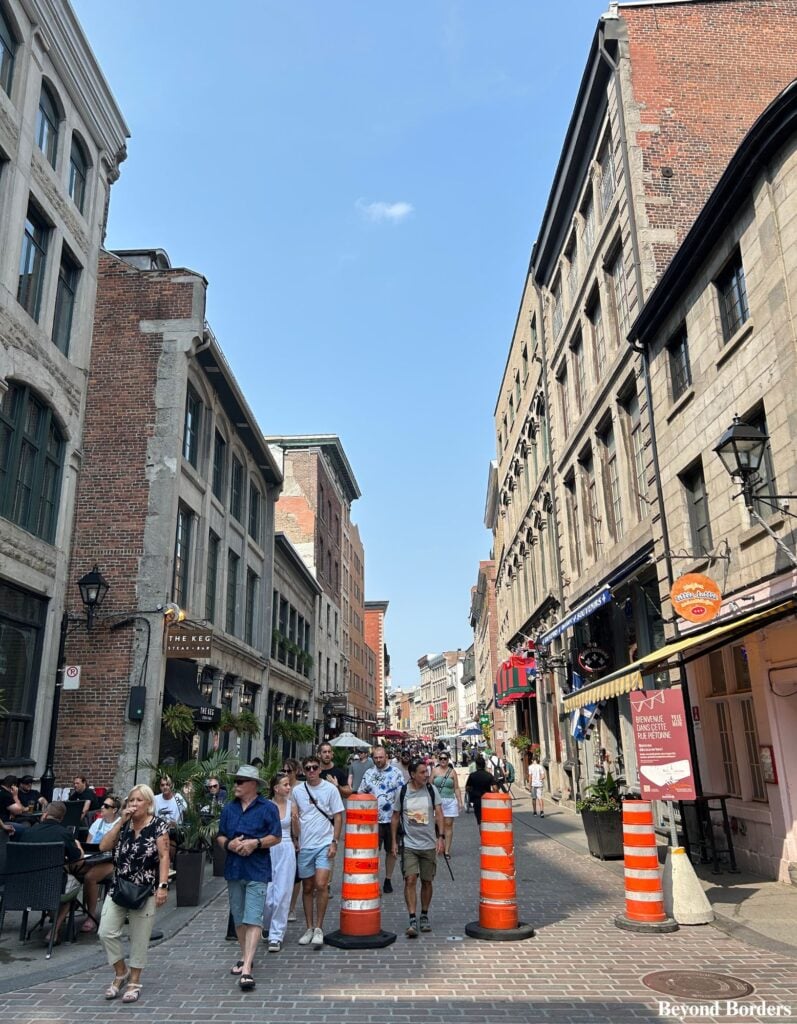
Rue St. Paul
Arguably the most famous street on this list, Rue St. Paul is one of Montreal’s oldest streets, founded in 1672 and named after Paul de Chomedey de Maisonneuve, the founder of Montreal. For several years, it was the city’s main thoroughfare. Rue Saint-Paul’s history is closely related to the development of the Port of Montreal, and it was a busy commercial center with warehouses and merchants.
What makes exploring Rue St. Paul so special is that it feels like walking through a European city, but in North America. The street is known for its picturesque atmosphere and is popular amongst both tourists and locals. It is filled with things to see and do, including shopping at boutiques, art galleries, and souvenir shops; choosing between an abundance of places to eat, including restaurants, cafes, and bars; and seeing notable landmarks such as Bonsecours Market.
The street is completely closed to traffic to accommodate the large number of people who walk through it every day. Due to the popularity of Rue St. Paul, it is included in several walking tours of Old Montreal, which I describe in my Montreal itinerary.

Rue Notre Dame
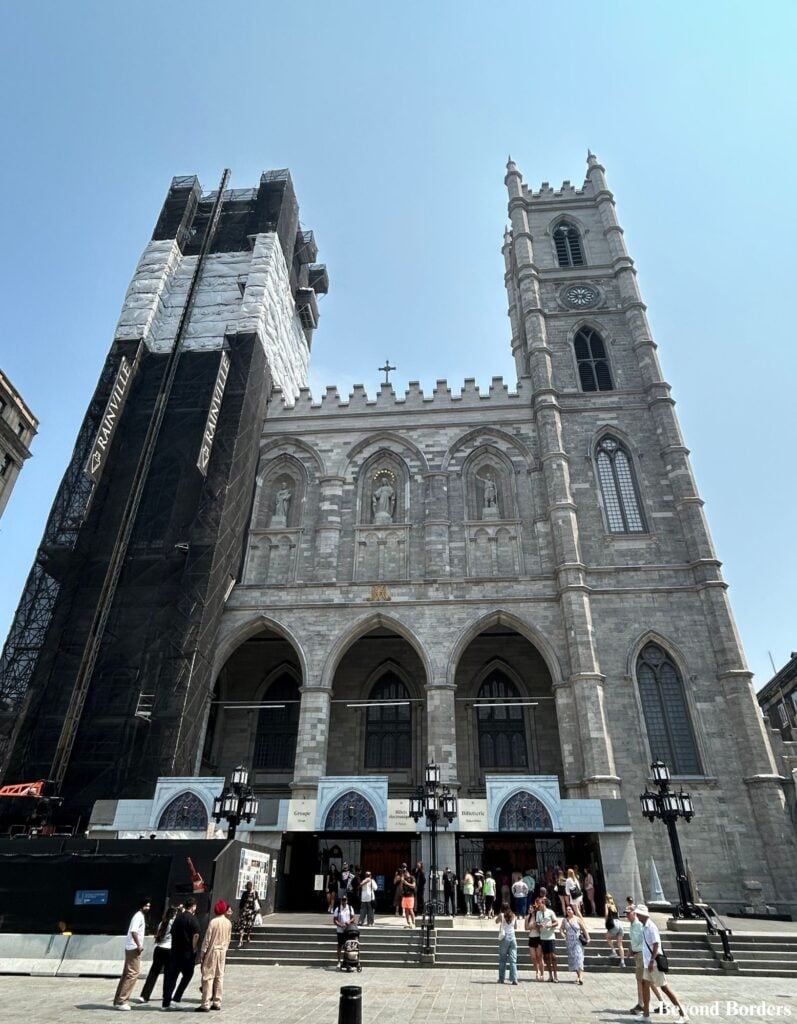
Rue Notre Dame is one of the most historically significant streets in the city and was founded in 1672, like Rue St. Paul. The street runs parallel to the Saint Lawrence River and has played a central role in Montreal’s development, becoming an essential street for government, commerce, and religion. While its entire span is not a tourist destination, the section within Old Montreal is a major hub of history, architecture, and culture.
Along Rue Notre-Dame in Old Montreal, you will see the Notre-Dame Basilica, the street’s most famous landmark. The basilica is a masterpiece of Gothic Revival architecture, known for its stunning and dramatic interior. The basilica is also a National Historic Site of Canada. You will also see Montreal City Hall (Hôtel de Ville de Montréal), a beautiful example of French Second Empire architecture, which has been the seat of the city’s government since the late 19th century.
Stroll down Rue Notre-Dame from the Notre-Dame Basilica, and you’ll be greeted by a vibrant scene of shops and restaurants, perfect for an afternoon of exploring!

Rue St. Jacques
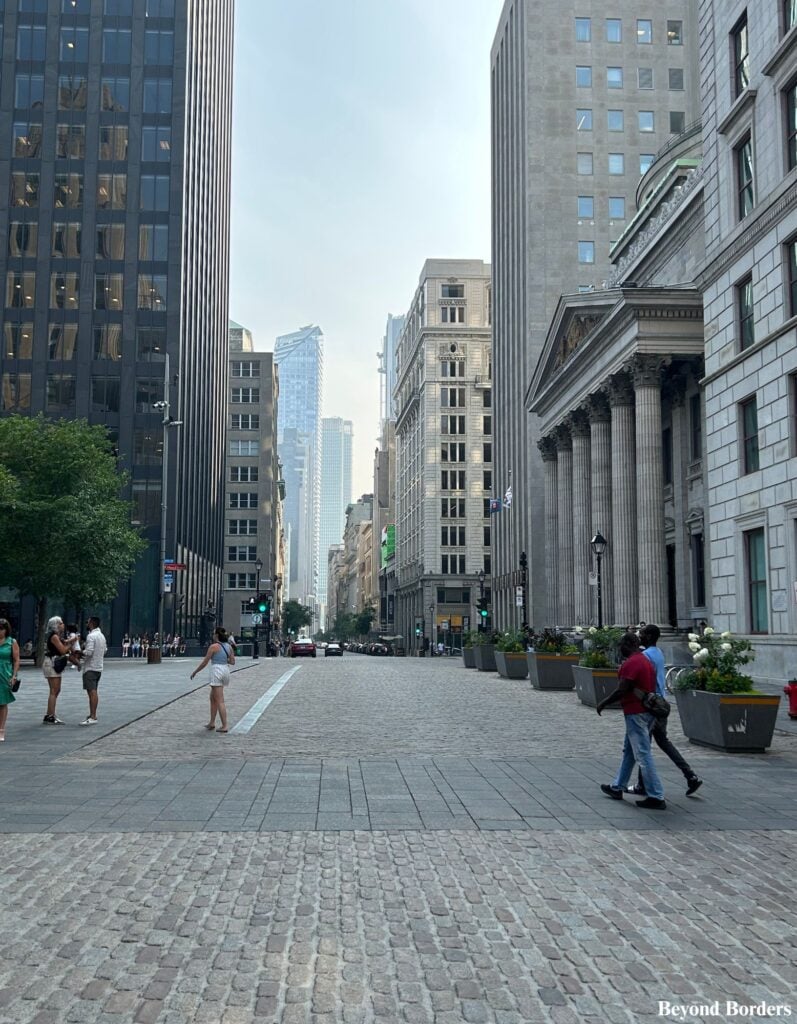
Rue St. Jacques (St. James Street in English) is a street in the city with a rich history as the city’s former financial center. While its early days date back to the founding of Montreal, its most significant period was in the 19th and early 20th centuries. For decades, Rue Saint-Jacques was the financial center of not just Montreal, but all of Canada. It was often referred to as Canada’s “Wall Street” because it was lined with the head offices of major Canadian banks, insurance companies, and brokerage firms. The imposing buildings along the street were a testament to the prosperity and influence of Montreal’s financial sector during that time.
As Toronto’s economic importance grew, the power of Montreal began to decline in the mid-20th century. Many of the major financial institutions eventually moved their head offices to Toronto, leading to a decline in the street’s status as a financial center. The key building you will see on Rue St. Jacques is the Bank of Montreal, right behind the Place d’Armes. As long as the doors are open, you are allowed to walk inside, no tickets needed. Another important building you will see at 360 Rue St. Jacques is the former Royal Bank of Canada headquarters. When it was completed in 1928, this building was the tallest in the British Empire.
Today, the area around Rue St. Jacques is known as the Quartier International, a modern business district. Even though Rue St. Jacques is not the financial center of Montreal today, the street (mainly in front of the Bank of Montreal) is still popular with locals, especially for couples who are getting married. On my walking tour of Old Montreal, my group saw three couples taking wedding photos in front of the bank; our tour guide told us that because the bank has a great deal of history and prestige, couples feel connected to the city’s past.
A walk down Rue Saint-Jacques is like walking down a historical time capsule of Canadian financial history, with magnificent architecture hinting at a period of immense wealth.

St. Laurent Boulevard
St. Laurent Boulevard is affectionately known as “The Main” and is one of Montreal’s most diverse streets. It’s a major north-south street that essentially divides the city into east and west, and it changes as it goes through different neighborhoods. It was declared a National Historic Site of Canada in 1996.
St. Laurent Boulevard’s fame comes from its historical role as a major thoroughfare and a home for successive waves of immigrant communities. For generations, it was a symbolic dividing line, with the predominantly English-speaking population to the west and the French-speaking population to the east. The street became a multicultural area of Montreal where these different communities, from Jewish and Italian to Portuguese and Greek, settled and built their lives.
When walking south to north, you’ll find: Old Montreal at the Saint Lawrence River; Chinatown, a small but busy area with traditional gates, restaurants, and shops; the Quartier des Spectacles, the city’s cultural center that is home to many theaters, concert halls, and festivals; the Plateau Mont-Royal, a neighborhood famous for its nightlife with bars, art galleries, and restaurants; and Little Portugal & Little Italy as you continue north, reflected in the bakeries, cafes, and shops. The part of St. Laurent Boulevard between Sherbrooke and Duluth streets is especially known for its abundance of bars, clubs, and late-night dining options.
What makes St. Laurent Boulevard so significant in Montreal is how you walk through a timeline of the city’s history, multicultural identity, vibrant arts scene, and energetic nightlife.
Saint-Laurent Boulevard: Where to Find Montreal’s Best New 2026 Eats
Known locally as “The Main,” Saint-Laurent Boulevard continues to be the definitive dividing line—and cultural bridge—of the city. In 2026, the food scene here has reached a new peak with highly anticipated openings that are already drawing massive crowds. If you want to taste the city’s current culinary obsession, head to Motto Handroll in the nearby Old Montreal transition zone for their crisp, made-to-order temaki, or check out Cococina for its vibrant blend of Iberian and Oriental flavors. These new spots perfectly complement the street’s legendary staples, like Schwartz’s Deli, ensuring that Saint-Laurent remains the best place in the city to see how Montreal’s history and its future taste.

Rue St. Catherine
Rue St. Catherine (also spelled Rue Sainte-Catherine) is a bustling, dynamic street that stretches for over 11 kilometers (7 miles) and serves as a hub for shopping, dining, entertainment, and culture. The atmosphere of Rue St. Catherine changes as you move along its length, from the bustling downtown core to the historic and cultural sections, reflecting the diversity of Montreal itself.
Rue St. Catherine Ouest (West) is a major hub for shopping. Here, you will find some of Montreal’s largest department stores and shopping centers, including Simons, The Bay, the Eaton Centre, and Complexe Desjardins. You’ll see a wide range of national and international brands, from high-end boutiques to popular chain stores. Rue St. Catherine Est (East), particularly between Saint-Hubert and Papineau streets, runs through Montreal’s vibrant Gay Village. During the summer, this part of the street is closed to vehicle traffic and becomes a lively pedestrian zone with patios, bars, and a festive atmosphere.
Montreal’s Rue St. Catherine is connected to the city’s famous Underground City, a network of tunnels known as the RÉSO (a homophone of the French word “réseau”, which means “network”). This allows people to shop, dine, and get around the downtown area comfortably, regardless of the weather. The RÉSO is vast, spanning over 33 kilometers (20 miles) and connecting over 1,700 stores, 200 restaurants, 40 banks, and even major attractions like the Bell Centre, home of the Montreal Canadiens, and Place des Arts, the city’s main performing arts center.
Rue St. Catherine is also easily accessible via the city’s metro system, with several stations running parallel to it. These include stations at Atwater, Place-des-Arts, Saint-Laurent, and Beaudry.
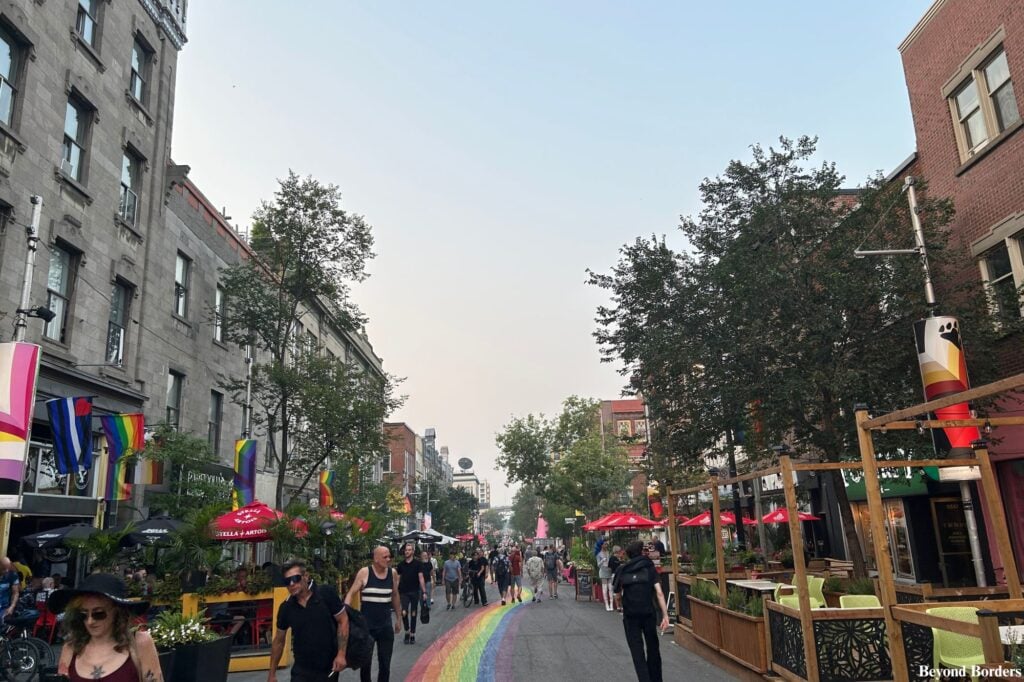
Rue Saint-Catherine: Celebrating the 50th Anniversary of the Olympics in 2026
As Montreal’s primary commercial street, Saint-Catherine Street is the heart of the city’s 50th Anniversary of the 1976 Olympics celebrations throughout 2026. While the street is always bustling, this year it serves as a gateway to various commemorative events and “Olympic legacy” tours that honor the summer games that put Montreal on the world map. However, if you are visiting in early 2026, keep in mind that the West End (specifically between Peel and Saint-Mathieu) is currently undergoing a massive “beautification” and infrastructure project. For the best experience, I recommend sticking to the East End, particularly through the Village, where the pedestrian-only zones are more consistent, and the construction noise is a world away.
Sherbrooke Street West: North America’s “Coolest Street” for 2026
If you want to walk the street that is currently defining Montreal’s global reputation, look no further than Sherbrooke Street West. In a massive win for the city, this historic artery was recently ranked the #5 coolest street in the entire world by Time Out, beating out iconic strips in New York, Berlin, and Brisbane. While locals have long loved Sherbrooke for its “quiet luxury” and grand architecture, 2026 has brought a new wave of cultural immersion that makes it the city’s most dynamic corridor.
What to See
Start in the Golden Square Mile, the historic heart of the street. Here, the McCord Stewart Museum is a 2026 essential–it is currently hosting a major exhibition celebrating the 50th Anniversary of the 1976 Montreal Olympics (running March through September). After soaking up the history, walk a few blocks to the corner of Crescent Street to look up at the massive, 22-story Leonard Cohen mural. It remains the ultimate tribute to Montreal’s poetic soul and is the best photo op in the downtown core.
The 2026 Vibe
This year, Sherbrooke feels like a blend of high-end sophistication and academic energy. With its proximity to McGill and Concordia universities, you’ll find students tucked into hidden courtyard cafés alongside luxury shoppers heading into the Ritz-Carlton. It’s the perfect place to experience Montreal’s “old world” charm while being steps away from the most modern art galleries and boutiques in North America.
FAQs: Famous Streets in Montreal
Conclusions
Each of these five streets has its distinct appeal: the European feel of Rue St. Paul, Rue Notre Dame’s access to Old Montreal, Rue St. Jacques’ historic role as a financial center, the different cultures that make up Saint Laurent Boulevard, and the vibrant shopping scene on Rue St. Catherine. Together, these streets tell the story of Montreal’s rich culture, showcasing the diverse history and unique character found in every corner of the city. As Canada’s second-largest city and the ninth-largest in North America, each of these five streets in Montreal offers a perfect snapshot of the city’s character through each street’s art, food, and history.
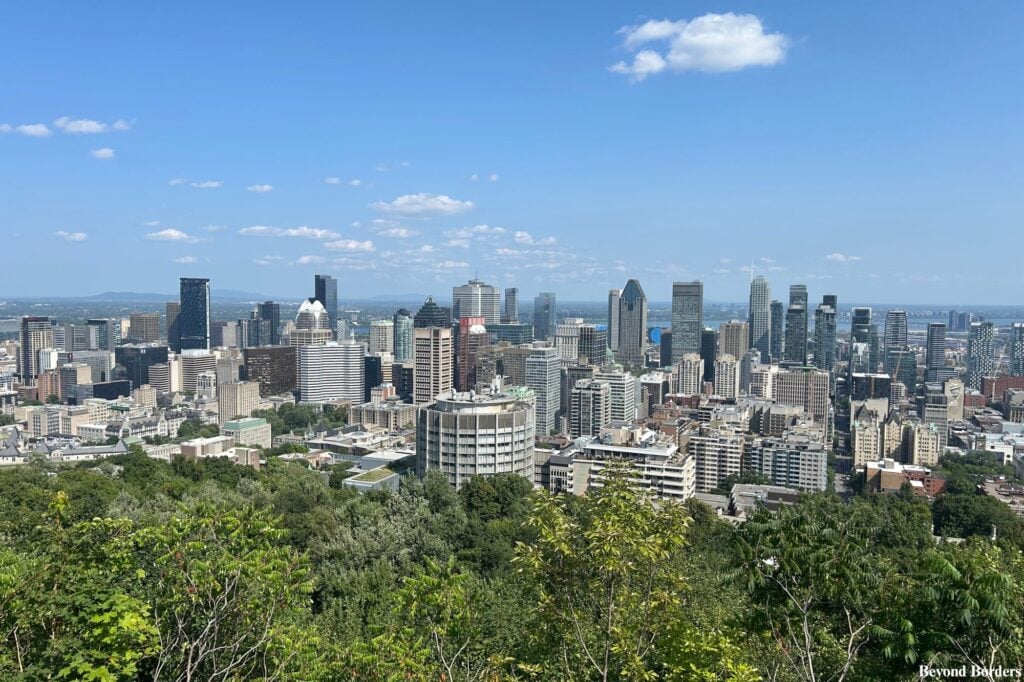
please map
Hi Rebecca! The interactive map is available as a free perk for my email community. You can unlock it instantly by clicking the blue “Subscribe” button right on the map box and entering in your email. You’re always welcome to unsubscribe at any time!