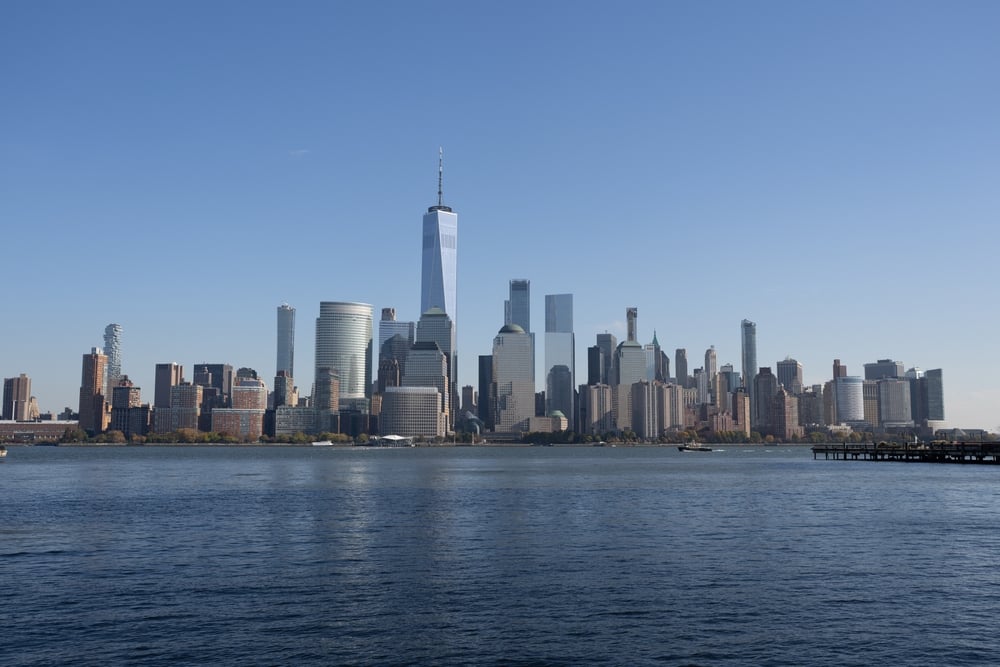
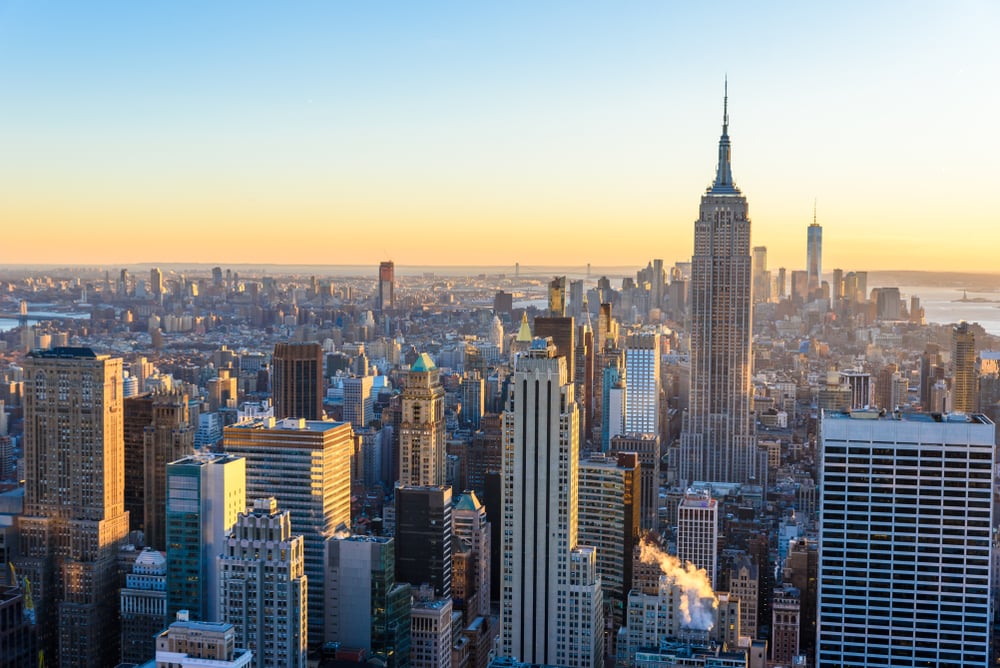
How to navigate your way through the best NYC museums!
Introduction
New York City has over 100 museums, but most visitors make the same mistake: they try to see everything and hit “museum fatigue” by hour three. This 2026 guide provides a strategy for navigating the “Big 5” icons–The Met, MoMA, AMNH, the Whitney, and the Guggenheim. Whether you are booking the mandatory 2026 timed-entry for the Raphael blockbuster exhibit at the Met or navigating the Whitney Biennial, this post gives you the exact step sequence to beat the crowds, skip the lines, and save your energy. I break down why these museums made the list, the “can’t-miss” masterpiece in each building, and the insider tips you need to beat the 2026 crowds.
In this guide, you will learn:
The Entry Hack: How to skip the 81st St. line at the Natural History Museum.
The Route: Why you should always start at the top floor of the Guggenheim and MoMA.
The Budget Strategy: How to use “Pay What You Wish” hours to see the icons for under $10.
The 2026 NYC Museum Quick-Start Guide: A 4-Step Master Checklist
To navigate the “Big 5” without the 2026 crowds or technical hiccups, follow this sequence:
Step 1: The “3-Week Window” (Booking Phase)
- The Met (Raphael: Sublime Poetry): This is the “blockbuster” of 2026, expected to be the most visited art exhibit this year. Timed-entry tickets are mandatory and sell out fast.
- What to Do: Check the Met’s official site exactly 21 days before your visit. Aim for the 10:15am slot to see the Alba Madonna before the school groups arrive.
- The Whitney Biennial: Starts March 2026.
- What to Do: Book your Friday evening slot (Pay-What-You-Wish) at least two weeks in advance. These are the most sought-after tickets in the city right now.
Step 2: The “Arrival Hack” (Entry Phase)
- AMNH (Natural History): Never enter via the Central Park West steps (the “Movie Entrance”)—the line is a 45-minute trap.
- What to Do: Walk around to the Gilder Center entrance on Columbus Ave. It’s faster, architecturally stunning, and drops you right at the Invisible Worlds immersive experience.
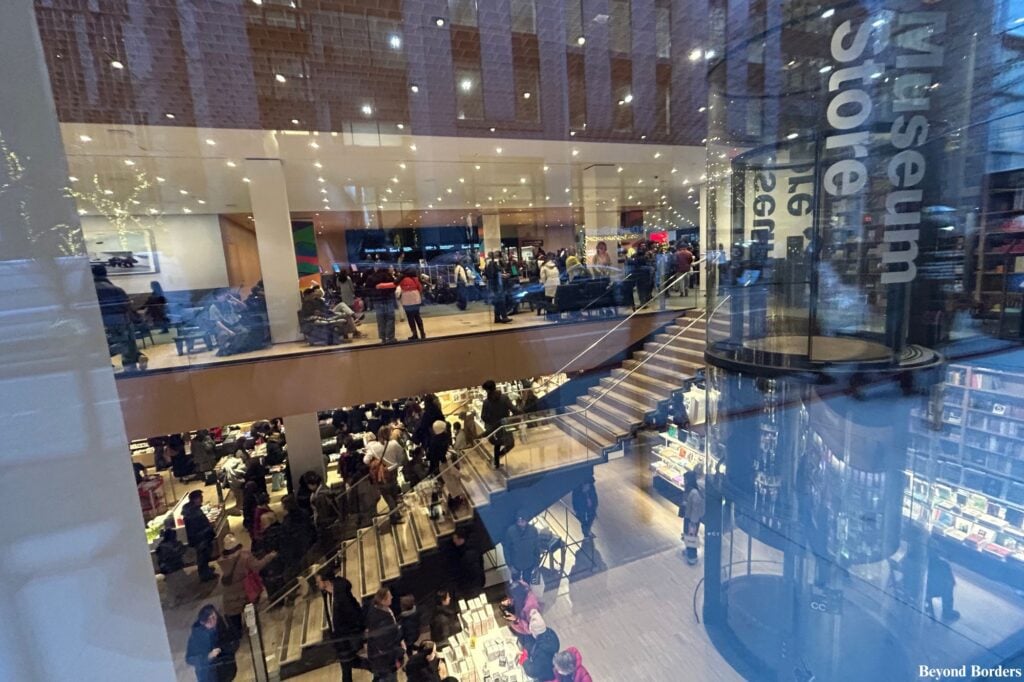
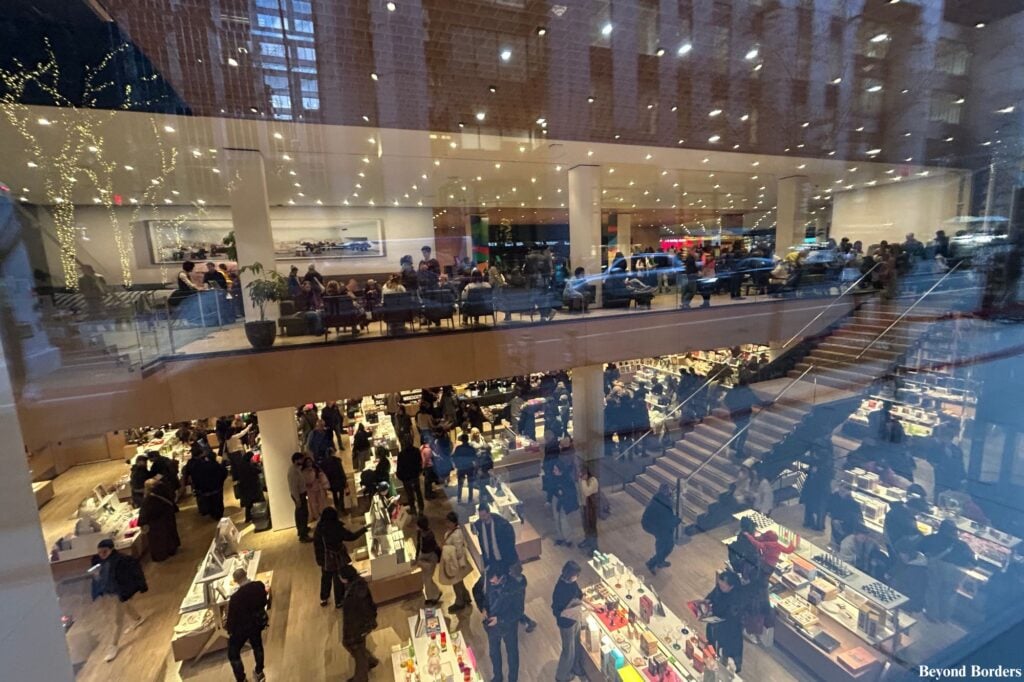
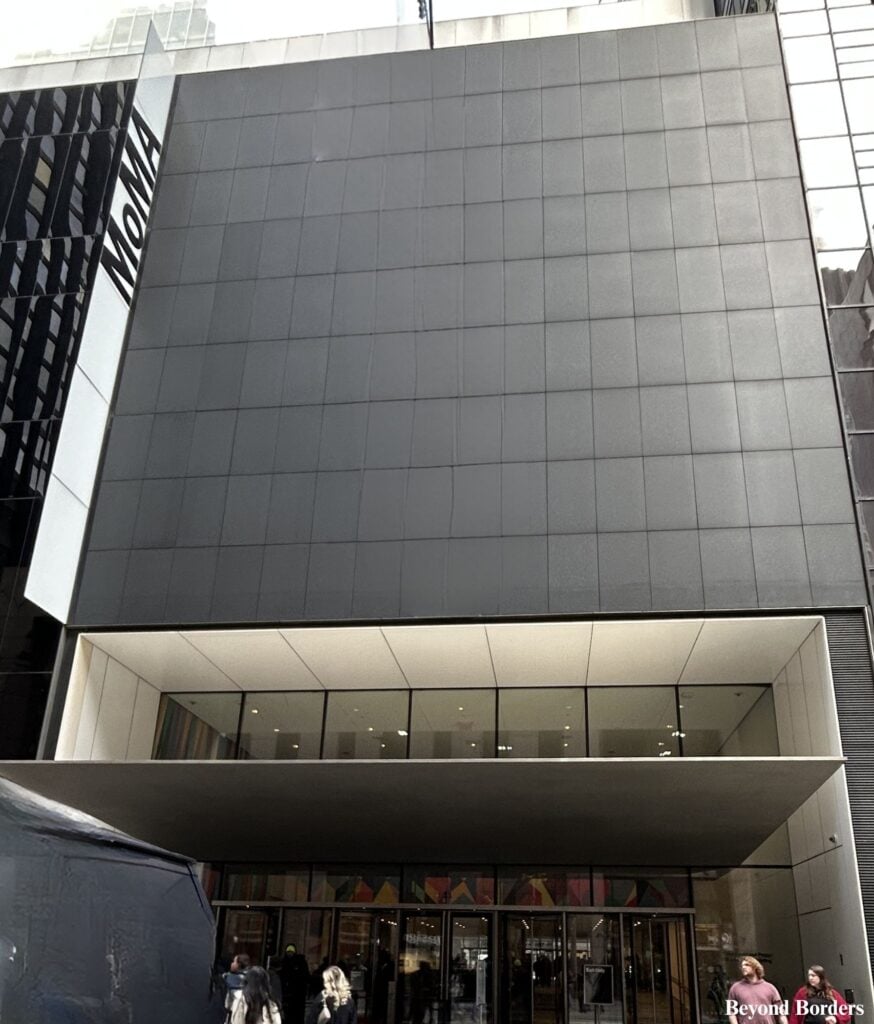
- MoMA: The 53rd St. flagship store often distracts visitors (photos of the store are below).
- What to Do: Keep walking to 11 West 53rd St. Have your digital ticket open on your phone before you reach the black awning to breeze through the first security check.
Step 3: The “Locker Strategy” (Bag Phase)
- The “No-Go” List: Do not bring any bag larger than a standard daypack. The Guggenheim and The Met are strictly enforcing a “No Backpacks on Backs” rule for 2026 to protect the art.
- What to Do: If you have a bag, head to the coat check immediately upon entry. At The Met, use the Uris Center for Education coat check (lower level)–it’s usually less crowded than the Great Hall.
Step 4: The “Sensory Reset” (Survival Phase)
- Avoid the “Hour 3” Slump: Every major museum has a “Reset Zone.”
- The Met: Go to the Petrie European Sculpture Court. The natural light and fountain sounds are a proven cure for “museum fog.”
- The Whitney: Step out onto the Floor 6 Terrace. The Hudson River breeze is the best way to clear your head between contemporary galleries.
The “Big 5” Best NYC Museums At A Glance (2026)
| Museum | Key 2026 Highlight | Best Time to Visit |
| The Met | Raphael: Sublime Poetry (March–June 2026) | Weekday mornings at 10:00am |
| MoMA | Marcel Duchamp Retrospective (Apr–Aug 2026) | Friday evenings between 5:30-8:30pm (free for NY State residents) |
| AMNH | Invisible Worlds Immersive Experience (add’l ticket required) | After 2:00pm on school days |
| Guggenheim | Guggenheim Pop (Jun 2026–Jan 2027, Warhol & more) | Sunday and Tuesday “Pay What You Wish” |
| The Whitney | The 2026 Whitney Biennial (Starts in March 2026) | Sunset for the outdoor terraces |
The Metropolitan Museum of Art (The Met)
The Vibe: A walk through 5,000 years of human history. It’s the largest museum in the USA–so big it actually has its own zip code (10028)! Walking through The Met feels like traveling across continents and eras without ever leaving Fifth Avenue.
The “Double-Wing” Strategy to the Met
- Step 1: Enter and turn right immediately toward Ancient Egypt. Walk straight back to the Temple of Dendur while the room is still quiet and the morning light hits the glass.
- The Temple of Dendur. Stand in the Sackler Wing and watch how the light from the massive glass wall hits the 2,000-year-old sandstone. It feels like a temple in a glass box.
- Step 2: The Renaissance Blockbuster (March–June 2026)
- The Must-See: Head to the special exhibition galleries for Raphael: Sublime Poetry. The star is the Alba Madonna (on loan from D.C.). It’s a masterclass in Renaissance composition–everything in the painting points toward the center.
- Step 3: Cross the museum (first floor) to the American Wing. Grab a seat in the Charles Engelhard Court–it’s a massive, sun-drenched courtyard that is significantly quieter than the Great Hall.
- Also, make sure to see Washington Crossing the Delaware in Gallery 760 of the American Wing. It’s even more impressive in person and serves as the anchor for the museum’s collection of early American history.
- Step 4: If you visit between May and October, take the elevator in the European Sculpture and Decorative Arts galleries up to the Iris and B. Gerald Cantor Roof Garden for a final view of Central Park before leaving.
Pro-Tip:
Remember: Don’t try to see everything in one day. You could walk 10 miles and still not see every gallery. Focus your energy, grab a coffee at the American Wing Cafe, and remember: your ticket is good for the whole day, so you can step out into Central Park for a breather and come back later.
Booking Tickets
To purchase tickets to The Met, visit the official website. Tickets are $30 per adult.
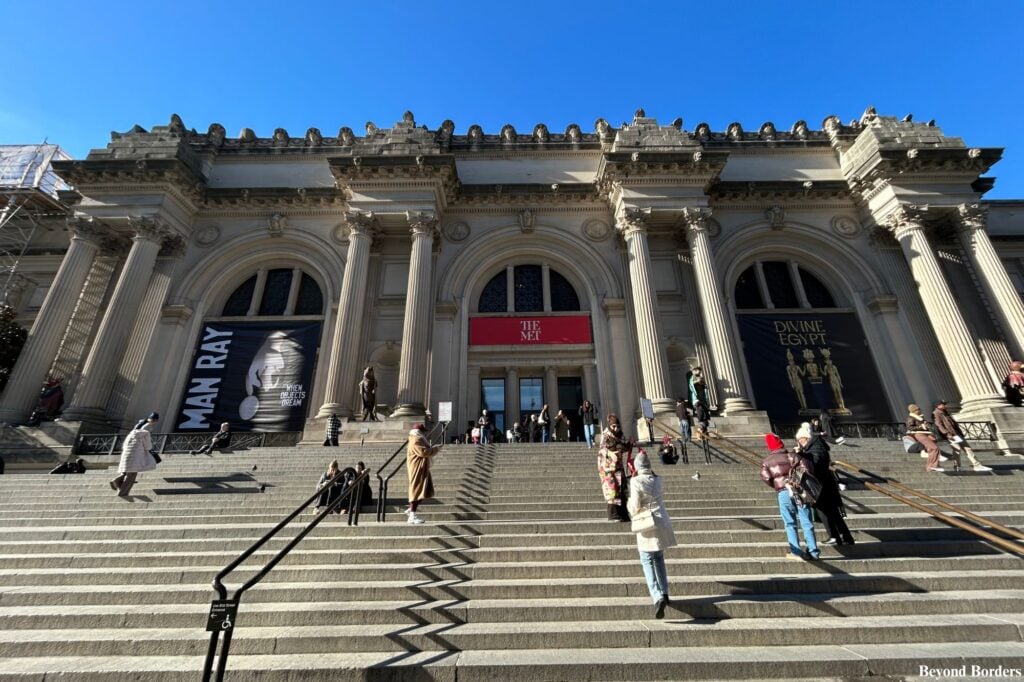
Museum of Modern Art (MoMA)
The Vibe: Sleek, revolutionary, and the home of every “famous” painting you’ve ever seen in a textbook. MoMA is where the quiet history of The Met meets the loud, pulsing energy of 53rd Street.
The “Top-Down” Sprint for MoMA
- Step 1: Head directly to the 5th Floor via the elevator right after you scan your ticket to enter. This is where the “heavy hitters” (Starry Night, The Persistence of Memory) live. You want to see these before the midday school groups arrive.
- The Masterpieces: You’re here for Van Gogh’s The Starry Night and Picasso’s Les Demoiselles d’Avignon. Don’t just look at the paintings; look at the texture of the paint–it’s much more “3D” than it appears in photos.
- Step 2: Spiral downward through the 4th and 2nd floors. The 4th floor houses the mid-century masters, while the 2nd floor features contemporary installations that are often less crowded.
- The Highlights: Look for Andy Warhol’s Campbell’s Soup Cans on the 4th floor. Most people don’t realize there are actually 32 individual canvases, one for each flavor sold at the time.
- Step 3: Exit through the Abby Aldrich Rockefeller Sculpture Garden. It serves as a literal and figurative “palette cleanser” before you head back out into the Midtown chaos.
- It’s home to Picasso’s She-Goat and a rotating selection of contemporary works.
Pro-Tips:
- Don’t Get “Store-Stuck”! When you arrive on West 53rd Street, you’ll likely see the MoMA Museum Store first, as I mentioned above. It’s gorgeous and filled with “I-need-that” souvenirs, but it is not the entrance.
- The actual museum entrance is at 11 West 53rd Street, just across the street from the flagship store. Look for the sleek black awning and the crowds of people—the entrance is much more understated than you’d expect for such a massive institution!
- If the line to enter the museum looks long when you get there, duck into the MoMA Design Store across the street first. It’s a great way to kill time, and honestly, the store is a curated gallery in its own right. Once the initial “opening rush” at the museum entrance dies down around 11:15am, head across the street to scan your ticket!
Booking Tickets
To purchase tickets to MoMA, visit the official website. Tickets cost $30 per adult.
American Museum of Natural History (AMNH)
The Vibe: Pure wonder for all ages. You probably recognize the facade as the Night at the Museum location, but it is even more impressive in person. It’s a massive labyrinth of history where every corner leads to a different corner of the universe.
The “Gilder Secret” to AMNH
- Step 1: Enter through the Gilder Center on Columbus Avenue (not the main steps). This puts you immediately in the newest, most “Instagrammable” part of the museum without the 81st Street line.
- The View: The building itself is the collection here. The “canyon-like” walls are made of shotcrete and intended to look like a slot canyon in the Southwest. It’s the most Instagrammable spot in the building.
- Step 2: Use the Gilder Center’s central staircase to reach the 4th Floor Dinosaur Halls. By starting at the top, you avoid the bottleneck of families that usually start on the 1st floor.
- The Highlights: Head straight to the Titanosaur. It’s so long (122 feet) that its head actually pokes out of the gallery doors to greet you. Nearby, the T-Rex is a must, but look for the “fluffy” juvenile T-Rex model to see how science has changed our view of dinosaurs.
- Step 3: Make your final stop at the Milstein Hall of Ocean Life. It’s dimly lit and cool–the perfect place to rest your eyes and legs for 10 minutes before heading back outside into the city.
- The Highlight: The 94-foot Blue Whale in the Hall of Ocean Life. Walk to the very back of the under-gallery. It’s the darkest and quietest part of the room, perfect for resting your feet while staring up at the belly of the largest animal to ever live.
Personal Favorite: The Hall of Gems and Minerals
While everyone rushes to the dinosaurs, I believe the Mignone Halls of Gems and Minerals is where the real magic happens. It’s a stunning, dimly lit space that feels like a high-end jewelry box the size of a football field.
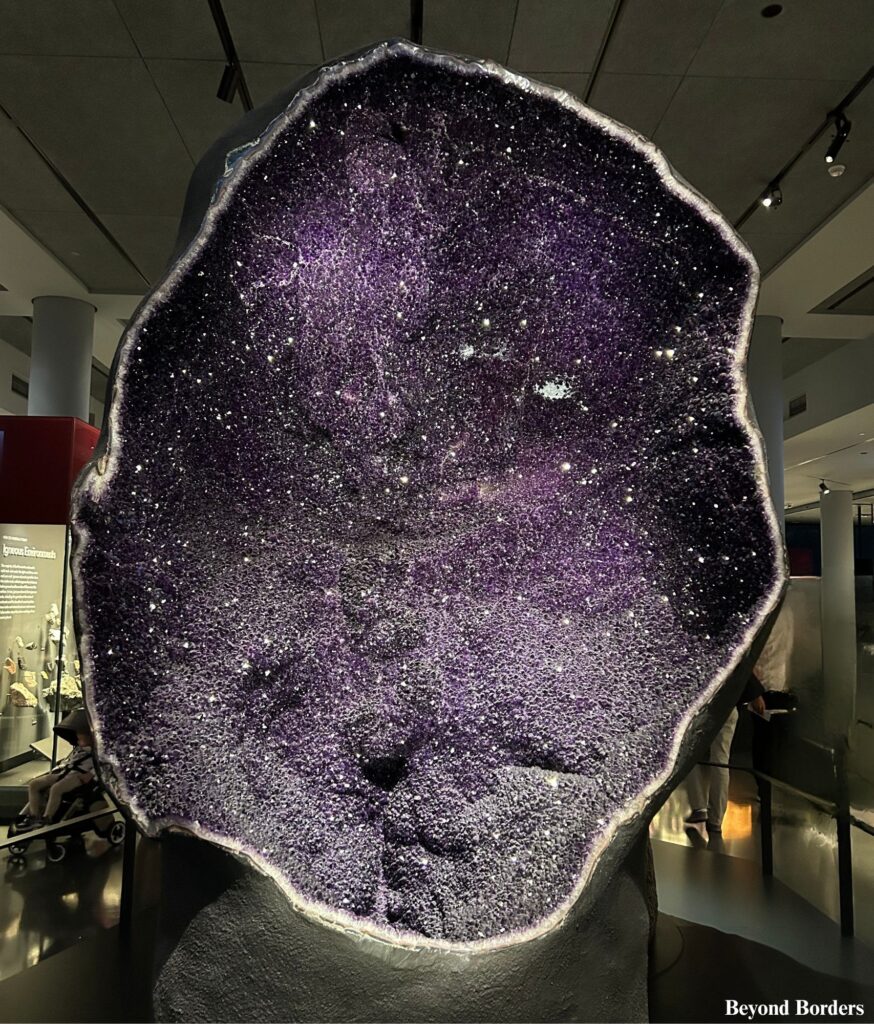
- The “Must-See”: Look for the two giant Amethyst Geodes that stand over 12 feet tall. They look like something from an alien planet.
- The Star of India: Don’t miss the world’s largest and most famous star sapphire. It’s 563 carats and has a fascinating history (it was actually stolen in a famous heist back in the 60s!).
- Why it’s a 2026 favorite: The hall features “The Sparkling Red” temporary case right now, showcasing a rare collection of rubies and garnet crystals that are mesmerizing under the gallery spotlights.
Pro-Tips:
- The AMNH is huge, so don’t try to “speedrun” it. Like with MoMA, work your way from the top floor with the dinosaurs and work your way down.
- If you want to see the Butterfly Vivarium or the Space Show, make sure to book those specific time slots online before you arrive–they almost always sell out by midday in 2026.
Booking Tickets
To purchase tickets, visit the museum’s official website. Tickets cost $37 per adult.

Whitney Museum of American Art
The Vibe: Modern, edgy, and deeply rooted in the Meatpacking District. If The Met is the “grand dame” of the city, the Whitney is the creative rebel. It feels significantly less “stuffy” than the uptown museums, with floor-to-ceiling windows that keep you connected to the city streets below.
The “High Line Sandwich” for The Whitney
- Step 1: Start your morning with a walk on the High Line (starting at 23rd St), ending at the Whitney’s Gansevoort Street entrance.
- Step 2: Take the elevator to the 8th Floor (the top) and visit the Studio Cafe for a quick view. Then, walk down the exterior staircases between floors. This allows you to see the art inside and the “living art” of the skyline outside simultaneously.
- The Highlights: Since the 2026 Biennial is all about “shifting currents,” look for the monumental sculptures and sound-based installations that define this year’s show. Don’t skip the Edward Hopper collection on the permanent floors—seeing his sketches of NYC streets while looking out at the actual NYC streets is unique. Also, don’t miss the Georgia O’Keeffe gallery for a dose of iconic American modernism.
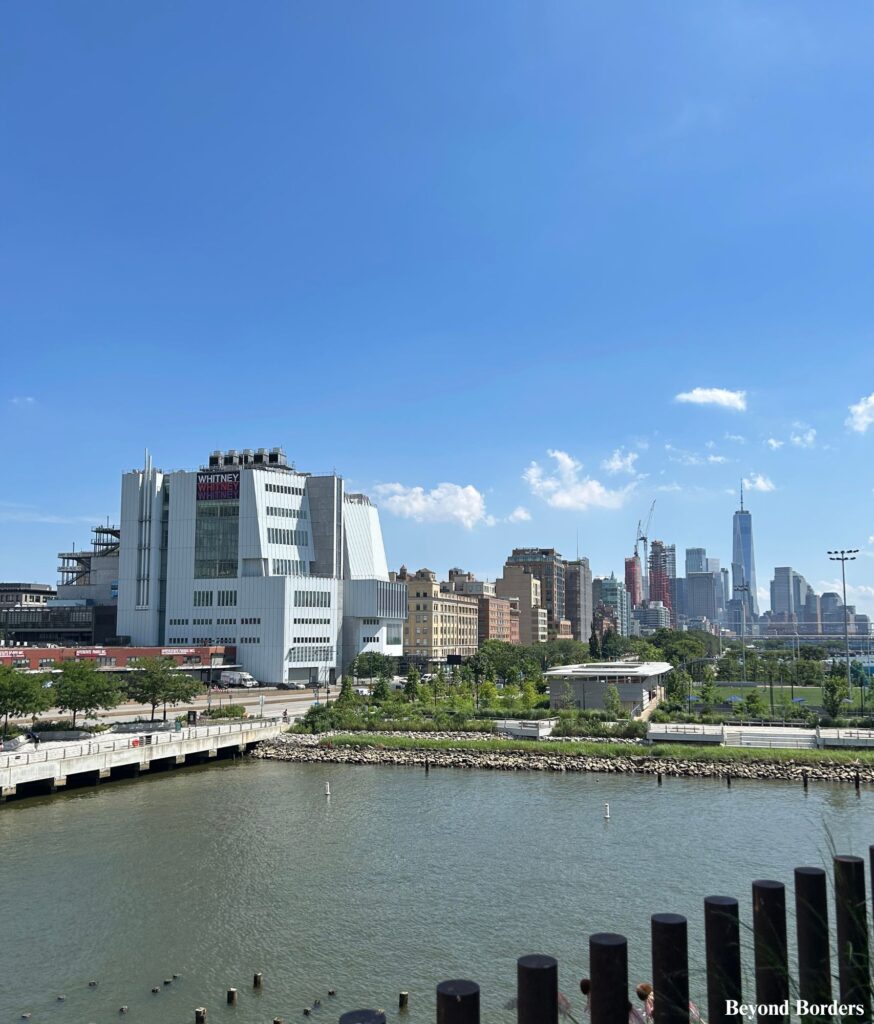
- Step 3: Time your exit for Golden Hour at any floor (each floor has a terrace). The museum’s west-facing windows and terraces offer the best sunset views of the High Line, the Hudson River, and the downtown Manhattan skyline.
- The Highlight: Look for the multi-colored chairs on the upper decks–they are perfect for a “city-meets-art” photo op with One World Trade Center in the background.
Pro-Tip:
On Friday nights, the Whitney often has “Pay-What-You-Wish” hours—it’s a great way to save money, but be prepared for a very “trendy” crowd! To read more about the High Line and how to access it, read my post on the best parks in Manhattan.

Booking Tickets
To purchase tickets, visit the official website. Tickets cost $30 per adult.
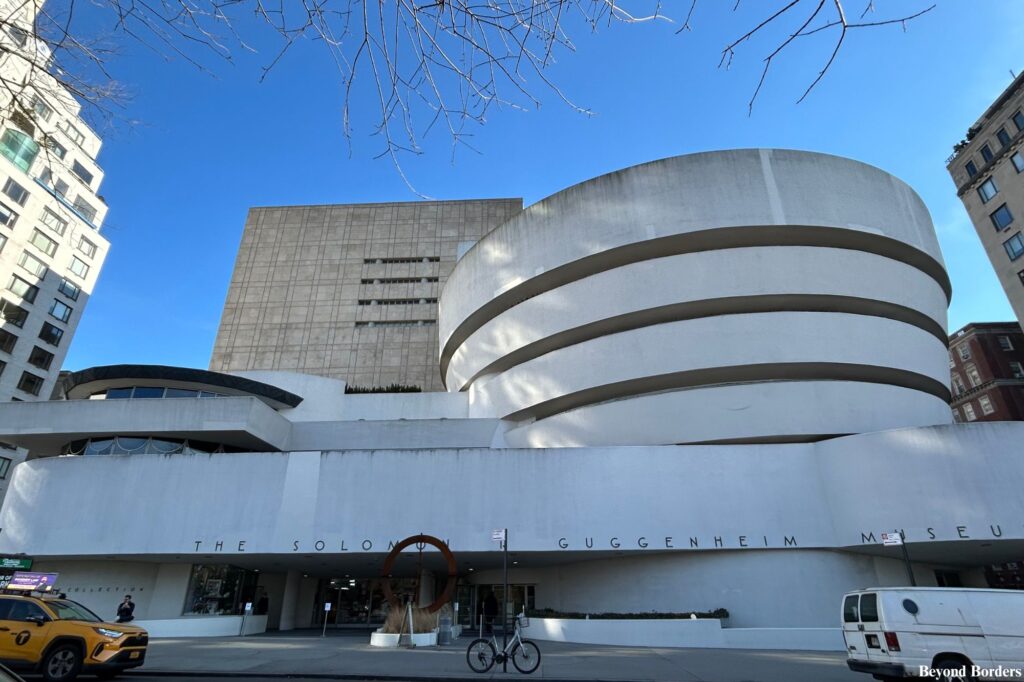
Solomon R. Guggenheim Museum
The Vibe: The building is the art. Frank Lloyd Wright’s masterpiece is a “temple of spirit” on the edge of Central Park. Even if modern art isn’t usually your thing, it is worth visiting just to experience the architecture—there isn’t a single right angle in the entire gallery space!
The “Anti-Gravity” Route for The Guggenheim
- Step 1: The Oculus Alignment. Before you even look at a painting, walk to the dead center of the lobby floor.
- The Action: Look straight up. The massive glass skylight (the Oculus) is one of the most iconic architectural views in the world. This is your “orientation” moment–notice how the light hits the white concrete curves of the rotunda.
- Step 2: The “Top-Down” Shortcut. Ignore the urge to start walking up the ramp with the crowd.
- The Strategy: Head directly to the elevator and ride it all the way to the 6th Floor. Because the Guggenheim is the only museum where the floor is a continuous Spiral Ramp, it is much easier on the legs to wind your way downward.
- The Highlight: Walking down gives you the best perspective of the rotunda below and ensures you are viewing the art at the downward angle Frank Lloyd Wright intended.
- Step 3: The 2026 “Guggenheim Pop” Finale (June 2026–January 2027).
- The Must-See: As you descend, you’ll reach the High Gallery. For 2026, this space is dedicated to Guggenheim Pop, featuring massive Warhols and Lichtensteins.
The Exit: End your spiral back in the lobby. Take one last look at the Oculus from the ground floor to see how the shadows have shifted since you arrived.
- The Must-See: As you descend, you’ll reach the High Gallery. For 2026, this space is dedicated to Guggenheim Pop, featuring massive Warhols and Lichtensteins.
- Step 4: End your visit at Cafe 3 (halfway down) or the gift shop on the ground floor. Looking back up at the rotunda from the bottom is the final “must-do” photo opportunity!
Pro-Tip:
- “Pay What You Wish” Admission– The Guggenheim can be pricey, but every Tuesday and Sunday between 4pm-5:30pm, you can “Pay What You Wish.” If you’re on a budget, this is the time to go! Read more about Pay What You Wish in my Troubleshooting Guide table below.
Booking Tickets
To purchase tickets, visit the official website. Tickets cost $30 per adult; tickets are discounted to $16 per adult when large portions of the museum are closed for the installation of new exhibitions.
How to Avoid “Museum Fatigue”: A Survival Guide
Step 1: The “Two-Wing” Maximum
The biggest mistake visitors make at The Met or the Natural History Museum is trying to see everything. You will fail, and your feet will pay the price. Instead, pick two specific areas (e.g., “Ancient Egypt” and “The Roof Garden”) and commit to those. If you happen to walk past something else cool on your way out, consider it a bonus.
Step 2: Master the “Art Nap” (and Rest Breaks)
Museums are mentally exhausting. Use the “vibe” of the museum to recharge:
- The Met: Head to the Petrie European Sculpture Court. It’s filled with light, has plenty of benches, and the sound of the fountain is incredibly soothing.
- MoMA: The Sculpture Garden is your best friend. Even in the winter, the crisp air and open space provide a necessary “reset” for your brain.
- AMNH: Consider wearing noise-canceling headphones for the Gilder Center, as the acoustics can be intense.
- The Whitney: Step out onto the multi-level terraces. The wind off the Hudson River is the perfect cure for that “indoor museum fog.”
- Guggenheim: Café 3 offers glimpses of Central Park across Fifth Avenue, allowing you to view nature instead of artwork for a nice break.
Step 3: Dress for the “Met Marathon”
This is not the time for fashion over function. The floors in these buildings are often marble or hard stone, which are unforgiving on your joints.
- Shoe Choice: Wear your most supportive sneakers. If you feel underdressed, remember that even the chicest New Yorkers pair their blazers with high-end trainers when they’re hitting the galleries.
- Layers are Key: The climate control in these buildings is unpredictable. You might be shivering in the MoMA galleries but sweating in the crowded Gilder Center at AMNH. Bring a light layer you can easily tie around your waist or stuff into a locker.
Step 4: Fuel Up
Museum cafes are notoriously expensive and often crowded. To keep your energy up without the $20 sandwich price tag:
- Eat a “Power Breakfast”: Start your day with protein and slow-burning carbs.
- The Hydration Hack: You can’t bring open drinks into the galleries, but you can bring a reusable water bottle. Keep it in your bag and hit the refill stations (usually located near the restrooms) to stay hydrated between floors.
Steps to Visiting The Met and The Guggenheim in One Day Without Exhausting Yourself
Since both of these museums are both on Fifth Avenue,
- Step 1: Start at The Met (82nd St) at 10:00am.
- Step 2: Exit via the 81st St door and walk North through Central Park (The “Greywacke Knoll” path) to stay in the shade.
- Step 3: Arrive at the Guggenheim (88th St) for a late-lunch visit when the morning rush has cleared.
Pro Tip: Use the 20-minute walk between them to grab food from a street vendor or sit on a park bench to give your eyes a “visual palate cleanser.”
The “Perfect Pairings”: Two-Museum Days
If you are an “Art Marathoner” and want to see more than one museum in a day, these pairings are the only ones that make logistical sense. They are close enough to walk (or take a quick bus), allowing you to spend your energy on the art, not the commute.
The “West Side Wonder”: AMNH + The New-York Historical Society
- The Schedule: Hit the American Museum of Natural History (79th St) in the morning, then walk literally right next door to the New-York Historical Society.
- The Vibe: This is the “Explorer’s Day.” You move from the history of the natural world and the stars to the specific, fascinating history of New York City itself.
- Why it works: Because they are neighbors, you don’t lose any time traveling. If the AMNH gets too crowded (which it likely will!), the New-York Historical Society offers a much quieter, contemplative atmosphere to end your day.
The “Downtown Edge”: The Whitney + Morgan Library and Museum
- The Schedule: Spend your morning at The Morgan Library and Museum, and then head over to the Whitney in the Meatpacking District.
- The Vibe: This is for the soul-searchers. You get the bold, contemporary American perspective at the Whitney, followed by the stunning and quiet library of JP Morgan.
- Lunch Break: This pairing is perfect because you are right next to Chelsea Market, where you can grab a world-class lunch between stops. Afterwards, walk the High Line for a bit.
Important Warning:
Never try to pair MoMA with The Met. They are on opposite sides of Central Park, and both are “Full Day” museums. Trying to do both in eight hours is the fastest way to ruin your New York trip!
Getting Around: The “Crosstown” Strategy
The biggest mistake visitors make is assuming the subway is the best way to get from one museum to another. While the subway is straightforward for going North/South (Uptown/Downtown), it can be a headache for going East/West.
The “Crosstown” Bus (Your Secret Weapon)
If you are moving from the American Museum of Natural History (West Side) to The Met (East Side), do not take the subway. You would have to go down to 59th Street and back up, taking 40 minutes.
- The Move: Take the M79-SBS or M86-SBS bus. These buses go directly through Central Park via the “transverse” roads.
- Pro Tip: Look for the “SBS” (Select Bus Service) signs. You must pay at the kiosk on the sidewalk before you board, or simply tap your phone/OVAL card at the back door. It takes about 8–12 minutes to get across the park.
The Subway “Lungs” (North/South)
- For MoMA: Take the E, M, or 6 train to 5th Ave/53rd St. It’s a very easy walk from there.
- For The Whitney: Take the A, C, E, or L to 14th St/8th Ave. This drops you right at the edge of the Meatpacking District, just a short walk from the museum entrance.
- For the Museum Mile (Met/Guggenheim): Take the 4, 5, or 6 train to 86th St. Be prepared: it’s about a 10-minute walk from the subway station to the museum entrances on 5th Avenue.
Walking the “Green Path”
If the weather is nice, the best way to get between the West Side (AMNH) and the East Side (The Met) is to walk through Central Park.
- The Route: Enter the park at 79th Street (behind the AMNH) and follow the paths toward the Belvedere Castle. You’ll emerge right behind The Met.
- Time: It’s a stunning 15-minute walk that serves as the perfect “mental reset” between two high-energy museums.
Museum Bag Policy: What to Pack (and What to Leave at Home)
Security at NYC museums has tightened significantly in 2026. Save yourself the headache by knowing the “Locker Logic” before you arrive.
The Met
Backpacks Allowed? No (Must check)
Large Suitcases? Strictly No
Water Bottles? Yes (Plastic only)
Pro-Tips: Small purses are fine, but “backpack-style” purses usually must be checked.
MoMA
Backpacks Allowed? No (Must check)
Large Suitcases? No
Water Bottles? No (In galleries)
Pro-Tips: They have a very efficient (and free) coat check, but the line gets long after 1:00pm.
AMNH
Backpacks Allowed? Yes (Small only)
Large Suitcases? No
Water Bottles? Yes (Sealed)
Pro-Tips: You can carry a small backpack, but you must wear it on your front to avoid hitting exhibits.
The Whitney
Backpacks Allowed? Yes (Small only)
Large Suitcases? No
Water Bottles? Yes (In bag)
Pro-Tips: They are very relaxed, but anything larger than a standard daypack must be checked.
Guggenheim
Backpacks Allowed? No (Must check)
Large Suitcases? No
Water Bottles? No (In galleries)
Pro-Tips: Because of the spiral ramps, they are very strict about bags to prevent accidental bumps.
Bag Policy Pro-Tips:
- The “No Suitcase” Rule: If you’ve just checked out of your hotel, use a service like Bounce or LuggageHero to store your bags nearby. See here for my post on luggage storage in New York City. Read my guide on luggage storage in New York City before booking tickets.
- The “Front-Pack” Shuffle: If a museum allows small backpacks (like AMNH), security will often ask you to wear it on your chest. This isn’t for theft prevention–it’s so you don’t accidentally knock over a 2,000-year-old vase when you turn around!
- Liquids & Art: You can almost always carry a plastic water bottle in your bag, but you can never take it out or drink it while standing in the actual galleries. Head to the “Cafe” areas or the lobby to drink your water.
The 2026 NYC Museum Calendar: When to Go
Timing is everything in New York. A museum that is a peaceful sanctuary in February can be a crowded gauntlet in July. Use this guide to plan your visits perfectly.
Winter (January – March)
- Best Museum: The Met.
- Why: There is nothing more “New York” than ducking out of a freezing January wind and into the warm, sun-drenched Temple of Dendur. This is also the best time for the Morgan Library, as the cozy, dark wood interiors feel like the ultimate winter retreat.
- Pro Tip: This is “Museum Week” season (usually part of NYC Winter Outing), where many museums offer 2-for-1 tickets.
Spring (April – June)
- Best Museum: The Whitney (or The Brooklyn Museum)
- Why: April and May bring the cherry blossoms to the Brooklyn Botanic Garden (right next to the Brooklyn Museum). At the Whitney, the spring breeze makes the outdoor terraces the best place in the city to see the skyline without the summer humidity.
- Event: Look for the Museum Mile Festival in June, where 5th Avenue closes to cars and all the major museums (The Met, Guggenheim, etc.) are free for the evening.
Summer (July – September)
- Best Museum: American Museum of Natural History (AMNH).
- Why: Let’s be honest—New York in August is hot. The AMNH has some of the best air conditioning in the city. The new Gilder Center is designed to feel like a cool stone cave, making it the perfect escape from the 90°F heat.
- Pro Tip: Visit the Met Rooftop Garden for a sunset cocktail before it closes for the season in late October.
Fall (October – December)
- Best Museum: The New-York Historical Society or MoMA.
- Why: Fall is when the “Blockbuster” exhibits usually launch. MoMA typically debuts its most prestigious shows in October.
- Holiday Highlight: In December, the Met puts up its famous Angel Tree and Neapolitan Baroque Crèche. It is one of the most iconic holiday sights in New York and a must-see for anyone visiting during the Christmas season.
The Ultimate NYC Museum Pro-Checklist
Before you head out to conquer the galleries, run through this quick 60-second checklist:
- Step 1: Check the “Closed” Days— Remember, many museums are closed on Mondays or Tuesdays. Always double-check the official website for 2026 hours, including holiday hours.
- Step 2: Pre-Book Your Tickets— Even for museums with “Pay-As-You-Wish” (like The Met for NY residents), timed entry slots can sell out. Book online to skip the main ticket line.
- Step 3: Ditch the Backpack— If you can, carry a small cross-body bag. You’ll avoid the mandatory coat-check lines at the Guggenheim and MoMA.
- Step 4: Download the Apps (if you wish)— Most museums (especially The Met and AMNH) have free apps with digital maps and audio tours. Bring your own headphones!
- Step 5: Screenshot Your Ticket— Cell service can be spotty in those thick-walled stone buildings. Have your QR code ready in your photo gallery.
- Step 6: Power Up— Make sure your phone battery is high. Between photos and audio guides, museums are battery killers.
NYC Museum Strategy: The 2026 Troubleshooting Guide
| If you are… | Then do this… |
| On a strict budget? | For NY State Residents: The Met (students only) and AMNH (all residents) are “Pay What You Wish” every day with a valid ID. For NJ and CT students only: The Met is “Pay What You Wish.” For Everyone: The Whitney is free every Friday night (5pm–10pm), and the second Sunday of every month. The Whitney is always free for visitors aged 25 and under. The Guggenheim is “Pay What You Wish” (minimum $1) on Sundays & Tuesdays from 4-5:30 pm. New Yorkers can also use a library card to reserve free tickets at The Guggenheim, depending on availability. |
| Caught in a sudden rainstorm? | Head to The Met. Its massive internal “zip code” means you can spend 5 hours indoors without ever retracing your steps. |
| Traveling with a large bag? | Use a service like Bounce or LuggageHero before you arrive. Most 2026 security protocols prohibit anything larger than a standard daypack. Read my luggage storage in NYC guide before booking tickets. |
| Feeling overwhelmed? | Head to the Petrie Sculpture Court in The Met; it’s the quietest “reset” zone. |
| Missing out on sold-out Raphael tickets? | Check the Met website at 9:00am sharp on the day of. They often release a small “same-day” batch of tickets for the 4:00pm time slot. |
| Wanting the best “Skyline” photo? | Go to the Whitney’s 8th-floor terrace at sunset. You get the Hudson River and the High Line in one shot. |
| Only have 1 hour? | Choose MoMA. The 5th floor is compact; you can see Starry Night and Water Lilies and be back on the street in an hour. |
Additional Budget Hacks
- The Guggenheim Hack: For “Pay What You Wish” on Sundays and Tuesdays, tickets are released online at 10:00am that same morning. If they sell out online, you can still wait in the standby line at the museum, but the line can be long!
- The AMNH Secret: If you’re a NY State resident, you can actually book “Pay What You Wish” online in advance to skip the box office line. Just select the “Resident” option and enter the amount you wish to pay (even $1) at checkout.
- MoMA PS1: MoMA PS1 in Long Island City, Queens, is currently completely free for all New Yorkers through 2026–it’s a hidden gem for those who want something edgy and cost-free.
Conclusions
New York City’s museums are the heartbeat of the city’s constant evolution, but they are also marathons for the mind and feet. Whether you are standing in awe beneath the Blue Whale at the AMNH, winding down the Guggenheim’s iconic spiral, or catching a quiet moment of Gilded Age beauty at The Morgan Library, remember: the best way to see New York is with a plan.
Don’t feel pressured to read every plaque. The real “Beyond Borders” magic happens when you stop rushing and let a single exhibit–like the 2026 Raphael blockbuster exhibit or the Whitney Biennial–truly capture your imagination.
Fuel Your Exploration: Exploring these massive galleries requires serious energy. Before you hit the museum doors, make sure you fuel up with a classic New York bagel from one of my top-rated spots. And once the sun sets on your museum trek, you’ll likely be ready for a world-class meal before a show. Check out my guide on where to eat in Times Square to find the perfect “cheap eat” or high-end Szechuan dinner to fuel your night at the theater.
Which NYC museum is at the top of your bucket list for 2026? Are you braving the crowds for the Raphael exhibit or heading downtown for the Whitney? Let me know in the comments below, and happy exploring!