
Introduction
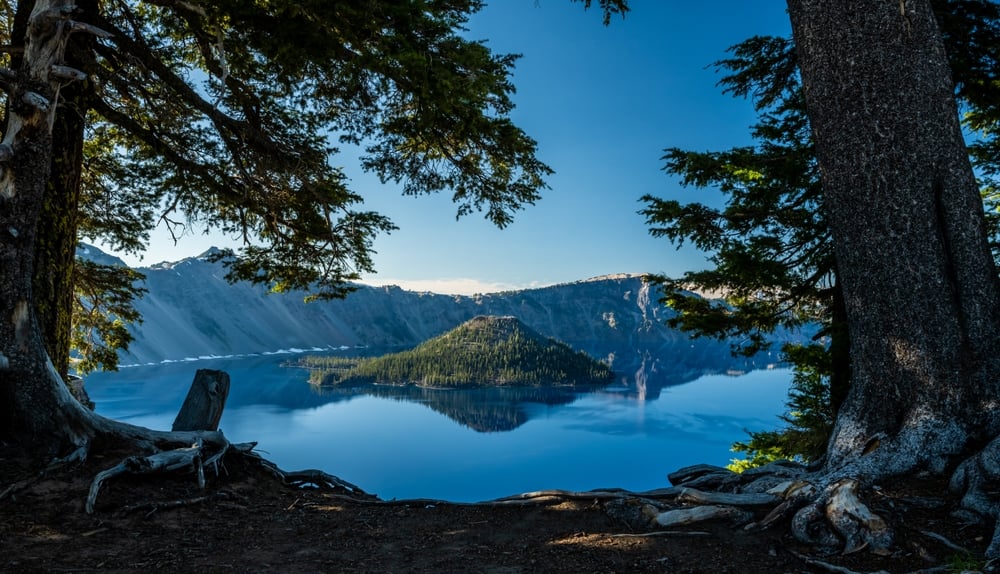
While I have several posts about iconic American cities like New York City, the United States is also home to some of the world’s most breathtaking natural scenery. Among these awe-inspiring wonders is Crater Lake National Park, a stunning natural wonder located in southern Oregon. The park’s history, geology, and ecological significance are showcased at the park’s Steel Visitor Center and the Rim Village, which also provide services and lodging. This Crater Lake National Park guide offers you a chance to see a place of great natural beauty and geological significance, offering a sense of peace and grandeur that makes it a truly unique destination.
About Crater Lake
Where Crater Lake sits today used to be Mount Mazama, a volcano that was destroyed after its last eruption over 7,000 years ago. This left a caldera that was filled with rain and snow to become a volcanic crater lake, leading to the lake’s official name, Crater Lake. No rivers or streams flow in and out of the lake, and the evaporation of the water is compensated for by rain, snow, and seepage, causing the total amount of water to be replaced every 150 years.
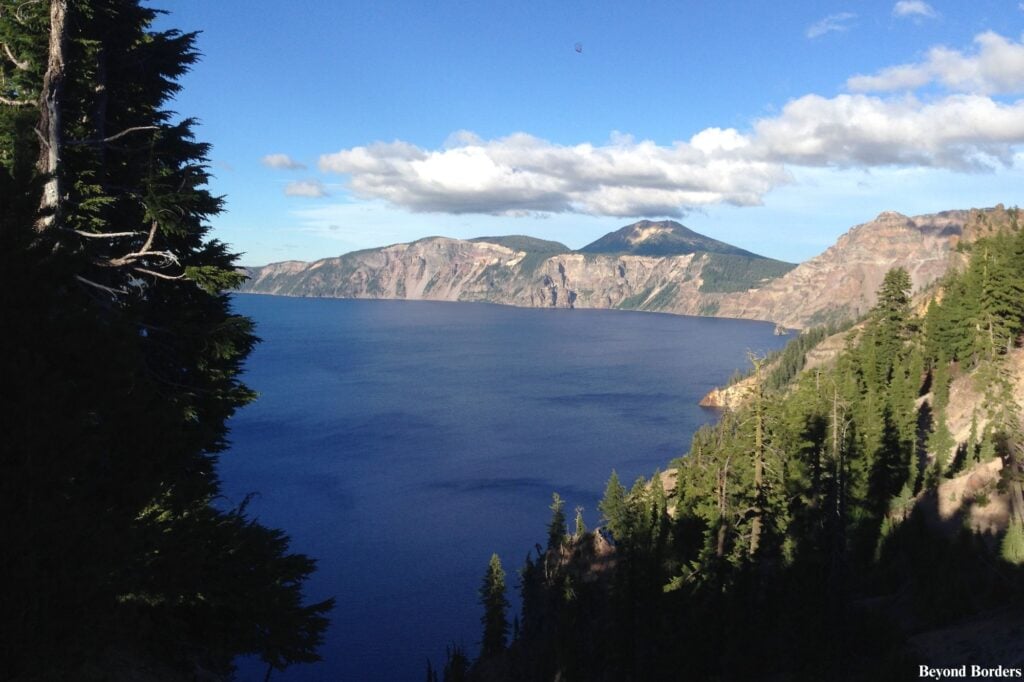
The lake’s depth is 1,949 feet (594 m), making it the deepest lake in the United States and the eleventh deepest lake in the world. Crater Lake National Park is not an extremely popular US National Park to visit; the park receives around 500,000 visitors annually. To me, this makes the park more of a “hidden gem” in the Pacific Northwest. I visited the park back in 2014, and I plan to visit again in the future.
How To Get There
Crater Lake National Park is located in southern Oregon, 44 miles north of the city of Klamath Falls. It will take about 50 minutes to drive to the park from there. The park is also about a 3-hour drive south of the city of Eugene. This drive is very scenic and traffic-free. Eugene has an airport you can fly into (EUG), mainly offering direct flights to and from other western US cities, with the easternmost city being Dallas/Fort Worth, Texas. If the Eugene Airport does not include the city you wish to fly from, you can fly into Portland International Airport (PDX), but it will take you almost 5 hours from there to drive to Crater Lake.
If you are coming from afar, I suggest making Crater Lake a stop on a trip in the western US and flying into Eugene airport to make the drive shorter. For example, if you plan to visit another western city, such as Los Angeles, and have the time to see Crater Lake, you can fly from LA to Eugene and then rent a car to drive to and visit the park. When I visited in 2014, I was on a USA road trip, so I didn’t fly. You can also include Crater Lake as a stop on a road trip!
Vehicle Entrance Fees
- $30 per vehicle in the summer and $15 in the winter.
- Crucial Note: The park is now entirely cashless. Visitors must pay via credit/debit card or have a pre-purchased digital pass on Recreation.gov.
North Entrance: The North Entrance typically doesn’t open until early June to July, depending on snowpack. In winter, only the South and West entrances are open.
What To Do and See
Crater Lake National Park offers many activities for visitors! There are over 100 miles of hiking trails, ranging from easy to challenging routes. Some routes are dog-friendly, and others are not, so plan accordingly to see if you can bring your dog with you on a hike. Popular hiking trails in Crater Lake include Garfield Peak, Mount Scott, Cleetwood Cove, Sun Notch, and Watchman Peak. You can view all hiking trails, complete with a map and photos for each, on AllTrails.
Another popular activity is biking. Cyclists enjoy biking on Rim Drive, enjoying breathtaking views all around the lake. However, biking on Rim Drive can be strenuous, and cyclists can face different hazards along the route, including elevated vehicle traffic in two directions, so only experienced cyclists should consider biking at the park.
The National Park Service (NPS) has more information about biking in the park, available here, if you are interested in biking. There are over 30 scenic overlooks to visit and take amazing photos (where you can also stop along a scenic drive or bike ride around the lake), and two visitor centers: Rim Visitor Center and Steel Information Center. The Rim Visitors Center is open daily from late May through late September. The Steel Information Center is open year-round. The park also has several winter activities, including sledding, snowboarding, downhill skiing, and snowmobiling. The NPS has more information here about winter activities allowed in the park.
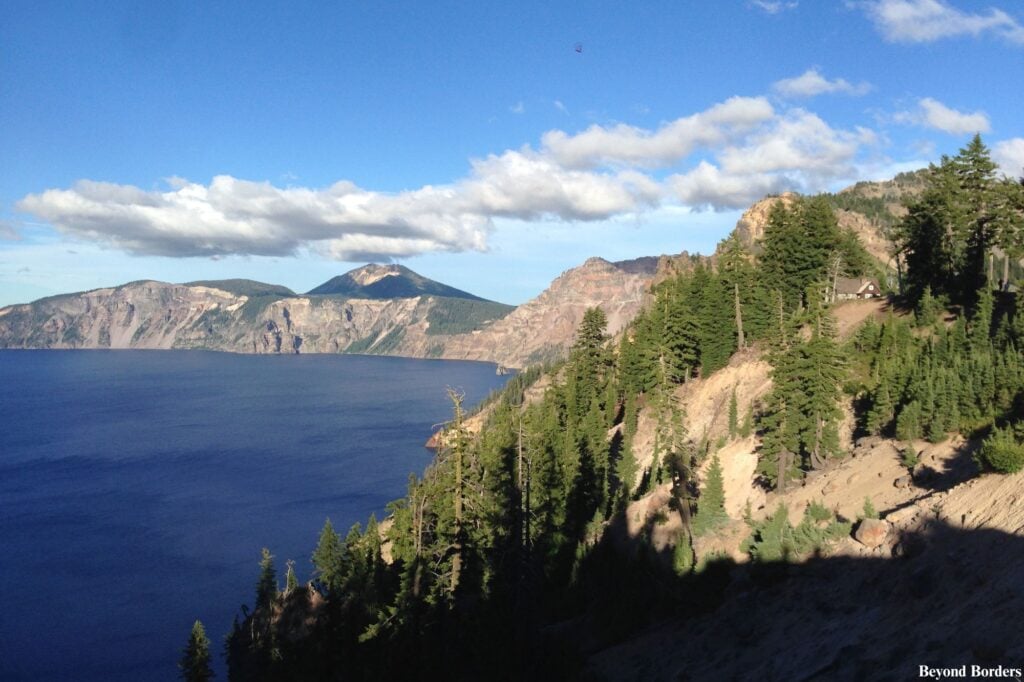
Driving around the park to see breathtaking views of the lake is another popular activity! Rim Drive features 33 miles (53 km) of stunning lake views, complemented by 30 overlooks where visitors can park their cars and take photos along the route. You can also board a trolley at Rim Village if you do not want to drive the route yourself. The NPS has more information about the route, taking the trolley, as well as when Rim Drive is closed.
The park also features two islands, Wizard Island and Phantom Ship. Wizard Island is located near the western shore of the lake and is a cinder cone. You can visit Wizard Island and climb it to see different views of the lake, but the island is only accessible by boat. However, due to trail maintenance, lake tours are not available in 2025 and 2026. Phantom Ship is a natural rock pillar and is easily seen from Phantom Ship Overlook. Phantom Ship is located near the southern shore of the lake. It got its name because it resembles a pirate ship.
2026 UPDATE: Construction is ongoing on East Rim Drive. Expect 20–30 minute delays on the section between Phantom Ship Overlook and Park Headquarters.
Swimming, fishing, and wading are allowed in Crater Lake, but pets are not allowed to swim in the lake. The shore to access the lake is only accessible from the Cleetwood Cove Trail. The trail is usually open from mid-June to late October. This trail is strenuous, can be slippery, is not fully shaded, and does not allow pets.
2026 UPDATE: Cleetwood Cove Trail is scheduled for a massive multi-year rehabilitation project starting in summer 2026. This means that for the next few years, it is impossible to swim in the lake. Because the Cleetwood Cove Trail is the only access point to the boat docks, all boat tours (including Wizard Island shuttles) are suspended for the 2026 season and likely until 2029. Rim Drive is the primary way to see the lake instead.
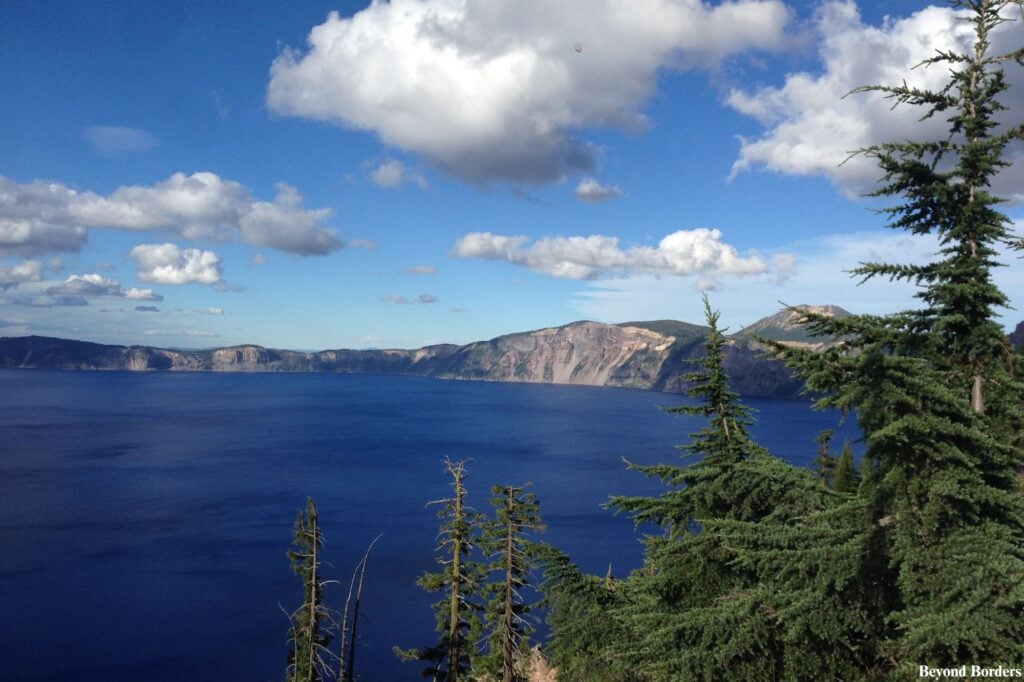
The NPS has more general information here about the Cleetwood Cove trail and what is allowed and not allowed while swimming in the lake (i.e. snorkeling gear, kayaks, etc) when it is open. Keep in mind: the water will be cold no matter what time of year you decide to swim! In the summer months, the average surface temperature of the lake is 57 degrees Fahrenheit (14 degrees Celsius).
Where to Eat at Crater Lake (and What to Pack)
Let’s be honest: you aren’t going to find a pastrami sandwich from Katz’s Deli or a doughy bagel from Best Bagel and Coffee out here in the high Cascades. Crater Lake is stunning, but it’s a “food desert” compared to NYC. If you don’t plan, you’ll be surviving on granola bars!
Dining in the Park
There are only a few spots to grab a meal inside the park boundaries:
- Crater Lake Lodge Dining Room: This is the “fancy” option. It has incredible views of the lake, but you must book reservations months in advance. It’s great for a sit-down dinner, but don’t expect the speed of a city bistro.
- Rim Village Café: Located near the Sinnott Memorial Overlook. This is your go-to for quick grab-and-go items like pre-made sandwiches, soup, and coffee. It’s open year-round, which is a lifesaver in the winter.
- Annie Creek Restaurant (Mazama Village): Located near the south entrance (near the campground). This is more casual—think burgers, pizza, and pasta. It’s a solid spot to refuel after a long day of hiking.
The 2026 Picnic Strategy
Since the Cleetwood Cove Trail is closed for 2026, you’ll likely be spending more time driving the Rim Drive. I highly recommend packing a “view-side picnic” instead of waiting in lodge lines.
My Tip: Stop in the town of Medford or Klamath Falls on your way into the park, the two towns I mentioned above. Visit a local deli or grocery store to stock up on food. There’s nothing quite like simply eating a sandwich while staring at the deepest blue water in the world from Cloudcap Overlook!
Don’t Forget the Water!
The elevation at the rim is over 7,000 feet. You will get dehydrated much faster than you do at sea level. Carry at least two liters of water per person, especially if you’re hiking trails like Garfield Peak.
Where To Stay: Inside vs Outside the Park
Crater Lake is one of the most popular parks in the Pacific Northwest, and since lodging is limited, booking 6 to 12 months in advance is the gold standard here. Here is the breakdown:
Staying Inside the Park
If you want to wake up to that famous “deep blue” view, you have two main options:
- The Cabins at Mazama Village: Located about 7 miles south of the rim, these 40 cabins offer a more “rustic-chic” feeling. They usually open in late May and September, but heavy snowpack can delay this—always check the weather before your trip!
- Crater Lake Lodge: It features 71 rooms and is typically open from mid-May to early October. Even if you don’t stay here, the back porch with its rocking chairs is the best place in the park for a sunset drink.
Camping & RVs
Perfect for those who want to be closer to the stars than a hotel lobby:
- Mazama Campground: The heavy hitter with over 200 sites. It’s open July–September. Note: There are only 18 RV hookup sites, so if you’re bringing a rig, you need to be extremely fast with your reservation.
- Lost Creek Campground: This is a smaller, tents-only site that operates on a first-come, first-served basis. It’s great for spontaneous travelers, but it fills up by noon on summer weekends!
Best Options Just Outside the Gates
If the park is fully booked (which happens often in summer), these nearby spots are excellent alternatives:
| Accommodation | Style | Why Stay Here? |
| Prospect Historic Hotel | B&B/Motel | Great “Dinner House” on-site and full of history. |
| Crater Lake Resort | Cabins/Cottages | Features a private creek and free canoe rentals. |
| Aspen Inn | Budget-Friendly | Located in Fort Klamath; very close to the South Entrance. |

When Should You Visit?
Because there are many activities to do year-round, there is no “best time” to visit Crater Lake National Park. That being said, the months of July, August, and September tend to be the most popular because of the warm weather and water activities you will be able to enjoy. This is also the time that all park roads and hiking trails are open, making it easier to access all areas of the park.
May and June are also good months to visit the park, but some roads might still be closed because of lingering snow, making the park not fully accessible. Hiking is discouraged in May and June because trails are still covered in snow, making them too dangerous to follow. You will still be able to enjoy the snow and amazing views of the lake! Driving and biking around the lake on Rim Drive are still permitted in winter, and you can see the entire lake from Rim Village.
Note that according to the NPS, the lake is usually hidden by clouds during periods of rain and snow. Therefore, the lake is completely invisible about 20% of the time in May and 10% of the time in June. If you want to visit during the winter, you can take part in outdoor activities such as snowshoeing, sledding, and skiing, while also enjoying scenic views of the lake, iced over. Remember: neither the two lodges nor the two campgrounds in the park will be open during the winter months. Gas stations will also be closed all winter, so if you drive to the park in the winter, you won’t be able to refill your tank in the park.
What to Pack
Don’t let the summer photos fool you—due to the elevation, Crater Lake feels like it has its own weather. Even in July, you might start your morning in a fleece and end it in a tank top. Because of the high elevation and the intense reflection off that famous blue water, packing “smart” means packing for three seasons in one day. Here is my 2026 essentials list to ensure you’re prepared for the trails, the boat tours, and those chilly rim-side sunsets.
Essential Packing Checklist
| Item | Why You Need It |
| Wide-brimmed hat | At 7,000+ feet, the UV rays can be brutal. A wide-brimmed hat is better than a baseball cap to protect your neck. |
| Polarized Sunglasses | To truly see that deep blue hue of the lake without the glare, polarized lenses are a no-brainer. |
| Puffy Jacket/Fleece | Even in the height of summer, temperatures at the rim can drop into the 40s (F) as soon as the sun goes down. |
| Sturdy Hiking Boots | You need shoes with strong traction, not flip-flops. |
| Refillable 2L Water Bottle | There are very few water refill stations once you leave Rim Village. The park has “taps” with some of the purest volcanic-filtered water in the world, and it’s free! Stay hydrated to avoid altitude headaches. |
| Mineral Sunscreen | The sun reflects off the lake like a mirror. You’ll burn twice as fast as you think you will. |
An Important Tip
Digital Pass & Offline Maps: Cell service is almost non-existent inside the park. Download your offline Google Maps and have a screenshot of your America the Beautiful Pass or digital entry receipt saved to your photos before you enter the park.
The Perfect 2-Day Crater Lake Itinerary (2026 Edition)
Since you can’t hike down to the water this year, the goal is to see the lake from every possible angle—and trust me, the views from the top are arguably better anyway.
Day 1: The Iconic Rim Drive
- Morning: Enter through the South Entrance and head straight to Rim Village. Grab a coffee at the café and walk the paved Discovery Point Trail for your first glimpse of the blue.
- Lunch: Enjoy a “view-side picnic” at one of the pull-outs. (This is where those supplies you bought in Medford come in handy)
- Afternoon: Drive the West Rim Drive. Stop at The Watchman Overlook to get the best photos of Wizard Island. If you’re feeling active, hike the 1.6-mile trail to Watchman Peak for a 360-degree view.
- Evening: Sunset dinner at the Crater Lake Lodge. Even if you aren’t staying there, I still recommend buying a drink and relaxing in a rocking chair on the back porch.
Day 2: Peaks and Pinnacles
- Morning: Tackle the Garfield Peak Trail (3.4 miles round trip). It’s a bit of a climb, but it offers the most dramatic views of the entire caldera.
- Lunch: Head toward the East Rim and stop at the Phantom Ship Overlook. It’s a great spot to eat while looking at the oldest rock formation in the lake.
- Afternoon: Visit The Pinnacles Overlook. These volcanic “fossil fumaroles” look like gray spires rising from the canyon floor—it’s a total change of scenery from the lake.
- Departure: Exit via the North Entrance (if it’s after June) to see the dramatic change in landscape as you head toward Central Oregon.
Frequently Asked Questions: Crater Lake 2026
Conclusions
Consider visiting this national park even just for a day while on a vacation out west, or make it the only destination you see on your next vacation. Either way, Crater Lake’s deep blue color and water clarity will leave you in awe, and the park’s scenery, hiking trails, and abundance of other outdoor activities will make you want to come back. Get ready to pack your bags and get ready to be mesmerized by this one-of-a-kind natural marvel! When you’re finished exploring the deepest lake in the US, head to the biggest city! Check out my guide to the top 5 NYC museums to visit or my 5-day NYC itinerary.