How to Visit These Historic Lower Manhattan Neighborhoods in One Day:
As a longtime local who has navigated these streets hundreds of times, I designed this self-guided walking tour to bypass standard tourist traps, optimize your photography lighting based on the time of day, and feature the actual culinary staples that define Downtown Manhattan.
- The Route & Total Distance: A seamless ~2.5-mile continuous loop linking Lower Manhattan’s most culturally distinct quarters.
- Time Commitment: Expect to spend 4 to 6 hours, depending heavily on your dining choices and how long you browse the shops.
- The Four Main Neighborhood Hubs: Start in the cobblestone streets of SoHo, dive into the historic core of Little Italy, navigate the vibrant blocks of Chinatown, and finish with the towering skyscrapers of the Financial District & Battery Park.
- Can’t-Miss Food Stops: Make room to grab a slice at Rubirosa (SoHo/Little Italy border), sit down for historic comfort food at Wo Hop or Tasty Hand-Pulled Noodles (Chinatown), or splurge on a meal with a Statue of Liberty view at Manhatta (Financial District).
- Best For: First-time travelers, photography buffs, and foodies looking to maximize their time in New York City with a self-guided, highly efficient walking itinerary.
Introduction
Downtown Manhattan is the historic birthplace of New York City, a dynamic, high-energy area where the 19th-century cobblestone streets of SoHo seamlessly bleed into the vibrant markets of Chinatown and the towering skyscrapers of Wall Street.
If you only have a single day to explore deep downtown, trying to figure out transit logistics and routing on your own can feel overwhelming. That is exactly why I designed this self-guided downtown Manhattan walking tour. It condenses the absolute best Downtown Manhattan highlights from my comprehensive 5-day NYC itinerary into one highly efficient, unforgettable day trip.
Whether you are a first-time visitor wanting to see the Statue of Liberty or looking to hit iconic culinary institutions back-to-back, this step-by-step blueprint covers it all. You’ll experience a spectacular mix of culture, history, and architecture across four of the city’s most famous neighborhoods.
One Quick Logistics Note: This self-guided tour involves a significant amount of walking, and navigating tight historic restaurants or busy sidewalks with heavy luggage is highly discouraged. Before you head downtown, make sure to drop your bags off safely using my trusted guide on how to store luggage near Penn Station so you can explore completely hands-free!
Jump to my Quick-Reference FAQs ↓ at the bottom of this guide if you have a specific question!
Is this Walking Tour for You?
- Total Time Investment: 4–6 hours (depending on meal length and how long you spend in each neighborhood).
- Total Distance: ~2.5 miles.
- Primary Goal: Experiencing 4 distinct cultures/neighborhoods via a continuous walking loop.
- Best For: First-timers, food lovers, and history buffs.
Map
I’ve created an interactive map below that plots each neighborhood in this Downtown Manhattan walking tour, along with all of the restaurants I mention in each neighborhood and the shops I recommend. Little Italy restaurants are purple, Chinatown restaurants are red, SoHo restaurants are dark green, and Financial District restaurants are yellow. Chinatown shops are lime green.
How to Use & Save This Map
- Open the Map: Click the [ ] icon in the top right corner of the map above to open it in full-screen mode.
- Save to Your Account: If you are signed into your Google account, the map will automatically be saved to your “Your Places” or “Saved” list.
- Access on the Go: On your phone, open the Google Maps app, tap the “Saved” (or “You”) tab at the bottom, scroll down to “Maps,” and select “4 Neighborhoods in Downtown Manhattan Map” to see all these pins while you’re walking!
- Pro-Tip: If you have limited data or a spotty connection, you can download the “Downtown Manhattan” area for offline use in your Google Maps settings so you never lose your way.
Pre-Tour Checklist
- Transit:
- The Payment: Use OMNY (contactless credit card or phone); MetroCards are phased out.
- The App: I recommend using the Transit app as well as Google Maps to navigate train routes. Visit my best NYC subway apps guide to learn how to utilize both of these apps for seamless trips on the subway.
- Footwear: Downtown Manhattan has cobblestones, especially in SoHo. Do not wear shoes with thin soles or heels.
- Phone and Battery Use Strategy: A walking tour drains phone batteries, especially since you will be taking photos. Make sure you have a portable charger!
- Dining Reservations: Make sure you book a reservation at the restaurant you want to eat at. I recommend booking at least 3 days in advance to be safe.
SoHo: Architecture & Morning Shopping
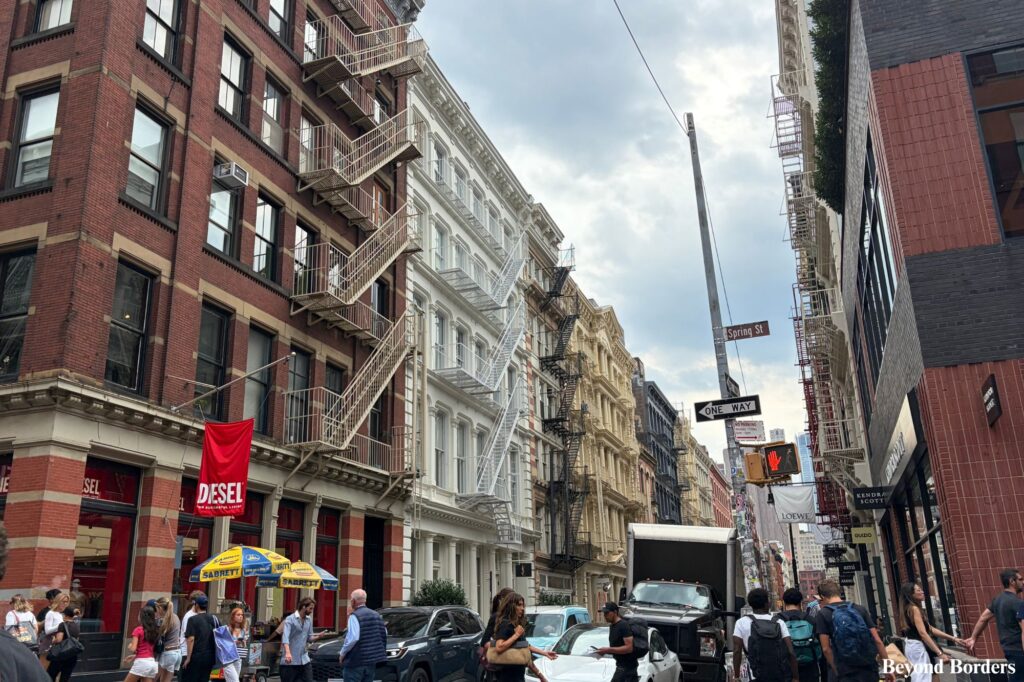
Your first stop is SoHo (short for “South of Houston Street”). This neighborhood is world-renowned for its upscale, artistic energy, trendy boutiques, and its absolute crown jewel: the world’s largest collection of historic cast-iron architecture.
How to Get There & Start the Walk: Start your morning by taking the N, Q, R, or W subway lines to the Prince St Station, or the 6 train or A, C, or E trains to Spring St. This lands you right in the heart of SoHo’s shopping and architectural district. To see the absolute best of the neighborhood’s visual charm, focus your stroll on the cobblestone blocks tucked between Broadway and West Broadway, making sure to walk down Greene Street to see the stunning historic cast-iron facades.
The Cast-Iron Architectural Highlights: Turn down Greene Street to experience the true heart of the historic district. As you walk the famous cobblestone streets, make sure to look up. The elaborate window frames, grand facades, and intricate iron fire escapes define the 1800s industrial era, making this area a beautifully preserved historic treasure. It is an absolute dream for original photography, so keep your camera out!
Shopping & The SoHo Vibe: Today, those grand industrial buildings house a premier shopping district. SoHo effortlessly captures the hip, stylish side of New York City, seamlessly blending luxury fashion houses like Prada and Chanel with independent art galleries and trendy, high-end boutiques.
Pro-Tip:
Check out my guide to NYC’s best architectural photo spots, where I detail how to take the best photos of the cast-iron architecture on Greene Street!
Where to Eat & Grab Dessert: SoHo has a reputation for some of the most stylish dining rooms in Manhattan. If you didn’t catch lunch at Rubirosa on the neighborhood border earlier, or if you’ve worked up a fresh appetite from shopping, you have some incredible options:
- Balthazar: A legendary, high-energy French brasserie that feels like stepping straight onto a bustling Parisian street.
- Boqueria: A fantastic contemporary spot if you are craving vibrant Spanish tapas.
- Black Tap: The ultimate stop if you want to indulge in a massive, over-the-top craft burger and one of their famous, photo-worthy crazy milkshakes.
- Ladurée (West Broadway): If you just want a sophisticated mid-afternoon break, step inside this famous Parisian bakeshop. They serve world-class French macarons in dozens of flavors, and the interior design is gorgeous.


Little Italy: The Mid-Day Culinary Immersion
Your day in downtown Manhattan continues in Little Italy, a historic neighborhood that once served as the bustling heart of New York’s Italian immigrant community. While the neighborhood’s physical footprint has condensed over the decades, its energy, aromas, and “old New York” atmosphere remain completely intact. Walking down Mulberry Street–lined with classic red-and-white checkered tablecloths and lively outdoor seating–feels like stepping straight into a movie set.
How to Transition to Little Italy: Once you’ve finished browsing the boutiques in SoHo, getting to Little Italy is incredibly simple. From the corner of Spring Street and Broadway, just walk three blocks east down Spring Street until you hit Mulberry Street. Make a right turn onto Mulberry, and you will step directly into the historic, lively core of Little Italy–just in time for lunch!
Where to Get Your Mid-Day Fuel: For the ultimate cultural immersion and high-quality caffeine, make your first stop at Ferrara Bakery & Café (195 Grand St). If you want to do it the authentic Italian way, order a quick espresso at the counter and drink it standing up. Otherwise, head to the back seating area for a full, sit-down pastry service. Having visited Ferrara Bakery & Café myself, I absolutely loved the timeless, elegant energy of the space. It’s got that classic, old-school Italian-American charm with its gleaming display cases and historic interior that you just can’t replicate. I ordered a carrot cake slice on a whim and was surprised by how good it was–rich, moist, and easily rivaling the traditional Italian specialties on the menu.
The Iconic Photo Op: As you continue walking north, keep your camera ready at the corner of Mulberry and Broome Street. Here, you’ll find the stunning, vibrant “Audrey Hepburn” mural by artist Tristan Eaton–easily the most iconic shot in the neighborhood.
Where to Eat: Several legendary, long-standing institutions still anchor these streets. Lombardi’s claims the title of the very first pizzeria in the United States, while Paesano is beloved for its massive portion sizes and old-school value. However, my absolute top recommendation is to head just slightly north into Nolita to eat at Rubirosa. I love it so much I featured it in my guide to the best pizza places in NYC. Because it’s one of the toughest tables to land in the city, make sure to check out my step-by-step guide on how to get Rubirosa reservations before you go!


Chinatown: The Deep Dive
As the oldest Chinatown in the United States–boasting the highest concentration of Chinese residents in the Western Hemisphere–this neighborhood is a magnificent maze of culture, history, and unparalleled food.
How to Transition to Chinatown: When I was walking from Little Italy to Chinatown, I loved seeing how seamlessly the city shifts from one neighborhood to the next, seeing green and red awnings change to gold and red awnings and seeing roasted ducks hanging in restaurant windows. Leaving the cafes of Little Italy behind, continuing south into Chinatown takes less than 60 seconds! Simply continue walking straight south down Mulberry Street or Mott Street across Hester Street.
Food Pro-Tip:
If you would rather explore these flavors with an expert guide, I highly recommend this guided food tour of Little Italy and Chinatown. It’s the perfect way to sample both neighborhoods’ most iconic dishes back-to-back before you continue on your own to SoHo and the Financial District!
Where to Eat: From Dim Sum to Historic Comfort Food
Chinatown is a culinary paradise, but navigating it requires a game plan. For an absolute classic New York institution, descend the stairs at Wo Hop (17 Mott St). Serving up no-frills, legendary Chinese-American comfort food downstairs since 1938, it is a vital, delicious piece of downtown history.
If you are hunting for dim sum, head to Nom Wah Tea Parlor, the oldest operating dim sum restaurant in NYC, or visit Jing Fong for a fantastic, bustling traditional experience. For fresh, snappy, made-to-order noodles, check out Tasty Hand-Pulled Noodles or Xi’an Famous Foods. And if you are craving world-class soup dumplings, Joe’s Shanghai is an absolute must-visit—be sure to read my guide on how to avoid waiting at Chinatown’s best restaurants before you go! (I also cover even more exceptional Chinese restaurants in my full 5-day NYC itinerary and my guide on how to beat the wait at top Chinatown restaurants.
The Shopping Guide: Curated Markets & Historic Legacy Shops
When it comes to shopping, your strategy depends on the vibe you want. Step inside the Canal Street Market if you are looking for curated, trendy goods from local designers. If you prefer hunting for classic souvenirs along the sidewalk tables, go for it–just keep in mind that polite haggling is expected with street vendors, but never inside the brick-and-mortar shops.
To experience the true soul of the neighborhood, skip the generic souvenir stands and step inside these incredible, long-standing specialty shops:
- Wing on Wo & Co. (26 Mott St): As the oldest continuously operating store in Chinatown (founded in the 1890s), this shop is legendary for its porcelain. It’s currently run by a fifth-generation owner who beautifully blends traditional craftsmanship with modern community projects. It is the ultimate place to buy gorgeous hand-painted ceramics and tea sets.
- Grand Tea & Imports (71 Mott St): Located just down the street, this beloved family-run shop is a neighborhood go-to for high-quality loose-leaf tea, traditional teaware, incense, and cultural items.
- Ten Ren’s Tea (75 Mott St): A classic institution featuring a dedicated tea bar. Grab a fresh bubble tea or a hot cup to go while you browse their massive selection of bulk teas and ginseng.
- Yunhong Chopsticks (50 Mott St): A fascinating, hyper-specific specialty shop that sells nothing but chopsticks, ranging from beautiful everyday sets to museum-quality pieces made of silver and hand-carved wood.
- Kamwo Herb & Tea Company (211 Grand St): Established in 1973, this is the largest Chinese herbal pharmacy on the East Coast. It feels like stepping into a stunning, old-school apothecary, featuring floor-to-ceiling wooden drawers filled with over 1,000 types of traditional herbs.
- Lin Sister Herbs (4 Bowery): A highly respected, intimate shop renowned for its deep expertise in Traditional Chinese Medicine (TCM). It’s the perfect spot for anyone looking for custom herbal wellness advice or custom blends.
Pro-Tip:
Once you’ve finished sampling food and browsing the shops, take your treats over to Columbus Park. It serves as the neighborhood’s outdoor living room, where you can sit back and watch locals playing intense games of mahjong and chess, or practicing tai chi.


Battery Park and the Financial District: The Grand Finale
Your journey concludes by transitioning from the bustling, vibrant street markets of Chinatown to the soaring skyscrapers of the Financial District–the historic birthplace of New York and the global center of finance.
The Scenic Walk South to the Financial District: From the heart of Chinatown near Columbus Park, make your way four blocks west to Broadway. Turn left and head straight south down Broadway for about 20 minutes. Watching the architecture evolve from Chinatown’s historic tenements to the towering modern monoliths of Wall Street is one of the coolest visual experiences in the city. Keep walking until you hit your first stop at Trinity Church (89 Broadway).
My Insider Advice:
If you want to take the subway to Battery Park instead of walking, walk to the Canal Street station and take the 4 train downtown. Get off the train at the Wall Street station. As you walk up the stairs to street level, you will see Trinity Church right in front of you!
Sequence of Sights
- Stop 1: Trinity Church (89 Broadway): Your first major landmark sits right at the intersection of Broadway and Wall Street. Step inside the historic, quiet churchyard to find the final resting place of Alexander Hamilton. Because this spot is completely free to enter, I feature it prominently in my guide to the best free hidden gem museums in NYC (which includes a dedicated itinerary connecting them all!).
- Stop 2: The Charging Bull: Continue walking south on Broadway for about five minutes until you hit Bowling Green. Here stands the famous bronze statue symbolizing financial optimism and Wall Street resilience. When I visited the Charging Bull, I noticed how there was still a line at the back of the bull, but it was significantly shorter. Also, I saw people taking their time making sure their photos were perfect before leaving; if you see a long line in front of the bull, I recommend not waiting and walking to the back of the bull instead so you don’t waste time waiting to take photos.
- Stop 3: Battery Park (The Battery): Keep heading south until the skyscrapers disappear and the wide-open water of the New York Harbor opens up before you.
Unwinding at the Southern Tip of Manhattan
This beautiful 25-acre waterfront park gets its historic name from the artillery batteries that were stationed here centuries ago to protect a young New York City from invasion. Today, it serves as the ultimate place to rest your feet after a long day of walking.
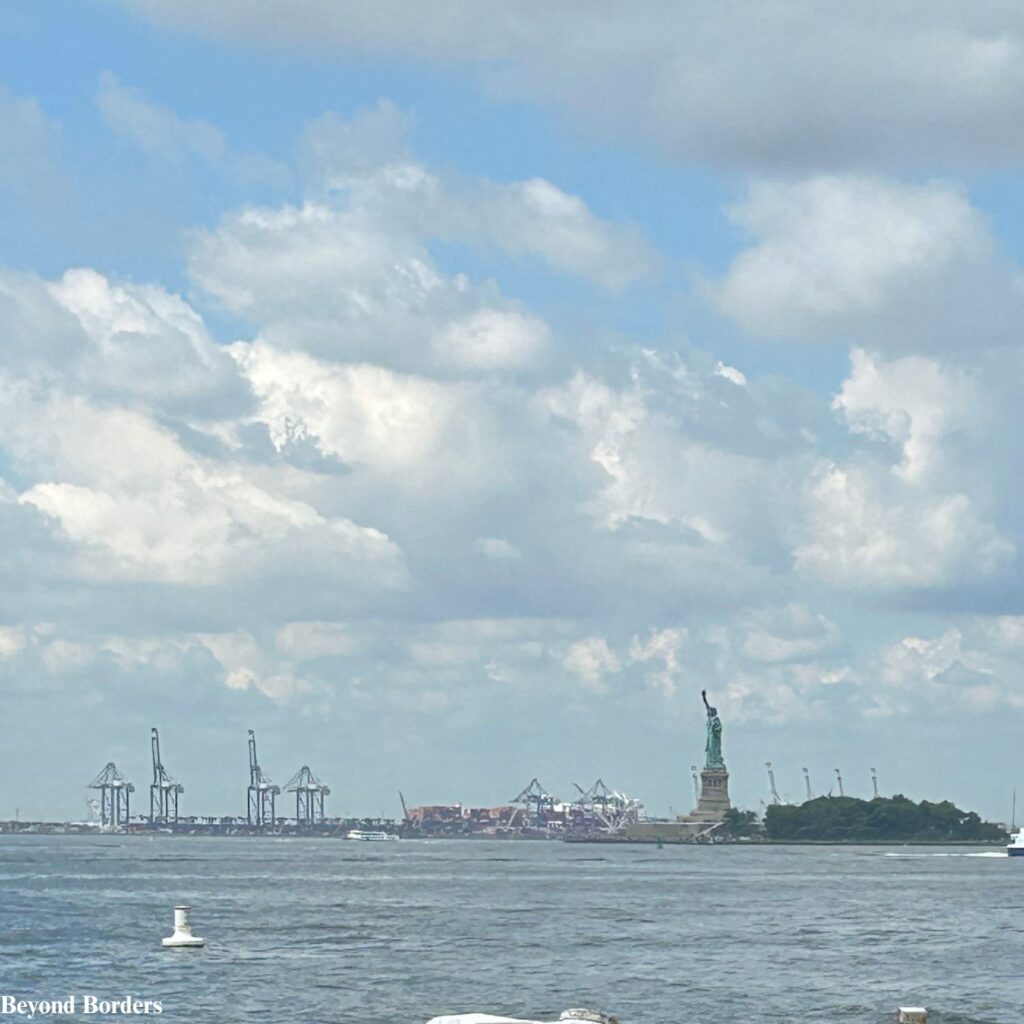
Find a bench along the waterfront promenade to soak in the uninterrupted views of the Statue of Liberty and Ellis Island. If you have some energy left to explore before dinner, wander through the park’s sprawling gardens or step inside Castle Clinton–a historic fort that famously served as America’s very first immigrant processing center long before Ellis Island even opened.
Food and Drinks in the Financial District
After completing your walking loop at Battery Park, you don’t have to travel far for an incredible meal. The Financial District features some of the most historic dining rooms and jaw-dropping views in New York City.
The Historic & Premier Picks
Fraunces Tavern: Located just a five-minute walk from Battery Park, this is an American restaurant and the city’s oldest standing bar. This legendary landmark famously hosted George Washington’s 1783 farewell address to his troops. Beyond its deep Revolutionary War history and ties to the Sons of Liberty, the building also housed the nation’s very first government offices. It’s an absolute must for history buffs wanting a pint in a room where the Founding Fathers stood.
Au Cheval: If you are craving a premier, world-class dining experience, head about 15 minutes north of Battery Park. Hop on the N, R, or W train from Whitehall St-South Ferry to Canal Street, followed by a quick five-minute walk. It is home to one of the most famous, decadent burgers in the country.
Manhatta: Perched high on the 60th floor at 28 Liberty Street, this spot offers some of the most breathtaking 360-degree views in Manhattan. While it is a high-end, fine-dining New American restaurant, you can skip the formal dining room reservation and head straight to the bar. Grab a cocktail and watch the sunset stretch across the Brooklyn Bridge and the Statue of Liberty. I also feature Manhatta in my best restaurants near NYC landmarks guide as my pick for eating near the Statue of Liberty. Check out that guide to see my recommendations on what to order!
World-Class Pubs & Drinks
The Dead Rabbit: Repeatedly named the “World’s Best Bar,” this multi-story Irish tavern is far from your average pub. It masterfully blends 19th-century history with elite mixology. Head to the Taproom for sawdust-covered floors and a legendary Irish coffee, or climb up to the Parlor for craft cocktails in a refined, vintage setting.
Ulysses’: Named after the James Joyce classic, this Irish folk house sits at the center of the downtown social scene. Known for its lively atmosphere, fresh oyster bar, and extensive whiskey list, it’s the ultimate place to be on a warm evening when the energy spills out onto the cobblestones.
FiDi Pizza & The Stone Street Debate
Adrienne’s Pizzabar: Tucked away on historic Stone Street, this is widely considered one of the best pizza spots in Lower Manhattan. Unlike the typical NYC round slice, Adrienne’s is famous for its thin-crust, “Old-Fashioned” square pies–crispy, light, and perfect for sharing.
Stone Street: Dating back to 1658 as the city’s first paved street, Stone Street transforms completely in pleasant weather. The street closes to cars and fills with communal picnic tables, creating a lively, European-style outdoor beer garden vibe.
Pro-Tip: Don’t Be Afraid to Grab Food Elsewhere
Grab a pint or cocktail under the string lights to soak in the post-work energy, but while the restaurants I mentioned above serve quality food, they will still be expensive! If you want to save on dinner, check out my detailed how to visit Stone Street guide for more options on where to eat close by.

Alternative Attraction: Staten Island Ferry
If you are a fast-paced traveler with a burst of extra energy at the end of your walking tour, adding a cruise across the harbor is the ultimate budget-friendly option.
The Staten Island Ferry is world-famous for a reason: it offers some of the absolute best, unobstructed views of the Statue of Liberty, Ellis Island, and the soaring Lower Manhattan skyline, and it is 100% free. No tickets, QR codes, or reservations are required–you simply walk right on. Ferries operate 24 hours a day, 7 days a week, including holidays.
On weekdays during rush hour, ferries depart every 15 to 20 minutes. Visit the Staten Island Ferry official website to see the morning and evening rush hour times. On weekdays during off-peak hours and on weekends, ferries depart every 30 minutes. The trip takes about 25 minutes each way.
The Insider Boarding & Transit Protocol
How to Get There: The ferry departs from the Whitehall Ferry Terminal, located just a short two-minute walk from the southern edge of Battery Park. If you are arriving from elsewhere, the 1 train (South Ferry station), N, R, or W trains (Whitehall St–South Ferry station), or the 4 or 5 trains (Bowling Green station) will place you right at Battery Park to enter the terminal.
The Golden Rule of the Turnaround: By law, you cannot stay on the boat for a round trip. When the ferry docks at the St. George Terminal on Staten Island, everyone must completely disembark, exit into the terminal, and re-board through the waiting area for the return journey to Manhattan.
Where to Stand for the Best Photos
Don’t just jump into the first open seat you see when you walk onto the ferry. I detail exactly where to stand to take the best photos of the Statue of Liberty, the Lower Manhattan skyline, the Verrazzano Bridge, and the harbor in my guide to NYC’s best free skyline views! In this post, I also include how to recognize unauthorized ticket vendors trying to sell visitors overpriced or misleading “Statue of Liberty tours” that do not land on Liberty Island.
Pro-Tip:
If you have 15 minutes to spare while waiting in the St. George Terminal before heading back to Manhattan, grab a quick snack at the adjacent Empire Outlets! If you have more time to spare, walk 10 minutes to the North Shore Waterfront Esplanade for a gorgeous, expansive view of the harbor!
What about the 9/11 Museum?
The 9/11 Memorial & Museum is located right in the Financial District, and many travelers wonder if they should squeeze it into a single-day walking tour. Because the museum is an incredibly detailed, deeply emotional, and time-intensive experience, it typically requires at least two to three hours to appreciate fully. Trying to rush through it in the middle of a packed 2.5-mile walking loop can leave you feeling physically and emotionally drained.
The Strategic Alternative: The Memorial Pools
Instead of booking a museum ticket for this specific day, I highly recommend visiting the outdoor 9/11 Memorial Pools. This allows you to experience a moment of quiet reflection at the twin reflecting pools–built directly where the original Twin Towers stood–without the massive time commitment.
Cost & Access: The outdoor Memorial public space is completely free and open to the public daily from 8:00am to 8:00pm. No tickets or reservations are required to walk around the plaza. I visited the Memorial Pools in the middle of the day and there were no crowds!
How to Fit It Into Your Route: If you want to include this stop, the best time to do it is right before you reach Trinity Church at the start of your Financial District segment. As you walk south down Broadway from SoHo, simply pivot two blocks west onto Fulton Street or Dey Street to reach the World Trade Center complex.
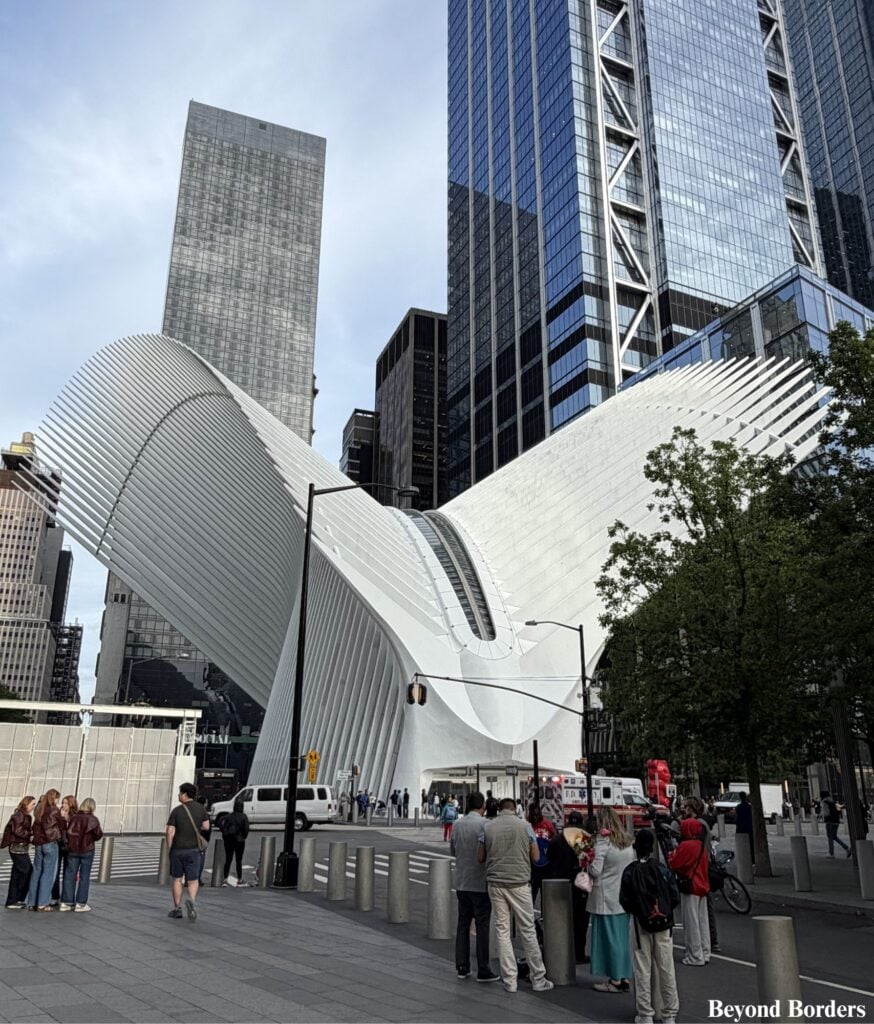
The Transit Hub Bonus: Visiting the plaza also gives you a perfect excuse to step inside The Oculus, the striking, white-winged transportation hub and shopping center. It’s a spectacular architectural photo opportunity and connects you directly to several subway lines if you want to head out from there.
Pro-Tip:
If you wish to visit the 9/11 Museum on your NYC trip, make sure to check out my 1-day Financial District itinerary to see how to navigate the 9/11 Museum, The Oculus, Trinity Church, sunset harbor views, and more in one continuous loop!

FAQS: Walking in Lower Manhattan
Conclusions: Wrapping Up Your Lower Manhattan Adventure
You’ve officially completed the ultimate Lower Manhattan loop! By following this route, you’ve tackled transit logistics, explored the best historic shops, and tasted iconic flavors across five entirely distinct neighborhoods, all while timing the harbor views perfectly.
This itinerary is designed to be a highly repeatable blueprint for getting the absolute most out of a single day downtown. Once you’re ready to plan your next neighborhood exploration, be sure to check out my 1-day West Village and East Village itinerary to see a completely different, historic side of the city. And if you want to make sure you never get turned around underground, read through my comprehensive guides on how to use the NYC subway and subway safety tips for tourists before your next trip!