Is the Tren Maya, Mexico a game-changer for your Yucatán itinerary, or a “tourist trap” on tracks? Here is the logistical—and ethical—reality of riding this year.
Introduction
After years of headlines, environmental protests, and “national security” declarations, the 1,500-kilometer loop is finally fully operational. It promises to whisk you from the white sands of Cancún to the deep jungles of Palenque and the lagoons of Bacalar in record time. If you’re looking for the best places to visit, check out my guide to the 7 Yucatán Hidden Gems to visit in 2026. However, as anyone who has actually tried to board the train in 2026 will tell you—it’s not exactly as simple as hopping on the London Tube.
In this 2026 guide, I’m skipping the government brochures and giving you the grounded, “boots-on-the-ground” reality. From navigating the buggy ticket app to finding the shuttles that bridge the gap between far-flung stations and city centers, here is everything you need to know to decide if the train belongs in your Yucatán itinerary.
In this guide
- Tickets 101: How to buy them (and why the app is your best friend).
- Onboard Reality: Is Premier Class actually worth the extra pesos?
- The “Last Mile” Problem: Why the station locations aren’t what you expect.
- The Sustainability Report: A look at the ongoing environmental impact in 2026.
The Tren Maya: 2026 Travel Reality Check
| The Pros (Why to take it) | The Cons (What to watch for) |
| Ultimate Comfort: Reclining seats, powerful AC, and clean, spacious bathrooms make it much more relaxing than a bumpy 5-hour bus ride. | Station Locations: Most stations are 15–20 minutes outside of town. You’ll need a taxi or shuttle for that “final mile” to your hotel. |
| Safety & Stability: No “white-knuckle” driving on narrow jungle roads or dealing with highway police checkpoints. | Fixed Schedules: Unlike ADO buses that run every hour, the train often has only 2–6 departures per day. If you miss it, you’re stuck for a while. |
| Dining Car Experience: The Janal car offers regional snacks and coffee, turning the transit into an actual part of your vacation. | The “Hidden” Costs: While the ticket is affordable ($20–$60 USD), the extra taxis to/from stations can make it more expensive than a bus. |
| Sustainability (Long-term): As an electric-hybrid system, it aims to reduce car traffic on the busy Cancun–Tulum corridor. | Environmental Debt: The project’s construction led to massive deforestation (millions of trees) and risks to the fragile cenote aquifer. |
Tickets 101: How to Secure Your Seat
Buying tickets for the Tren Maya in 2026 has become much more streamlined than during the launch phase, but it still requires some planning. Here is the process.
If you wish to buy tickets online, visit the official website.
Download the Official App: Search for “Tren Maya Tickets” on the iOS App Store or Google Play. Avoid third-party “reseller” apps, as they often charge high fees and may not provide valid QR codes.
The Booking Process:
- Select your origin, destination, and date.
- Choose your Fare: You will see four tiers: International (for tourists), National (for Mexicans), Local (for residents of the 5 states), and Special (discounts for seniors/students). Note: You must have a valid ID (Passport or INE) that matches your fare type to board.
- Select Your Class: Tourist Class is very comfortable with a 2-2 seat layout. Premier Class offers wider 2-1 seating, more legroom, and complimentary coffee/snacks.
Keep in mind:
- Dynamic Pricing: In 2026, the train uses a “Plan Ahead” model. Booking 45+ days in advance can save you up to 25% compared to buying at the station on the day of travel.
- Kiosks & Cash: If the app fails (it happens!), head to the physical ticket offices at the stations. Most accept major credit cards, but it is always wise to have Pesos (cash) as a backup in case the internet terminals are down.

Onboard Reality: Tourist vs. Premier Class
The Tren Maya isn’t just a commute; in 2026, it’s a high-tech experience that feels more like a flight than a standard bus ride. Here is what to expect once you step through the sliding doors:
- Tourist Class: Don’t let the name fool you—it’s extremely comfortable. The seats are arranged in a 2-2 layout and are more spacious than economy airplane seats. Each seat includes a folding tray table, adjustable footrests, and personal USB/electrical outlets to keep your phone charged for all those jungle photos.
- Premier Class: If you’re traveling for more than 3 hours (like the Cancun to Merida stretch), Premier is worth the upgrade. You get a 2-1 seating layout (meaning more elbow room), plus a complimentary light meal and unlimited coffee.
- The Cafeteria Car (Janal): This is the heart of the train. In 2026, the menu has expanded to include regional specialties like panuchos and local craft beers. It’s a great place to stretch your legs and watch the scenery through the massive panoramic windows.
- Connectivity: While the train offers free Wi-Fi, remember that you are traveling through a dense jungle. Expect the signal to drop in remote stretches—download your offline Google Maps and playlists/other entertainment before you leave the station.
The “Last Mile” Problem: Getting to Your Destination
The biggest surprise for 2026 travelers is that the Tren Maya stations are rarely in the actual city centers. To avoid NIMBY issues and protect historic zones, most stations were built 15–30 minutes outside of town.
This creates a “Last Mile” hurdle you need to budget for in both time and money:
- Mérida (Teya Station): You are roughly 14km from the Centro Histórico. Your best bet is the IE-TRAM, a new electric bus that connects the station to La Plancha park in downtown Mérida. It costs about $45 MXN and takes around 40 minutes. A taxi is faster (15 mins) but will cost closer to $150–$250 MXN. Learn more about the IE-TRAM on the official website.
- Valladolid Station: Located about 7km from the main plaza. Official shuttles run from the station parking lot to the ADO bus terminal in the center for approximately $35 MXN. Taxis are plentiful but significantly more expensive.
- Cancún Station: This is located near the airport, not the Hotel Zone. There is a free shuttle that runs between the airport terminals and the train station, but if you’re heading to the beach, you’ll still need an ADO bus or a pre-arranged transfer from the airport hub. Visit the ADO website for ADO bus tickets.
Pro-Tip: Always look for the “Transporte Intermodal” signs when you exit the train. These are the official, government-regulated buses and shuttles that are timed to meet every arriving train.
NIMBY and Tren Maya
NIMBY (“Not In My Backyard”) describes a specific type of social phenomenon where people support a project in theory (like a new train, a homeless shelter, or a wind farm), but they fight against it being built anywhere near where they actually live or own property. Local residents and business owners often fought to keep the tracks away from historic centers to avoid noise and traffic, which is why travelers today need a shuttle or taxi to reach the “real” destination.
- The Conflict: Most residents in cities like Mérida or Playa del Carmen wanted the economic boost of the train, but they didn’t want the noise, the construction traffic, or the “vibration” of a massive railway cutting through their historic neighborhoods.
- The Result: Because of this local pushback (and the high cost of buying expensive city land), the government moved the tracks to the outskirts of town.
- The Traveler’s Headache: This is why you now have to take a 20-minute taxi from the “Mérida Station” to get to the actual city of Mérida. The train was kept out of the locals’ “backyards,” but now it’s further from your hotel front door.
The Sustainability Report: Travel with Perspective
While the Tren Maya makes reaching gems like Bacalar and Calakmul easier than ever, it’s important to acknowledge that the project remains deeply controversial. To travel the Yucatán responsibly in 2026, it helps to understand the complexity of what was gained versus what was lost.
Environment & Wildlife
The project has faced significant criticism regarding the destruction of an estimated 10 million trees to clear the jungle path.
- The Jaguar Crossings: To combat habitat fragmentation, the government constructed dozens of “wildlife corridors” and utilized satellite monitoring to track jaguar movements. While some biologists have observed a 30% increase in jaguar populations due to improved protection in nearby reserves, activists argue that these crossings don’t fully compensate for the forest lost.
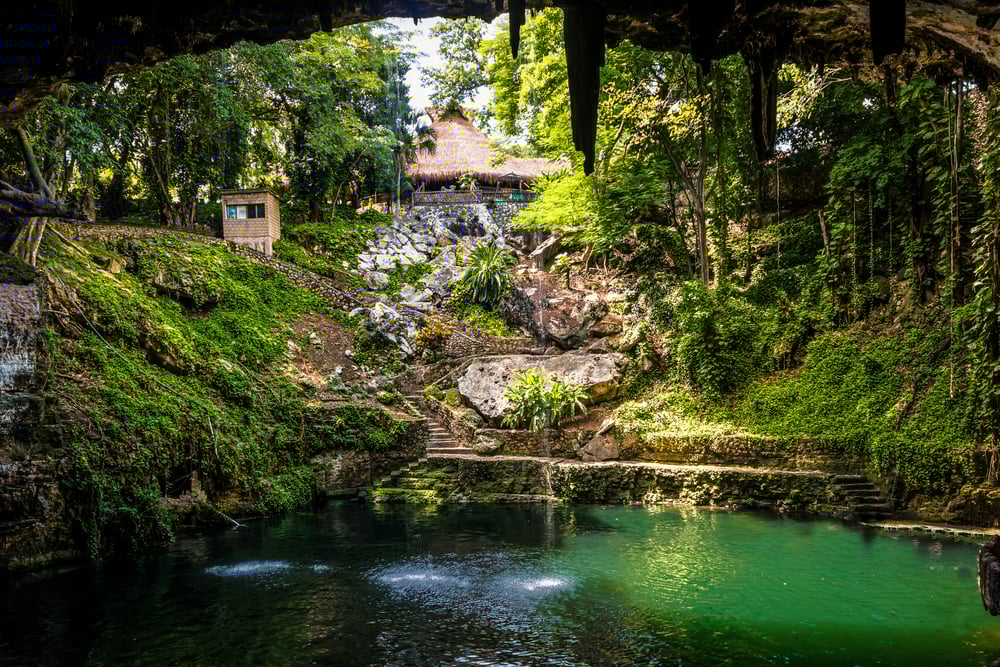
- Cenote Protection: This is the most sensitive issue. Thousands of steel and cement pillars were driven into the limestone soil. Environmentalists have documented cases where these pillars pierced through underground cave ceilings, causing rust and sediment to leak into the pristine freshwater aquifer.
Indigenous Rights & National Security
The social impact of the Tren Maya is equally complex. Many local Mayan communities have expressed that they were not properly consulted before construction began.
- National Security Designation: To bypass legal challenges and environmental lawsuits, the government designated the train a matter of “National Security.” This allowed construction to continue even when courts ordered it to stop, which many human rights groups view as a violation of indigenous land rights.
My Advice for Conscious Travelers
If you choose to use the train, try to balance your footprint by supporting hyper-local businesses. Choose a family-owned fonda for lunch, hire a local community guide for your cenote tours, and stay in eco-conscious boutique hotels that prioritize water conservation. Your tourist dollars have the power to support the communities that are most affected by these large-scale changes.

Conclusions: Should You Take the Tren Maya in 2026?
After weighing the high-tech comfort against the station logistics and the environmental cost, the big question remains: Is it worth it? In 2026, the answer depends entirely on how you travel. The Tren Maya isn’t a one-size-fits-all solution, and for some itineraries, the “old ways” of getting around are still superior.
The train is for you if…
- You are a “Slow Traveler”: If you have 2+ days in each destination, the train is a relaxing, scenic way to move between hubs without the stress of Mexican highway driving.
- You are on a “Long Haul”: For distances like Cancún to Mérida or Mérida to Palenque, the train wins on comfort and safety every single time.
- You are a Solo Traveler: The train is social, safe, and significantly more comfortable than sitting on a bus for 6 hours.
Stick to a Car or ADO Bus if…
- You are on a Day Trip: If you are trying to see Chichén Itzá and get back to your beach resort in one day, the train’s fixed schedule and far-flung stations will eat up too much of your time. Driving is still faster for “out-and-back” trips.
- You are on a Tight Budget: Once you factor in the taxis to and from the stations, the ADO bus remains the most cost-effective way to traverse the Yucatán.
- You need “Door-to-Door” Flexibility: If your “hidden gems” are truly off the beaten path (like deep-jungle cenotes), you will still need a rental car to reach them.
Ultimately, the Tren Maya is a massive feat of engineering that has forever changed the landscape of Southeast Mexico. It offers a level of comfort that has never been in this region, but it comes with a heavy environmental and social price tag. By choosing to ride with a conscious mindset—supporting local guides and staying in eco-certified hotels at every stop—you can ensure your Yucatán 2026 adventure contributes to the preservation of the very “gems” you came to see.
Now that you know everything you need to know about the Tren Maya, it’s time to plan your trip. Don’t just stick to the main tourist destinations—here are the 7 Yucatán Hidden Gems that are easily accessible thanks to this new rail loop.