Everything you need to know to navigate your US Open Tennis tournament visit with this US Open tennis logistics guide, from what tickets to get to bag policies to where to take the best photos!
Introduction
The US Open is one of those quintessential New York experiences that everyone should do at least once, but it can be a logistical headache. Every year, thousands of fans descend on the Billie Jean King National Tennis Center in Queens only to realize they brought the wrong bag, bought a ticket that doesn’t get them into the match they wanted, or spent 45 minutes stuck in a rideshare line when they could have been court-side in twenty.
If you have never been or haven’t been in a few years, the tournament has evolved into a high-tech, high-speed operation. It’s no longer just about showing up with a paper ticket and finding a seat; it’s about navigating digital-only entry, strict security protocols, and a sprawling campus that feels like a city within a city.
To help you ace your visit without the stress, here is your US Open tennis logistics guide highlighting the most common points of confusion for visitors and the tactical tips you need to know before you head to Queens.
Top 3 Points of Confusion for First-Timers
1. The Ticket Trap
The most frequent mistake is not realizing that an Arthur Ashe Stadium ticket is the “all-access pass” of the tournament. It gets you a reserved seat in the main stadium plus first-come, first-served access to every other court. On the other hand, a Grounds Pass gives you the run of the place but strictly forbids entry into Arthur Ashe. If you want to see the top-seeded superstars, you have to buy the stadium-specific ticket.
2. The “Session” Overlap
The US Open is split into Day and Night sessions. A common point of confusion is when the Day session runs long (which it often does). If you have a Night session ticket, you generally cannot enter the grounds until 6:00pm, even if the Day matches are still taking place. On the flip side, if you’re a Day session holder, you aren’t kicked out at 6:00pm–you can stay and wander the grounds or watch matches on the outer courts as long as they last.
3. The Bag Policy Reality Check
This is where most people get caught. The US Open has one of the strictest bag policies in sports. Backpacks–even small, stylish leather ones–are a flat no. You are allowed one bag per person, and it must be a tote or a small crossbody within the 12 x 12 x 6 limit. If you show up with a standard backpack, you’ll be heading straight to the long (and paid) storage locker line outside the East Gate.
How to Choose Which US Open Ticket You Should Buy
To choose the right US Open ticket, you must first decide between the main stadium experience in Arthur Ashe or the flexibility of a Grounds Pass, the first step to enjoying your US Open tennis visit. Here is the breakdown of what each entry gets you. Read more about ticket options on the official US Open website.
1. Grounds Admission (The Explorer’s Choice)
- Best For: Budget travelers who want to see as many matches as possible.
- Stadium Access: All outer courts + Louis Armstrong (Upper Deck). No access to Arthur Ashe Stadium.
- Entry Time: 9:30am.
2. Arthur Ashe: Day Session (The Main Event)
- Best For: Seeing top-seeded players and guaranteed shade/roof.
- Stadium Access: Reserved seat in Arthur Ashe and all outer courts.
- Entry Time: 9:30am.
3. Arthur Ashe: Evening Session (The Primetime Vibe)
- Best For: Marquee matches and that iconic NYC night energy.
- Stadium Access: Reserved seat in Arthur Ashe (matches start around 7pm) and all outer courts, perfect for catching the end of a 5-set thriller on a side court.
- Entry Time: 6:00pm.
4. Louis Armstrong: Day Session (The Close-Up)
- Best For: Seeing high-ranked players in a more intimate stadium setting.
- Stadium Access: Reserved seat in Louis Armstrong and all outer courts (including Grandstand).
- Entry Time: 9:30am.
Key “Night Session” Tips
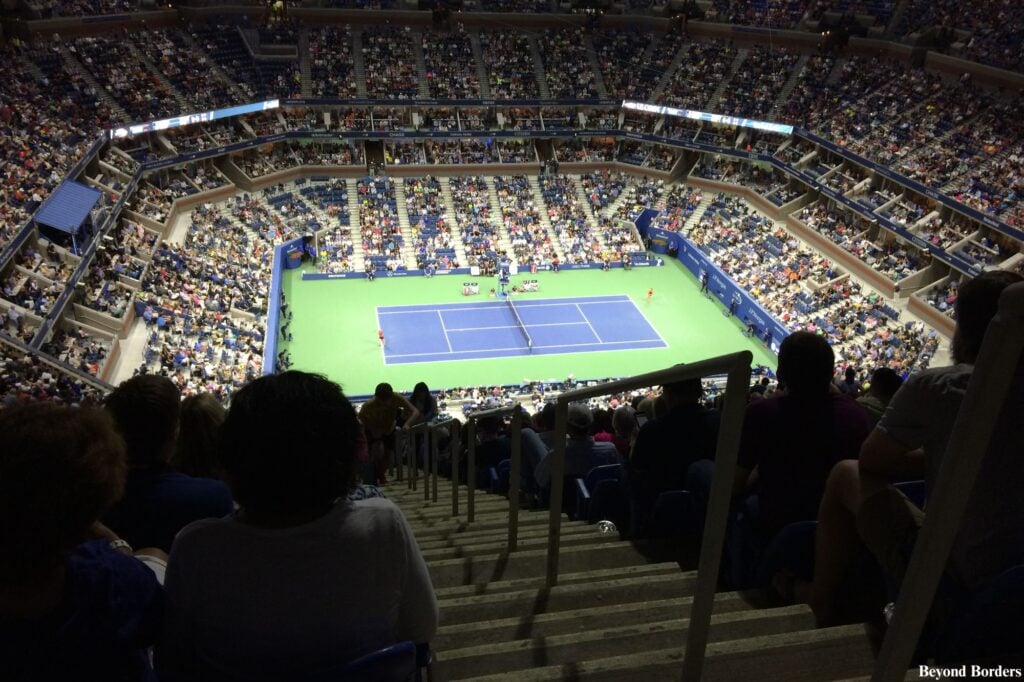
- The 6:00pm Bottleneck: Even though matches in Arthur Ashe don’t start until 7:00pm, entry begins at 6:00pm. This is the busiest time at the security gates. To see the first ball hit, you should aim to be in the security line by 5:30pm.
- The Overlap Rule: If you have an Evening Session ticket, you can still catch the tail end of the high-stakes Day matches on the outer courts and in the Louis Armstrong upper deck. It’s a great way to get extra value out of a night ticket.
- No “Late” Grounds Pass: A common point of confusion is whether you can buy a cheaper grounds pass just for the evening. In 2026, there is no “evening-only” grounds admission–you either need a stadium ticket for night entry, or you have to buy a full-day grounds pass and simply arrive late.
The “Late Entry” Strategy (The Budget Hack)
If you were thinking of a pass to get into the grounds late at night without the high price of an Ashe ticket, here is the procedural reality:
- There is no “Evening-Only” Grounds Pass: Unlike some other tournaments, the US Open doesn’t sell a cheaper grounds pass that starts at 6:00pm.
- The “Stay Late” Rule: If you buy a Day Session Grounds Pass, you can stay on the grounds as long as matches are playing. You don’t get kicked out when the night session starts (but you still won’t have access to Arthur Ashe Stadium at night). This is the secret to getting “primetime” tennis on the outer courts for a fraction of the price of a night stadium ticket.
- The “Evening” Louis Armstrong Ticket: For 2026, tickets are also being sold for reserved night sessions at Louis Armstrong Stadium. These are often significantly cheaper than Arthur Ashe night tickets but still give you that night-match atmosphere and grounds access starting at 6:00pm.
Important Warning:
No Re-Entry: Once you enter for the night session, if you leave the grounds, you generally cannot get back in.
How to Get to the US Open from Manhattan
Navigating to Queens during the tournament is all about timing. While it’s only a few miles away, your choice of transit can be the difference between making the first serve and sitting in traffic in a tunnel.
Option 1: The LIRR (The “Speed & Comfort” Choice)
This is the gold standard for getting to the Billie Jean King National Tennis Center.
- Departure: Head to Penn Station or the new Grand Central Madison terminal at Grand Central.
- The Route: Look for the Port Washington Branch. It’s a direct, 19-minute ride to the Mets-Willets Point station.
- Buy a CityTicket: Since you’re traveling within NYC, don’t buy a standard ticket. Use the MTA TrainTime app to buy a CityTicket ($7.00 peak/$5.00 off-peak). It’s cheaper than a standard fare but gets you the same seat.
Pro Tips:
- The LIRR is less crowded and has better air conditioning than the subway–well worth the extra few dollars if you’re heading straight to a long day in the sun.
- If you’re still deciding on a home base for your trip, I recommend staying in Midtown, near Penn Station or Grand Central. It makes the 20-minute LIRR trip to the tournament incredibly easy. Check out my Booking Strategy Guide for my top 5 Midtown hotels, perfect for any budget!
Option 2: The 7 Train (The “Budget” Choice)
The most frequent way to get there, but expect “tennis-commuter” crowds.
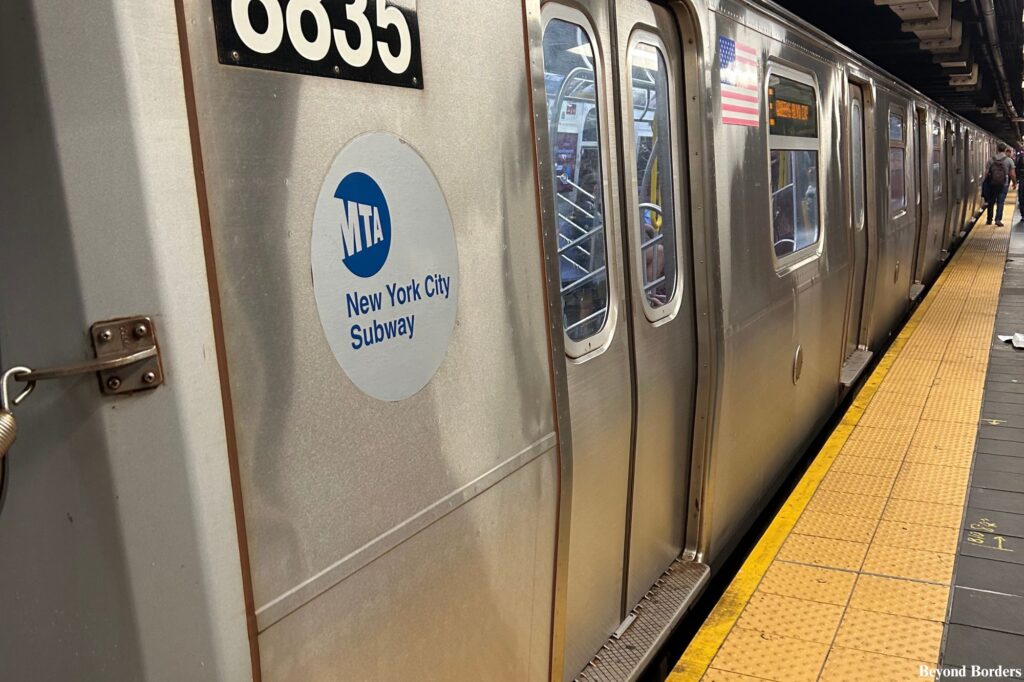
- Departure: Board at Hudson Yards, 5 Av, Times Square, or Grand Central. These are the first stations on the 7 train in Manhattan; there will likely be fewer people already on the train when you board.
- The “Super Express”: During the tournament, the MTA runs special Diamond 7 Express trains. They skip a massive chunk of local stops in Queens, cutting your travel time down to about 30 minutes from Midtown.
- Navigation: Get off the train at Mets-Willets Point. Follow the massive crowds across the boardwalk–you can’t miss it.
- Use OMNY: Remember, MetroCards have been discontinued. Just tap your debit/credit card or phone at the turnstile to keep things moving.
Option 3: Rideshare & Driving (The “Warning” Choice)
I generally advise against this unless absolutely necessary, as traffic on the Grand Central Parkway is brutal during session changes and rush hour.
- Drop-off Point: Ubers and Lyfts are not allowed to drop you off at the front gates. You will be dropped off at the New York Hall of Science or the New York State Pavilion area.
- The Walk: Expect a 10–15 minute walk from the rideshare lot to the actual South or East Gate entry points.
- The Strategy: If you must use a car, have your driver drop you at a nearby subway stop in Long Island City or Sunnyside and take the 7 train the rest of the way to skip the final 2 miles of stadium traffic.
Important Warning:
Before you head out, check the Mets’ home schedule at Citi Field. If there is a home game at the same time as a US Open session, the Mets-Willets Point station becomes twice as crowded. On these days, the LIRR is your best bet to bypass the subway crowds.
How to Handle US Open Mobile-Only Entry and Security
The US Open has moved to a completely frictionless–but strictly enforced–entry system. If you aren’t prepared before you reach the boardwalk, you’ll likely find yourself directed to the back of a very long line.
1. Digital Ticketing: The “No-Screenshot” Rule
Security at the gates will not accept a screenshot or a printed PDF of your ticket. The barcodes are “dynamic,” meaning they refresh every few seconds to prevent fraud.
- The App Trio: Ensure you have the US Open App, Ticketmaster, or your Apple/Google Wallet ready to go.
- The “Dead Zone” Strategy: With 25,000 people trying to ping the same cell tower, data speeds at the gates are notoriously slow. Download your tickets to your mobile wallet before you leave Manhattan.
- Transfer in Advance: If you’re meeting friends or family, transfer their tickets to them before you arrive. Everyone must have their own ticket on their own phone for the fastest entry.
2. The 2026 Bag Policy: Beyond the Dimensions
I mentioned this earlier, but I’ll expand on this here. The official limit is one bag per person, no larger than 12” x 12” x 16”. However, the secret is in the type of bag.
- Backpacks are banned: Even if your backpack is tiny, it is strictly prohibited. The only exception is a single-compartment drawstring bag.
- Totes & Crossbodies: These are your best friends. They are much easier for security to scan quickly.
- The Locker Reality: If you accidentally bring a prohibited bag, you’ll have to use the storage lockers outside the Main Entry (East) or Champions’ Gate. It’s a paid service and can add 30+ minutes to your entry time during peak hours. Avoid this at all costs.
3. Prohibited Tech & Gear
If you are a visitor who wants to capture original content, this is the most important part for you:
- Cameras: “Point and shoot” and SLR cameras are allowed, provided the lens does not exceed 300mm.
- The “No-Go” List: Laptops, tablets, selfie sticks, and camera stabilizers (like gimbals) are strictly prohibited. Leave the MacBook at the hotel; you won’t get it past the first checkpoint.
- Water Bottles: You can bring a reusable metal or plastic water bottle (no glass!), but it must be 24 oz. or less, and it must be empty upon entry. There are plenty of filling stations/water fountains inside.
Before You Reach the Gate Checklist
- [ ] Tickets added to Apple/Google Wallet.
- [ ] Phone at 100% battery (or bring a portable power bank–these are allowed).
- [ ] Bag is a tote or drawstring (No backpacks!).
- [ ] Water bottle is empty.
- [ ] Laptop and selfie sticks left at home.
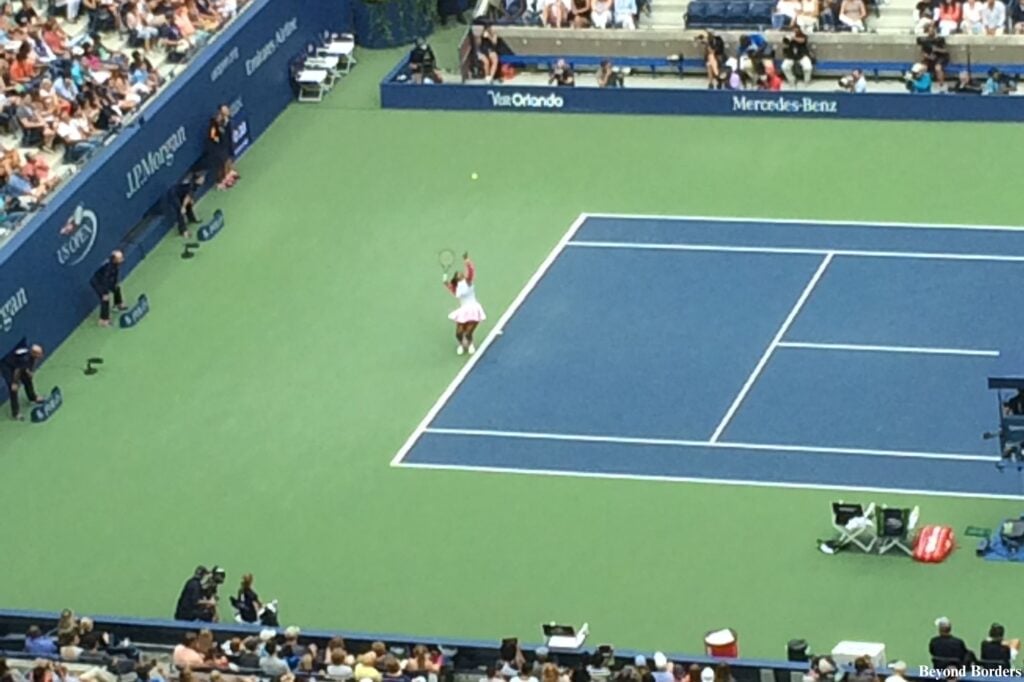
The First Stop: American Express Perks
If you are an Amex cardholder, don’t walk past the blue booths. These perks are “logistics lifesavers” that help you stay informed and charged throughout the day. Read more about Amex cardholder perks on the American Express official website.
1. The Complimentary US Open Radio
This is the most popular perk on the grounds! It’s a small earpiece that lets you listen to live ESPN commentary of the matches while you’re sitting in the stands.
Where to find them: There are five main locations, but the easiest ones to hit are at the Main Entry (East Gate), the Fountain Plaza, and the Grandstand stadium.
Pro-Tip:
Head here immediately after entry. By the time the marquee matches start at 2:00pm, these are almost always gone.
2. The Amex Card Member Lounge
Located on the second floor of the American Express Fan Experience (near the East Gate/Main Entry).
- The Benefit: It’s air-conditioned and–crucially–has mobile charging stations! If you’ve been taking photos and videos all morning, your battery will likely be low by mid-afternoon.
- Guest Policy: You can bring up to two guests with you just by showing your card.
3. The Centurion Lounge (Platinum & Centurion Only)
If you have a Platinum or Centurion card, this is your “luxury” home base located in Louis Armstrong Stadium.
The Strategy: Unlike the general lounge, this requires a reservation via Resy. Reservations open at 9:30am sharp each morning for that day. Set an alarm on your phone, as they disappear in seconds.
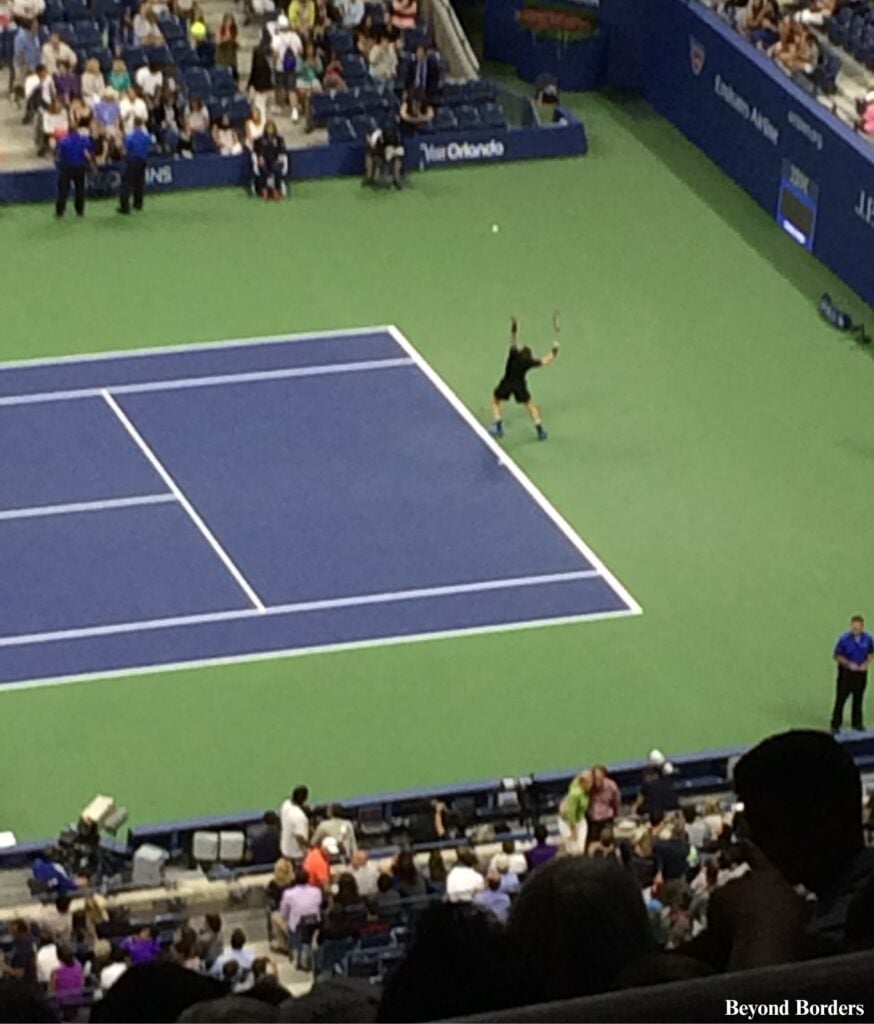
How to Navigate the National Tennis Center: A Layout Strategy
The Billie Jean King National Tennis Center is massive, and if you don’t have a plan, you’ll easily clock 20,000 steps just trying to find a bathroom or a specific court. Here is the physical breakdown of the grounds.
The North End: The Power Hub
This is the most crowded area and where you’ll spend the most time if you have stadium tickets.
- Arthur Ashe Stadium: The centerpiece! It’s impossible to miss; you will see the fountains in front of the entrance to the stadium.
- Tip: Entry for the Promenade (upper) level is on the outside of the stadium. If you have courtside seats, you’ll enter through the main Great Hall.
- Louis Armstrong Stadium: Located just to the east of Ashe; you will see it first before Ashe if you are entering the tennis center from the East Gate (the main gate).
- The Practice Courts: Located right behind Arthur Ashe. This is a must-visit for your original photography. There is a two-story viewing gallery that allows you to look down directly onto the players. It’s the best place to get close-up “action shots” of the world’s top players without needing a front-row ticket.
- Tip: Entry for the Promenade (upper) level is on the outside of the stadium. If you have courtside seats, you’ll enter through the main Great Hall.
The South End: The “Intimate” Courts
If you want to feel the speed of the game, head south away from the main stadiums.
- Grandstand: Tucked in the southwest corner. It’s a “sunken” stadium that feels very intimate. Even the “nosebleed” seats here are closer to the court than the middle of Arthur Ashe.
- The Field Courts (4–17): These are the small courts lined up in rows. This is where the “procedural” magic happens. You can sit just inches away from the players.
- Strategy: Walk the “boardwalk” (the elevated path) to get a bird’s-eye view of four matches at once to see where the best action is.
The East Gate vs. South Gate
- East Gate (Main Entry): This is where the LIRR and 7-Train boardwalk lead you. It is the most beautiful entrance for photos (the Unisphere is right there), but also the most crowded.
- South Gate: If you are arriving via rideshare or walking from the parking lots, you’ll likely use this gate. It usually has shorter lines than the East Gate during peak session changes.
Navigation Pro-Tips:
- Water Stations: Don’t buy $7 water bottles! There are high-tech chilled water fountains located near the bathrooms of every major stadium. Bring an empty (non-glass) reusable bottle to refill.
- The Big Screens: If a match on a field court is at capacity, head to the “Court 17” area or the main plaza outside Ashe. They have giant LED screens with lounge seating where you can watch the high-stakes matches in the shade.
How to Navigate Fan Week: The “Secret” Budget Hack
Fan Week is the ultimate “insider” secret of the tournament. If you want the full US Open experience–stadium access, star players, and that iconic atmosphere–without paying for a ticket, you need to plan your visit for Fan Week.
1. What is Fan Week?
Fan Week is a six-day festival held during the Qualifying Tournament, held the week immediately preceding the main draw (late August). While the main draw superstars are practicing, hundreds of other world-class players are competing for the final spots in the tournament.
- The Cost: Entry to the grounds is completely free. You do not need a ticket to enter the facility, though some specific evening events (like the “Stars of the Open” exhibition) may require a separate paid ticket.
- The Access: You have free access to the front-row seats of the outer courts and even the lower bowls of Louis Armstrong Stadium and Grandstand.
- Bag Policy: Even during Fan Week, the strict bag policy and security screenings are still in full effect.
2. Photography and Fan Week
Capturing photos during Fan Week is actually better than the main tournament for three reasons:
- The Practice Court Schedule: The US Open publishes a public “Practice Schedule.” During Fan Week, you can stand three feet away from legendary players like Sinner or Alcaraz while they warm up on the practice courts.
- Smaller Crowds: While it’s still busy, it’s nothing compared to the 70,000+ people on the grounds during the main draw. This makes it much easier to get clean shots of the Unisphere, the fountains, and the stadium architecture without a sea of heads in the way.
- Arthur Ashe Access: Usually, one or two days during Fan Week allow fans to walk into the upper promenade of Arthur Ashe Stadium for free to watch open practice sessions. This is the only time you can see inside the world’s largest tennis stadium without an expensive reserved ticket.
3. Key Fan Week Events to Watch For
- The Qualifying Tournament: High-stakes tennis where players are literally fighting for their careers. The intensity is incredible.
- Net Generation Kids’ Day: A massive event for families with clinics and player appearances.
- Arthur Ashe Kids’ Day: Usually the Saturday before the main draw begins; it often features musical performances and top-tier players.
Fan Pass Pro-Tip:
Even though entry is free, the US Open encourages fans to register for a “US Open Fan Pass” (a QR code on your phone). This gives you:
- Reserved seating for certain practice sessions.
- Entry into various “sponsor zones” for free giveaways and opportunities to take photos.
- Access to the digital “schedule of play” so you know exactly which court your favorite player is on.
How to Get the Best Food and Drink at the US Open
Eating at the National Tennis Center is as much a part of the tradition as the tennis itself. However, with “stadium pricing” in full effect, you need a plan to ensure you’re getting the best quality food and drink for your money.
1. The Iconic “Honey Deuce”
You cannot walk ten feet without seeing someone holding a Honey Deuce.
- The Drink: A refreshing mix of Grey Goose vodka, lemonade, and Chambord (raspberry liqueur), topped with three honeydew melon balls that look exactly like mini tennis balls. It has been the US Open’s signature drink since 2007.
- The “Souvenir” Hack: The drink is very expensive (usually $22+), but it comes in a sturdy, commemorative plastic glass listing all past US Open champions. Many fans collect these every year.
- Pro-tip: If you want the glass but not the alcohol, most booths will sell you a “mocktail” version in the same commemorative cup for a slightly lower price.
2. Must-Try Food Options
The US Open food court (located near the East Gate) is surprisingly high-end, featuring outposts of famous NYC restaurants.
- The Kosher Hot Dog: For a classic New York experience, look for the certified Kosher stands (typically located in the Food Village). These are a staple of the tournament and are often cited by fans as the best “quick bite” on the grounds. Note that these stands usually close early on Friday evenings and remain closed on Saturdays for the Sabbath.
- Pat LaFrieda’s Filet Mignon Steak Sandwich: A cult favorite. It’s expensive, but it’s one of the few “filling” meals that feels worth the price.
- Fuku Spicy Fried Chicken: Created by David Chang, this is a great option if you want something with a bit of a kick that’s easy to eat while walking between courts.
3. Strategic Dining: When & Where to Eat
- Avoid the “Session Change” Rush: Between 5:00pm and 7:00pm, the Food Village becomes a bottleneck as Day Session fans grab a final drink and Night Session fans arrive hungry. Eat around 4pm or wait until 7:30pm (or later) to avoid 30-minute lines.
- The “Hidden” Food Area: Most people stay in the main Food Village. However, there are smaller food clusters near the Grandstand and Court 17 that often have much shorter wait times for basics like water, pretzels, and hot dogs.
- Free Water: As mentioned in the logistics section, bring an empty reusable bottle. There are chilled filtered water stations throughout the grounds, which will save you at least $7 per bottle.
4. The “Off-Site” Budget Alternative
If you want to save your “splurge” money for a Honey Deuce, do what the locals do:
Take the 7 train just one stop further east to the end of the route at Flushing-Main Street. You’ll be in the heart of Flushing’s Chinatown, where you can get world-class dumplings, noodles, pork buns, and more for a fraction of the price of stadium food. It’s a great “pre-match” fuel-up or “post-match” dinner!
For a full breakdown of where to eat along this subway line, check out my Queens Guide to Chinese Restaurants, where I share my top picks for Flushing (look under “Manhattan Chinatown’s Bigger Rival: Downtown Flushing” for recommendations).
How to Get the Best Photos of the Tennis and the Skyline
1. The Best Photo Opportunities on the Grounds
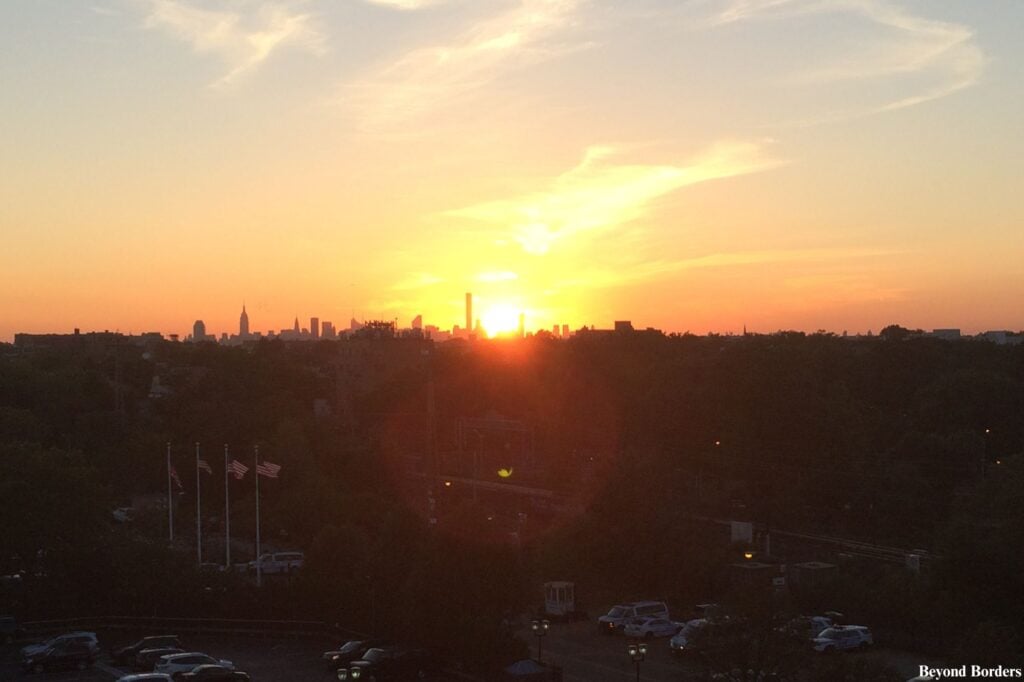
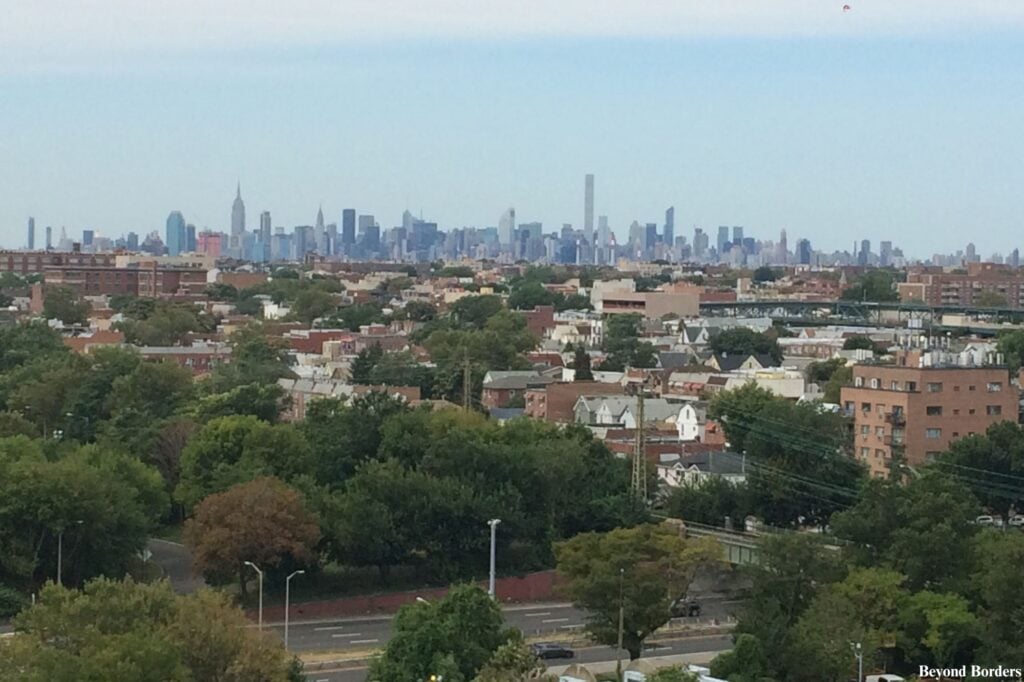
- The Manhattan skyline from Arthur Ashe: Head to the very last rows of the Promenade level in Arthur Ashe Stadium. From the top of the south side, you get a breathtaking wide shot that includes the stadium court in the foreground and the Manhattan skyline in the background. It’s the ultimate “I was there” shot!
- The Practice Court Gallery: As mentioned earlier, the elevated viewing platform here is your best chance for “player portraits” without a courtside ticket. Use a portrait mode on your phone or a 50mm-85mm lens to blur the background and make the player pop.
- The Unisphere at Night: Don’t just take a photo of the Unisphere on your way in. Wait until you’re leaving the night session when it’s lit up and reflects in the fountains. It’s the most “cinematic” shot of your visit.
2. Camera Gear: Know the Limits
To keep this procedural, remind your readers about the specific 2026 security “hard lines”:
- The 300mm Rule: You can bring a professional SLR or mirrorless camera, but your lens cannot exceed 300mm. If your lens looks like a “bazooka,” security will likely turn you away.
- No “Pro” Extras: Leave the tripods, monopods, and gimbals at home. They are strictly prohibited. For stable video, lean against a stadium railing or use your camera’s internal stabilization.
- Flash Photography: This is a huge etiquette “no-go.” Ensure your flash is completely disabled before entering any court area. Shutter noise should also be minimized (use “Silent Mode” if your camera has it) so you don’t distract the players.
3. Working with the Light
- The Golden Hour (5pm – 7pm): This is when the light “spills” across the blue courts, creating long shadows and vibrant colors. This is the best time for those action shots on the outer courts.
- Night Session Lighting: The floodlights are incredibly bright, but they can create harsh shadows on players’ faces. To get a clean shot at night, wait for the player to be at the baseline where the light is most even.
Conclusions: Your US Open Game Plan
Navigating the US Open is a marathon, not a sprint. If you take away only three things from this logistics guide, let it be these: take the LIRR for the fastest way to get there, leave your backpack at your accommodation, and get your Amex radio the second you walk through the gates (if you are a cardholder).
The US Open is easily the most electric sporting event in New York City, and while the logistics can feel like a high-stakes match of their own, being prepared means you can actually spend your time focusing on the tennis (and the Honey Deuces!) rather than the stress of the commute.
Now for the ultimate tournament debate: Day Session vs. Night Session? Are you here for the non-stop outer court action under the sun, or do you live for the marquee matches and the lit Manhattan skyline views at night? Let me know which one you’re booking this year!