
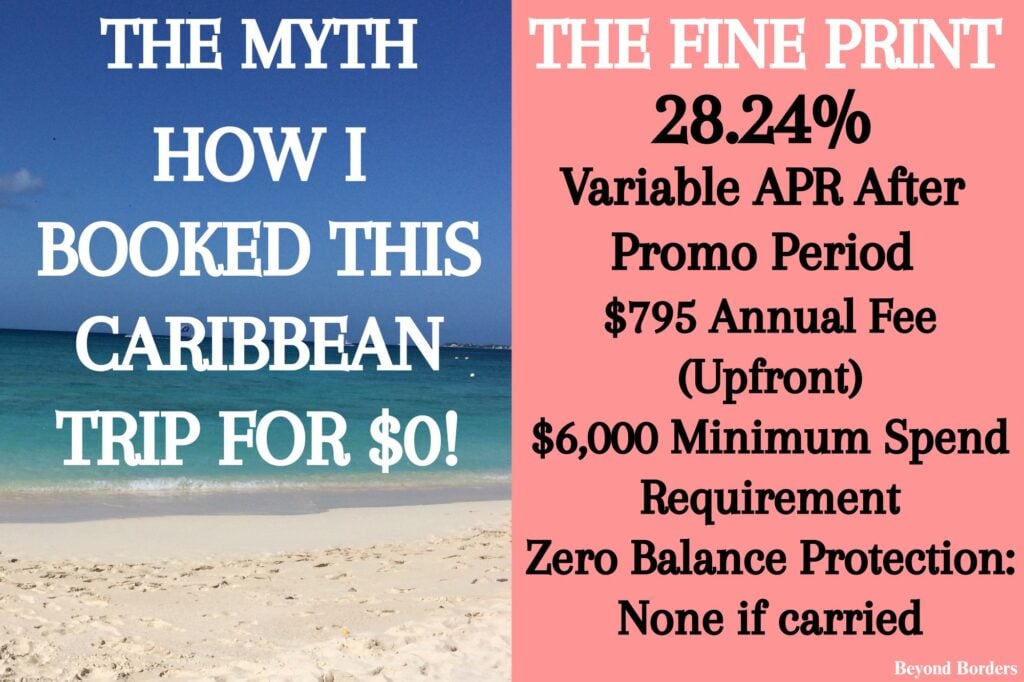
Behind the hype of “free travel” lies a multi-million-dollar affiliate economy. Here’s how travel influencers monetize travel rewards credit card recommendations–and the hidden APR traps, fee structures, and more that cost everyday travelers real money.
Is Travel Hacking Worth It? What to Know About Travel Influencers and Reward Credit Cards:
Travel influencers market high-fee travel credit cards as risk-free shortcuts to luxury, funding their lifestyles through lucrative Cost-Per-Acquisition (CPA) affiliate commissions.
In this breakdown, you will:
- Learn how travel credit card affiliate payouts and CPA bounties work.
- Expose the critical fine print social media influencers routinely leave out.
- Examine the most popular travel credit cards heavily pushed online.
- Deconstruct the psychological tactics creators use to maximize affiliate clicks.
- Analyze how corporate comparison sites (e.g., NerdWallet) mirror social media marketing.
Followed by the Modern Traveler’s Audit: a practical 5-step framework to evaluate whether a rewards credit card actually fits your budget.
Editorial and Fair Use Disclosure: This article is an independent journalistic commentary and educational analysis of creator marketing, financial media incentives, and credit card affiliate structures. All screenshots, images, and quoted material from publicly accessible websites and third-party social media channels (including YouTube, Instagram, and/or TikTok) are included under the Fair Use doctrine (17 U.S.C. § 107) for the purpose of commentary, criticism, news reporting, and media literacy education. To preserve individual privacy and focus on broader industry practices rather than specific creators, personal identifiers, handles, and avatars have been redacted. This publication receives no compensation or affiliate revenue from any financial institutions or products discussed.
Introduction: The Business of “Free” Travel
If you have scrolled through your social media feed recently, you have almost certainly encountered the pitch. A polished 60-second video shows a traveler sipping champagne in a lie-flat business-class seat on an international flight or opening the glass doors of a five-star resort suite in Bali. The caption delivers a familiar promise: “How I got this $5,000 business class seat for only $400,” or “Why you should never pay the full rate for a hotel stay again.”
To an audience navigating rising travel costs (especially in extremely popular cities to visit like New York City), these videos feel like a financial lifeline–a portal into a lifestyle that used to be reserved exclusively for the wealthy. The creator appears not as a salesperson, but as a savvy “travel big sis or bro” or a generous friend passing along trade secrets the industry doesn’t want you to know.
However, behind the seamless transitions and aspirational travel lies one of the most lucrative marketing ecosystems on the internet.
Jump to my Quick-Reference FAQs ↓ at the bottom of this guide if you have a specific question!
Utility vs Illusion: The Disclaimers Hidden Behind the Hype
Credit card rewards and point transfers are legitimate financial tools. Disciplined consumers who pay their balances in full every month can use them strategically to offset significant travel expenses. But when credit cards are marketed as risk-free shortcuts to luxury, critical consumer disclaimers are routinely left out:
- The High Annual Fee Stacks: Unlocking “free” resort nights and lounge access frequently requires holding cards carrying annual fees ranging from $250 to $895 per year.
- The Minimum Spend Pressure: Sign-up bonuses often demand spending $4,000 to $10,000 within ninety days to receive the sign-up points, incentivizing consumers to overspend on personal expenses just to hit that target.
- The Point Economy Disconnect: High-volume creators operate with a constantly replenished pool of points generated by audience approvals for these credit cards, allowing them to burn 60,000 points on a single luxury flight–a redemption that represents months or years of hard-earned spending for the average viewer.
Understanding this dynamic requires looking past the glossy travel aesthetics and examining the financial systems in place underneath.
In this article, I break down:
1. How credit card affiliate payouts work,
2. Expose the fine print social media influencers don’t include,
3. The most popular travel credit cards influencers push their viewers to apply for,
4. Deconstruct the tactics influencers use to maximize their viewers’ clicks, and
5. Analyze how corporate institutions’ incentives compare to what you see on social media.
By the end of this article, you’ll be able to see past the lifestyle aesthetics, decode the hidden affiliate mechanics, and decide whether a travel credit card actually makes sense for your budget–all on your own terms.
Follow the Money: The Affiliate Pipeline Funding the Flex
To understand why your social media feed is flooded with travel creators telling you to “get the card linked in my bio,” you have to pull back the curtain on creator economics. Influencers aren’t giving you disinterested financial advice out of the goodness of their hearts–they are operating a highly lucrative financial pipeline that converts your credit score into their next luxury vacation.
Here is how the money, points, and incentives actually work behind your screen.
1. How Credit Card Affiliate Payouts Work (The CPA Model)
Popular travel influencers and media outlets operate on direct financial affiliate networks (such as CardRatings, Impact, or CJ Affiliate). While a fashion or tech creator earns a modest 2% to 5% commission when you buy a shirt or phone case through their link, financial institutions play by a completely different rulebook.
- The System: Credit card companies acquire customers using a Cost-Per-Acquisition (CPA) model. Instead of paying for mere views or clicks, the bank pays the influencer a flat, high-dollar bounty every single time a viewer is approved for a card through their link.
- The Cold Hard Math: Payouts for mid-to-high-tier travel cards typically range from $50 to $300+ in pure cash per approved user.
- The Scale: Consider what that means at scale. If a travel influencer posts a YouTube Short or Reel that gets 500,000 views, and just 100 people apply and get approved using their bio link, that single 60-second video just generated $10,000 to $30,000 in cash revenue directly into the creator’s business bank account.
2. The Closed-Loop “Trip Funding” Cycle
This creates a self-sustaining marketing engine that masquerades as lifestyle content:
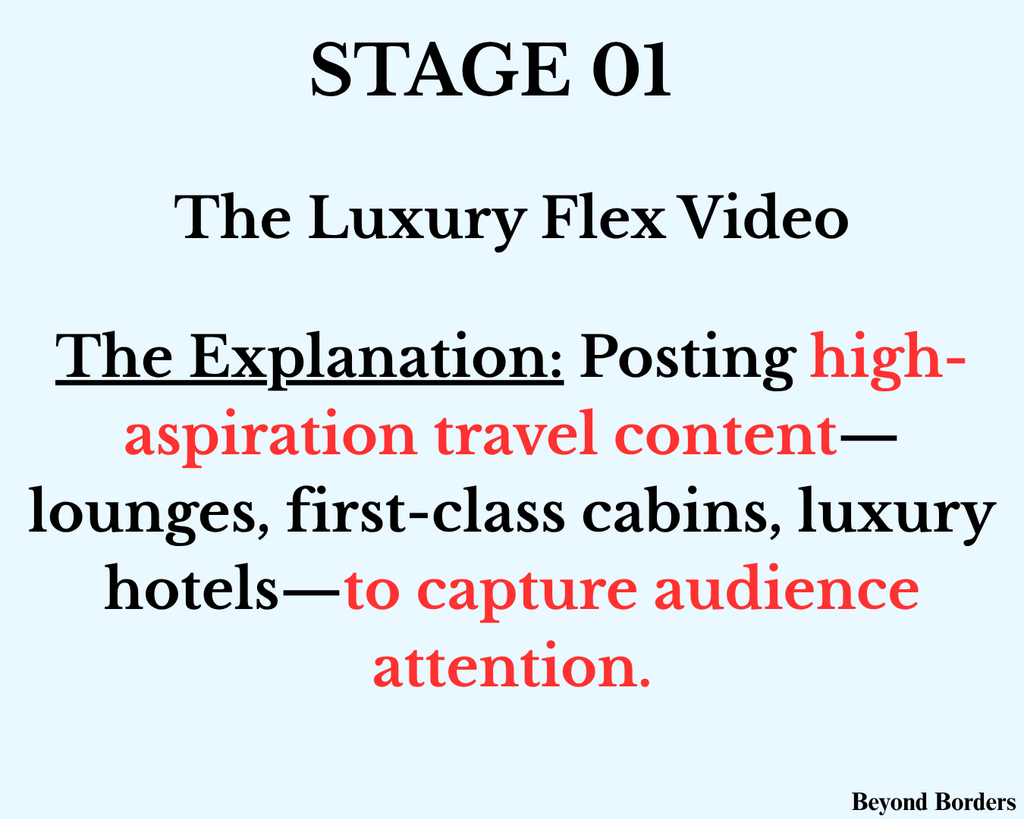
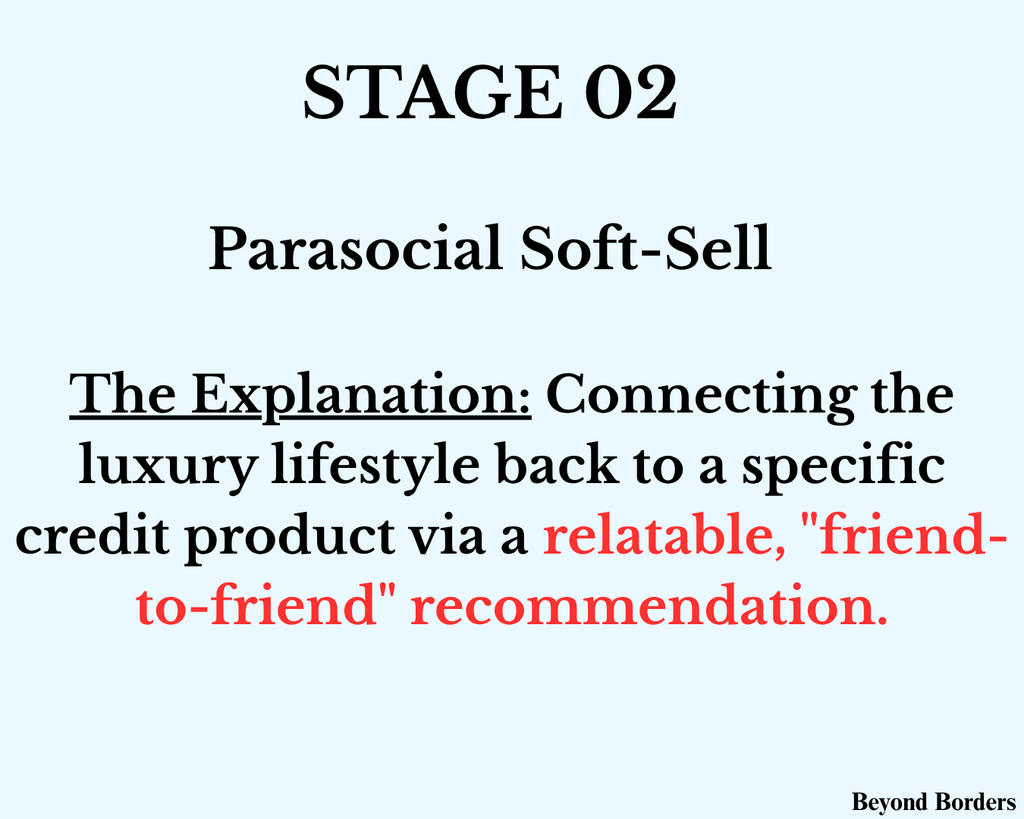
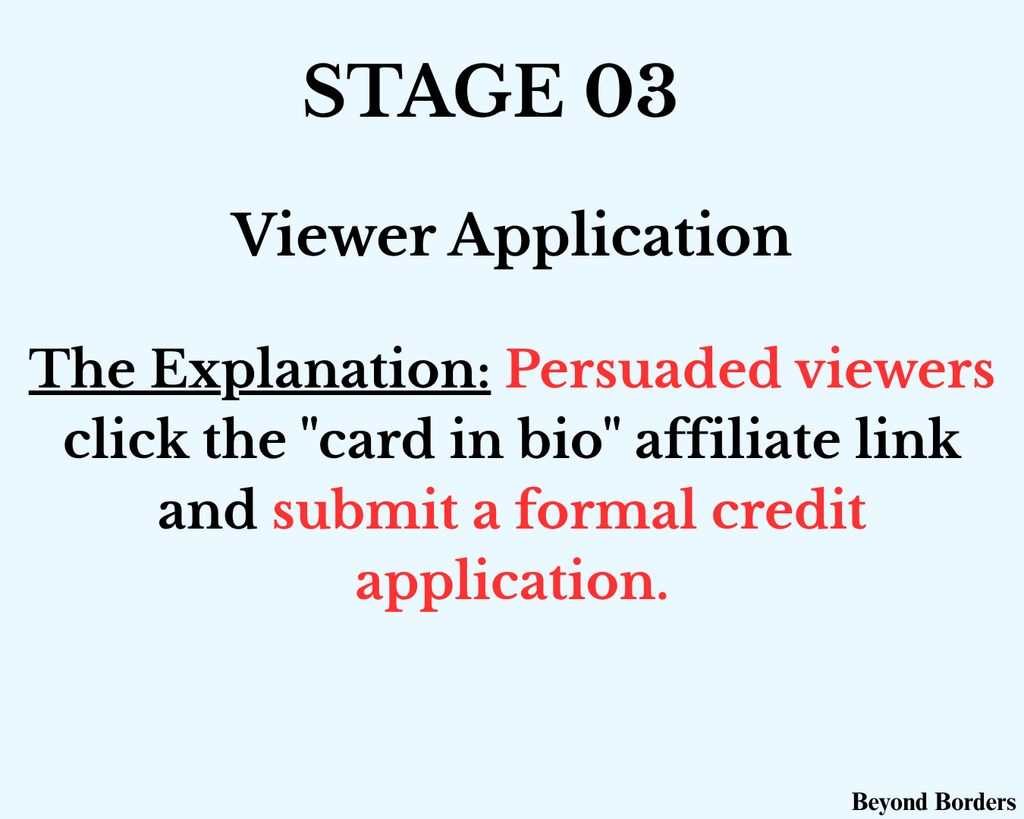


The Exposure: The reader realizes the influencer isn’t traveling for “free on points”–they are traveling on the commissions generated from their audience taking on debt and annual fees.
3. The Conflict of Interest (Why They Don’t Warn You)
These affiliate networks and referral systems operate on a binary outcome: they only pay out if the user is approved.
- Why Nuance Gets Left Out: If an influencer spent time explaining:
- “Hey, don’t get this card if your credit score is under 700,”
- “Don’t get this if you can’t hit the $6,000 minimum spend to get the 100,000 points,” or
- “The $895 annual fee is steep and could hurt your savings,”
- …they would drastically drop their approval and conversion rate.
- The Reality: They are financially incentivized to make the cards sound as easy, essential, and risk-free as possible to maximize approved clicks. I talk more about this below in my section “The Fine Print Influencers Conveniently Leave Out.”
The Mechanics: How Creators Monetize Your Credit Score
1. The “Sole Proprietorship” Loophole
This is a massive trend on social media where creators push viewers to apply for high-value business credit cards (like Chase Ink Business Preferred® or Amex Business Platinum®) even if the viewer doesn’t own an actual business.
- How the Pitch Works: Influencers tell their viewers, “You don’t need a real business! If you sold an item on eBay once or dog-sit, you’re a Sole Proprietor!” They walk viewers through putting their Social Security Number (SSN) down as a Tax ID and listing $500 as “annual revenue.”
- Why Influencers Push It: Business cards often carry the largest sign-up bonuses (e.g., 100,000–150,000+ points), requiring massive minimum spends (e.g., $6,000–$10,000 in only 3 months). The influencer gets a massive affiliate payout or referral bonus when the viewer applies.
- The Reality Check/Consumer Risk: While applying as a sole proprietor is technically legal for legitimate side hustles, influencers gloss over the risks:
- Mixing Finances: Mixing personal expenses on business credit cards can complicate personal taxes and void certain consumer protections (like protections from the 2009 CARD Act that apply strictly to personal credit cards; you can read more about the CARD Act here).
- The Overspending Pressure: Business cards have strict, high minimum spend requirements. Pushing average consumers into business cards just to hit a bonus often forces them to overspend wildly on everyday personal items to hit the $8,000–$10,000 threshold.
2. “Refer-a-Friend” Links (Points vs. Cash)
Travel influencers can use either affiliate links or their “refer-a-friend” links to make money:
- Official Affiliate Networks/Financial Aggregators (Direct Cash): Major card issuers (e.g., Chase, Amex, Capital One) partner with financial affiliate networks and brokers (like CardRatings, Impact, or CJ). Large creators and media outlets sign up through these networks to get unique links for Chase/Amex cards and receive direct cash payouts sent to their bank accounts.
- When a big influencer drops a link for the Chase Sapphire Reserve® or Amex Platinum®, they aren’t using a casual referral code from their banking app. They are contracted through financial affiliate networks and brokers (like Impact or CardRatings) that track card approvals and pay out massive cash amounts directly into the creator’s business bank account.
- Refer-a-Friend Links (In-House Point Systems): The banks do run their own internal systems, but these are strictly the in-app “Refer-a-Friend” links. These are open to any regular cardholder inside the Chase or Amex mobile apps. They pay out strictly in bonus points/miles, capped annually, rather than cash payouts through a corporate network. Just as with official affiliate networks, the influencer is only paid if the viewer’s application is approved.
- The Pitch: They frame it casually: “Use my link to support my channel!”
- The Reality Check: Every time a viewer applies through that link, the creator earns 10,000 to 30,000 reward points directly into their personal credit card account. This is literally how micro-influencers fund their “free” flights. They cap out their annual referral point limit (often up to 55,000–100,000 points per card per year) solely by getting their followers to apply.
The Fine Print Influencers Conveniently Leave Out
Influencers sell credit cards by highlighting potential rewards while purposely hiding operational risks. Breaking down what they deliberately leave out shifts the narrative from a simple “points review” into true consumer advocacy.
When an influencer gives you a 60-second pitch for a shiny metal card, here is the critical fine print that is intentionally left out:
1. The High APR Debt Trap (The Real Math of Carrying a Balance)
- The Omission: Influencers talk endlessly about 100,000 bonus points or $1,000 in “free travel,” but they rarely mention that premium travel credit cards carry some of the highest Variable APRs on the market–often ranging from 21% to 29%+.
- The Reality: If a viewer gets a card, spends $4,000 to hit the sign-up bonus, and carries even a partial balance because they couldn’t afford it out-of-pocket, high interest charges will completely erase the monetary value of those “free” points within just a few months. The bank wins, the influencer gets paid, and the cardholder is left absorbing high-interest debt.
2. The High Minimum Spend Trap (Forced Overspending)
- The Omission: Creators pitch the sign-up bonus as easy money, omitting the strict timer attached to it–typically requiring $4,000 to $8,000 in spending within 90 days.
- The Reality: For an average consumer on a baseline budget, hitting that spend threshold forces artificial lifestyle inflation. People end up buying things they don’t need, taking extra trips, or pre-paying unnecessary expenses just to hit the target–spending thousands of real dollars out-of-pocket just to secure a $750 flight.
3. Long-Term Credit Responsibility and Management
- The Omission: Pushing multiple card sign-ups makes credit card churning look like a harmless game with zero downside.
- The Reality: The viewer–not the influencer–is left holding a new financial account that requires strict long-term maintenance:
- Payment History Risk: A single missed payment can drop a credit score by 50 to 100+ points and remain on a credit report for up to 7 years.
- Credit Utilization Spikes: Maxing out a new card’s limit to hit a sign-up bonus temporarily spikes credit utilization, dinging credit scores right when a reader might be applying for an apartment lease, auto loan, or mortgage.
- Average Age of Accounts: Closing high-fee cards after year one (to avoid paying an $895 annual fee) shortens the user’s average age of credit accounts, which can drag down their score over time.
4. The Legal Contract
- The Omission: Excluding the legal reality of owning a credit card.
- The Reality: The FTC (Federal Trade Commission) requires influencers/creators to disclose paid relationships, but they don’t require creators to offer actual financial advice or verify if their audience can handle high-tier credit cards/products they have to maintain. It treats financial products like standard lifestyle merchandise, when in reality, having a credit card isn’t like buying clothing; it’s a legally binding financial contract.
“Influencer Favorite” Travel Cards: A Reality Check
To help you spot these pitches in the wild, here is a breakdown of the most heavily promoted personal and business travel cards influencers push, alongside the real spend requirements and annual fees they gloss over:
| Card Name and Card Type | Pushed Selling Point | Annual Fee, Minimum Spend Requirement, and Reality Check |
| Amex Platinum®; Personal | “Free 5-star hotel stays, Centurion airport lounge flex, $300 travel credit.” | $895/year; $12,000 in 6 months; credits are heavily coupon-book style and require strict monthly tracking; high 21%–29%+ Variable APR. |
| Amex Business Platinum®; Business | “High sign-up bonus (150k+ points), business write-off.” | $895/year; $20,000 in 3 months; lacks 2009 CARD Act protections. |
| Chase Sapphire Preferred®; Personal | “Lower annual fee, starter points card, easy transfer partners.” | $95/year; $5,000 in 3 months; this minimum spend forces artificial overspending for lower-budget users. |
| Chase Sapphire Reserve®; Personal | “First-class flights, free concerts, luxury Chase airport lounges.” | $795/year; $6,000+ in 3 months; high interest charges if balance is carried. |
| Capital One Venture X®; Personal | “2x miles on everything, airport lounge access.” | $395/year; $4,000 in 3 months; this minimum spend forces artificial overspending for lower-budget users. |
| Chase Ink Business Preferred®; Business | “100,000 free bonus points, use for rent/business expenses.” | $95/year; $8,000 in 3 months; lacks 2009 CARD Act protections. |
| Bilt Rewards Card®; Personal | “No annual fee, earn free flights just by paying your rent.” | $0/year; must make 5+ transactions/month to earn points; encourages higher rent limits**. |
**The Bilt Rewards Card is a long-time favorite among travel creators. Its headline feature is deceptively simple: it allows you to pay your monthly rent using the card without incurring the standard 3% credit card processing fee, letting you earn points on your housing costs. While that sounds like a win for renters, it fundamentally shifts how you view credit.
Rent is usually your largest monthly fixed expense. By tying your housing payments to a rewards system, creators can pitch a zero-annual-fee card to followers who could never hit the traditional $4,000 minimum spend requirements on luxury travel cards. It turns your biggest monthly bill into an automatic pipeline for bank points–and hooks you deeper into its system.
This is part of a much larger fintech trend: the increasing financialization of everyday survival. Whether it’s turning housing costs into rewards or borrowing against your next paycheck before you’ve even earned it (read more in my article on using EWA/BNPL to pay for travel), the modern financial playbook relies on embedding apps and credit products directly into your baseline survival costs.
Decoding the Strategy: Four Persuasion Tactics Influencers Use to Sell You Credit Cards
Rather than just saying travel creators overpromise, let’s break down their core persuasion strategies so you can decode these pitches on your own feed. When you peel back the slick editing and aesthetic music, almost every credit card pitch on social media relies on the same four psychological tactics to lower your (financial) defenses.
Tactic 1: The “Travel Big Sis/Bro” Persona (Parasocial Trust and Soft Selling)
The Framing: Creators rarely make videos like salespeople. Instead, they position themselves as a caring mentor, protective older sibling, or seasoned travel buddy sharing a “secret.” You will hear openers like “As your travel big sister, if you’re still using a debit card to pay for trips, we need to talk,” or “Stop paying full price for flights! Let me show you what the airlines don’t want you to know.”
The Psychological Pipeline from Relatable Persona to Affiliate Conversion
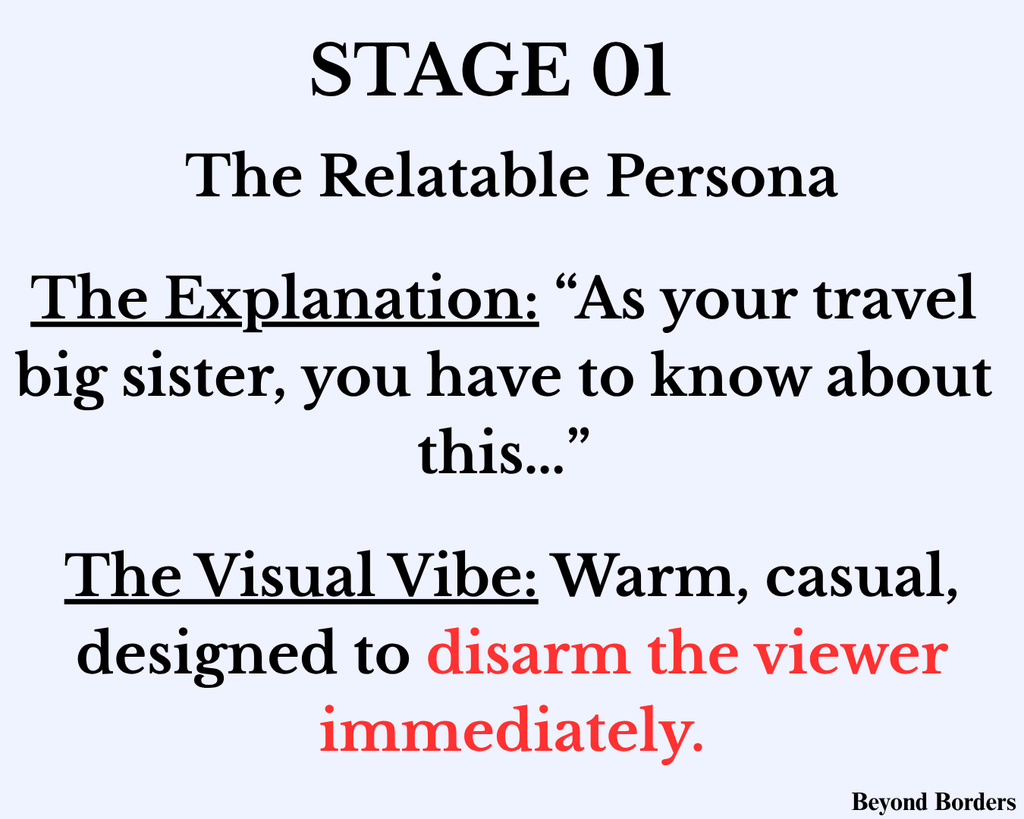

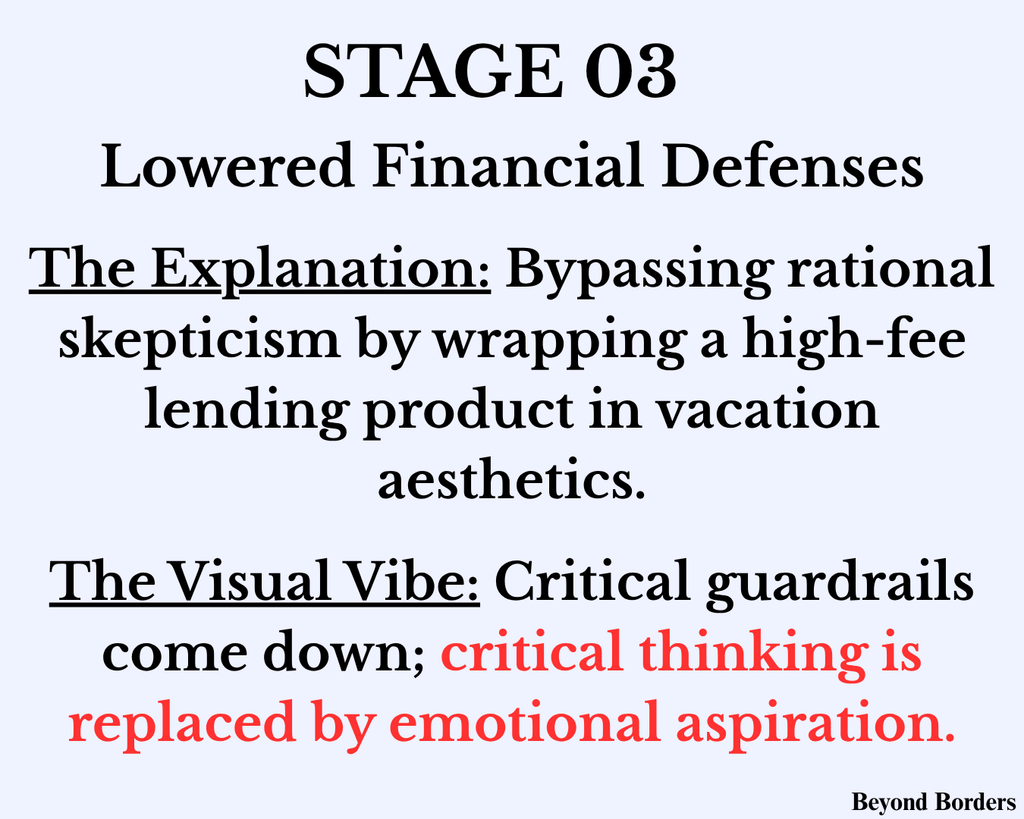
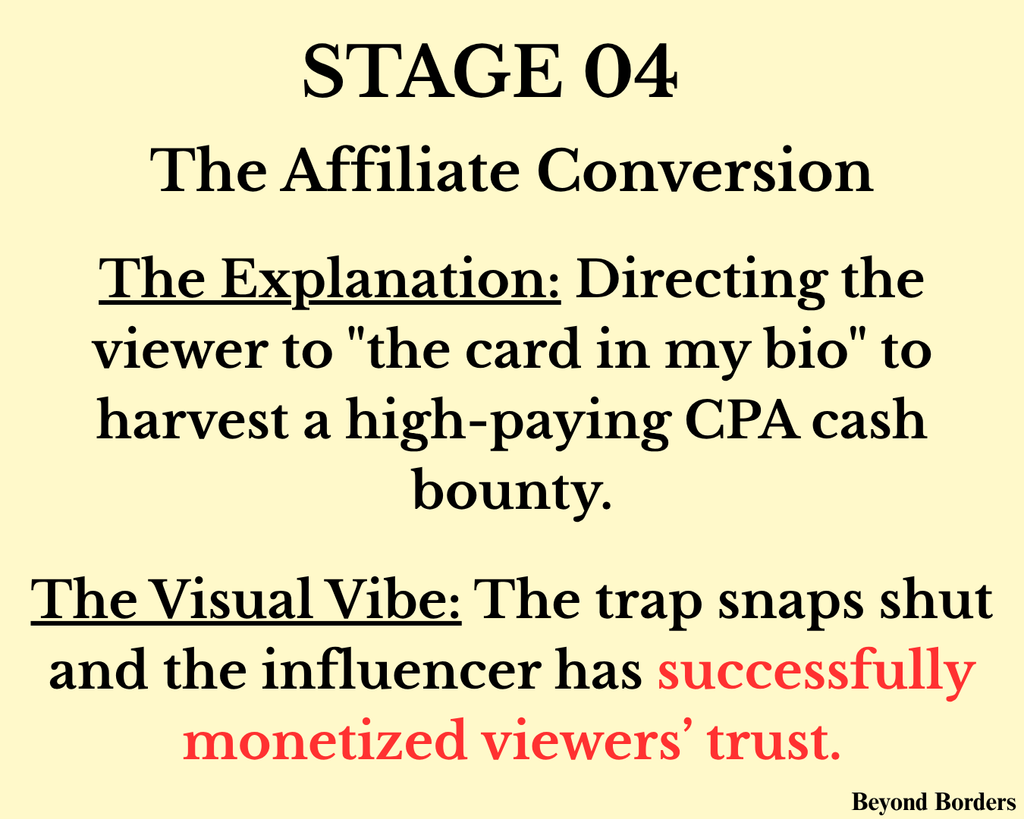
The Deconstruction: This framing leans into parasocial interaction, a one-sided psychological relationship where viewers feel a genuine bond of trust with a creator. By mimicking conversational advice between friends, the creator bypasses your natural skepticism. You perceive the recommendation as a helpful personal tip rather than what it actually is: a scripted sales pitch.
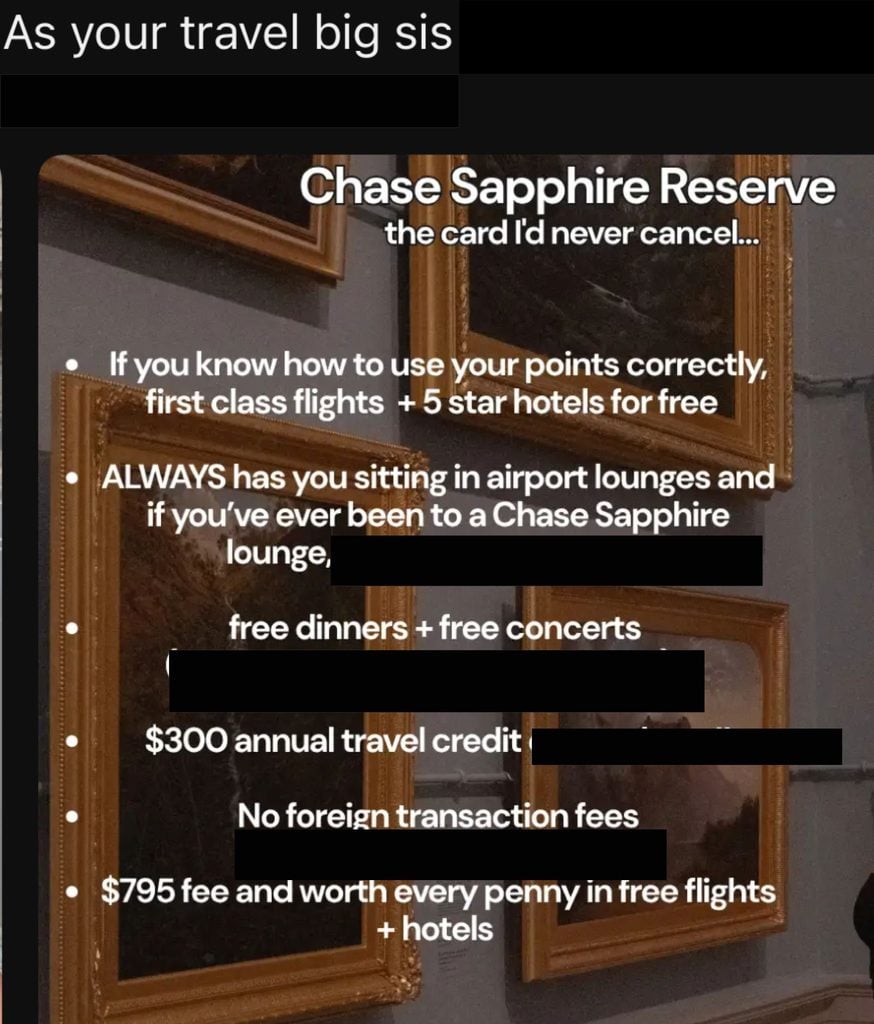
“As you’re travel big sis…”; they are trying to gain their viewers’ trust by making themselves seem like a close friend
The Hidden Incentive: Behind the casual “sisterly/brotherly advice” lies a high-margin business model. The creator isn’t suggesting that card out of pure altruism; they are directing you to a bio link that pays them a massive cash commission or a large stack of referral points every time an application is approved.
Tactic 2: Math Illusions (Hiding the True Cost)
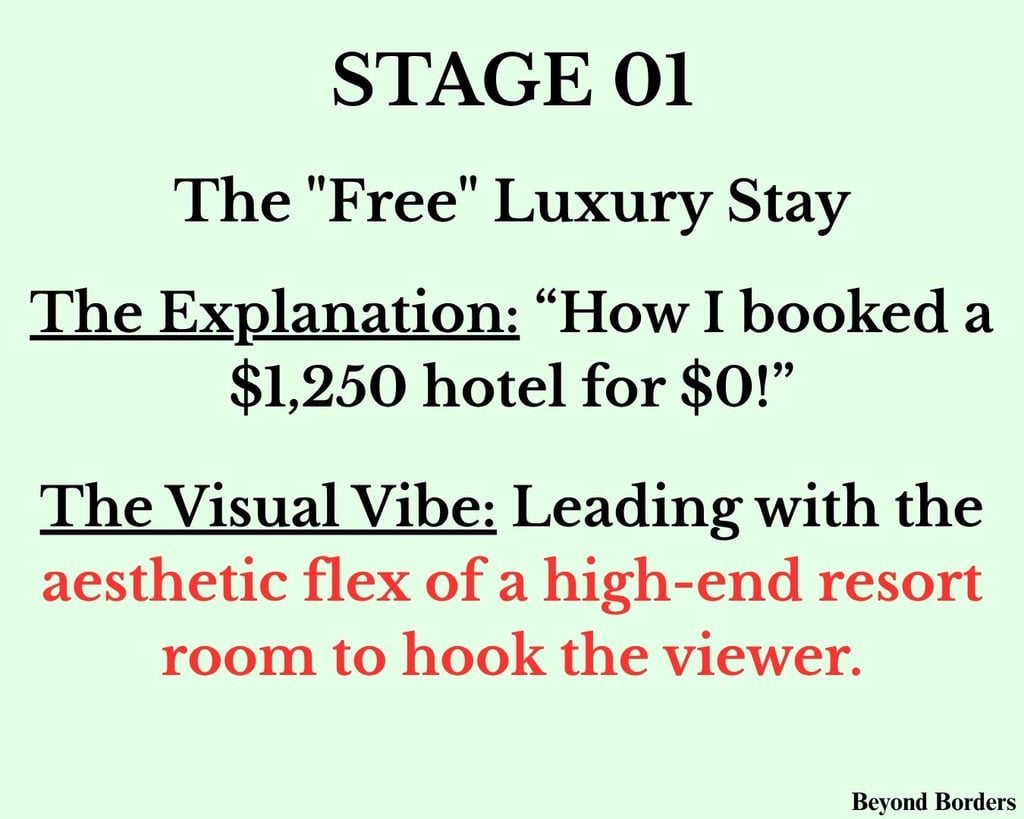
The Framing: Influencers use consumer manipulation and value anchoring to make a travel card look like an irresistible deal: they highlight flashy statement credits–$300 back on travel, $200 in hotel credits, etc–while burying the annual fee in tiny, fast-moving text or hiding it with “I booked a $1,000 hotel for $0!” or “How YOU can get a $6,440 flight for $440!”
The Deconstruction (Consumer Manipulation): Any influence that guides decision-making while creating a false illusion of free choice. Consumer manipulation tactics creators use include hidden information, such as glossing over net out-of-pocket costs:
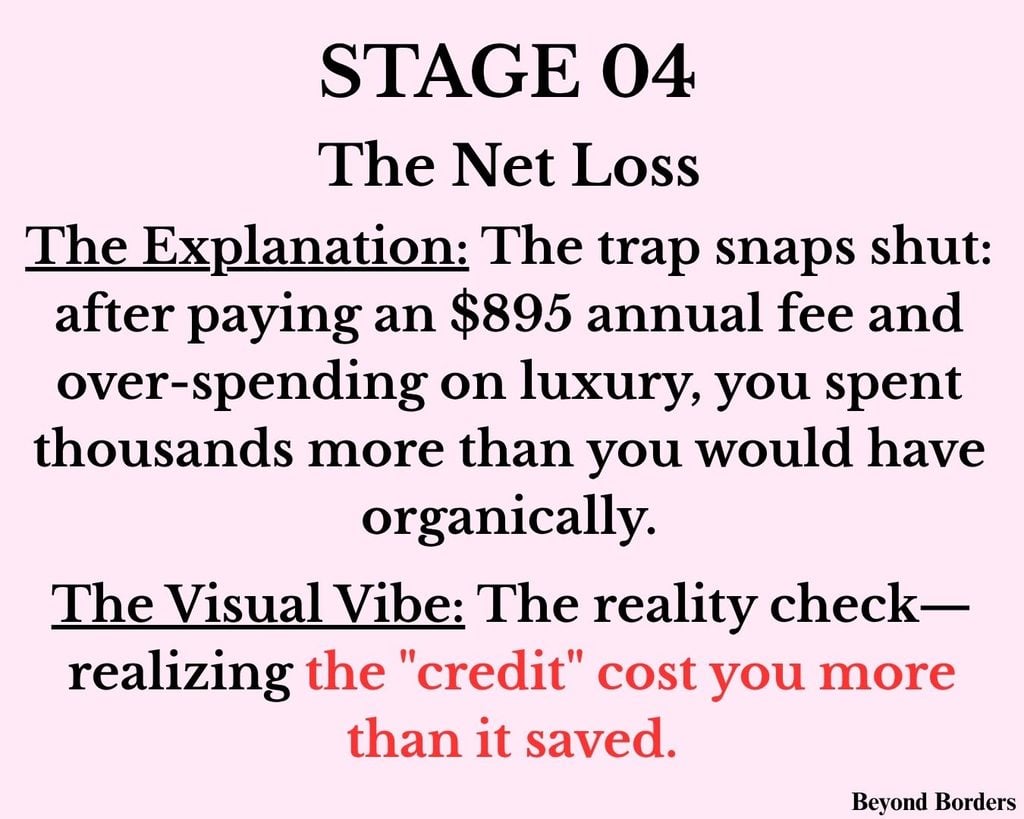
- Bragging about a $300 hotel credit sounds great until you factor in the upfront annual fee, such as $895 on the Amex Platinum® or $795 on the Chase Sapphire Reserve®.
- Subtracting a $300 credit from an $895 fee still leaves you $595 in the hole before you spend a single dollar on actual travel.
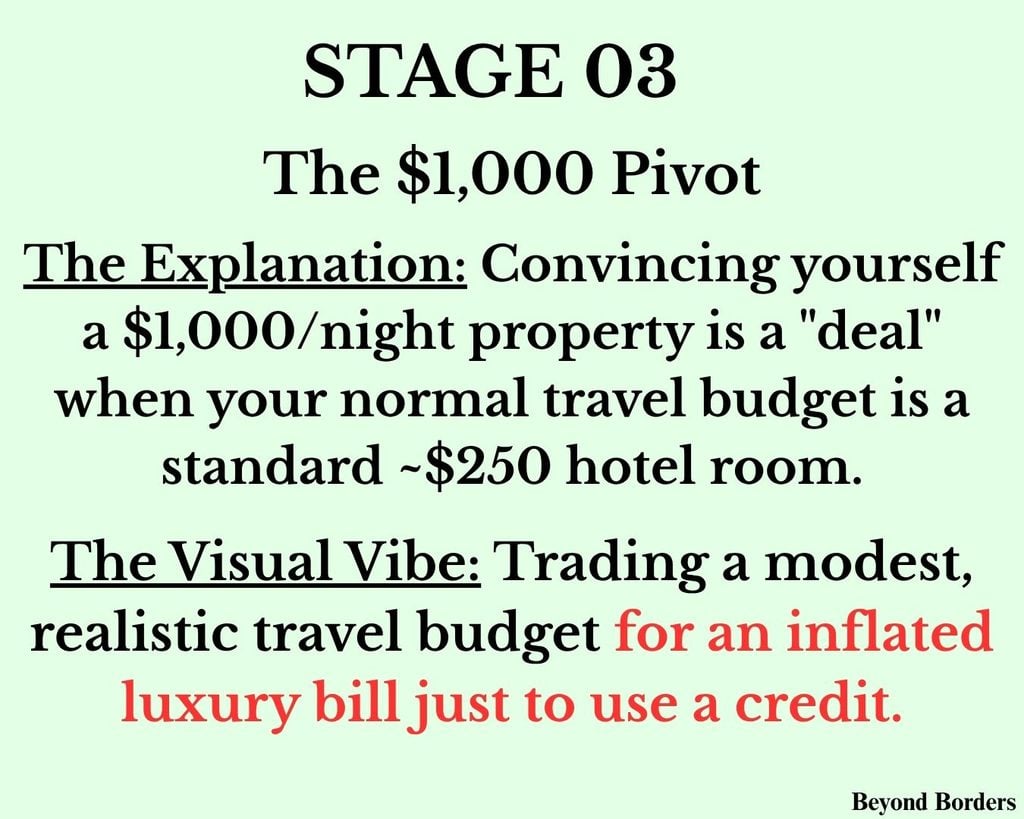
- They claim they “saved $300” on a luxury hotel, glossing over the fact that they booked a $1,000-a-night property through a specific bank portal to use the travel credit–when they normally would have stayed in a standard $250 hotel room. The creator treats those card benefits as free bonus money out of thin air rather than rebates on a steep annual entry fee.
- You aren’t saving money if you are forced to spend double to unlock a discount. High-tier credit card perks push consumers to book luxury inventory they wouldn’t normally buy under the illusion of “getting a deal”.
- Moreover, unless you naturally use every single hyper-specific card benefit (e.g., complimentary DashPass on the Chase Sapphire Reserve®), you are paying cash for benefits you may never use.
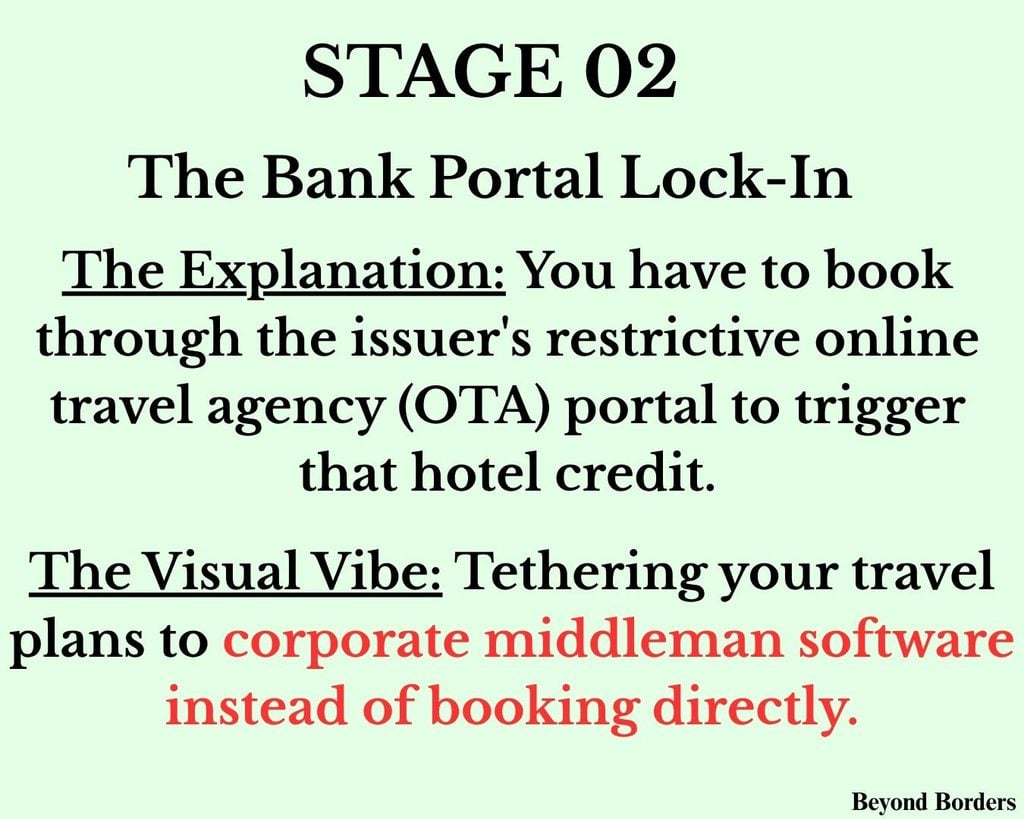
To use these coveted annual credits, cardholders are typically forced to book through the issuer’s proprietary Online Travel Agency (OTA) portal–locking you into a corporate middleman platform with its own hidden fee structures, inflated room rates, and rigid booking restrictions. Learn more about why booking through bank-owned travel portals often costs you more than direct bookings in my post on booking hotels on trips through OTAs vs directly!
The Deconstruction (Value Anchoring): In behavioral economics, anchoring occurs when a person relies heavily on the first piece of information offered.
- Retail Rack Rates vs. Reality: One-way international business class tickets booked last-minute carry artificially inflated cash prices (e.g., $6,440) that almost no one pays in real life. Comparing points to a ridiculous last-minute rack rate tricks viewers into thinking they got $6,440 of “free money.”
- Economy Alternative: Influencers will casually say, “Obviously you can fly in economy, but you deserve to fly business class.” A standard economy ticket home from a large city might only cost $300–$500 total cash. However, the influencer makes the several hundred dollars in taxes and fees (e.g., $440 in taxes) look like an unbelievable bargain compared to the $6,440 seat.
- They trick you into comparing $440 to $6,400, instead of comparing $440 + annual fees + thousands in required spending (the minimum sign-up spend) to what you normally would have spent on a standard economy ticket.
- The influencer is not “saving $6,440”; it’s paying more cash out-of-pocket than a standard economy flight just to sit up front in a larger seat.
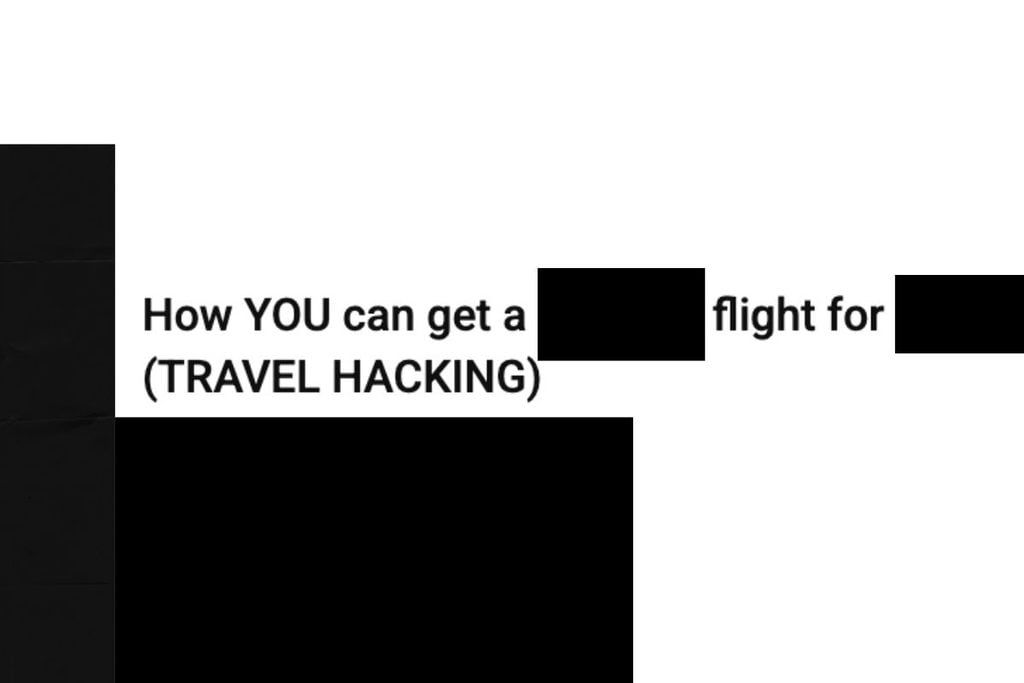
The Hidden Incentive: This is classic “up-spending.” A creator will 1) claim they “saved $300” on a boutique hotel, glossing over the fact that they booked a $1,000-a-night property through a specific bank portal just to use the credit, and 2) claim they saved thousands on a more expensive seat on a flight, glossing over the fact that they are paying more cash out-of-pocket than a standard seat would have cost them.
When booking accommodations to a popular destination such as NYC, choosing a clean, well-located property outside the Manhattan core will always beat paying for inflated resort fees. Take a look at my curated guides–such as staying in Long Island City vs. Manhattan and the best hotels in Williamsburg, Brooklyn–to save money on your next trip to NYC, prioritizing transit logistics, safety, and true out-of-pocket value over social media aesthetics.
Tactic 3: The “Free” Travel Illusion (Omitting or Justifying the Sign-Up Spend)
The Framing: Showing high-definition clips of lie-flat business-class seats, glass-walled airport lounges, and private plunge pools overlaid with text claiming something like: “The card pays for itself!” or “How my family of 4 travels the world for free!”
The Deconstruction: Creators routinely omit the Minimum Spend Requirement required to unlock the points that get you the nearly free flights or hotel stays:
- To earn a welcome bonus of 100,000+ points, cardholders are typically forced to spend $4,000 to $8,000+ out-of-pocket within 3 to 6 months. Points are not a windfall–they are a percentage-based rebate on thousands of dollars of real, out-of-pocket consumer spending.
- If an average consumer takes on artificial debt or carries a balance at a 21% to 29%+ Variable APR just to hit that spending threshold, the interest charges will rapidly erase the monetary value of that “free” flight.
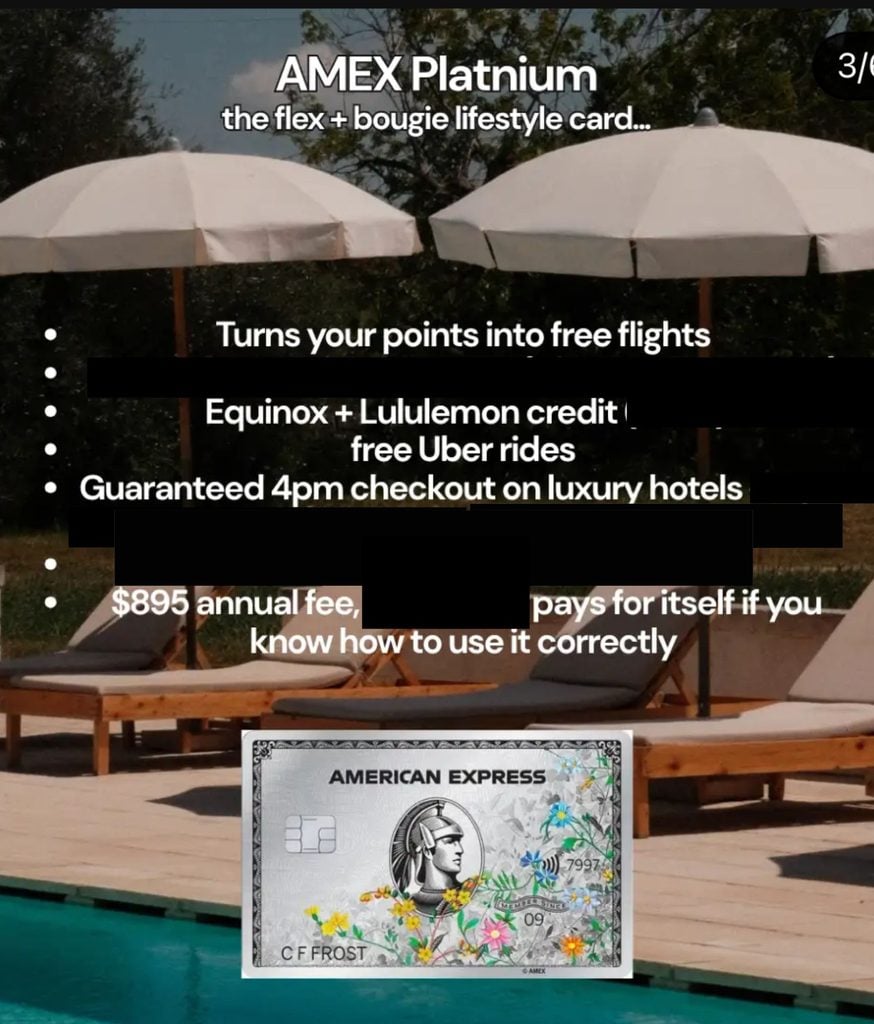
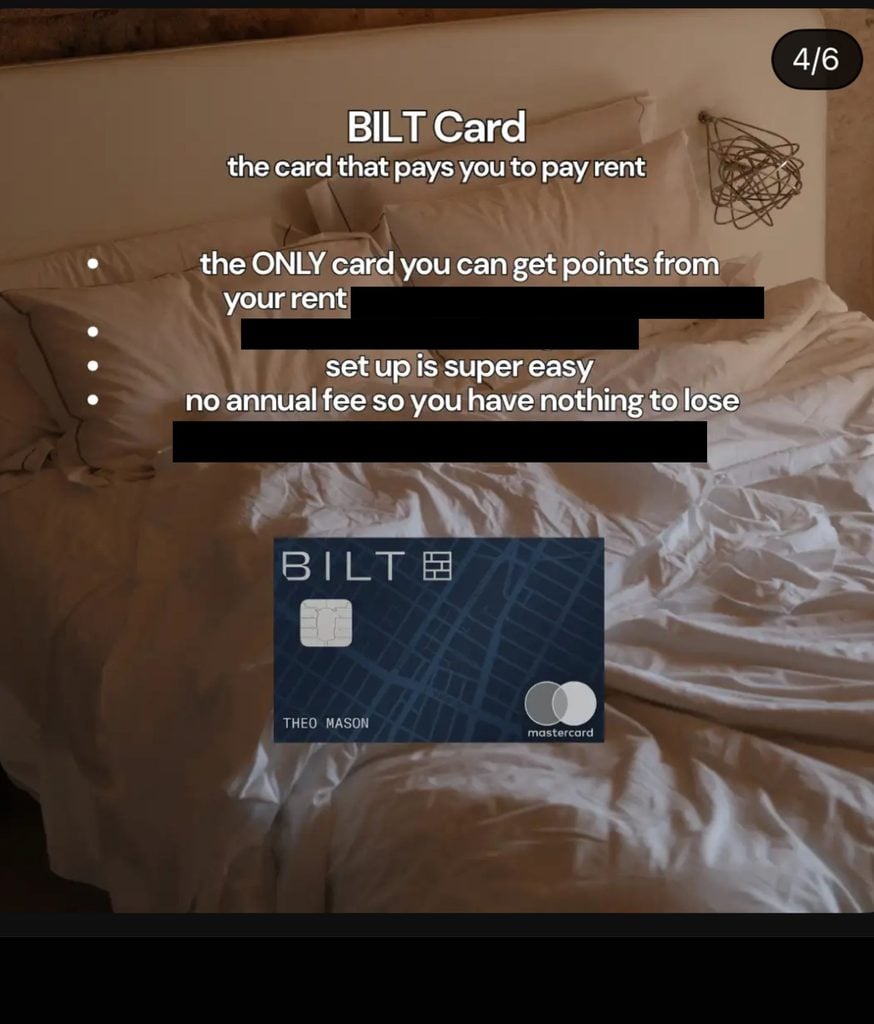
What I’ve Also Seen: Videos on YouTube Shorts where the influencer does mention the minimum spend requirement, but then actually says to put all of your travel expenses on that travel credit card to justify the minimum spend requirement! In this case, you will hear an influencer say, “I know $7,000 sounds like a lot of money…but if you are going to spend that much, you’ll get rewarded for it with the points!”
The Hidden Incentive: By glossing over tight spending deadlines, creators frame “free travel” as an exclusive secret waiting to be unlocked. The irony, of course, is that there is no secret code or hidden magic hack–“free travel” simply requires laying out thousands of real dollars in cash that most viewers were never planning to spend in the first place.
Tactic 4: The “FOMO and Flex” Aesthetic (Selling the Vibe, Not the Utility)
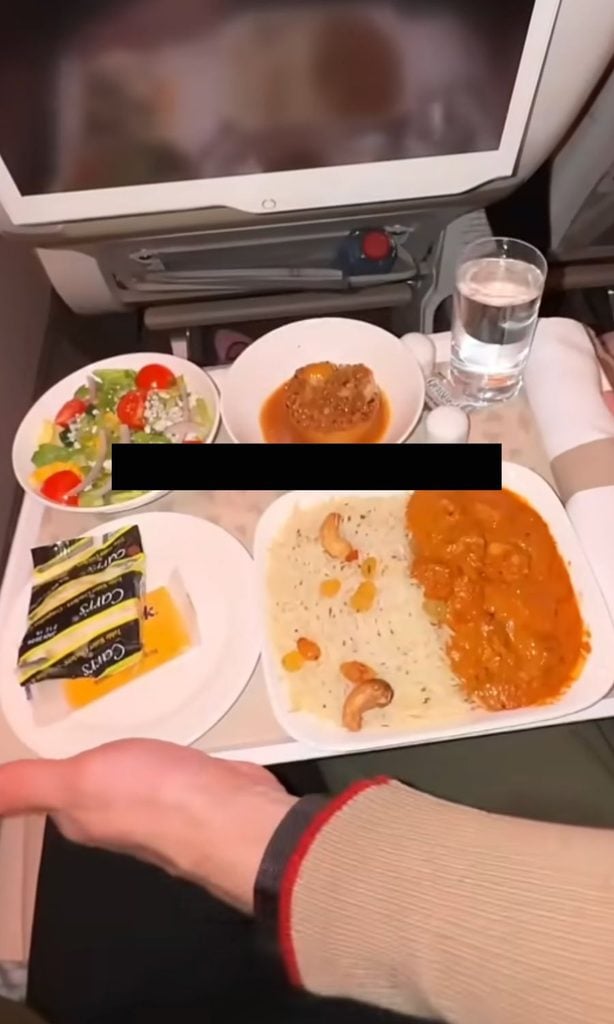
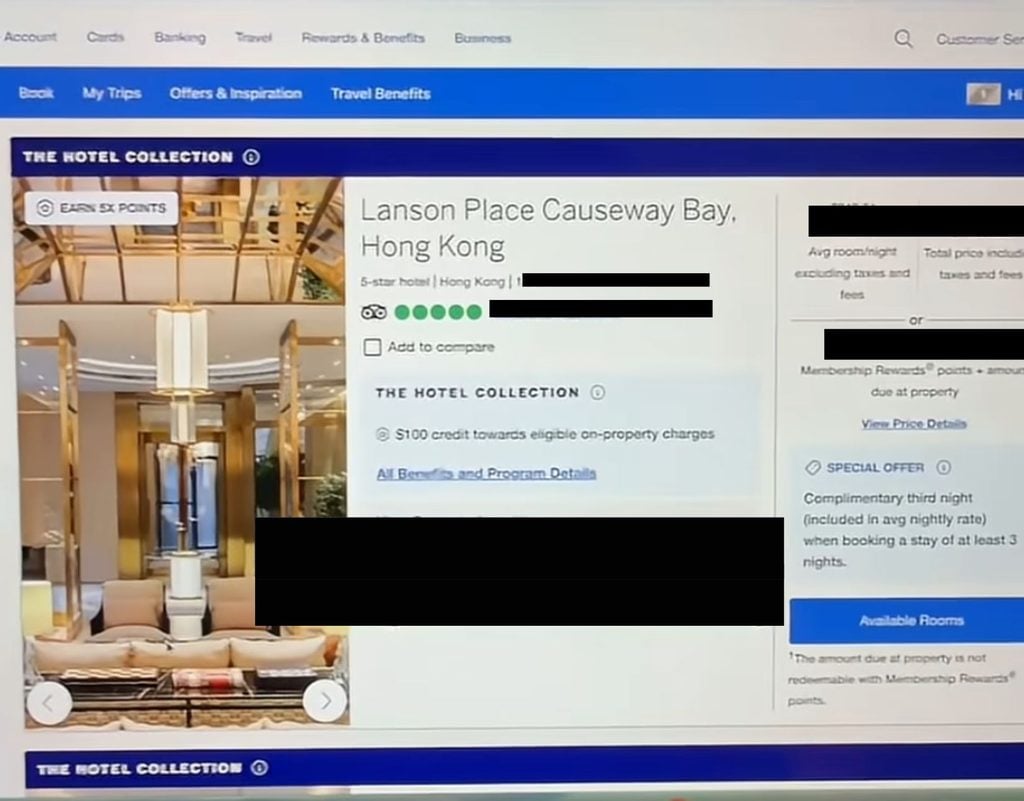
- The Framing: Pairing credit card breakdowns with aspirational visual storytelling–a rooftop champagne toast at sunset, showing five-star luxury hotels to their audience, sitting in premium seats on a flight with more legroom and great food, and/or eating in large, comfortable airport lounges.
- The Deconstruction: Influencers sell a lifestyle vibe rather than a financial instrument. They are weaponizing aspirational marketing. By framing a plastic credit card as an aesthetic lifestyle, they turn a high-risk lending product into a status symbol.
- The emotional appeal of aspirational marketing generates Fear Of Missing Out (FOMO), shifting your focus away from practical financial questions (“Does this fee fit my monthly budget?” or “Will I carry a balance?”) and toward social validation (“I want to feel like the kind of person who sits in that seat”).

The Hidden Incentives:
- Content Aesthetics and Engagement: A short video on YouTube or TikTok showing someone sipping champagne in a lie-flat bed gets 10x more views than a clip of someone eating pretzels in seat 34B. Luxury gets clicks, and clicks drive card applications via affiliate links.
- Point Inflation Disconnect: When a creator reaches the maximum point cap on card referrals (harvesting 100,000+ points every year off viewers using their links), points lose their scarcity value. High-volume creators often operate under a completely different point economy than their viewers. By leveraging referral links across thousands of followers, creators can regularly replenish point balances, making a 60,000-point business-class flight feel trivial to them–even though it represents months of real-world budget spending for the average viewer.
- This is exactly what I talked about earlier in The Closed-Loop “Trip Funding” Cycle in my Follow the Money section.
- “Point Maximization” Mindset Trap: Influencers love to flex high “Cents Per Point” (CPP) metrics–claiming they got a “$4,000 flight for 40,000 points” (a 10-cent-per-point valuation; similar to Tactic 2 I talked about earlier) vs. an Economy flight valued at 1.5 cents per point. But getting “high point valuation” on a luxury item you never would have bought with real cash isn’t saving money; it’s just luxury up-spending.
Beyond Social Media: How Corporate Financial Sites Play the Same Game
It is easy to assume that the monetization tactics pushing credit cards are unique to fast-talking social media influencers. But if you turn away from social media and search Google for “Best Travel Credit Cards of 2026,” you run straight into the same incentive structure–just presented in a more formal, professional way.
Major digital financial portals like NerdWallet, Bankrate, and The Points Guy operate on the exact same Cost-Per-Acquisition (CPA) affiliate model as a YouTube or TikTok creator. Whether you are watching a 60-second video on social media or reading a 3,000-word search-engine-optimized article, the underlying objective is identical: getting you to click an affiliate link so the publisher collects a payout from the bank. Understanding how corporate comparison hubs operate is essential for true financial media literacy.
How Financial Websites Operate vs Travel Influencers
| Feature | Social Media Travel Influencers | NerdWallet, The Points Guy, etc |
| Monetization Model | Cost-Per-Acquisition (CPA) affiliate payouts ($100–$300+ per approved application) or referral points. | Cost-Per-Acquisition (CPA), Cost-Per-Click (CPC), and partner lead fees ($100–$900+ per approval). |
| Sales Pitch | “As your travel big sis…” (Parasocial trust, luxury aesthetics, lifestyle flex). | “Objective financial advice, editorial ratings, star scores.” |
| Distribution | TikTok, YouTube Shorts, Instagram Stories. | Google Search (SEO articles, calculators, comparison tools). |
| The Omission | Hides annual fees and minimum spend in fast captions or small text overlay. | Excludes or buries zero-affiliate cards (e.g., small credit union cards) from top rankings. |
The Anatomy of Institutional Bias: How Review Sites Monetize Rankings
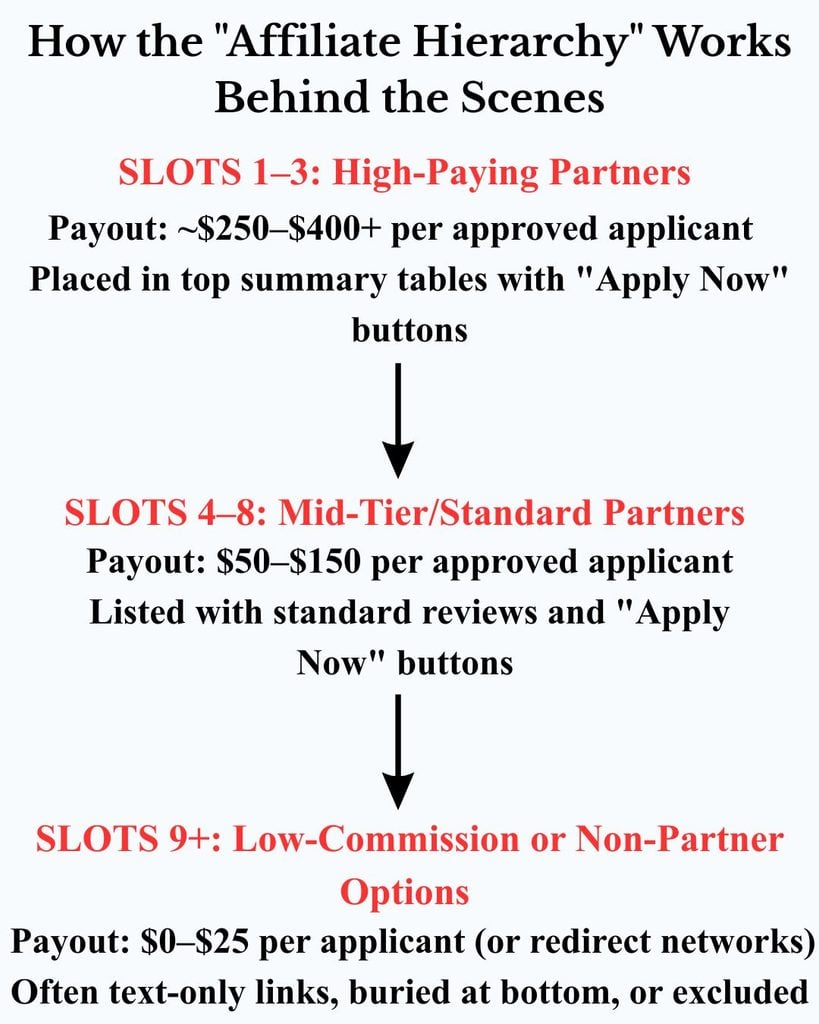
1. Ranking Lists Are Commercial Real Estate
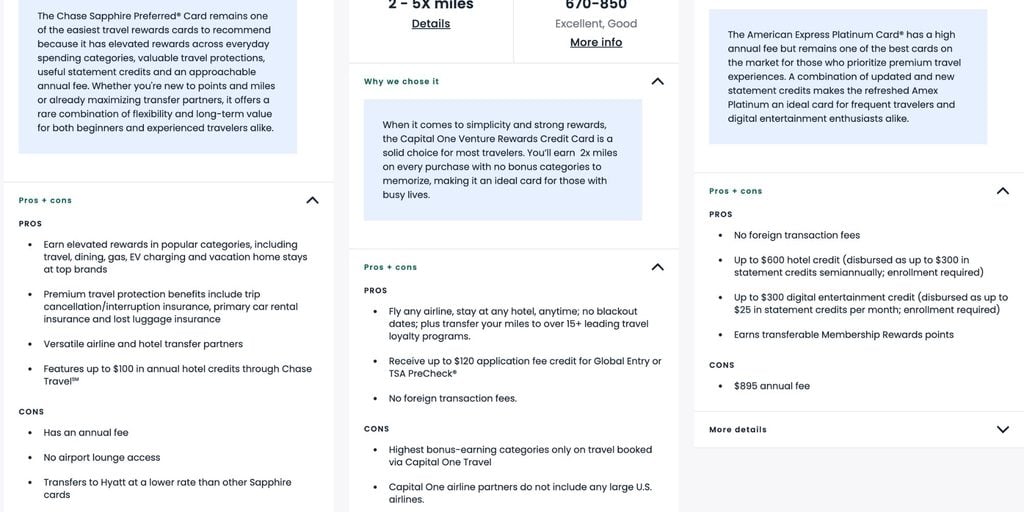
When a major comparison site like NerdWallet publishes a list like “The Best Travel Credit Cards of 2026,” and The Points Guy publishes their “Best Travel Credit Cards of 2026” list, the order of those cards isn’t determined solely by objective merit. Rankings are heavily influenced by commercial partnerships. Cards from major issuing banks that pay high affiliate commissions–or have active, high-dollar promotional contracts with the publisher–are systematically prioritized at the top of the list, awarded “Editor’s Pick” badges, or featured in highlighted visual boxes.
2. Great Non-Affiliate Cards Get Left Out
Because these business models rely on commission payouts, cards that don’t offer affiliate programs rarely get real estate on major comparison hubs. Many credit unions, regional banks, or smaller financial institutions offer phenomenal travel and cash-back cards featuring zero annual fees, low variable APRs, and straightforward rewards. However, because these institutions don’t pay site commissions, they are either relegated to the bottom of the page or excluded entirely in favor of high-commission premium cards.
3. Small-Print Disclaimers vs User Expectations
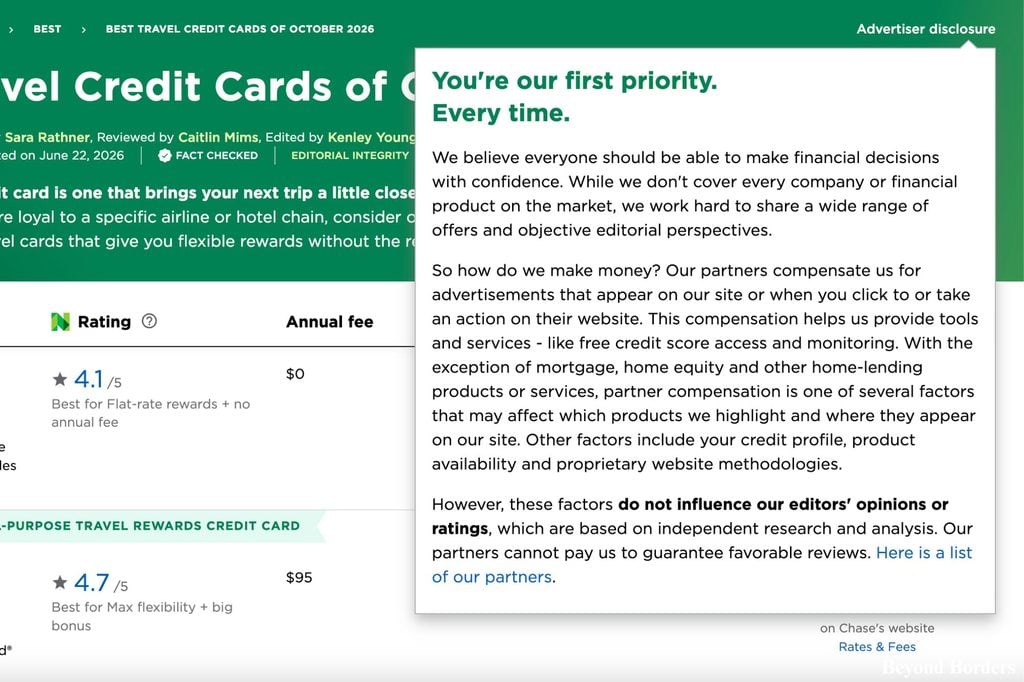
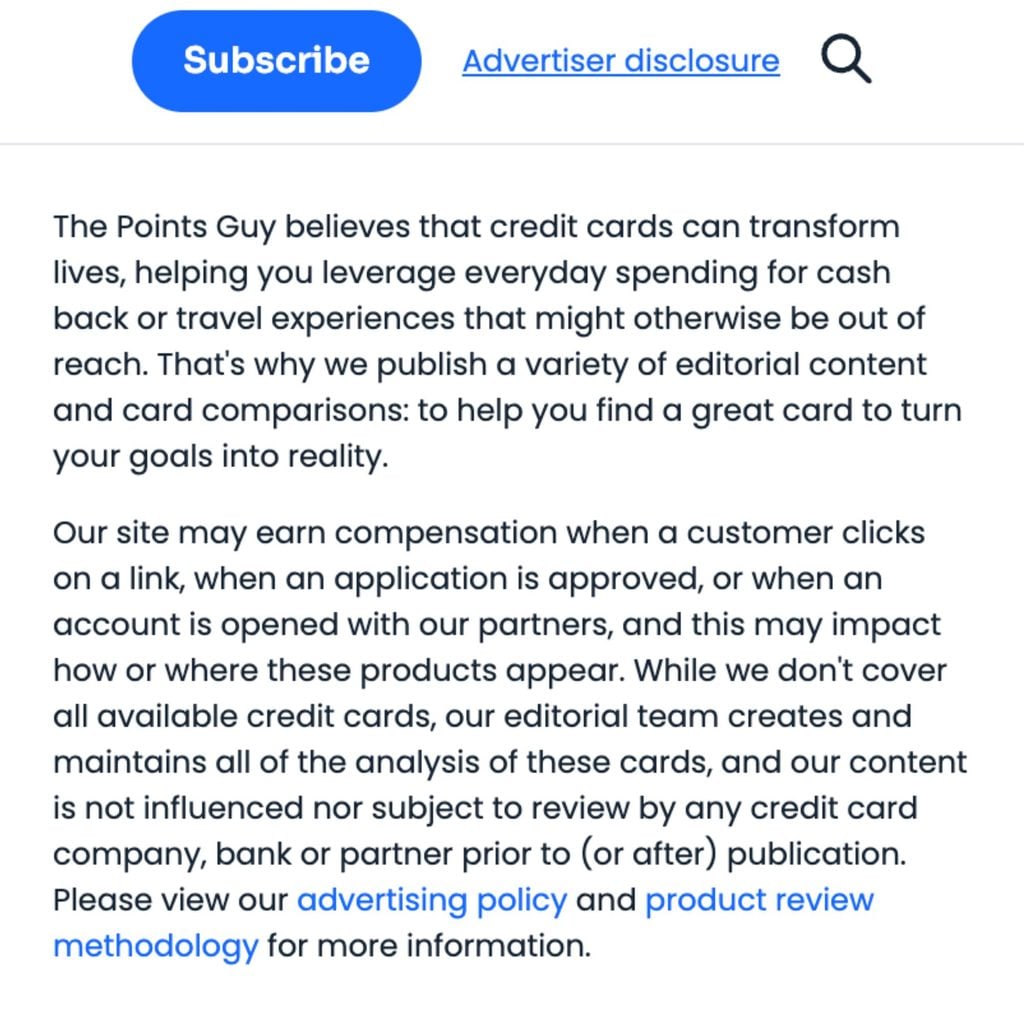
To stay compliant with FTC guidelines, sites like NerdWallet and The Points Guy include an “Advertiser Disclosure” at the top of their articles. It usually states that the site receives compensation from card issuers and that those payments may impact how and where products appear.
The problem? Most readers skip right past these small-print disclaimers. Consumers assume that a polished, corporate website with interactive star ratings and “editorial scores” is providing strictly neutral, uncompensated financial advice. In reality, those star ratings and review scores are built directly inside a commercial sales funnel.
Decoding the Disclaimer Trick
At first glance, the NerdWallet disclosure seems contradictory. It states that partner money doesn’t dictate their editors’ star ratings in paragraph three. However, in the very same breath, they disclose that advertiser compensation determines where products are highlighted on the page. The same goes for The Points Guy: they note, “While we don’t cover all available credit cards, our editorial team creates and maintains all of the analysis…” after stating “…compensation… may impact how or where these products appear.”
In practice, this creates a clever legal loophole: a non-paying card can theoretically earn a “5-star rating” from an editor, but because it brings in little (zero) affiliate revenue, it gets pushed down the page where most readers don’t look. Meanwhile, paid partner cards sit in the prime, top-of-page real estate where 90% of clicks happen. The editor’s score stays “independent,” but the consumer’s eyes are steered straight towards the highest-paying link. This isn’t an isolated quirk of one website; it is the standard operating model across the entire financial media industry.
Additionally, while The Points Guy does list “pros and cons” for the first 3 credit cards they recommend, they omit the high minimum spending requirement for them, going back to tactic 3 above.
The Reality for the Consumer
What to know when reading the site:
- Placement is the recommendation. Most users don’t read 15-card lists down to the footer; they click the top 3 cards featured at the very top of the article.
- By placing paid partner cards at the top of the roundup, NerdWallet technically satisfies its legal disclaimer while driving almost all user traffic directly to its monetized affiliate links.
FAQs: Travel Influencers, Credit Cards, and Affiliate Links
Conclusions and the Bottom Line
Don’t Hate the Player, Hate the Game
It’s easy to single out an influencer filming a 60-second video in an airport lounge and accuse them of selling out their followers. But focusing solely on individual creators misses the bigger picture. Creators are simply responding to the financial incentives set by massive banking institutions. Financial affiliate marketing is one of the highest-paying niches in the creator economy. When a single approved card application pays more than an entire month of ad revenue on YouTube, creators are playing the game exactly as it was designed to be played.
The problem isn’t that travel rewards credit cards exist; it’s that the system relies on asymmetry. Banks and creators win when you focus on the dream of “free flights” while ignoring the high APRs, steep annual fees, and forced spending required to get them.
So…Is Travel Hacking Worth It?
The honest answer depends entirely on who is funding the travel expenses:
- Yes–if you are a disciplined, zero-balance traveler. If you pay off your balance in full every month, never carry interest, organic spend easily clears sign-up thresholds, and you treat points like a discount program rather than lifestyle validation, rewards points offer genuine net utility.
- No–if you are spending for points or carrying a balance. If a $695 annual fee or a $4,000 minimum spend forces you to alter your normal spending habits, or if you carry even a single month of balance at a 28%+ APR, the bank wins instantly. The interest fees will wipe out the value of your “free” points in weeks.
The Modern Traveler’s Audit
If you have decided you are in the “Yes” category, there is absolutely nothing wrong with supporting your favorite travel influencers by using their affiliate links to apply for a travel credit card, and you don’t need to swear off travel cards entirely to protect yourself. You just need to understand the hidden risks before applying for a card through an influencer’s affiliate link. Before clicking “card in my bio,” run every recommendation through a simple three-step audit:
- Follow the Monetization: Ask yourself how the person recommending the card is getting paid. Are they using a direct cash affiliate link, a point-harvesting referral link, or sponsored content? Knowing their incentive instantly gives you the context behind their enthusiasm.
- Do the Cold Out-of-Pocket Math: Ignore the point valuations and statement credits for a moment. Calculate your net out-of-pocket cost: (Annual Fee) – (Guaranteed Benefits You Already Use Naturally) = Real Annual Cost. If that number is positive and you have to change your spending habits to offset it, the card is costing you money.
- Decouple the Lifestyle from the Tool: Separate the creator’s aesthetic travel lifestyle from the credit product itself. A sleek credit card isn’t a prerequisite for memorable travel, and taking on high-interest debt or forced spending to hit a bonus threshold will always cost more than a flight or hotel stay is worth.
- When you strip away the credit card marketing and focus on actual logistics, a memorable trip comes down to smart neighborhood selection and efficient routing–not whether your hotel serves champagne. If you’re planning a trip that prioritizes tactical navigation over high-end luxury, check out my 5-day NYC itinerary to map out your next trip to NYC efficiently without breaking your baseline budget.
- Check the Bank’s Official Website First: If you decide a travel credit card actually fits your baseline budget, go directly to the issuer’s site to read the fine print they are legally required to show consumers: the exact Variable APR range, minimum spending requirement to get sign-up points, and the annual fee.
- Apply Intentionally (Supporting the Creator If You Wish): If you have done the math, verified the disclaimers on the bank’s site, and decided to move forward, then apply using your favorite creator’s affiliate link if you want to support their channel. Just make sure the decision is driven by your financial baseline, not their 60-second sales pitch.
The Final Word
Points and miles can be fantastic tools when used with strict discipline, paid off in full every month, and integrated into a budget you already maintain. But they are financial products–not magic tickets. The next time a travel influencer tells you a luxury trip was “100% free,” remember the pipeline going on behind your screen. Enjoy the travel content, admire the destinations, but leave the credit card pitches in the bio where they belong.