How to Visit the Top 5 Quiet Spots in Central Park At a Glance:
These quiet, uncrowded spots in Central Park’s North End (above 103rd St) make for a relaxing and tranquil visit:
- Conservatory Garden: Central Park’s only formal garden.
- The North Woods: At 40-acres, the North Woods is the largest of Central Park’s three woodland areas and was designed to evoke the landscape of the Adirondack Mountains in upstate New York.
- The Ravine and The Loch: Winding through the heart of the North Woods is The Ravine, a narrow, shaded valley carved out by a natural stream called The Loch, featuring artificial waterfalls and stone arches.
- The Pool: A small body of water known for stunning fall foliage, urban wildlife viewing, and relaxing/picnicking.
- Great Hill: The third-highest natural point in Central Park, offering picnic tables and a mix of shade and sun for relaxing (closed for the winter).
I also include a step-by-step East-to-West walking itinerary starts at Vanderbilt Gate (5th Ave and East 105th St) and ends at the West 103rd St subway station (on the B and C lines), avoiding crowds and Harlem Meer construction.
Introduction
When most people picture Central Park, their minds instantly go to the same iconic postcard landmarks: joining the sea of sunbathers on Sheep Meadow, navigating the photo-seekers at Bethesda Terrace, or waiting for a quiet second to cross Bow Bridge. While those central landmarks are classic for a reason–and features I cover in my 5-day NYC itinerary, my 1-day NYC itinerary, and my 1-day Manhattan parks itinerary–they often draw heavy foot traffic.
If you want to actually hear the birds chirp, or find a shaded bench without competing for a seat, head north.
Upper Manhattan’s northern end of Central Park, particularly everything sitting north of 103rd Street, feels like a completely different world. Up here, grand stone fountains, cascading waterfalls, and dense forest canopies replace the packed lawns and selfie sticks. Whether you’re looking for a peaceful morning walk or a scenic place to unwind, these five quiet spots in Central Park’s North End offer the ultimate escape from the crowds. I also feature all five of these spots in a one-day itinerary at the end of this post!
Jump to my Quick-Reference FAQs ↓ at the bottom of this guide if you have a specific question!
Map
I have pinned all five locations on the map below, including subway access points, entrances/exits, restroom locations, and certain walking paths/crossings to make your walk through all locations smooth and stress-free.
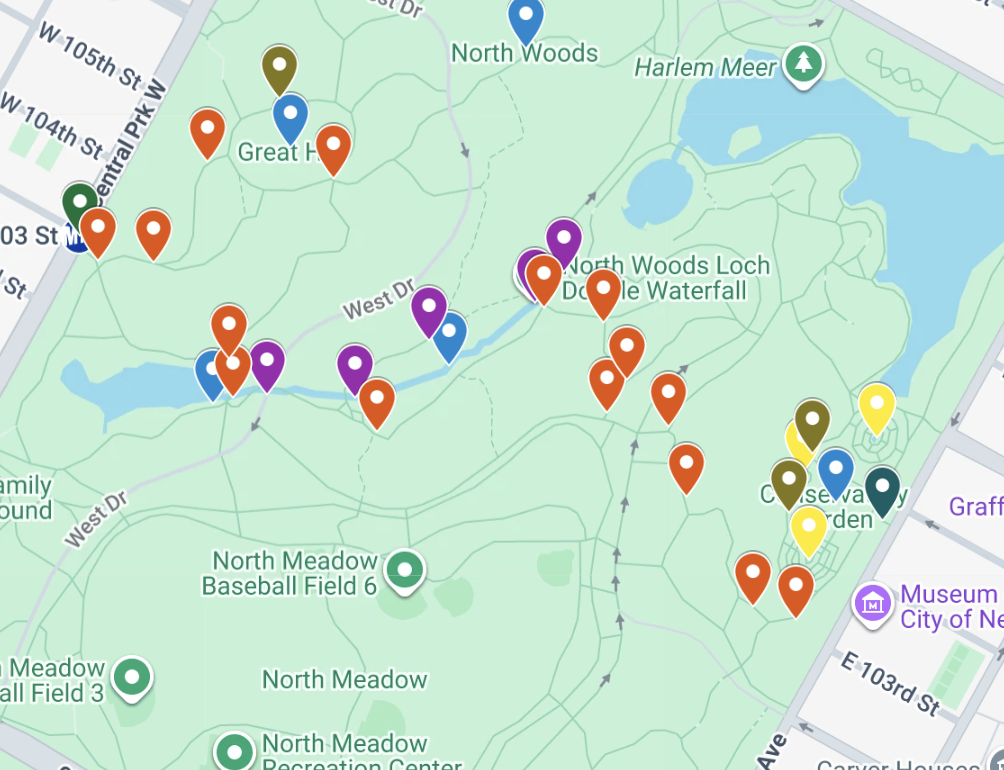
Map data © 2026 Google
Enter your email below to get the private, interactive Central Park Quiet Spots Google Map saved directly to your Google Maps app for easy navigation!
How To Use This Interactive Map
To make exploring Central Park’s Top 5 Quiet Spots as seamless as possible, you can save my custom interactive map directly into your Google Maps app for on-the-go navigation:
- Get the Private Link: Enter your email in the box above. Check your inbox for your confirmation email and click the button to unlock the interactive map.
- Save to Your Profile: Simply open the map link while logged into your Google account. Google will automatically attach the map to your Google Maps profile–no extra saving required!
- Access on the Go: Open the Google Maps app on your phone, tap the Saved (or “You”) tab at the bottom, scroll down to Maps, and select “Central Park Quiet Spots” to view all my pinned photo spots, historic stops, and recommended eateries while walking!
- Pro-Tip: Download the Central Park area for offline use in your Google Maps app settings before heading out. That way, you will have turn-by-turn walking directions even without cellular data!
The Conservatory Garden: One of Central Park’s Most Non-Touristy Areas
How to Get Here: Take the 6 train to 103rd St Station and walk one block north and then west towards Fifth Avenue, passing the Museum of the City of New York, and you will find Vanderbilt Gate at 105th Street
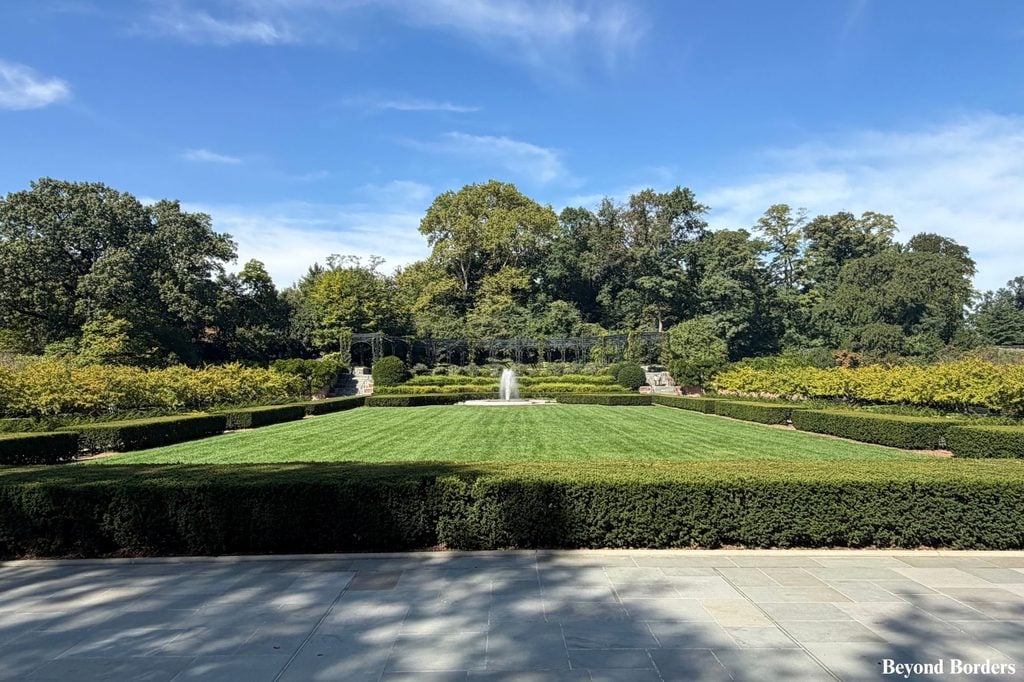
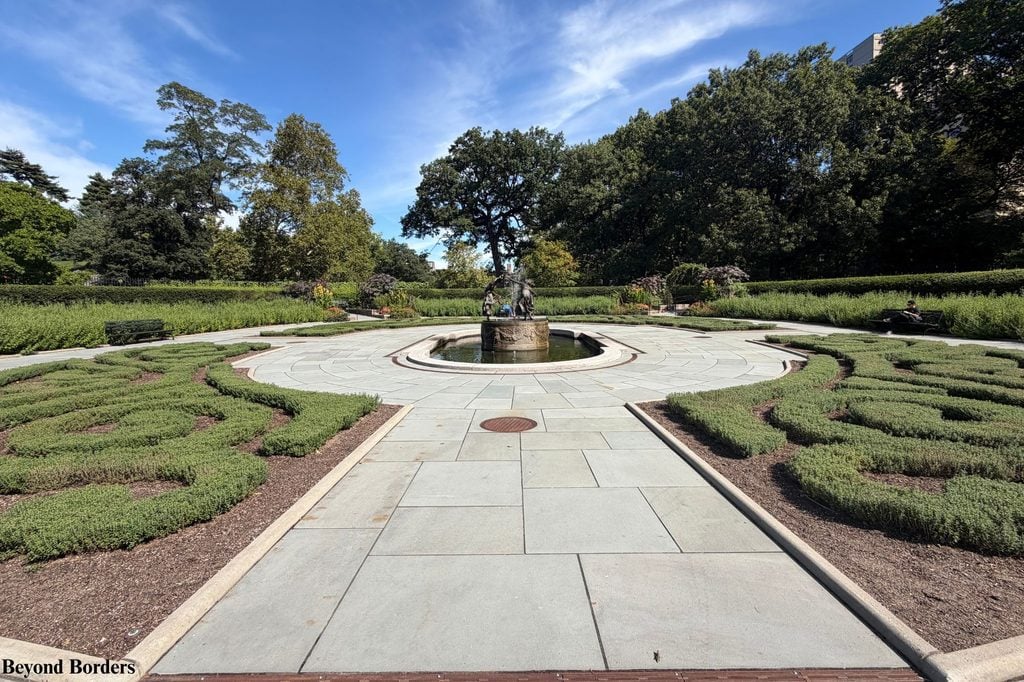
Step through the grand, ornate wrought-iron Vanderbilt Gate at 5th Avenue and 105th Street, and the city noise instantly fades away. Originally forged in Paris for a Vanderbilt family mansion on Fifth Avenue, this gate now serves as the regal grand entrance to Central Park’s only formal garden, giving a formal, manicured, and tranquil vibe. Unlike the open, sprawling lawns farther south, the Conservatory Garden is divided into three distinct European-style layouts:
- The English Garden (South): Home to the iconic Frances Hodgson Burnett Memorial Fountain and lush perennial beds.
- The Italian Garden (Center): Features a massive central lawn framed by clipped hedges, a dramatic 12-foot jet fountain, and a shaded wisteria pergola.
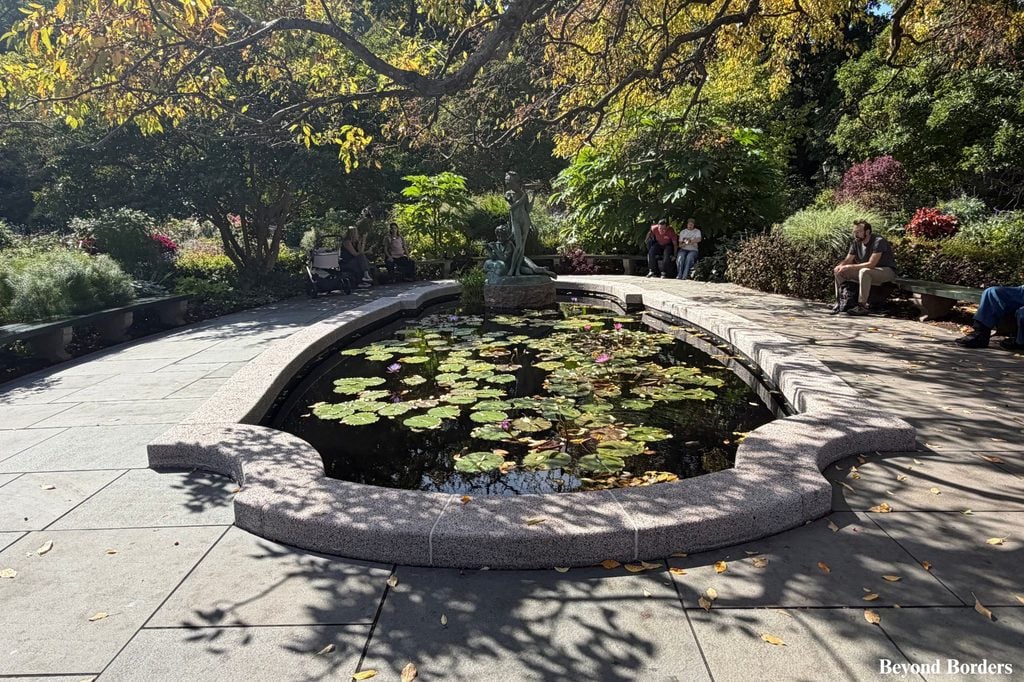
- The French Garden (North): Has the stunning Untermyer Fountain, featuring lilypads and the bronze sculpture Three Dancing Maidens surrounded by vibrant, seasonal flower displays.
Why It’s So Quiet
The Conservatory Garden is officially designated as a Quiet Zone. Bicycles, skateboards, running, and lawn games are strictly prohibited, making it one of the few places in Central Park where you can sit on a bench with a book and hear nothing but water trickling from the fountains.
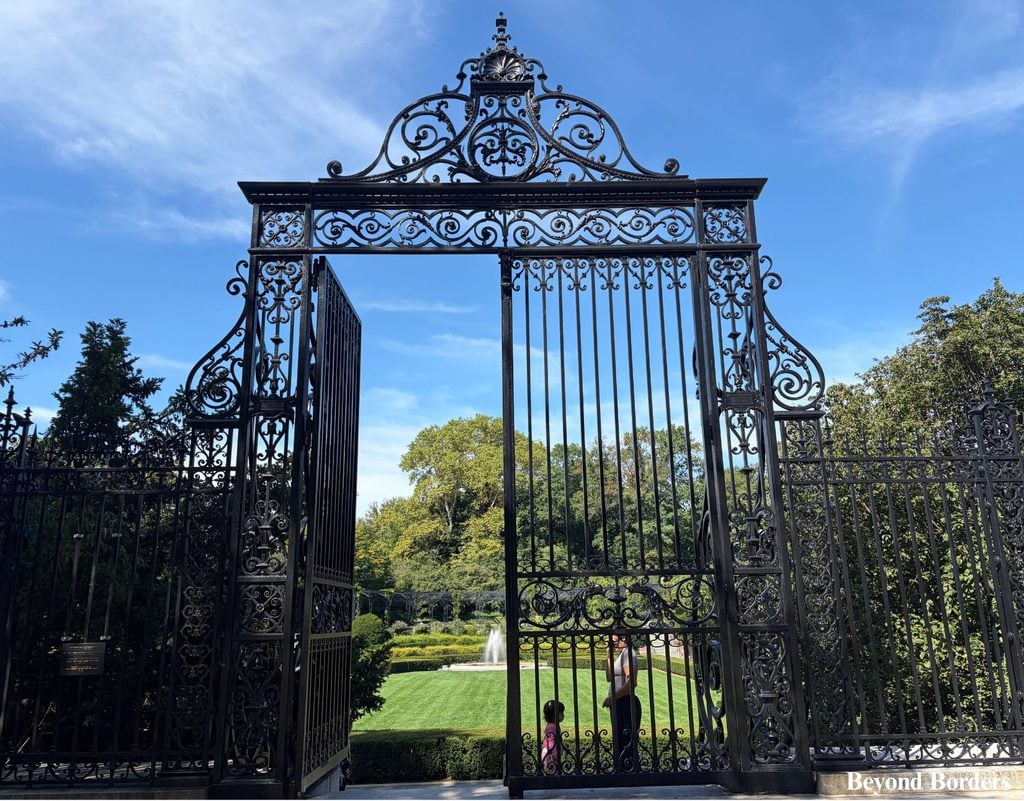
Pro-Tips:
- If you plan to explore northward toward the Harlem Meer from here, keep in mind that direct pathways can be blocked due to seasonal gate closures and ongoing park maintenance. For the easiest, hassle-free walk, enter at Vanderbilt Gate, walk through the three separate gardens, and exit westward (past the English Garden), going a bit south in the park toward the woodland trails that lead to the North Woods; these trails are pinned in my map above).
- There are restrooms and water fountains on each side of the fountain in the Italian (central) garden after you enter Vanderbilt Gate.
The North Woods: Forested Tree Canopies
How to Get Here: Walk just west of the Conservatory Garden (about 102nd to 110th St, mid-park)
Nearest Subway: 6 train at 103rd St (East Side entrance) or the B or C train at 103rd St (West Side entrance)
Exiting the manicured paths of the Conservatory Garden and heading west immediately drops you into the North Woods–a 40-acre, rugged and densely forested sanctuary that feels completely removed from New York City. Designed by landscape architects Frederick Law Olmsted and Calvert Vaux to evoke the wild landscapes of the Adirondacks, it is the largest of Central Park’s three woodland areas.
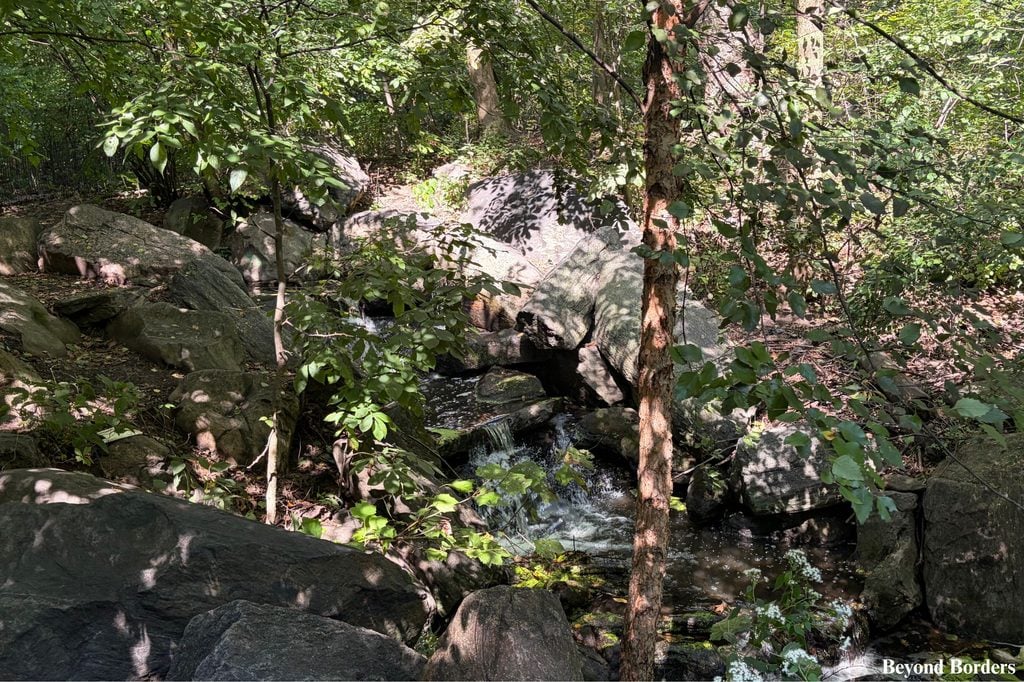
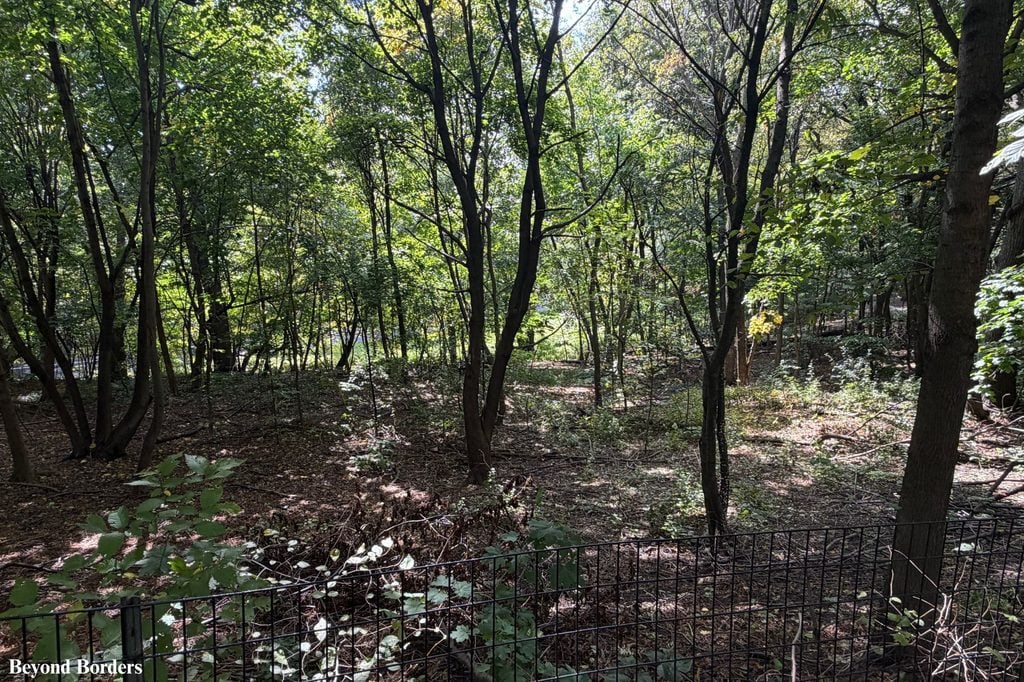
Under a thick, leafy canopy of oaks, maples, and black locust trees, city noise instantly gives way to the rustle of leaves and bird calls. As you wander the dirt paths, dense underbrush, tall ferns, and overhanging branches hug the trail so closely that you’re completely cocooned in greenery. It’s one of the park’s best areas for birdwatching, offering a serene, immersive woodland walk right in the middle of Manhattan.
North Woods Highlights
- Birdwatching and Wildlife Haven: Because of its dense cover and natural water source, this is one of the premier spots in Manhattan for spotting warblers, herons, and owls, as well as urban wildlife such as squirrels and chipmunks.
- Abundant Shade: The concrete paths are flanked by layers of natural growth: wild wildflowers, thick moss, and overhanging saplings that brush past your shoulders as you walk. It creates a narrow, green corridor where every angle is framed by trees. If you visit during summer, you will instantly feel cooler under the tree canopy!
Pro-Tip: Have Your Camera Out
- Make sure to capture photos along the paths! You’re not just looking at nature–you’re completely enveloped by it.
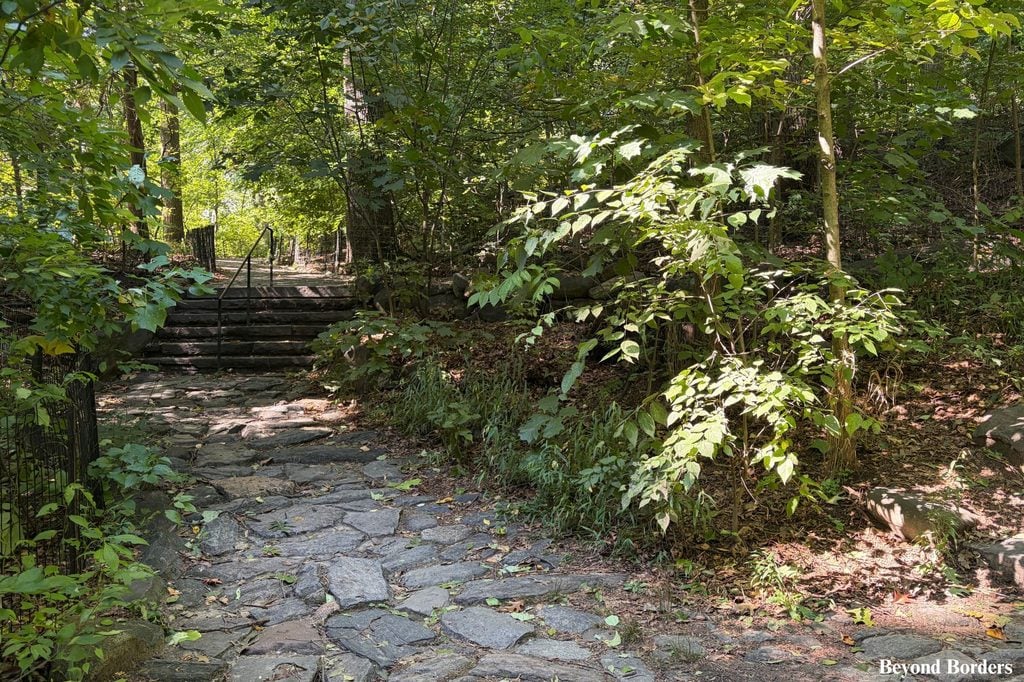
- You will see uneven stone paths and steps while exploring the North Woods, but you do not have to use them! Follow the concrete paths if you use a stroller or have mobility issues.
- When I was walking through the North Woods, I saw lots of chipmunks and squirrels. Make sure to have your camera ready to photograph them relaxing and/or eating!
The Ravine and The Loch: Waterfalls and Streams
How to Get Here: Nested inside the lower section of the North Woods; walk along The Loch Walking Path
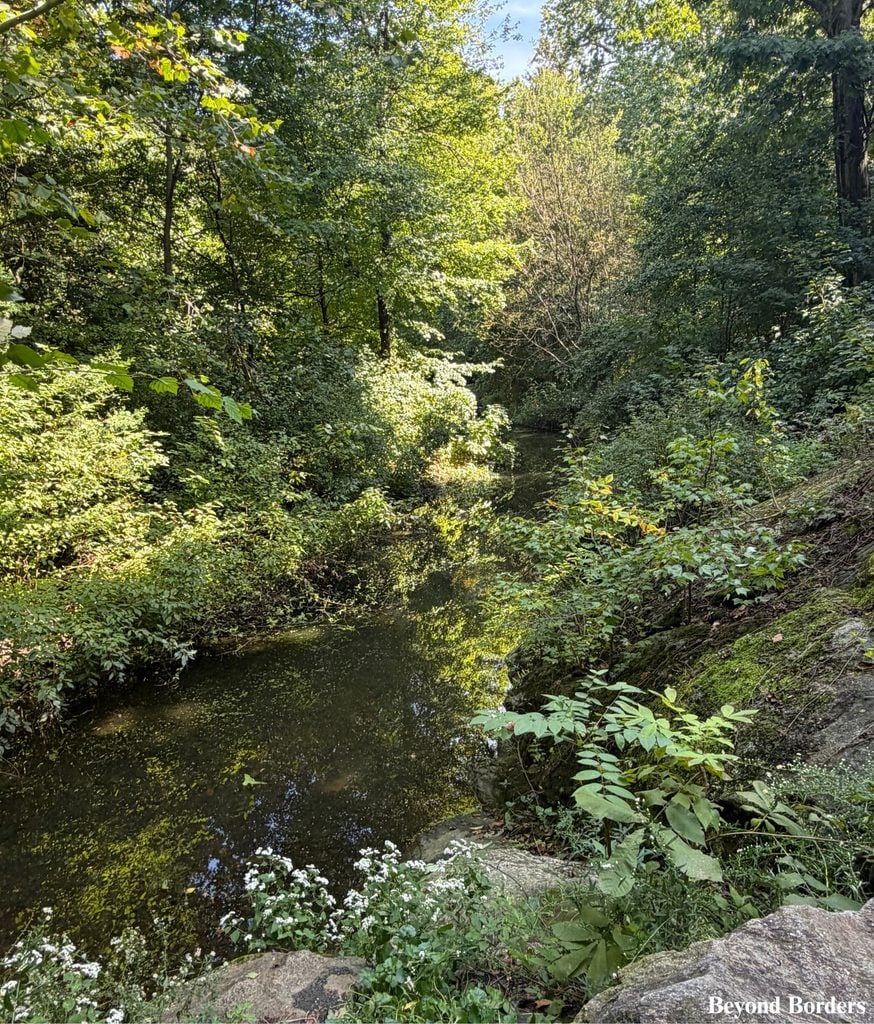
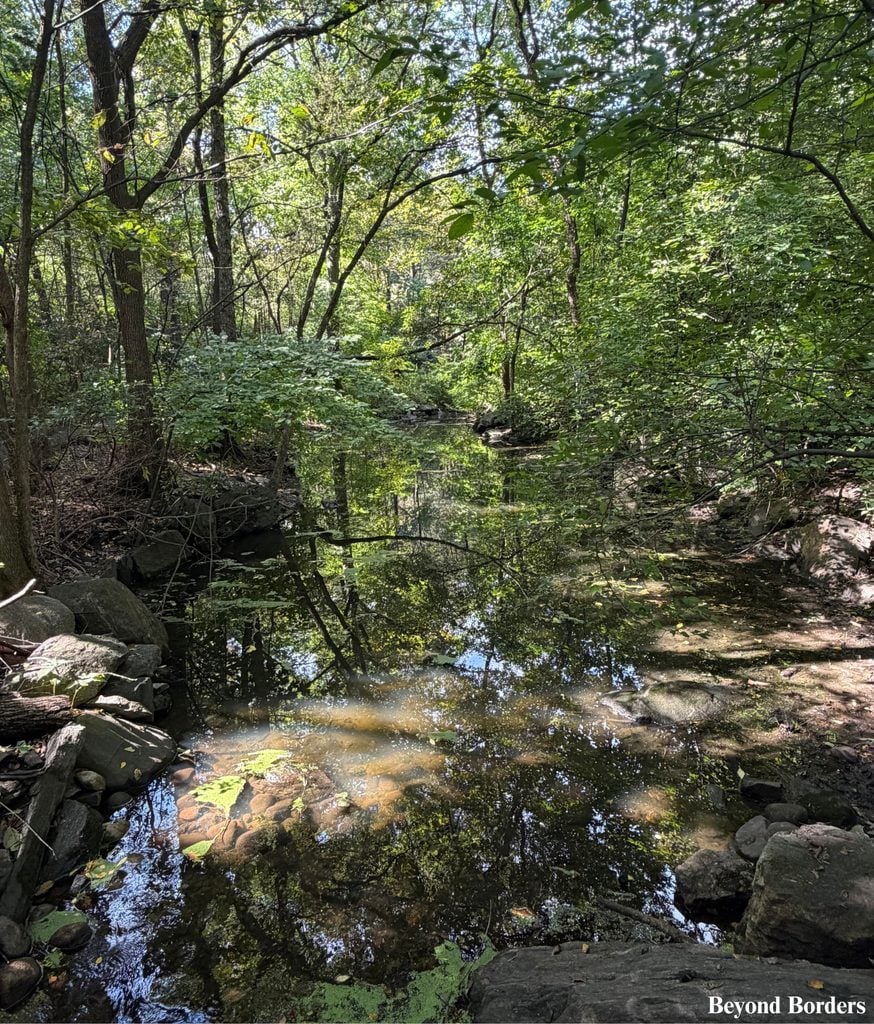
As you descend deeper into the North Woods, the sound of trickling water takes over. Winding through the heart of the North Woods is The Ravine, a sunken, stone-lined valley carved out by The Loch, a narrow stream that meanders beneath a thick leafy overhead. Following the water along the paths, sunlight filters through the trees in soft dappled patches, creating a secluded riverbed atmosphere that feels thousands of miles away from Manhattan.
The Ravine and Loch Highlights
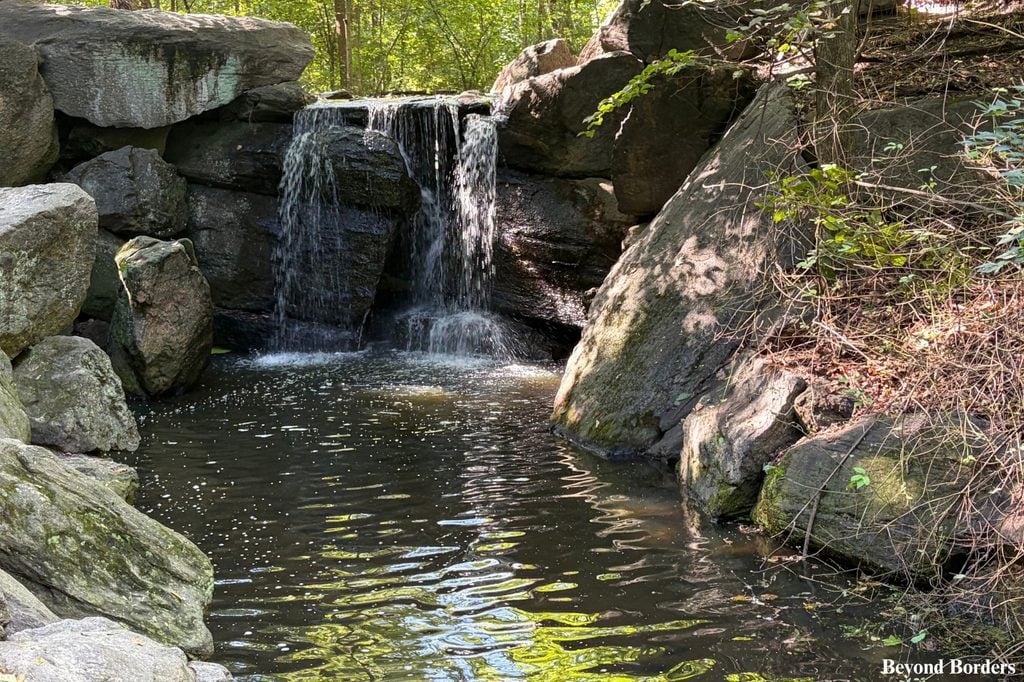
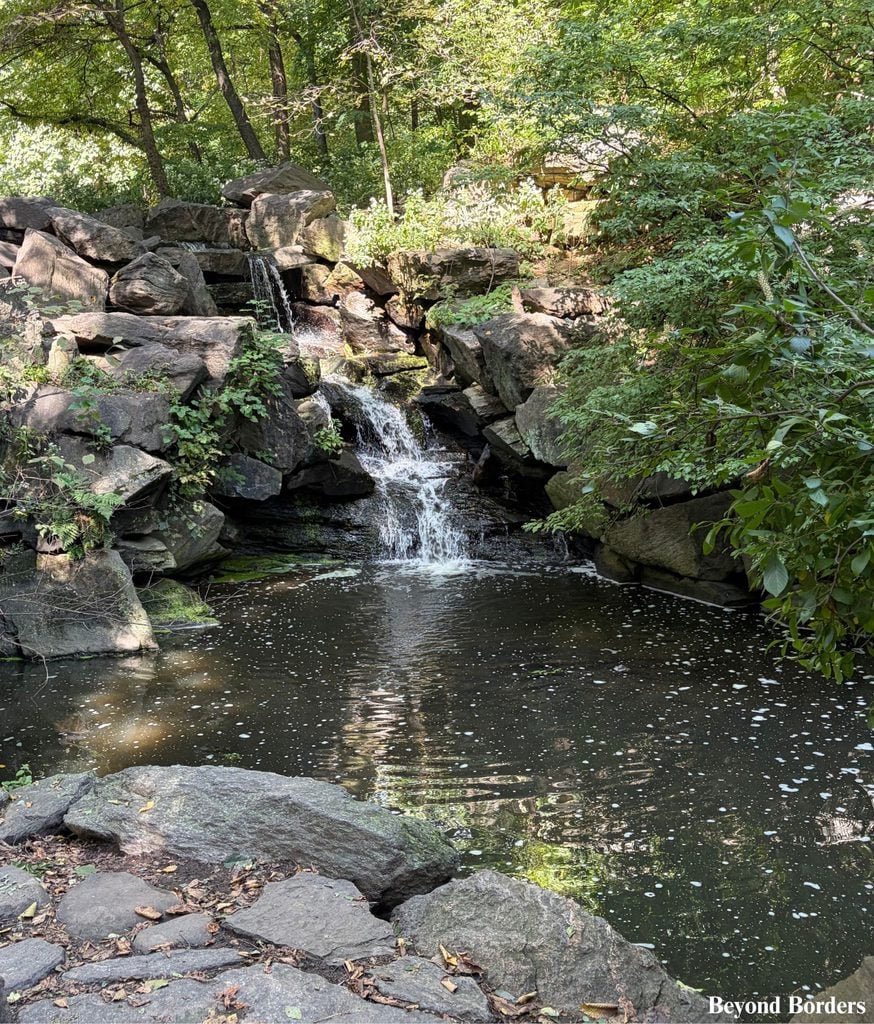
- Cascading Waterfalls: The Loch features a series of artificial waterfalls, including the North Woods Loch Double Waterfall (which I have pinned on the map above), designed to rush over weathered boulders. The soothing sound of flowing water easily drowns out distant street traffic.
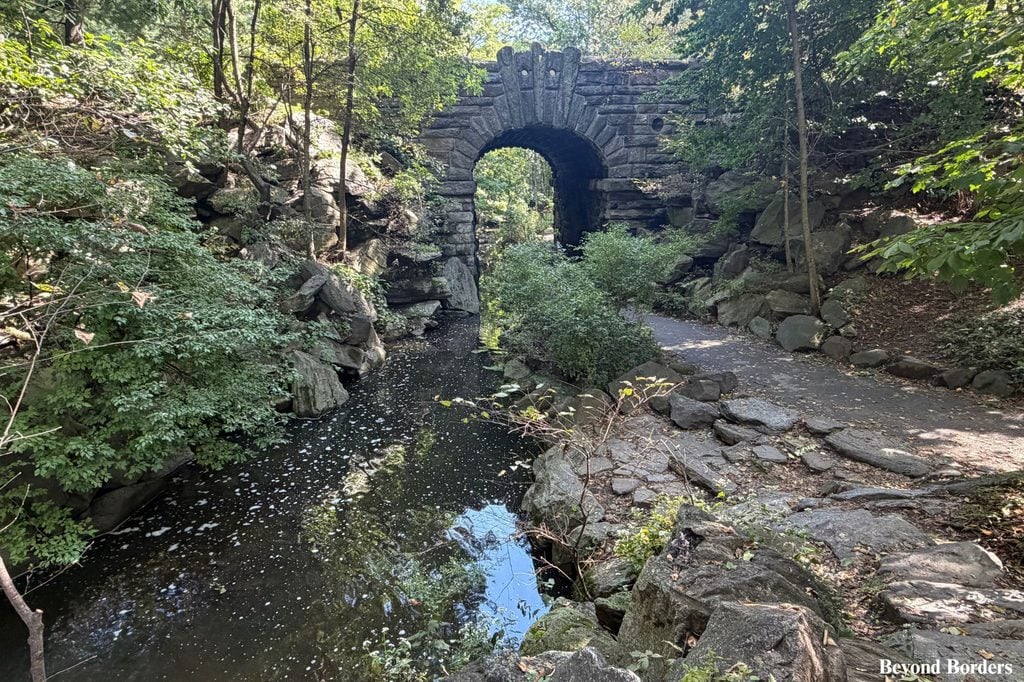
- Historic Stone Arches: As you follow The Loch (the stream), you will walk under two striking 19th-century arches: Glen Span Arch and Huddlestone Arch. Huddlestone Arch is built entirely of massive, unmortared boulders held together purely by gravity.
Pro-Tip: Watch Your Step
Some walkways through The Ravine and The Loch feature uneven stone steps and paths; do not use them if you have mobility issues or a stroller. Remember to follow the concrete walking path that brings you towards The Pool.
The Pool: One of the Most Relaxing Places in Central Park
How to Get Here: After walking under Glen Span Arch, you will reach the eastern end of The Pool.
Nearest Subway: B or C train at 103rd St or 100th St; west side of Central Park between West 100th and 103rd Streets
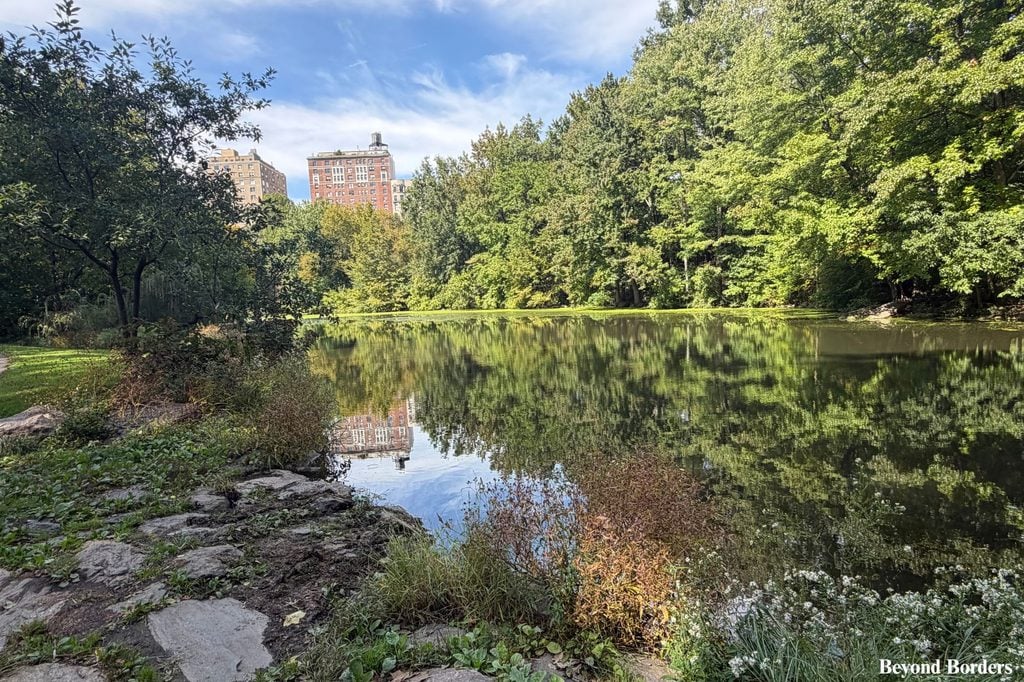
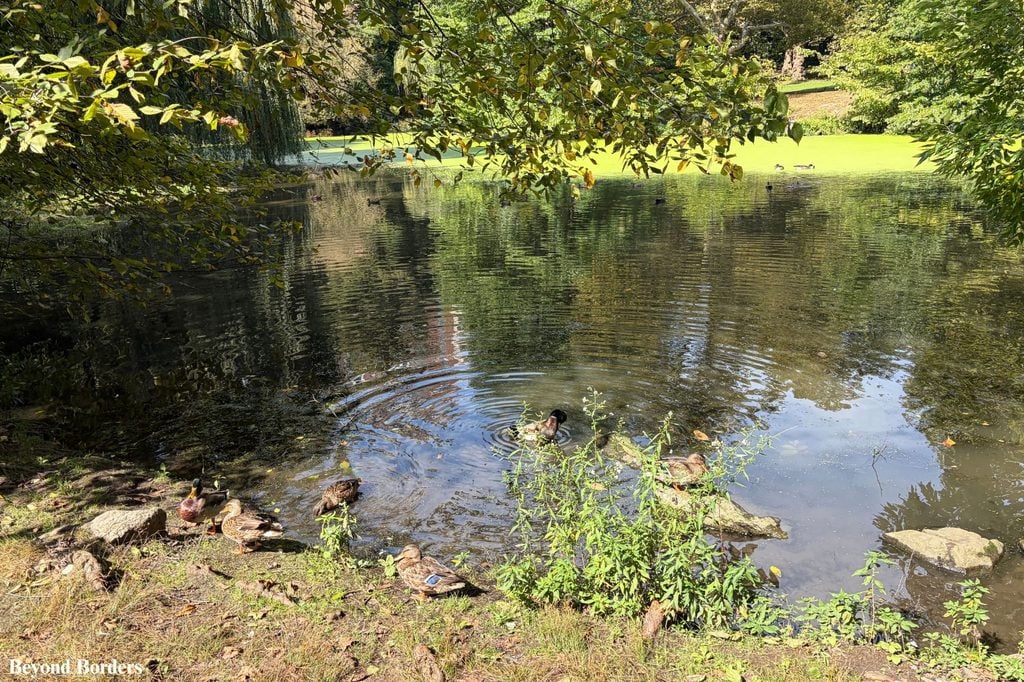
As you emerge from under the dark, rustic boulders of Glen Span Arch, the enclosed forest canopy suddenly opens up to reveal The Pool, one of Central Park’s most tranquil bodies of water, surrounded by weeping willows and soft grassy slopes. The Pool is a great alternative spot for a quiet picnic or reading on the grass without the Sheep Meadow crowds.
Fed by the same natural stream that flows into The Loch, The Pool feels like a quiet country pond tucked away on Manhattan’s Upper West Side. Unlike the bustling paths around the Jacqueline Kennedy Onassis Reservoir just to the south, the perimeter around The Pool remains remarkably calm and uncrowded throughout the day.
The Pool Highlights
- Weeping Willows: The grassy banks are draped with towering weeping willow trees whose branches hang directly into the water, creating picturesque, shaded nooks to sit and relax.
- Wildlife Spotting: With its natural shoreline and gentle reeds, it’s a popular sanctuary for ducks, turtles, and wading birds like green herons.
- Lush Fall Foliage: If you visit in autumn, the reflection of brilliant red maples and golden leaves across the calm water makes this one of the prettiest photo spots in the entire park!
Pro-Tip:
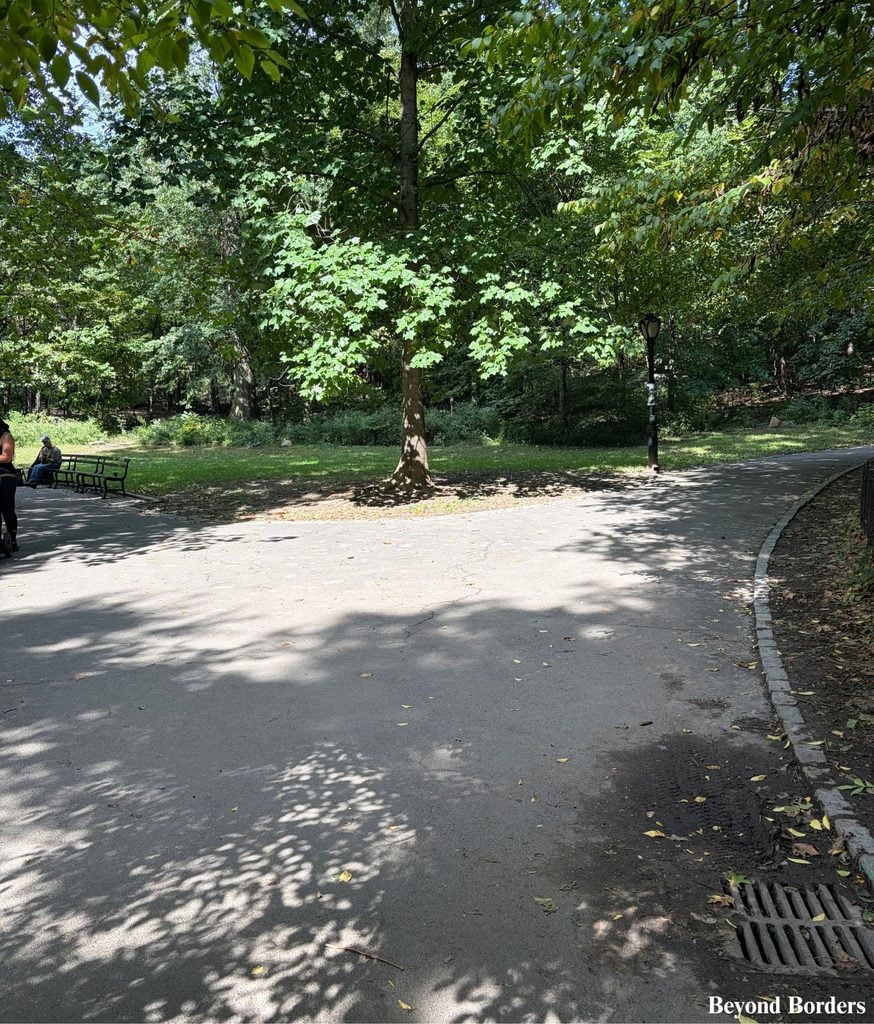
After you walk under the Glen Span Arch, look ahead–you don’t have to walk uphill on the uneven stone steps to get to the Pool; you can walk slightly uphill on the concrete path instead.
Great Hill: One of Central Park’s Highest Elevations
How to Get Here: West Side between 103rd and 107th Streets
Nearest Subway: B or C train at 103rd St (along Central Park West)
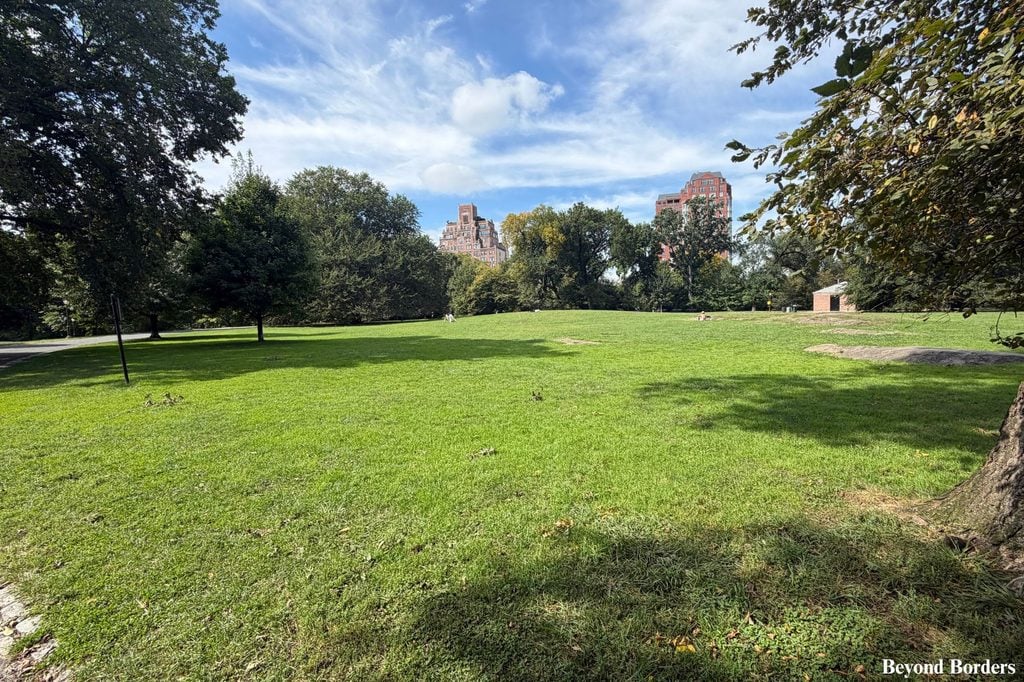
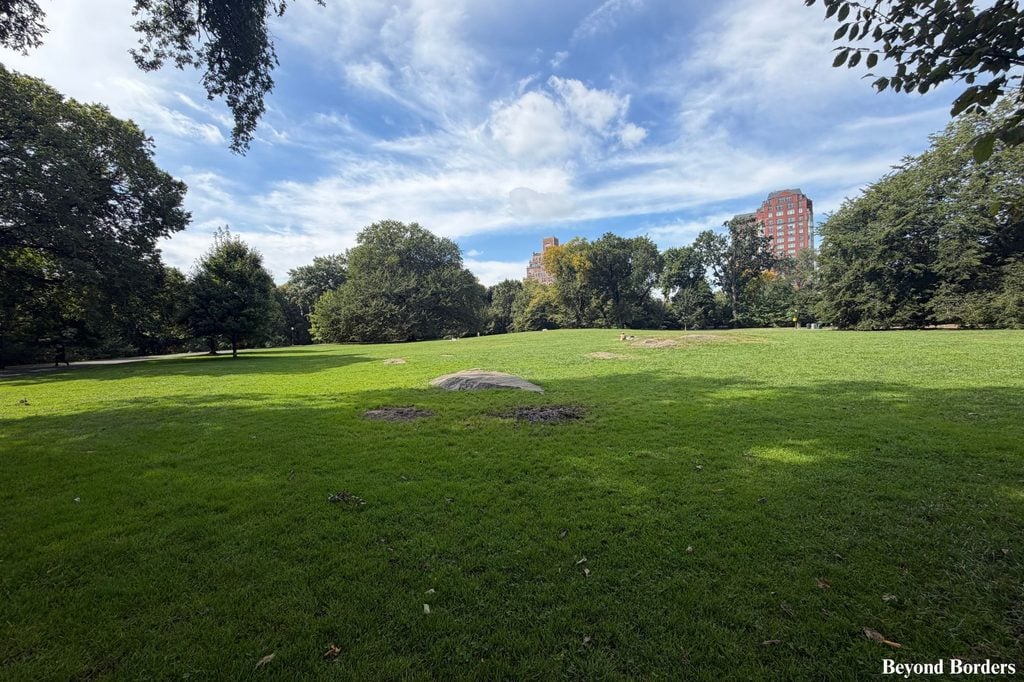
Following the gently sloped path upward from the edge of The Pool brings you to the Great Hill, one of the highest natural points of elevation in all of Central Park. At about 135 feet above sea level, this sunny, four-acre meadow feels wonderfully spacious compared to the narrower woodland trails below.
The Great Hill was also an important site during the American Revolutionary War; it was used by British troops as a temporary campsite along with other high points nearby, the Fort Clinton and Nutter’s Battery.
While Sheep Meadow and the Great Lawn draw massive crowds farther south, the Great Hill offers an expansive hilltop lawn framed by towering mature trees, giving you plenty of room to stretch out without feeling packed in. The wide perimeter creates a relaxed, open-air haven where soft breezes drift across the grass, making it one of the calmest spots in Upper Manhattan to slow down, throw down a blanket, or enjoy a quiet afternoon outdoors.
Great Hill Highlights
- Rare Picnic Tables: Great Hill is one of the very few areas in Central Park equipped with wooded picnic tables under a cool canopy of trees, making it ideal for taking a lunch break or reading in peace.
- Shaded Perimeter Path: A soft, circular walking track loops around the hilltop, shaded by elm, oak, and ginkgo trees. It’s a popular spot for quiet morning strolls and gentle jogging away from bike lanes.
- Breezy Hilltop Elevation: Thanks to its high vantage point, Great Hill catches a fresh breeze even on warmer days, making it one of the park’s coolest spots to unwind.
Pro-Tips:
- After relaxing on Great Hill, follow the short paved path exiting down to Central Park West and West 103rd Street (I have the path pinned in my map above). The entrance to the 103rd St Subway Station (B and C train) is right outside the park perimeter, giving you a seamless, zero-backtracking subway connection after walking across the North End!
- There are restrooms and water fountains surrounding the hill.
- The Great Hill is closed during the winter season.
Central Park North End 1-Day Itinerary
This itinerary includes all five of these quiet spots in the park on an east-to-west route.
- Total Distance: about 1.5 to 2 miles
- Walking Time: 45–60 minutes (allow 2 to 2.5 hours total for strolls, photos, and breaks)
- Start Point: 5th Avenue and East 105th Street (Vanderbilt Gate)
- End Point: Central Park West and West 103rd Street subway station
Stop 1: Conservatory Garden
- Arrival: Take the 6 train to 103rd St station, walk one block north and then west towards Fifth Avenue (passing the Museum of the City of New York) and enter the Conservatory Garden through the wrought-iron Vanderbilt Gate on Fifth Ave.
- The Walk: Explore the three European-style gardens inside the Conservatory Garden: start at the Untermyer Fountain (with the Three Dancing Maidens sculpture) in the French Garden to the north, cross the central lawn and fountain of the Italian Garden, and finish at the English Garden to the south (with the Frances Hodgson Burnett Memorial Fountain). Remember this is an official Quiet Zone, so keep music off and take advantage of the quiet bench seating.
Stop 2: The North Woods
- Transition: I recommend getting to the North Woods by exiting the Conservatory Garden’s English (south) Garden (the park interior around 103th–104th St).
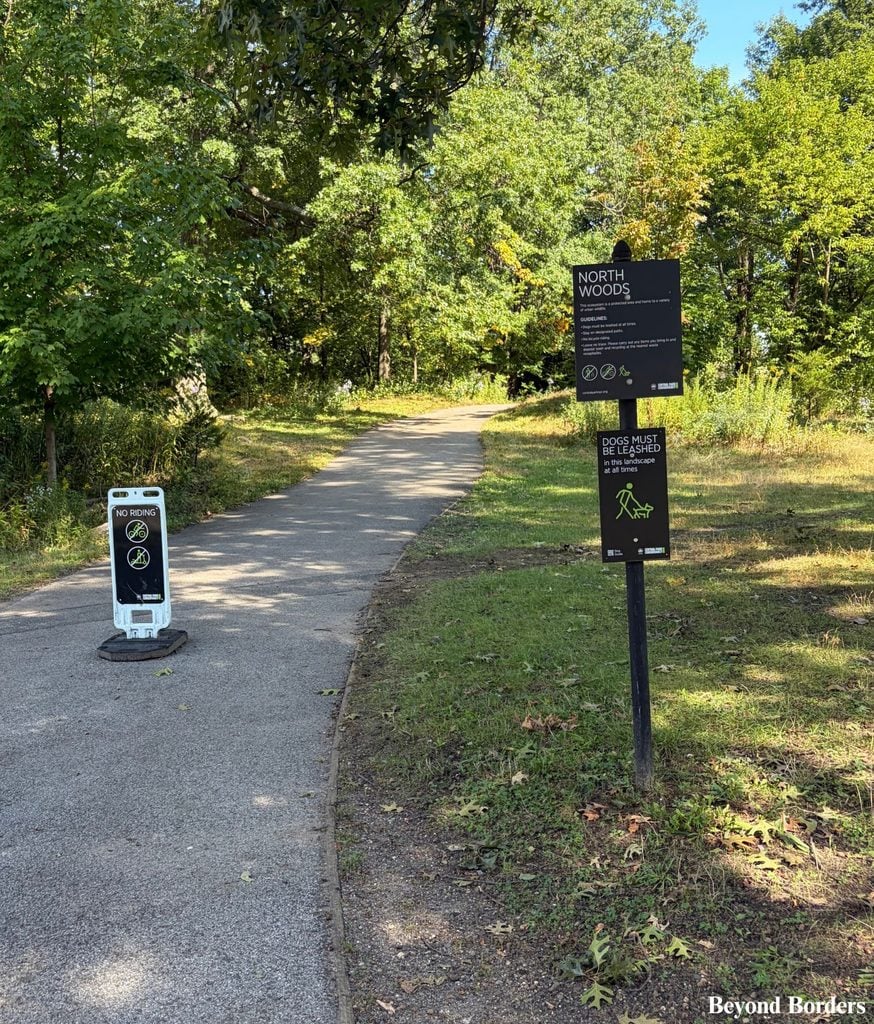
- The Walk: Walk south on the concrete path towards East Drive (pinned in my map above), then north towards the 102 St crossing. Look down when you walk here because the ground and stairs can be uneven. You will see a sign that says “North Woods” (see photo above) where you will enter. Follow the concrete paths of the North Woods beneath the heavy oak and maple tree canopy, where 360-degree foliage frames the trails and completely hides the city grid.
Stop 3: The Ravine and The Loch
- Transition: Take the Loch walking path, walking through the Ravine, and you will get to a short bridge to see the Loch.
- The Walk: You’ll pass cascading artificial waterfalls (including the Loch Double Waterfall), cross mossy stone pathways, and walk under Huddlestone Arch (walk just north of the double waterfall and you will see it) and Glen Span Arch.
Stop 4: The Pool
- Transition: Continue walking on the Loch walking path and under the Glen Span Arch (under West Drive) to get to The Pool.
- The Walk: The forest opens up to the calm, grassy perimeter of The Pool. Walk along the paths around The Pool to admire the reflection of weeping willow trees in the water and the ducks in the water before taking the sloped path heading northwest.
Stop 5: Great Hill and Subway Exit
- Transition: At the eastern end of The Pool (where you entered after walking under Glen Span Arch), take the path to the right to get to the Great Hill (see photo above).
- The Walk: The walk on the concrete path to get to the Great Hill from The Pool is smooth but steep, so take your time! Take a break at the shaded wooden picnic tables/benches or stop by the nearby restrooms when you get there.
- Final Exit: On the western end of the Great Hill, follow the paved path down south (pinned in my map above) to get to Central Park West. Cross Central Park West and you will see the 103rd Street subway station to catch the B or C train, ending your 1-day northern end Central Park itinerary.
FAQs: How to Avoid Crowds in Central Park
Conclusions: A Crowd-Free Visit to Central Park
Exploring Central Park doesn’t have to mean dodging crowds, weaving around photo shoots, or hunting for a bench. By trading the busy mid-park landmarks for the tranquil trails above 103rd Street, you get to experience Manhattan at its most peaceful and grounding.
Whether you’re sitting by the trickling waters of Untermyer Fountain, listening to the waterfalls in The Ravine, or watching the sunset from a picnic bench on Great Hill, these five northern spots prove that quiet areas still exist right in the heart of New York City’s most visited park. Next time you need a break from the urban noise, grab your walking shoes, take the train uptown, and discover a side of Central Park that most tourists miss.