1-Day Manhattan 5 Parks Itinerary in 5 Steps:
The ultimate route to exploring Manhattan’s best green spaces in a single day flows efficiently from north to south, utilizing the subway to maximize your time.
- Begin your morning at Central Park (exiting at 81st St-Museum of Natural History exit).
- Take the subway down to Bryant Park for some unique views of the Empire State Building, then catch the subway south to Washington Square Park. Afterward, walk over to the West Village to grab lunch at one of my favorite neighborhood food spots.
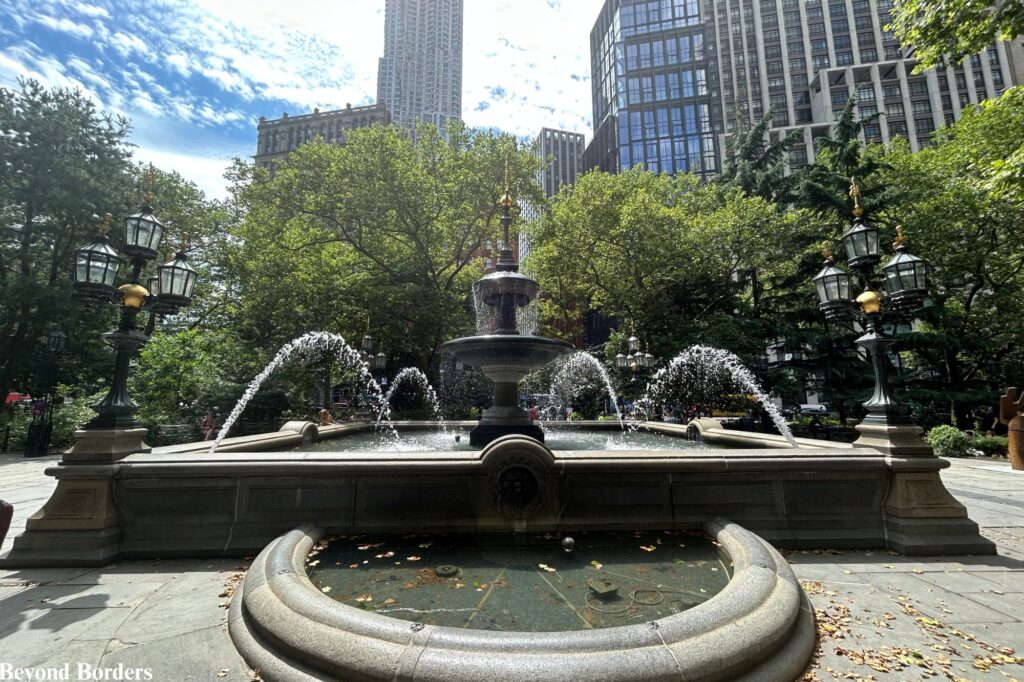
- Take the subway down to City Hall Park, right next to the Brooklyn Bridge. Relax at the Jacob Wrey Mould Fountain.
- Conclude your afternoon by taking the subway to Battery Park (The Battery) at the southern tip of Manhattan for views of the Statue of Liberty.
This linear route eliminates backtracking and showcases the city’s architectural contrast between iconic neighborhood green spaces and waterfront parks.
Introduction
Manhattan is the undisputed center of New York City, famous for its towering skyscrapers and the non-stop hustle. While the “New York minute” defines the city itself, the island’s abundance of green space offers a vital balance for locals and tourists alike, and its network of parks is unmatched for relaxing, lounging, and admiring nature. To truly experience these spaces, you need a plan. This essential park itinerary provides a step-by-step guide to the best parks in Manhattan, organized into a North-to-South walking and subway route that takes you from the heights of Belvedere Castle in Central Park down to the harbor views of The Battery.
Jump to my Quick-Reference FAQs ↓ at the bottom of this guide if you have a specific question!
Map
This map lists all 5 parks in this itinerary, including entry and exit points and my lunch recommendations, so you can see the exact walking paths and subway connections for this route! The route is optimized to eliminate backtracking from uptown to the southern tip of Manhattan at Battery Park.
How to Use & Save This Map
To make your Manhattan parks day even easier, you can save this custom map directly to your Google Maps app:
- Open the Map: Click the [ ] icon in the top right corner of the map above to open it in full-screen mode.
- Save to Your Account: If you are signed into your Google account, the map will automatically be saved to your “Your Places” or “Saved” list.
- Access on the Go: On your phone, open the Google Maps app, tap the “Saved” (or “You”) tab at the bottom, scroll down to “Maps,” and select “Manhattan 1-Day Parks Itinerary” to see all these pins while you’re walking!
- Pro-Tip: If you have limited data or a spotty connection, you can download the “Manhattan” area for offline use in your Google Maps settings so you never lose your way.
Phase 1: The Iconic North-to-South Gateway
Central Park
No trip to New York City is complete without a visit to Central Park, which is why I’ve included it as a must-visit in both my 5-day and 1-day New York City itineraries. Central Park isn’t just New York City’s most famous park; it’s also one of the most visited parks globally. Spanning 843 acres, Central Park has activities for anyone and everyone.
The Entry Protocol: Start at the southeast corner of the park. Take the N, R, or W trains to the 5 Av/59 St station.
The Route
- Walk northeast toward The Pond for the classic “Plaza Hotel” view.
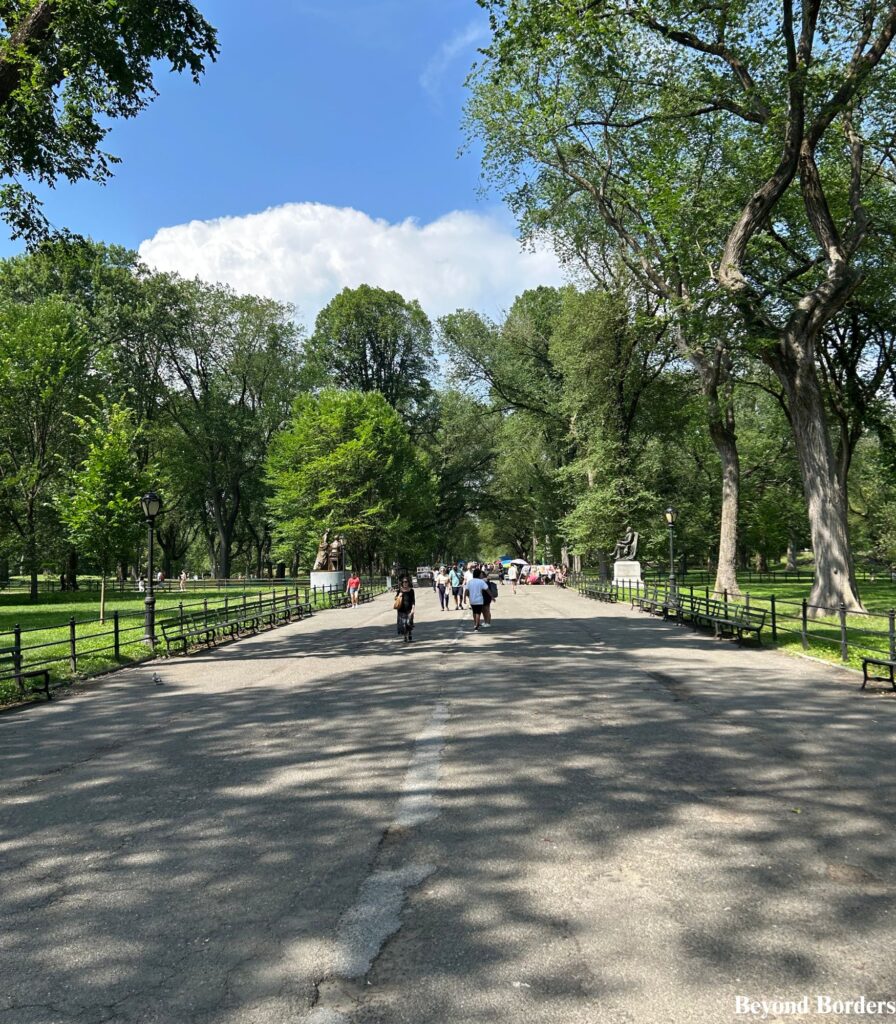
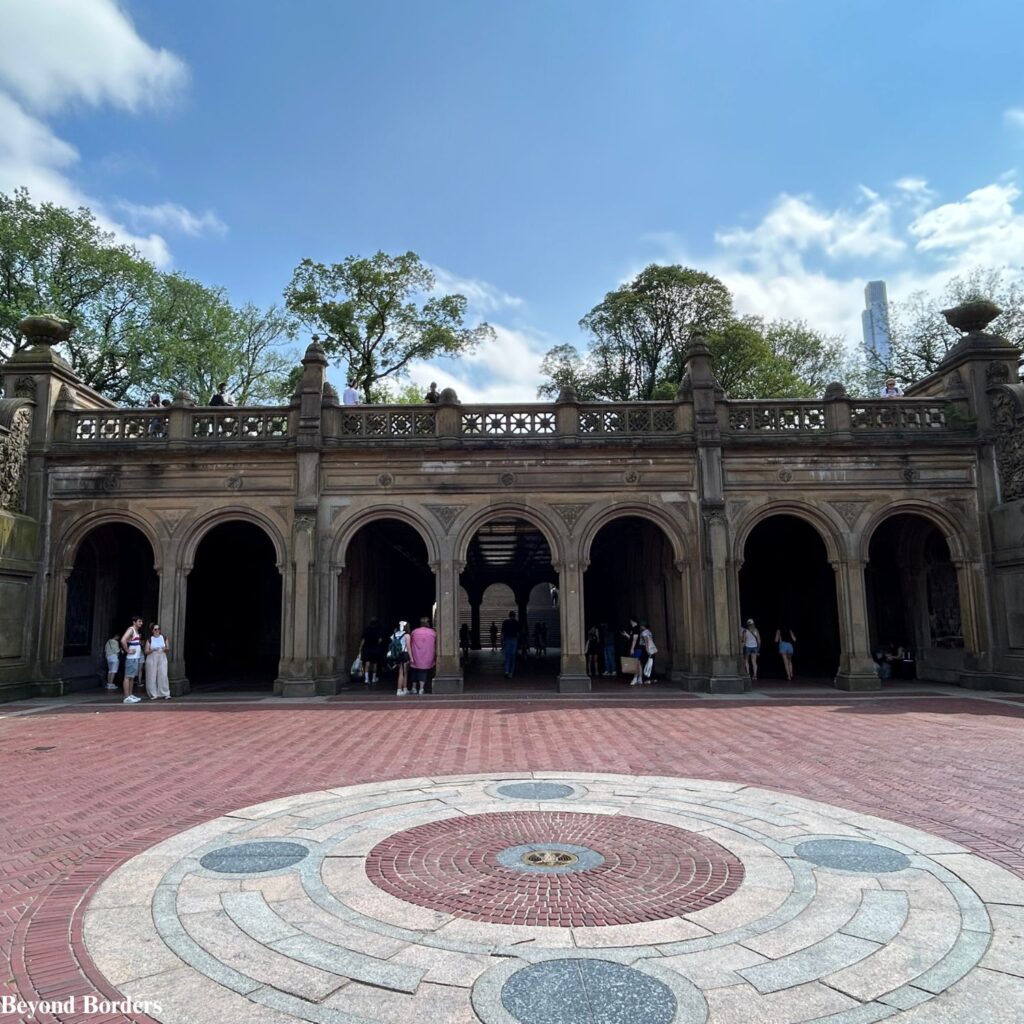
- Proceed to The Mall and Literary Walk, the only straight line in the park’s original design, leading directly to Bethesda Terrace.
- Go west towards the Strawberry Fields (72nd St) to pay respects at the Imagine Mosaic.
- The Bow Bridge Crossing: From Bethesda Terrace, walk west across Bow Bridge–the most photographed bridge in the park.
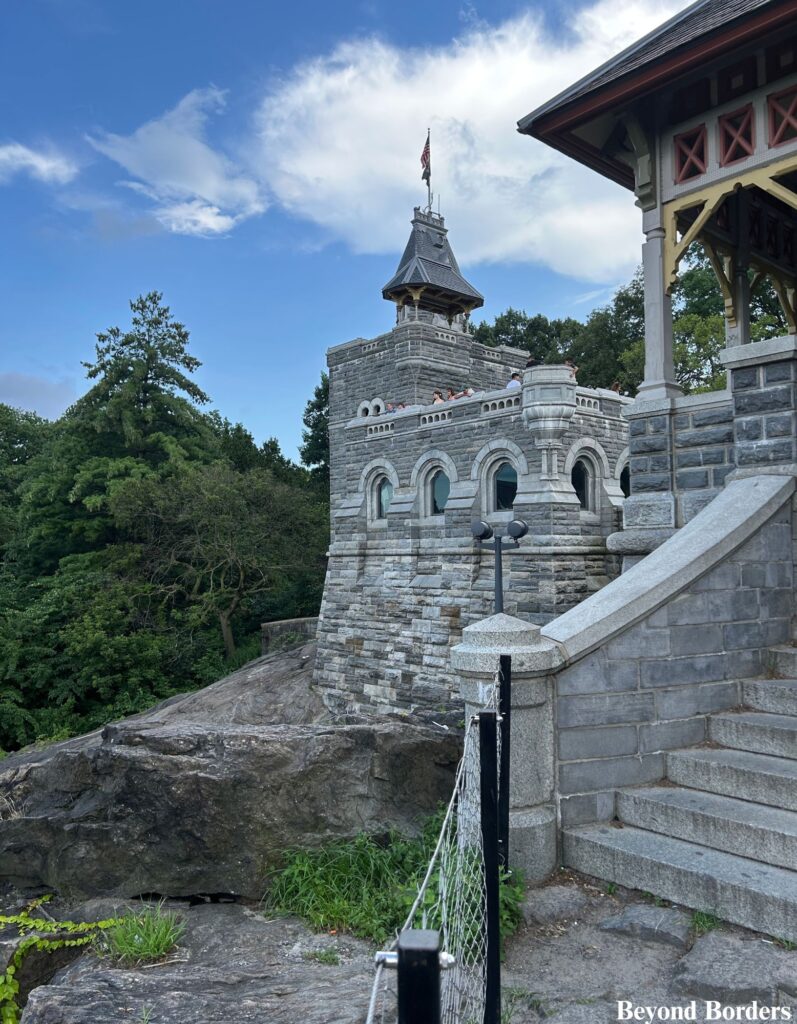
- The Castle Ascent: Walk back towards Bethesda Terrace and follow the signs through The Ramble (heading north) to reach Belvedere Castle on Vista Rock.
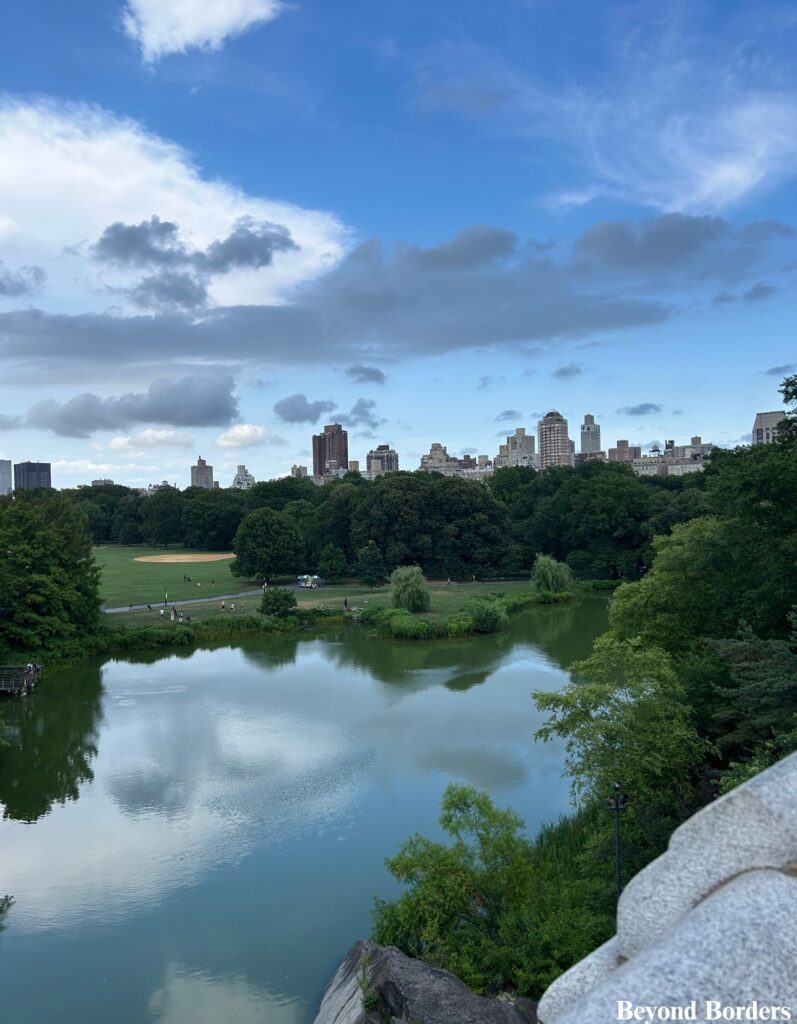
- Observation Deck: Climb the spiral staircase to the lookout for the highest 360-degree views in the park, overlooking Turtle Pond and the Great Lawn.
The Exit: Head west toward the 81st St-Museum of Natural History exit. Take the B train to 42 St–Bryant Pk station or the C train to the 42nd St–Port Authority Bus Terminal station and walk 2 blocks east on 42nd St towards the park.
Famous activities in Central Park include using rowboats and gondolas on The Lake, Bethesda Terrace and Bethesda Fountain, the Strawberry Fields, and the Central Park Zoo. Renting bikes and riding them throughout the park is also very popular. The park is open daily between 6am and 1am.
The Mall and Literary Walk are featured in several movies and TV shows, such as Kramer vs Kramer (1979), Gossip Girl (2007-2012), Sex and the City (1998-2004), Enchanted (2007), Breakfast at Tiffany’s (1961), and When Harry Met Sally (1989). Also, make sure to see Bethesda Terrace, Bethesda Fountain, and Bow Bridge!
⚠️ My Insider Advice:
While Central Park is beautiful, it is also a primary target for pedicab drivers trying to overcharge you. To ensure you don’t accidentally fall for an expensive tourist trap while enjoying your time here, check out my common NYC scams prevention guide for the exact action steps to recognize and avoid them.


Belvedere Castle is a miniature castle designed in 1867 and located on the second-highest point in Central Park. When the castle is open, it is free for visitors to walk up a short spiral staircase to get spectacular views of Central Park’s Great Lawn and Turtle Pond.
Phase 2: The Midtown Intermission
Bryant Park
The Entry Protocol: Enter via 6th Avenue between 40th and 42nd Streets.
What to See and Do
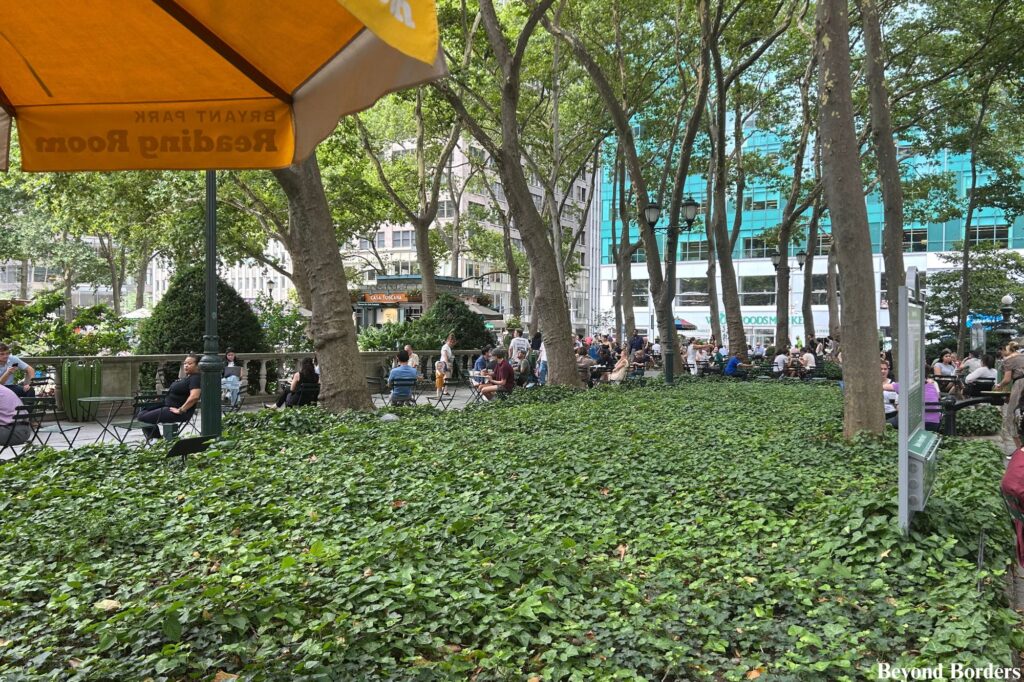
- Stationary Selection: Find one of the 2,000 iconic bistro chairs; you are free to move them anywhere on the gravel to find the best light for photos.
- Connectivity Check: This is a prime spot for a digital “pit stop”-connect to the free park Wi-Fi to check your itinerary or post updates.
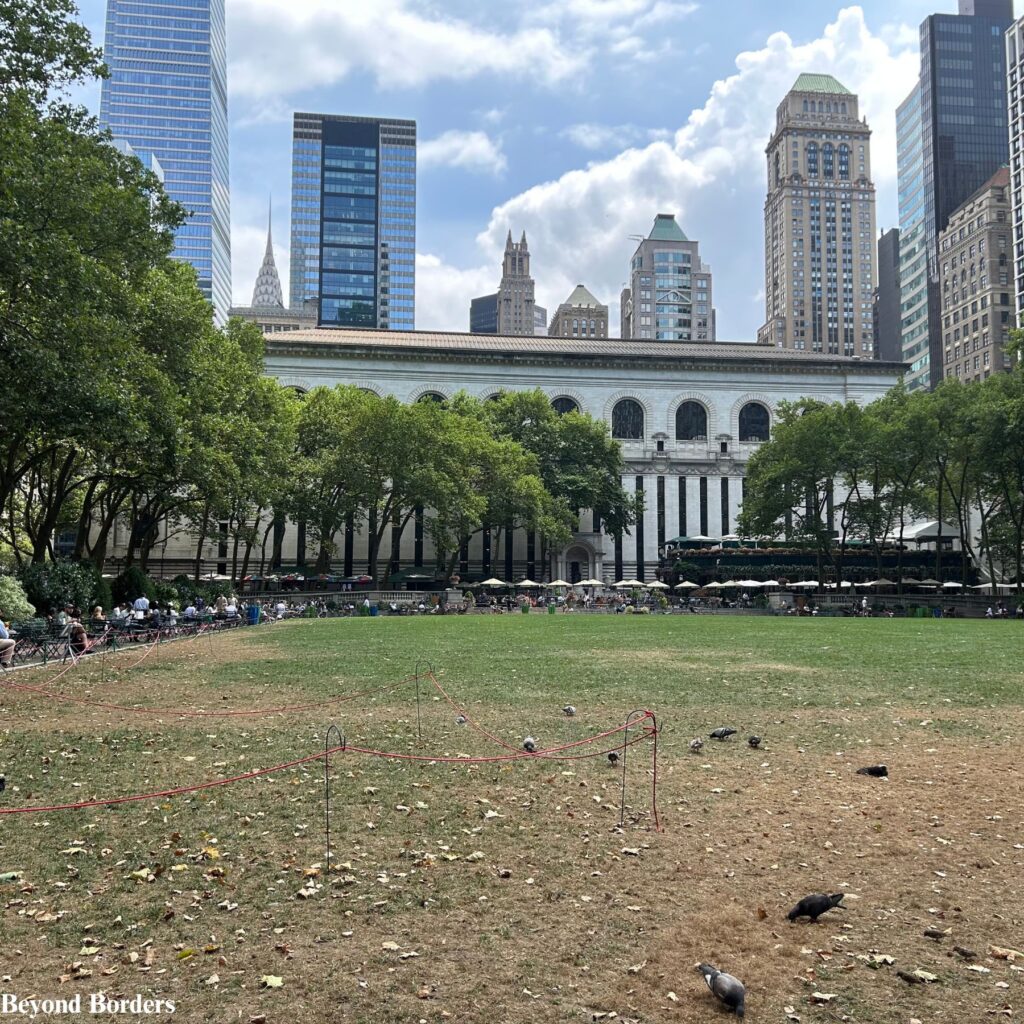
- The Library Loop: Walk behind the park to the Stephen A. Schwarzman Building (New York Public Library) to view the library “stacks” through the ground-level windows.
The Exit: Walk to the Times Sq–42 St station and take either the A, C, or E train south to the W 4th St–Wash Sq station.
Bryant Park is open daily between 7am and 11pm. Besides free Wi-Fi, the park has clean public restrooms with attendants, several dining options, and 24-hour security. Other amenities include chess and ping-pong tables and a reading room with free books. One of the most famous aspects of Bryant Park is that it was the site of New York Fashion Week (NYFW), which took place on the park’s lawn for 17 years, between 1993 and 2010.
The park also has a French Market that takes place between April and September. During the winter, the park features the “Bank of America Winter Village,” which includes a free-admission ice skating rink. Directly behind the park is the main branch of the New York Public Library, officially called the Stephen A. Schwarzman Building, making it easily accessible to office workers, tourists, and residents alike.
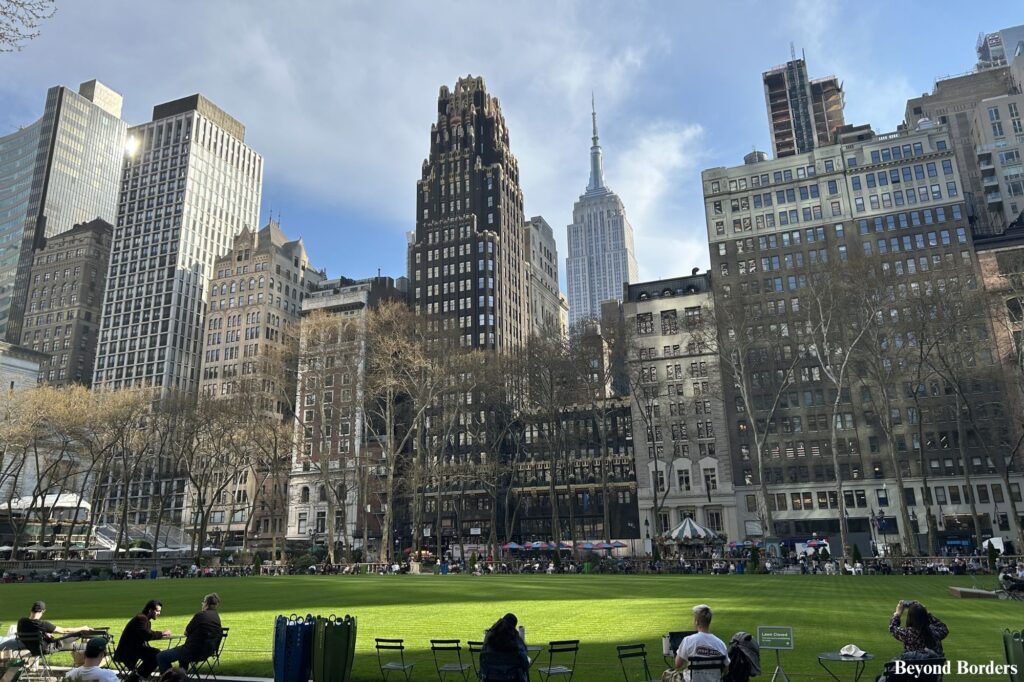
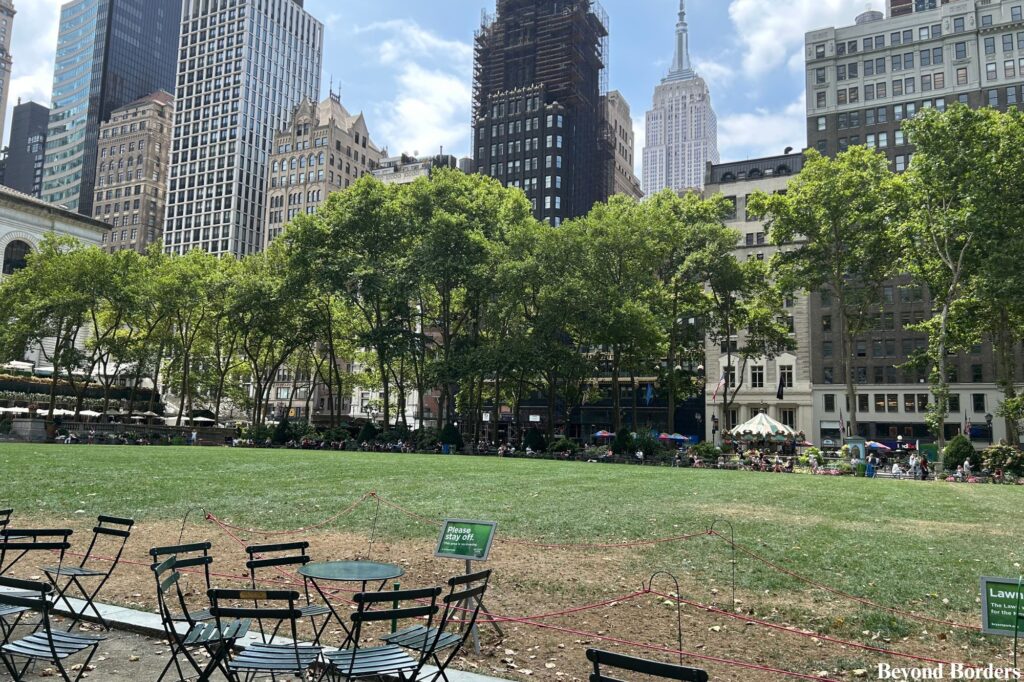
While in the park, visitors and locals alike enjoy breathtaking views of iconic skyscrapers such as the Empire State Building and the Chrysler Building, further cementing its status as a must-visit park in New York City!
Local Pro-Tip:
Read more about the Bryant Park public restrooms in my best public restrooms in NYC guide, including how to find an alternative restroom if you are in a rush and the line is too long. Make sure to read the guide to find other free, clean restrooms throughout Manhattan, so you never have to spend time looking for one throughout your day trip!
Phase 3: The Cultural Core
Washington Square Park
The Entry Protocol: Enter by walking down West Washington Place or West 4th St on the park’s east side to immediately immerse yourself in Greenwich Village.
What to See and Do
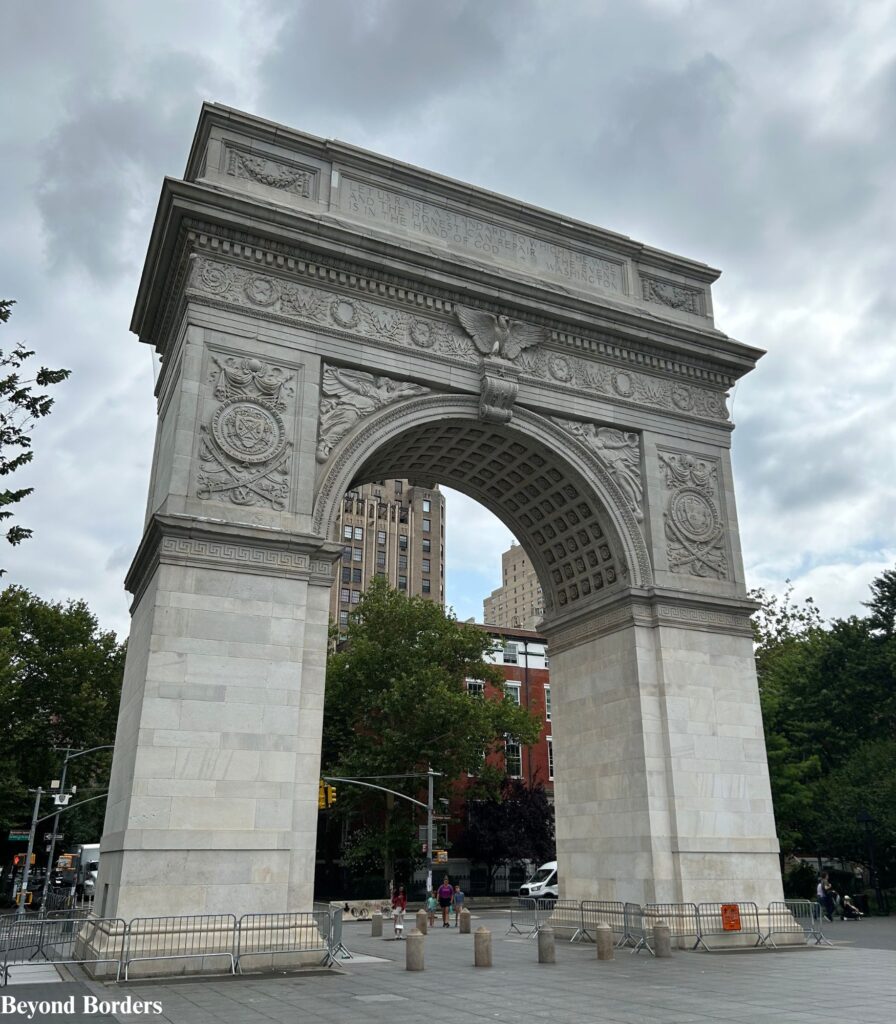
- The Arch as an Anchor: Use the Washington Square Arch as your reference point; don’t forget to take photos!
- The arch is at the 5th Avenue entrance (northern entrance) to the park.
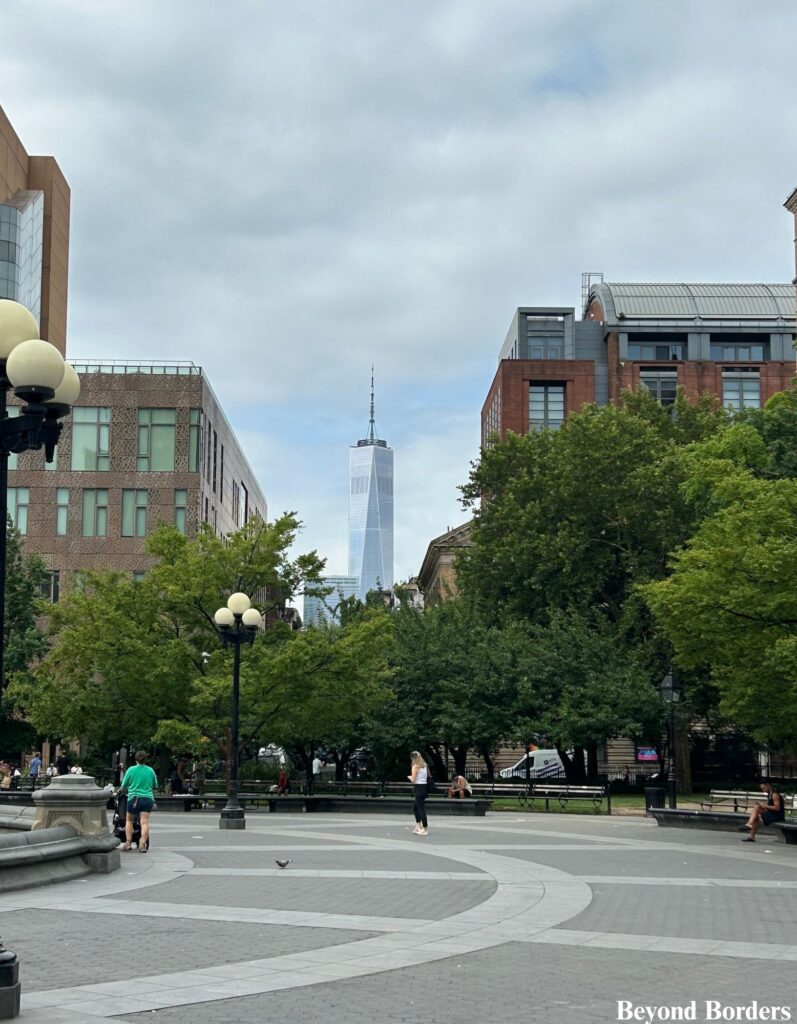
- The Fountain Stage: Head to the central fountain to catch the street performers and musicians who use the space as an outdoor theater.
- The Chess Challenge: Visit the southwest corner to watch a match (or play!) at the permanent stone tables.
Washington Square Park is open daily between 6am and 12am. The park is known as the unofficial “quad” of NYU due to its proximity to the school. Besides chess, amenities of the park include children’s play areas, two dog runs, public restrooms, park benches, and picnic tables to relax and play.
Washington Square Arch was built between 1890 and 1892, dedicated in 1895, and honors George Washington, the first president of the United States. The arch was inspired by Roman triumphal arches and is around 77 feet (23 meters) tall. The arch has become one of New York City’s most recognizable landmarks and is a powerful symbol of national pride.
Washington Square Park has been featured in numerous movies, including When Harry Met Sally (1989), Home Alone 2: Lost in New York (1992), Big Daddy (1999), and Enchanted (2007). TV shows that feature the park include The Marvelous Mrs. Maisel (2017-2023), Gilmore Girls (2000-2007), Glee (2009-2015), and Blue Bloods (2010-2024).
Lunch: The West Village Refuel
The Procedure: From the southwest corner of Washington Square Park, walk two blocks west into the heart of the West Village. This neighborhood is the perfect “midway” point to sit down and grab some lunch before the final two phases of your park itinerary.
My Lunch Recommendations
- The “Classic” Choice: Buvette; 42 Grove St.
- Step-by-Step: Walk towards West Washington Place and cross 7th Ave onto Grove St, and Buvette will be on your left. This spot is famous for its “steamed eggs” and Parisian charm. Note: They do not take reservations, so plan to arrive before the 12:30pm crowd if you want to eat here.
- The “Fast-Casual” Choice: Jack’s Wife Freda; 50 Carmine St
- Step-by-Step: Exit the park on MacDougal St and walk towards West Houston St. Make a right onto West Houston St and cross 6th Ave onto Bedford St. Make a right onto Carmine St and the restaurant will be on your right. I recommend ordering the “Madame Freda” for a quick, high-energy Mediterranean-inspired lunch that won’t weigh you down for the rest of the walk.
Strategic Detour: If you want to dive deeper into the hidden cobblestone streets and historic townhomes of this area, check out my 1-day West and East Village Itinerary to expand your day into the “side-streets” of the city.
The Exit: After eating, take the R or W trains from 8th St-NYU south to the City Hall station.
My Insider Advice:
While the Brooklyn Bridge-City Hall station sits right on the edge of the park, I don’t recommend taking the subway there. It serves the 4, 5, 6, J, and Z lines and is constantly bottlenecked with massive crowds heading to the bridge. You might be tempted to walk east to Astor Place to catch that 6 train, but skipping that station entirely will save you a major headache.
Phase 4: The Civic Commons
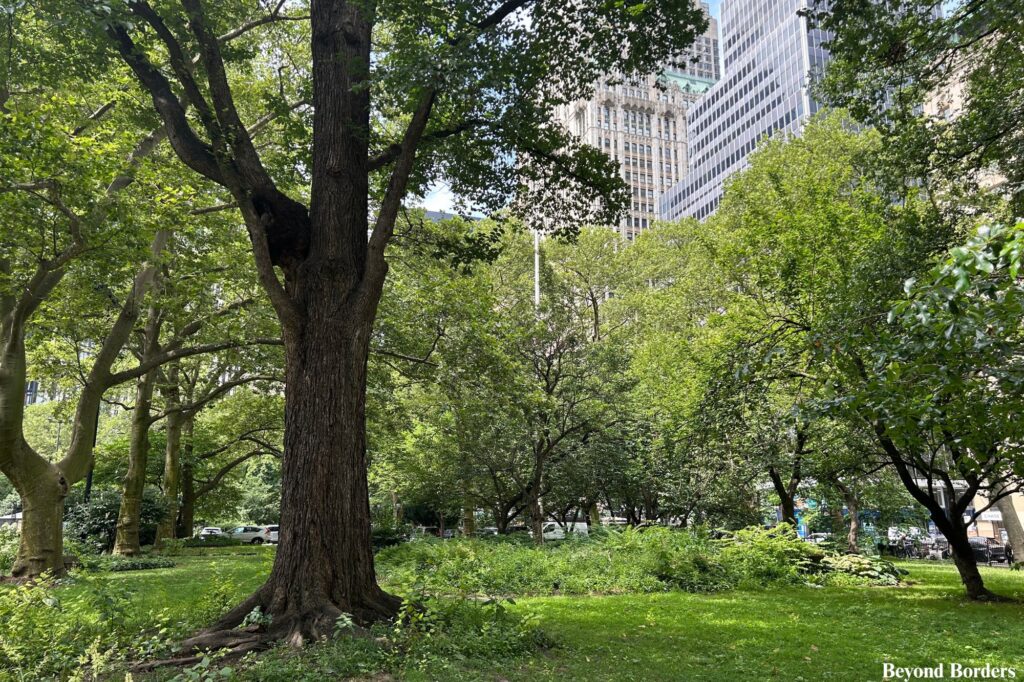
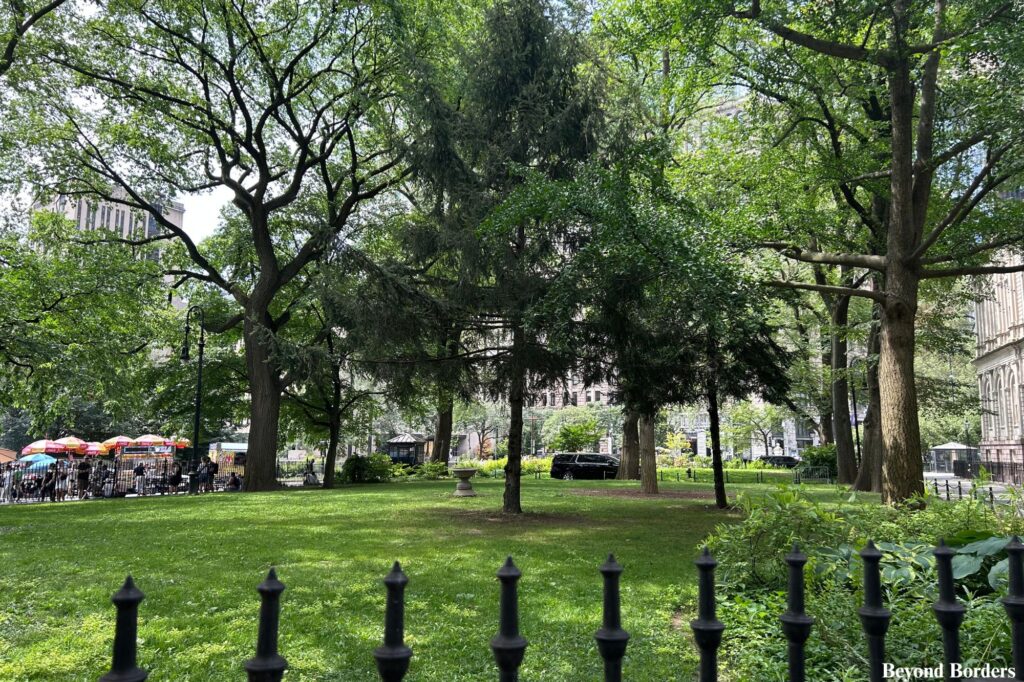
City Hall Park
The Entry Protocol: Enter the park after exiting the City Hall subway station.
What to See and Do
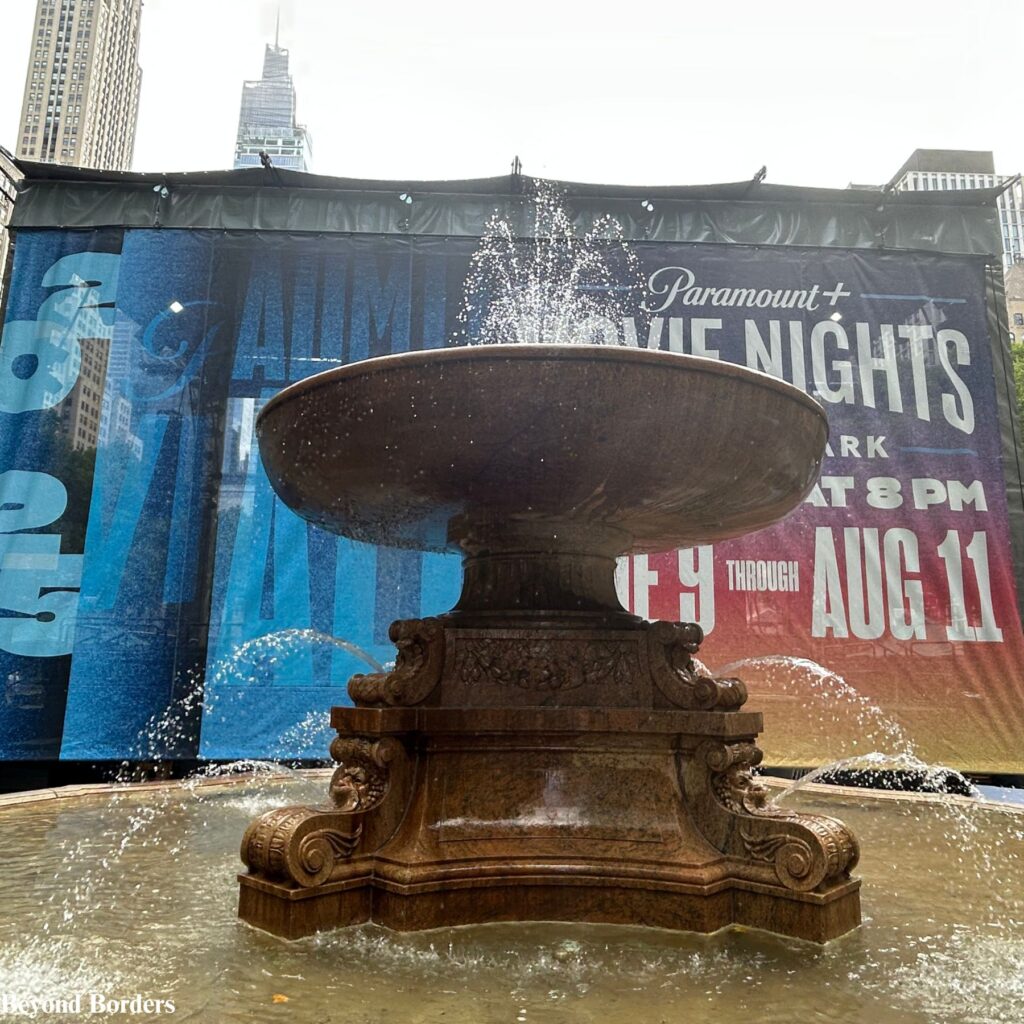
- The Fountain Focal Point: Walk toward the Jacob Wrey Mould Fountain. It’s the centerpiece of the park and offers a quiet, symmetrical perspective of the surrounding towers.
- Spot the Statues: The park features statues of American historical figures, including Benjamin Franklin and Nathan Hale.
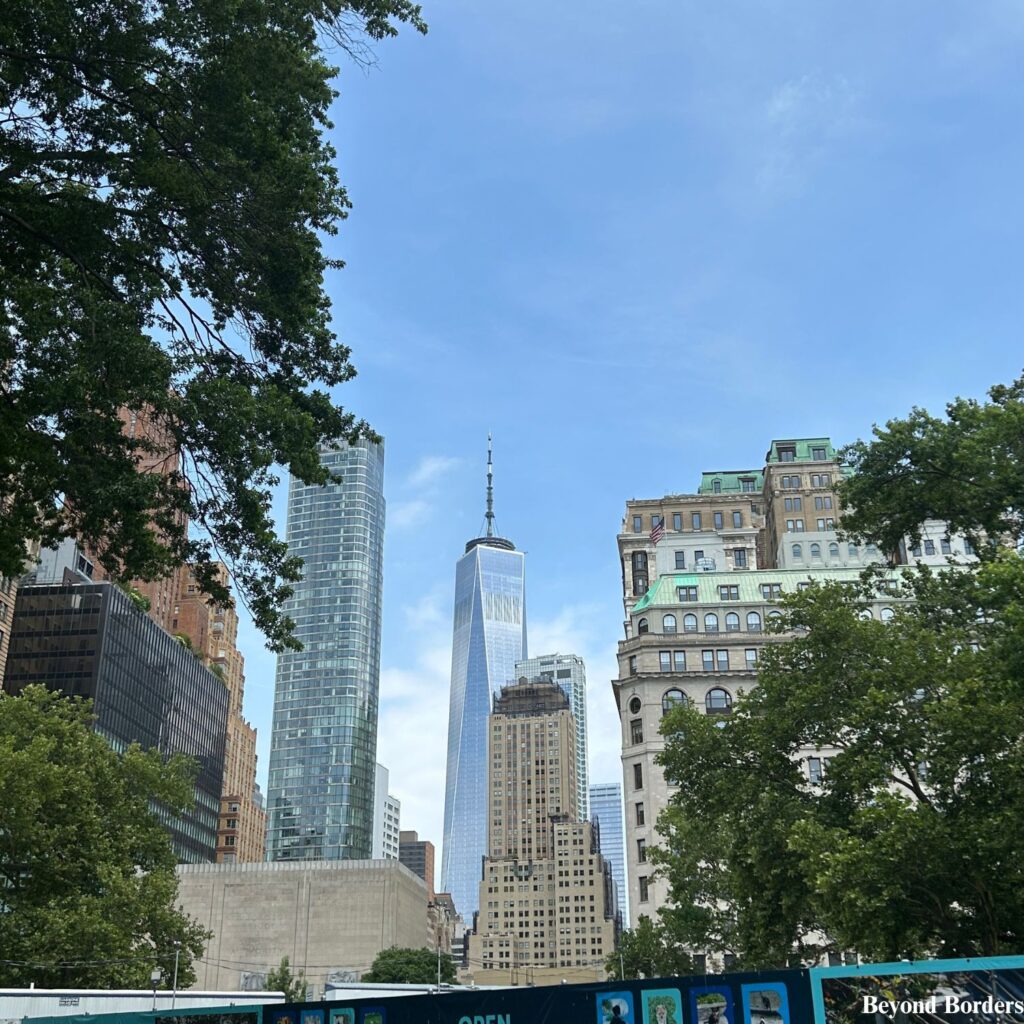
- Architecture: Stand by the fountain to compare the historic Woolworth Building with the modern One World Trade Center–a perfect visual summary of Manhattan’s growth.
The Exit: Walk south down Broadway (about 15 mins) or take the 4 or 5 train from the Brooklyn Bridge-City Hall station to Bowling Green station.
The Brooklyn Bridge is just east of City Hall Park and is open daily between 6am and 12am. As the name suggests, New York City Hall Park is located in City Hall Park. New York City Hall was built in 1811 and is one of the oldest continuously operating city halls in the United States. You can also see the New York State Supreme Court building that serves Manhattan just north of the park, located at 60 Centre Street in Foley Square.
Moreover, the African Burial Ground National Monument just north of the park commemorates the lives of enslaved and free Africans buried in the area during the 17th and 18th centuries. Many green spaces are fenced off, but there are several benches and tables throughout the park to sit and relax.
The location of City Hall Park makes it popular with both locals and tourists; it is a perfect starting point for exploring other Lower Manhattan attractions, such as the Brooklyn Bridge, the Financial District (featuring Wall Street and the World Trade Center), and the 9/11 Museum and Memorial Pools.
Phase 5: The Harbor Terminus
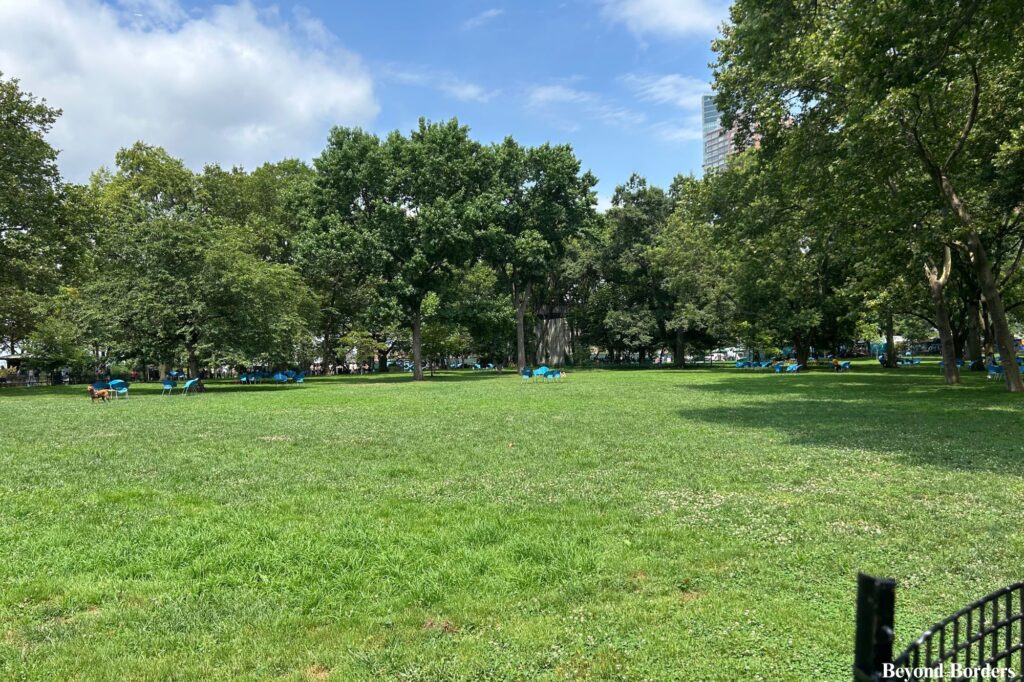
Battery Park
The Entry Protocol: Enter via State Street near the Bowling Green station.
What to See and Do
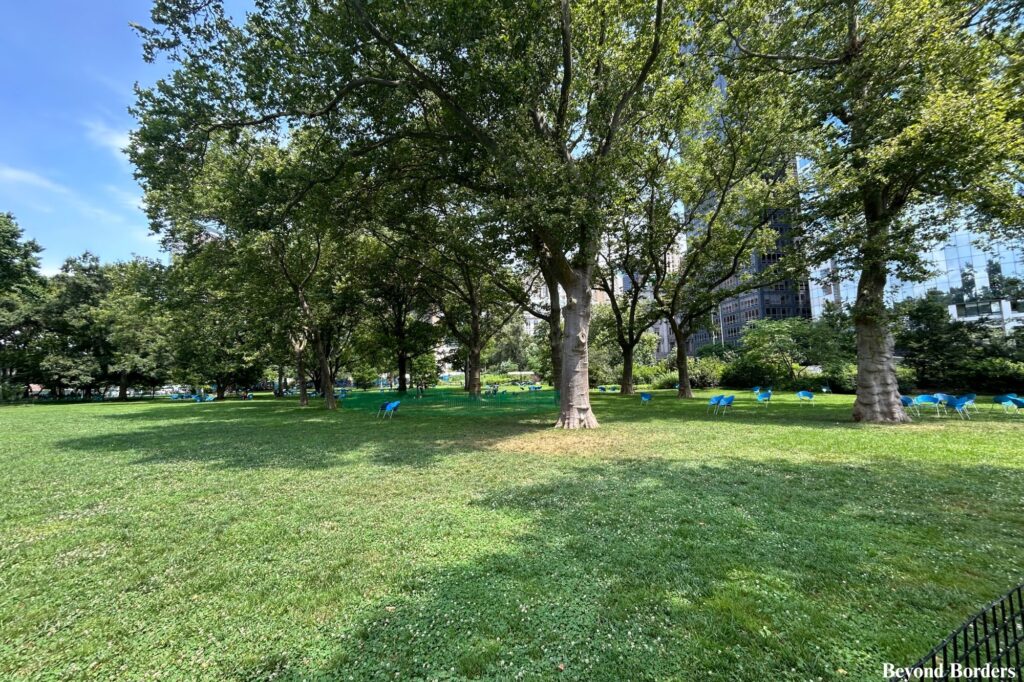
- The Waterfront Promenade: Walk directly to the harbor railing for an unobstructed view of the Statue of Liberty. Also see the World Trade Center complex, a prominent feature of the Lower Manhattan skyline.
- Castle Clinton National Monument: A historic sandstone fort that has evolved from a War of 1812 coastal defense into an entertainment center, America’s first immigrant depot, and a public aquarium. It is also the official ticketing hub for ferries to the Statue of Liberty and Ellis Island. It is free, and no reservations or tickets are required to enter!
- The Battery Gardens: Navigate through the perennial gardens toward the southern tip. These were designed for year-round texture and movement. You will also see the 4-acre Battery Woodland green space, which features native New York trees.
- The SeaGlass Carousel: End your journey at the iridescent carousel. The architecture alone makes it an essential final stop for travel photos.
The Exit: You are at the southern tip of Manhattan! Go to either the Whitehall St station to take the R or W trains back to Times Sq–42 St to get to the center of Midtown, or go to the South Ferry station and take the 1 train to Times Sq–42 St. Keep in mind: the R and W trains are express, while the 1 train is local.
⚠️ My Insider Advice:
While Battery Park is a must-visit park to see the Statue of Liberty in the distance, it is also a primary target for fraudulent Statue of Liberty ferry ticket sellers. To ensure you don’t accidentally fall for an expensive tourist trap while enjoying your time here, check out my common NYC scams prevention guide for the exact action steps to recognize and avoid them.
Now referred to as The Battery, Battery Park is 25 acres and is open daily between 7am and 6pm. The park is a significant site that has mirrored New York City’s evolution, serving as a crucial location for immigration, recreation, and tourism for centuries. Due to the park’s location, it offers expansive and breathtaking views of Upper New York Bay, including the Statue of Liberty and Ellis Island. Therefore, the park is the primary departure point for ferries to see the Statue of Liberty and Ellis Island.
The park also has various food kiosks, carts, trucks, and nearby restaurants in Battery Park City. The park also showcases 20 monuments, many in an area known as “Monument Walk,” honoring soldiers, explorers, inventors, and immigrants. The Castle Clinton National Monument, a circular fort that has been restored to its early 19th-century appearance, now serves as a ticket booth for the ferries and has a small history exhibit. Over 8 million immigrants entered the United States through here, making it a pivotal point in American immigration history.

The Strategic Detours: High-Value Alternatives
Have more time? If you have an extra afternoon, definitely visit these three parks! The following parks are also listed from north to south.
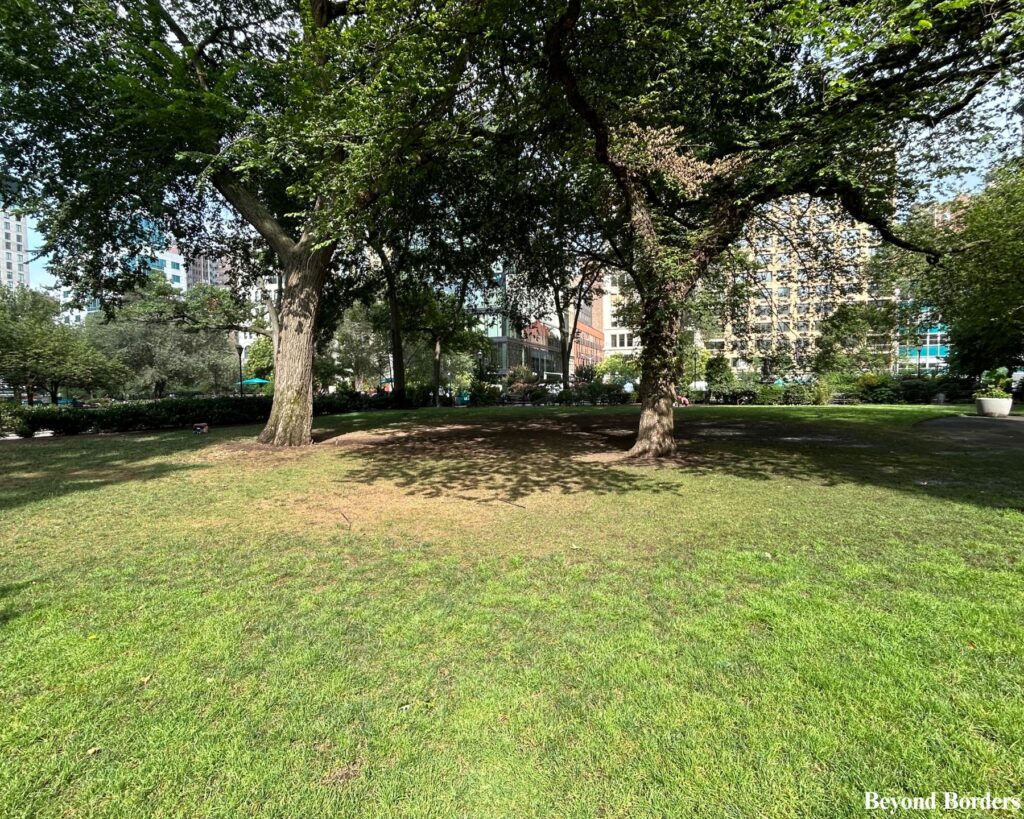
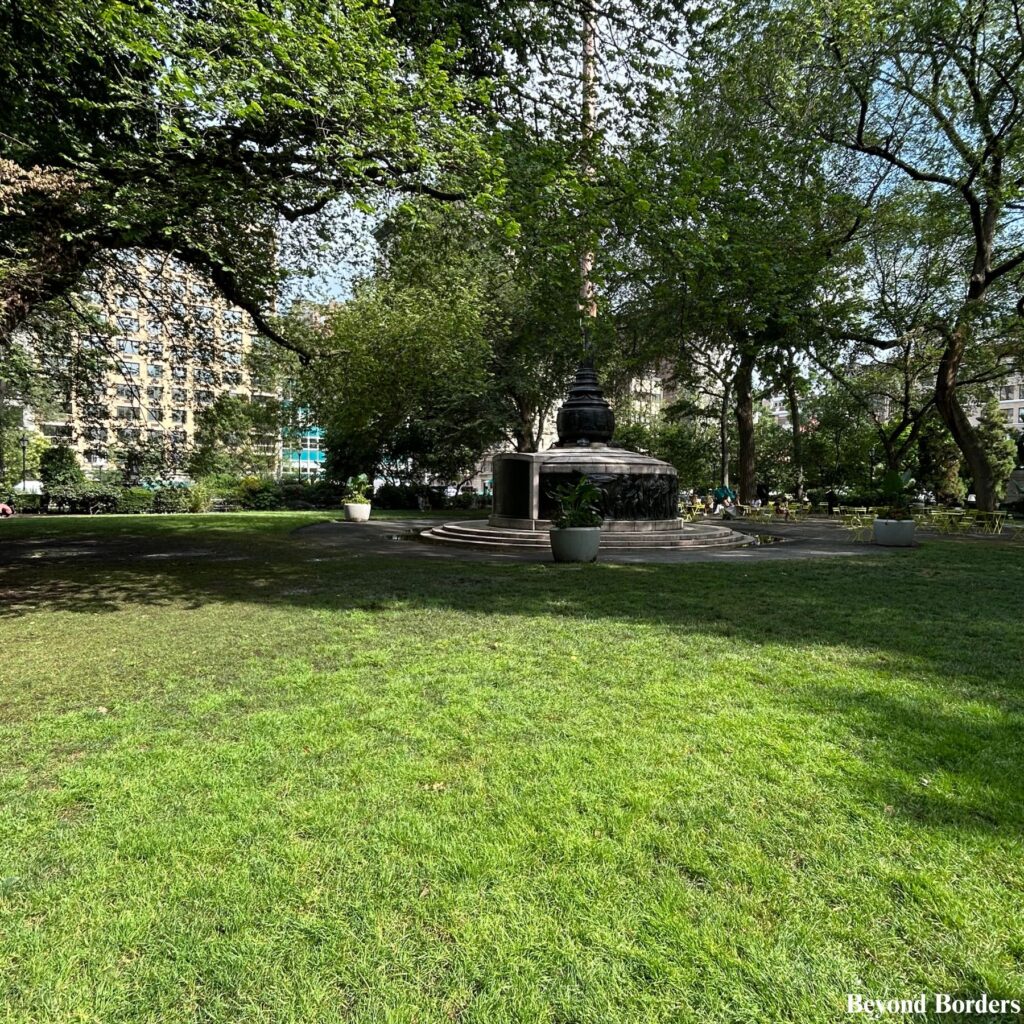
Union Square Park
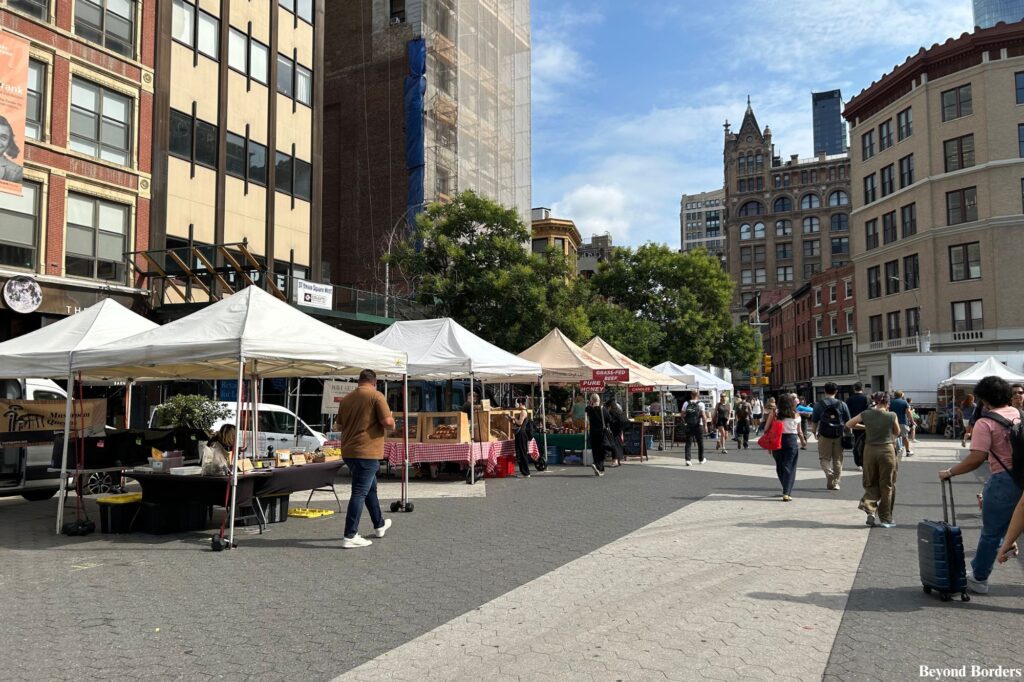
- Best For: People-watching and the city’s premier Greenmarket.
- When To Go: Best visited on Monday, Wednesday, Friday, or Saturday when the Greenmarket is open. This market is one of the largest and most popular farmers’ markets in New York City, featuring regional farmers and producers who offer fresh produce, baked goods, meats, and artisanal products. The park itself is open 24 hours a day, all year.
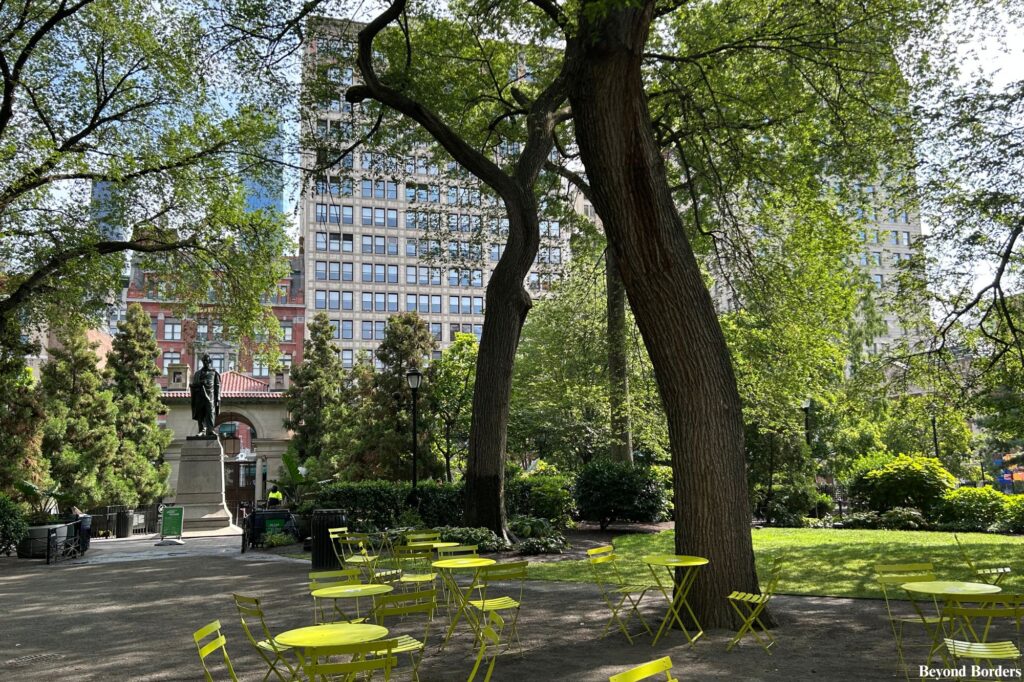
- Key Checkpoint: The George Washington Statue at the south end is the best spot to orient yourself before heading into the shops of 14th Street.
Union Square Park is located in the center of Manhattan’s Union Square neighborhood, easily accessible via the three different 14 St–Union Sq subway stations on several different subway lines. Because its southern end is at 14th Street, Union Square Park sits at the border between midtown and downtown Manhattan. Its name comes from its location at the “union” of two major roads: Broadway and the former Bowery Road (now Fourth Avenue).
Union Square Park was designated a National Historic Landmark in 1997 and features several statues of historical figures, such as an equestrian statue of George Washington (1856), the oldest statue in NYC Parks’ collection, Abraham Lincoln (1868), and Ghandi (1986).
The park also hosts the popular Union Square Holiday Market during November and December, featuring numerous vendors selling crafts and food. Other amenities include a large and popular playground for kids and a fenced-in dog run. Bistro tables and chairs are provided from April through October for people to sit, eat, and relax.
The High Line
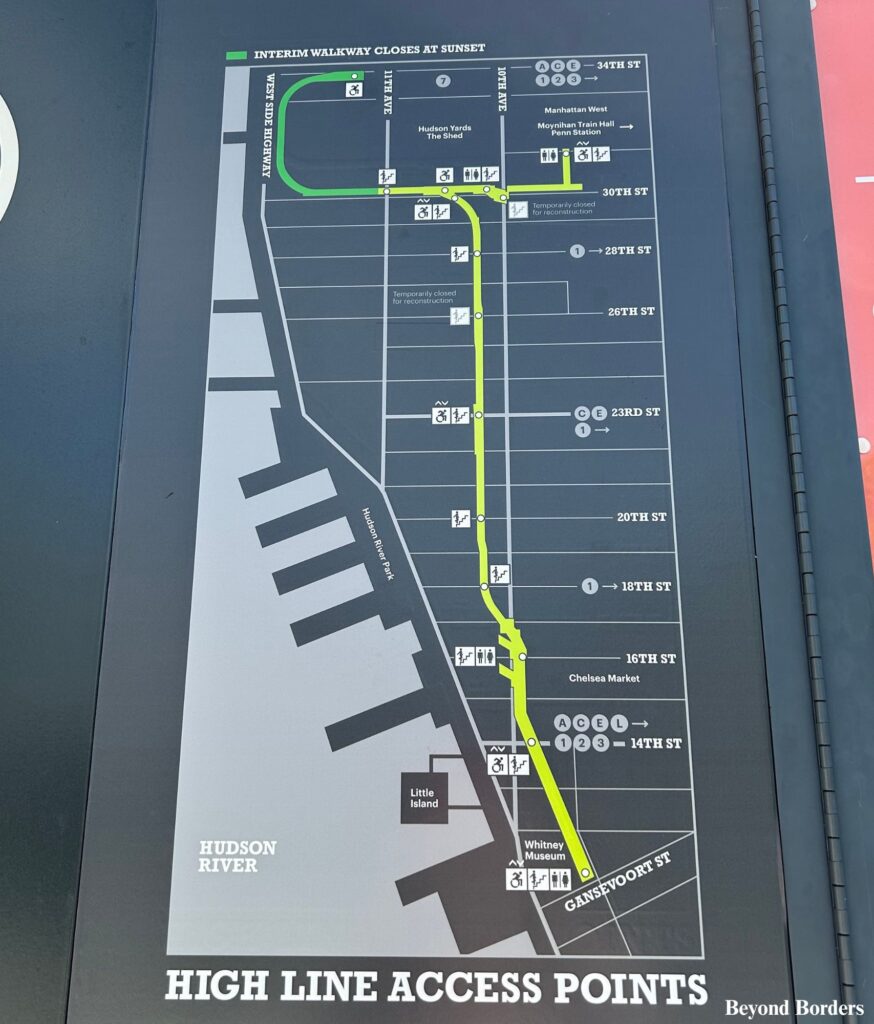
- Best For: Architecture enthusiasts and those moving between Hudson Yards and Chelsea. The park is easily accessible via the 34th St–Hudson Yards station.
- How to Walk It: Enter at 30th St and 10th Ave. Walk south to keep the harbor views in front of you.
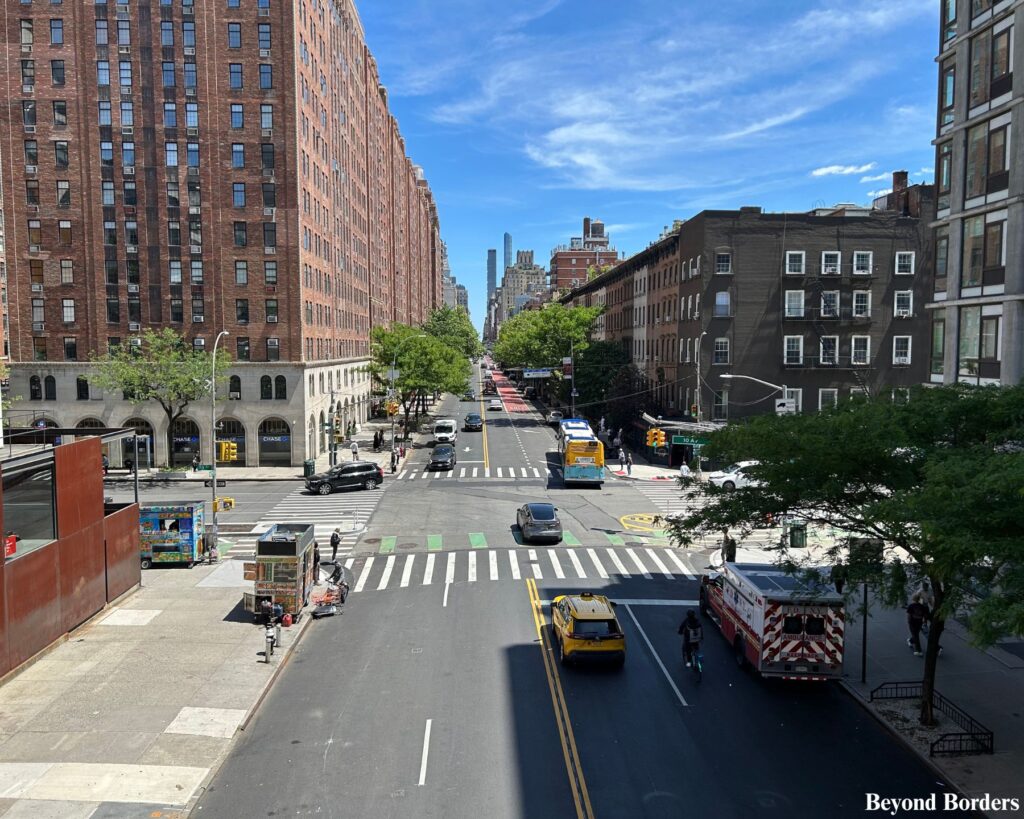
- Key Checkpoint: The High Line Observation Deck on 10th Ave provides a “window” into the city’s traffic grid, perfect for unique, aesthetic city photos!
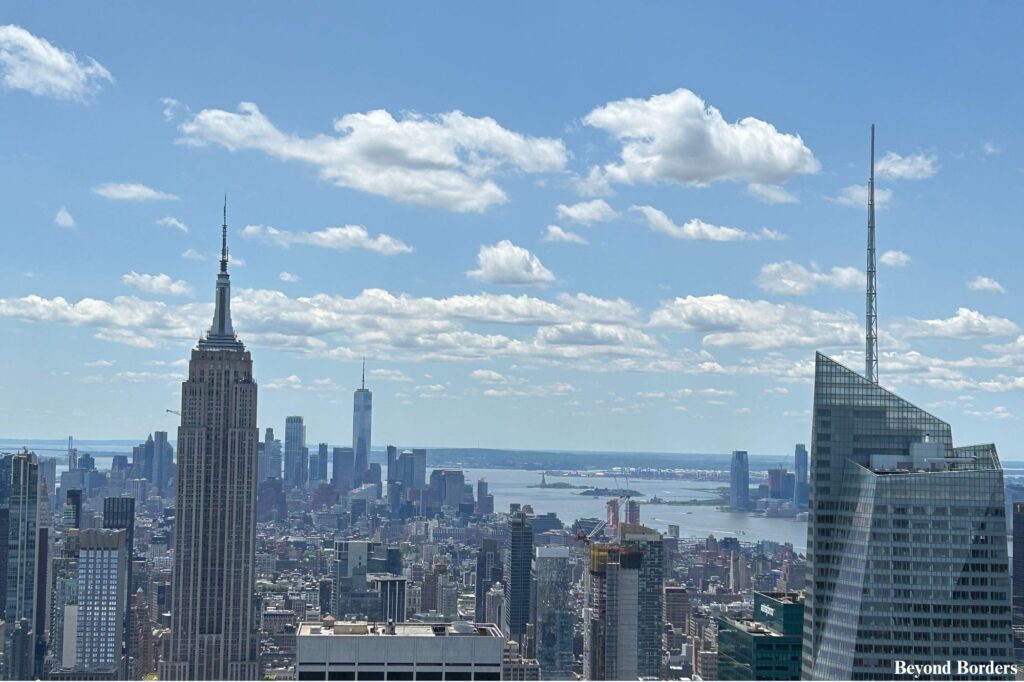
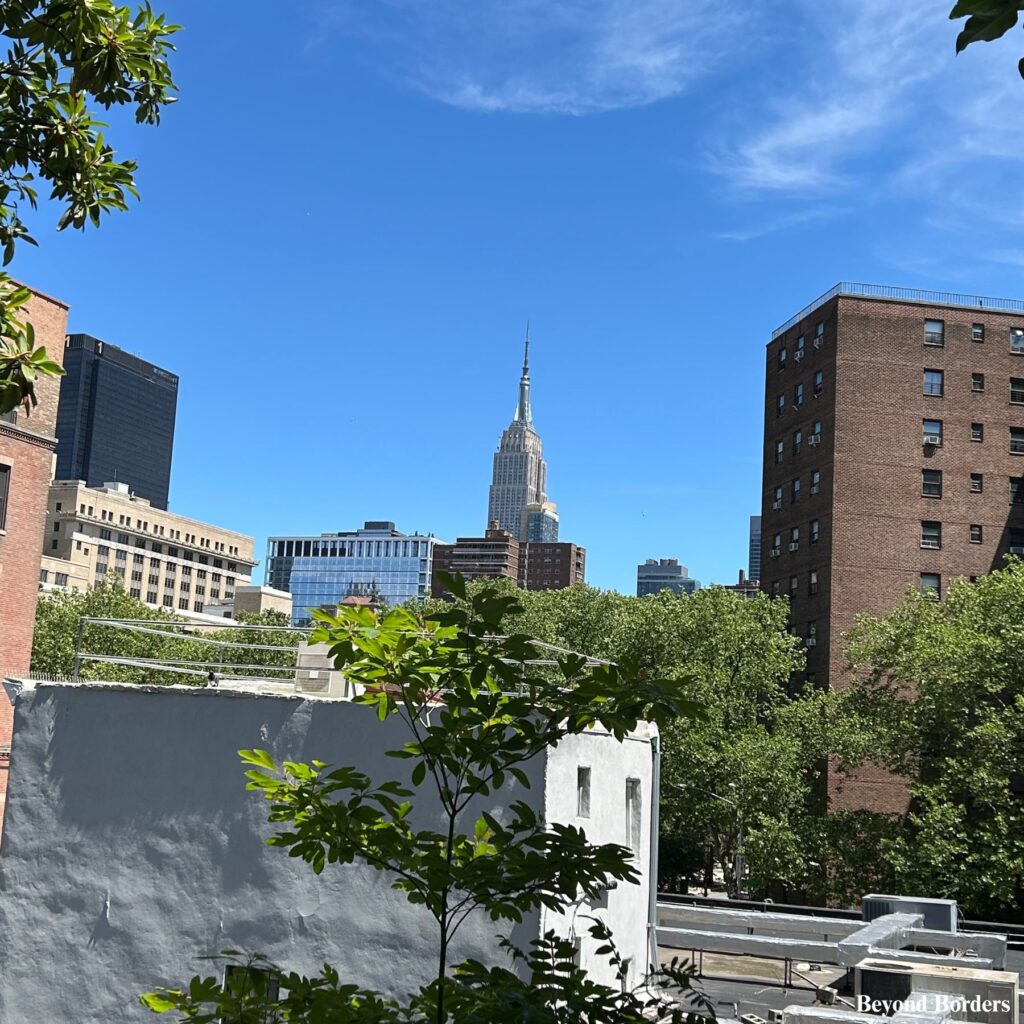
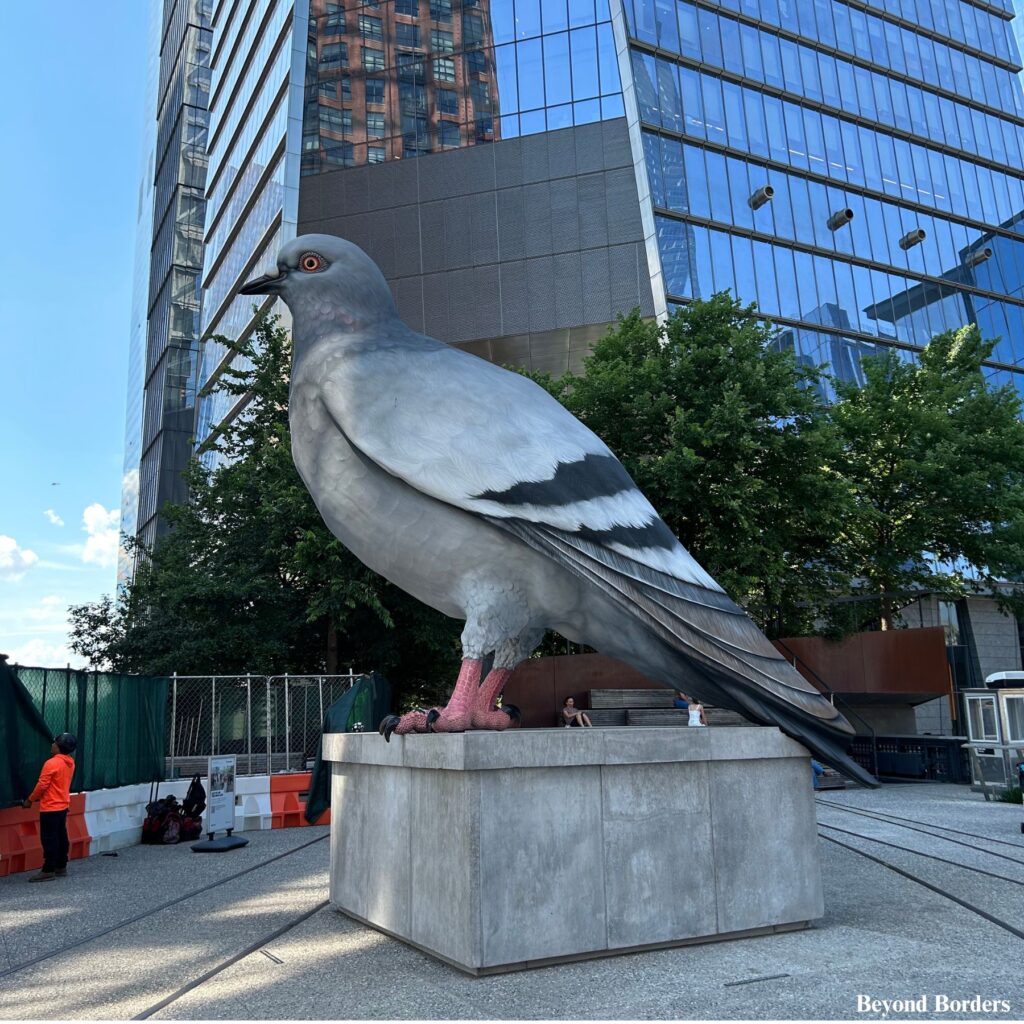
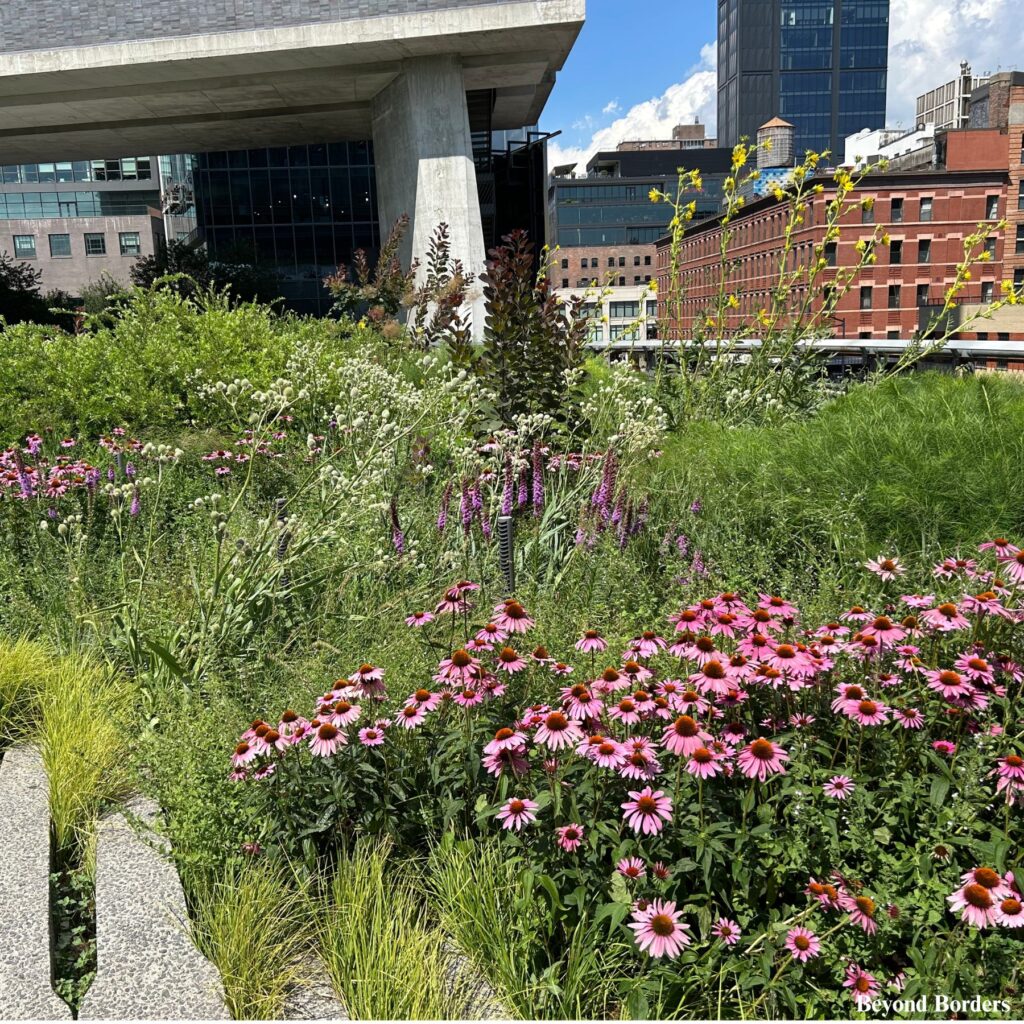
The High Line is one of New York City’s most innovative parks, something that makes it distinct from all the others. I include The High Line in my NYC hidden gems post, including how it is included in a NYC hidden gems itinerary. The High Line is a free 1.45-mile-long elevated linear park that features gardens and art on a rail trail built on a former New York Central Railroad on the West Side of Manhattan. While walking through the park, you will see the Empire State Building, the Edge Observation Deck, and neighborhoods such as Chelsea, Hudson Yards, and the Meatpacking District.
As you walk along the High Line, you will notice original steel rails embedded in the concrete or gravel pathways, beautiful flowers, and unique pieces of artwork, including sculptures and murals. The park has several entrances (listed on their official website). If you want to start walking at one of the ends to walk through the entire park, go to the 30th Street Hudson Yards entrance across the street from the Javits Center or the Gansevoort Street and Washington Street entrance, which is close to the Whitney Museum of American Art.
There are also food and drink options available as you walk (usually at 15th Street and 22nd Street), with various vendors. There are public restrooms available at Gansevoort Street (the southern entrance of the park), 16th Street, and 30th Street.
The High Line is an example of a park that uses elements of the city’s past to create a modern piece of architecture that combines gardens, art, and history, allowing visitors to gain a unique perspective of New York City.
Pro-Tip:
Located close to the High Line, The Shops at Hudson Yards has clean public restrooms to use, as featured in my best public restrooms in NYC guide.
Little Island
- Best For: Immersive landscape design and unique Hudson River photography.
- How to Get There: Located at Pier 55. You have to cross the South Bridge to enter.
- Key Checkpoint: Walk to the Little Island Vista Point Overlook for a view of downtown Manhattan, including One World Trade Center.
- Also, make sure to take photos of the “tulip pot” structures that hold the park up as you walk across the bridge to enter!
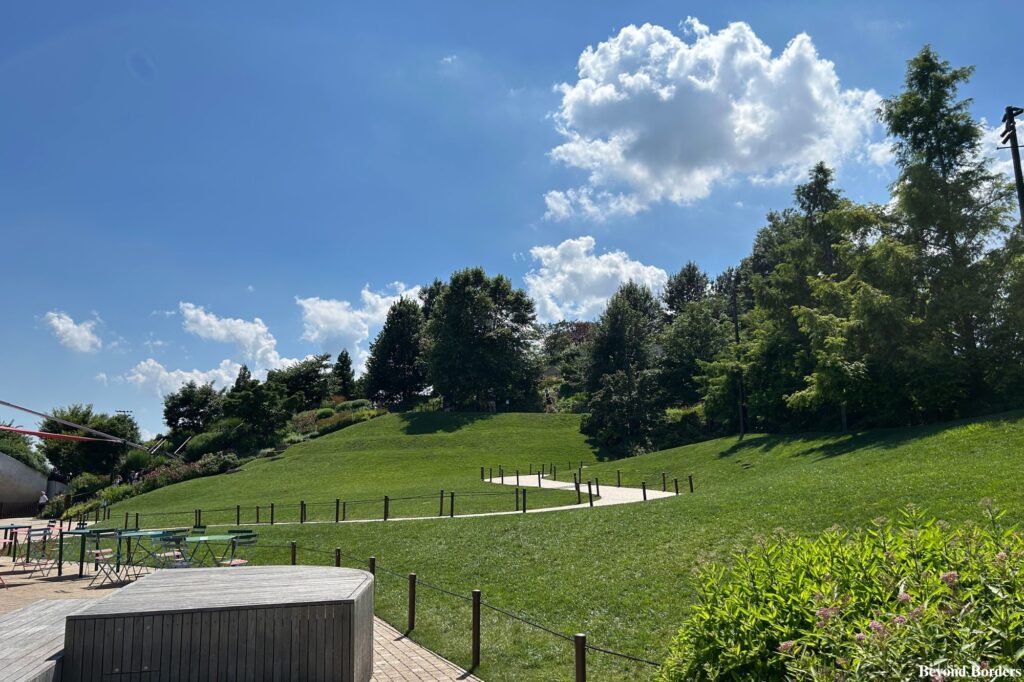
Little Island is also included in my NYC hidden gems post. The park is 2.4 acres, opens at 6am daily, and closing times vary by season; check the official website for closing hours per season. Also at the park are benches, tables, and chairs to relax, a food vendor, restrooms, and a small amphitheater for concerts.
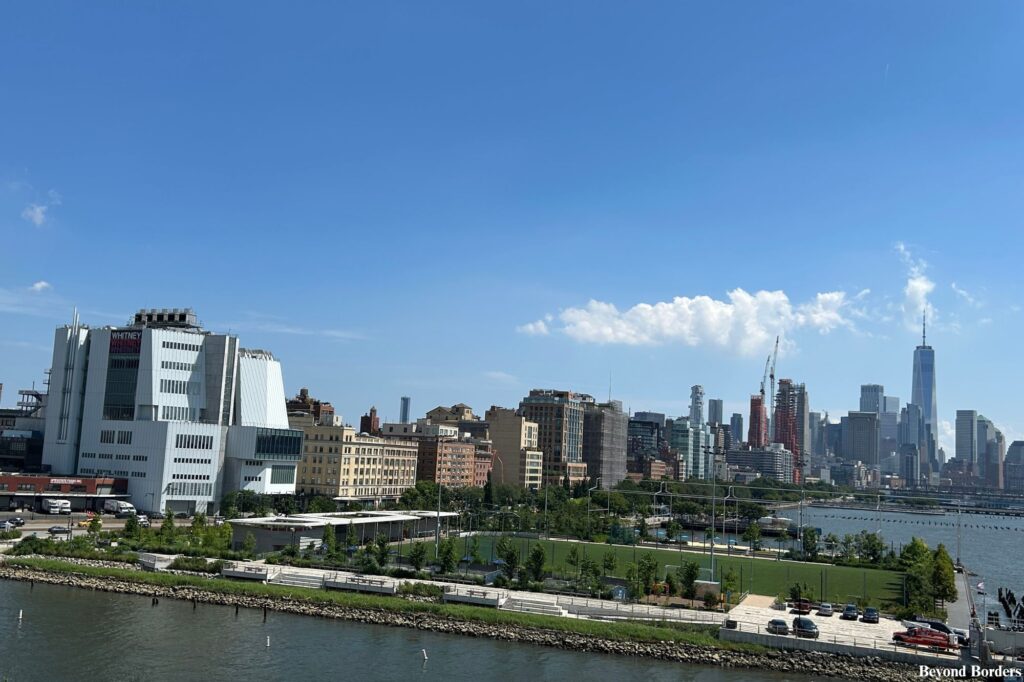
While visiting this park, visitors get amazing views of several places. These include the Hudson River, the Whitney Museum of American Art, downtown Manhattan, One World Trade Center, and even the Statue of Liberty and the Verrazzano-Narrows Bridge (connecting the NYC boroughs of Staten Island and Brooklyn) in the distance!
What makes Little Island unique, like The High Line, is that it does not look like a stereotypical park; the park is made up of 132 “tulip pot” structures of different heights that look like they are floating above the Hudson River.
Pro-Tip:
If you plan to visit Little Island, I recommend combining it with trips to Chelsea Market (a 5-minute walk away) and the Whitney Museum of American Art (a 10-minute walk away).


FAQs: Manhattan Parks
Conclusions
Manhattan’s relentless energy is beautifully balanced by its world-class parks, but the secret to enjoying them is knowing how to move between them. By following this North-to-South protocol–from the heights of Belvedere Castle in Central Park to the harbor views of The Battery–you can navigate the city’s urban core with purpose. Whether you stick to the route of Central, Bryant, and Washington Square Parks, or take a tactical detour to the High Line, Little Island, or Union Square, these spaces offer the essential balance needed to master the energy of New York City.