The 2026 Penn Station Luggage Storage Strategy:
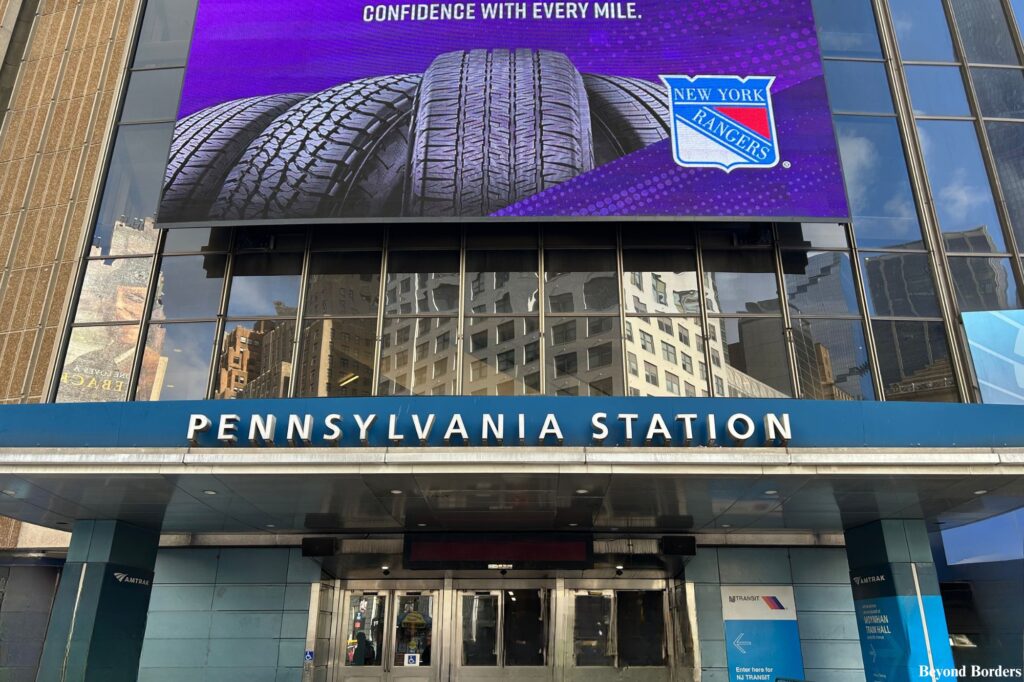
New York Penn Station and Moynihan Train Hall do not have public luggage storage lockers. If you try to wander the main concourses looking for a place to drop your bags, you will be out of luck. Whenever I’ve walked through Penn Station and Moynihan and have seen visitors dragging suitcases aimlessly looking for a place to drop their bags, I know they are about to waste valuable time.
To avoid getting stuck dragging rolling suitcases through midtown crowd surges, I recommend booking a secure, app-based storage provider before you exit the station complex. Focus your search on spots located along 31st or 33rd Streets–and whatever you do, avoid trying to navigate the 34th Street sidewalk gridlocks while hauling luggage.
Introduction: Why You Need Luggage Storage Near Penn Station
Arriving in New York City with luggage in tow can instantly feel like you’re trying to run a marathon in a snowsuit. You want to hit the streets, see the sights, and grab a slice of pizza–not drag a heavy suitcase behind you. As one of the busiest travel hubs in the world and the biggest in the Western Hemisphere, Penn Station is your gateway to the city. However, Penn Station and the adjacent Moynihan Train Hall do NOT offer public luggage lockers.
Whether you’re arriving via Amtrak, NJ Transit, or the LIRR, if you don’t have a check-in or check-out plan, you’re stuck. This guide covers the safest, cheapest, and most convenient app-based and traditional options to store your bags right near Penn Station so that you can enjoy NYC hands-free.
Jump to my Quick-Reference FAQs ↓ at the bottom of this guide if you have a specific question!
When is Luggage Storage Your Best Friend?
- The Day Tripper: You are visiting NYC for a quick day trip (from Long Island, New Jersey, or a nearby city) and are arriving and departing via Penn Station. You need a safe spot to ditch your bags for 6-12 hours of sightseeing.
- The Early Arrival/Late Departure: Your hotel or Airbnb/Vrbo check-in is late (e.g., 3pm), but your bus/train arrived at 8am, or you had an early check-out, but your evening train/flight doesn’t leave until 9pm.
- The Layover Explorer: You are connecting through one of the NYC area airports (JFK, LGA, or EWR) but have a long layover (6+ hours). You take the train into Penn Station and want to maximize your time in Manhattan without your luggage.
- The Concert/Event Attendee: You are attending a sporting event at Madison Square Garden (MSG) or a Broadway show, and the venue has a strict bag policy that prohibits large backpacks or suitcases.
- The Cruiser: You are heading to or arriving from a cruise at the Manhattan Cruise Terminal, located on the west side in Midtown. Rather than bringing your luggage all the way to a faraway hotel before boarding, you store it near Penn Station (a major subway connection point) and explore the city briefly.
Whatever the reason for your luggage-free gap, once your bags are securely stashed, use my one-day in NYC itinerary to hit the ground running!
“Immediate Action” Decision Matrix
| My Situation | Use This Service | Why? |
| “I only have 2 hours to kill.” | Luggage Hero | The only one with hourly pricing. |
| “I have a massive, heavy trunk.” | Radical Storage | No size/weight limits or extra fees. |
| “I’m carrying expensive gear.” | Bounce | Highest insurance ($10k) and most 24/7 spots. |
| “I’m on a strict budget.” | Vertoe | Often the lowest flat daily rate ($5.95). |
| “I’m an Amtrak passenger.” | Amtrak Parcel Check | Official station security (but costs $20+). |
My Insider Advice: Madison Square Garden Attendee Alert
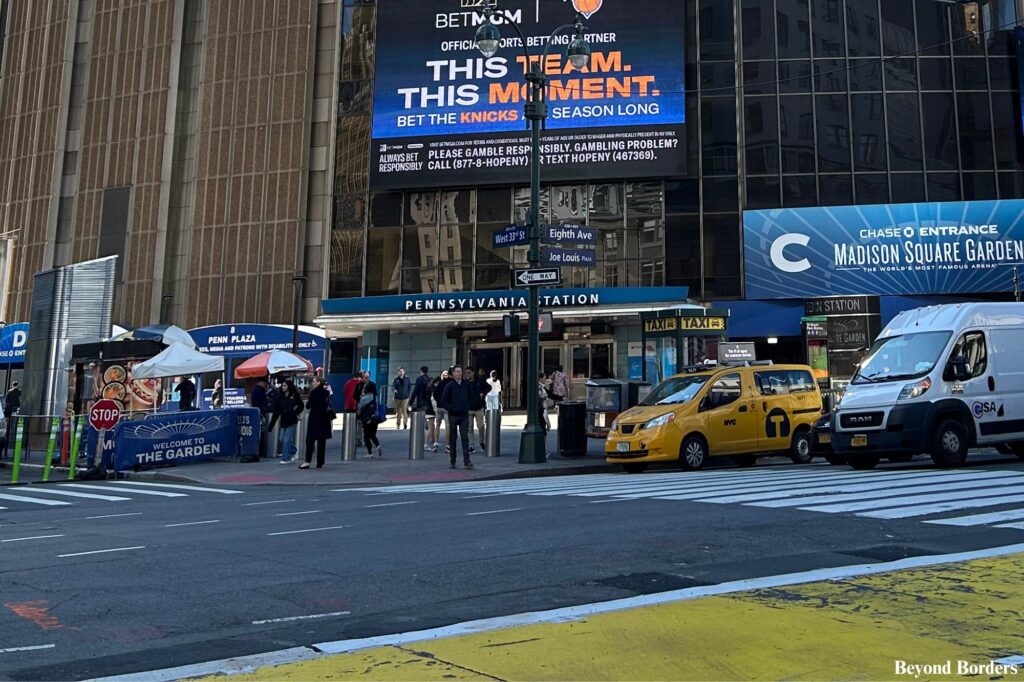
If you are coming into Penn Station specifically for a concert, comedy show, or Knicks/Rangers game at Madison Square Garden, save yourself a massive headache: drop your bags off at your storage location before you even attempt to go up to the arena gates.
MSG does not have a bag check for oversized items, and their security will flat-out deny entry for backpacks or suitcases. Because hundreds of other fans make this mistake every game night, nearby app-based storage spots fill up fast–make sure to book your digital reservation a few hours before doors open.
2026 Luggage Storage Comparison Table
| Service | Est. Daily Rate Per Bag (2026) and Insurance Guarantee | Best For… |
| Bounce | $6.60-$8/day; $10,000 | More expensive items |
| LuggageHero | $1.49/hour; $3,000 | Short 2-3 hour layovers |
| Vertoe | $5.95/day (max $5.90–$8.00/day); $5,000 | Long-term (24h+) on a budget |
| Radical Storage | $6.90/day; $3,000 | Oversized items (no size limits) and 3-Minute Check-ins |
| Amtrak | $20.00/day; Varies (Internal) | Maximum “official” security |
⚠️ The Insurance Procedure Pro-Tip:
To ensure your insurance/guarantee is valid, you must take a photo of your bag inside the storage location during drop-off. If the shop doesn’t use the app’s official digital check-in system (QR code scan), your insurance claim may be denied. Always insist on the scan!
How Does App-Based Storage Actually Work?
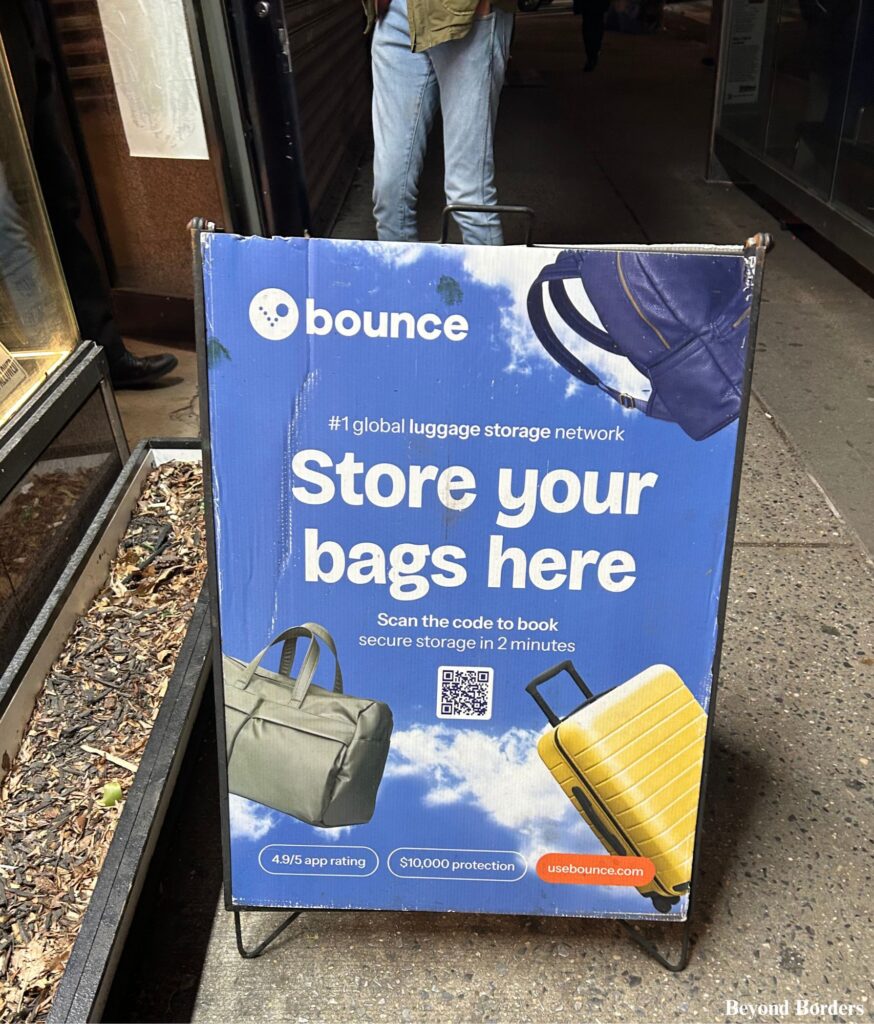
If you’ve never used a service like Bounce or LuggageHero, it’s helpful to think of it as “Airbnb for your bags.” You aren’t leaving your luggage in a locker; you are leaving it in a secure, vetted area inside a local business (like a hotel, cafe, or boutique).
The Step-by-Step Procedure
Step 1: The Digital Reservation— You must book through the app or website first and toggle the “Open Now” filter (many NYC shops close at 7pm; don’t get locked out of your bags!). These businesses cannot accept “walk-in” cash payments for insurance reasons. Once you pay, you’ll receive a QR code and the exact address of your “host.”
Step 2: The Check-In & Security Seal— When you arrive, show your QR code. The shopkeeper will verify your booking and, in most cases, apply a tamper-proof security seal to your zippers.
Step 3: The “Photo Check-In”— When the shopkeeper takes your bag, take a photo of the bag in the shop. This acts as your “digital receipt” and proof of condition for insurance claims.
Step 4: Secure Storage— Your bags are moved to a non-public, restricted area (usually a locked back room or behind a high-security counter). Many hosts also take a photo of the bag for their records.
Step 5: The QR Pick-Up— When you’re ready to head to Penn Station, return to the shop and show your QR code again. The host will scan it to “end” the storage timer and return your bags.
⚠️ Pro-Tip: If you are using LuggageHero, remember to click “Start Timer” in the app the second you drop your bags off. This ensures you are billed correctly and that your insurance coverage is active!
Why is this safer than a locker?
Unlike a public locker in a busy station (which can be picked or broken into), these bags are monitored by staff and kept in areas the public can’t access. Plus, every app-based booking includes digital tracking, so there is a permanent record of who has your bag and when it was picked up.
Amtrak Luggage Storage Services (Moynihan Train Hall)
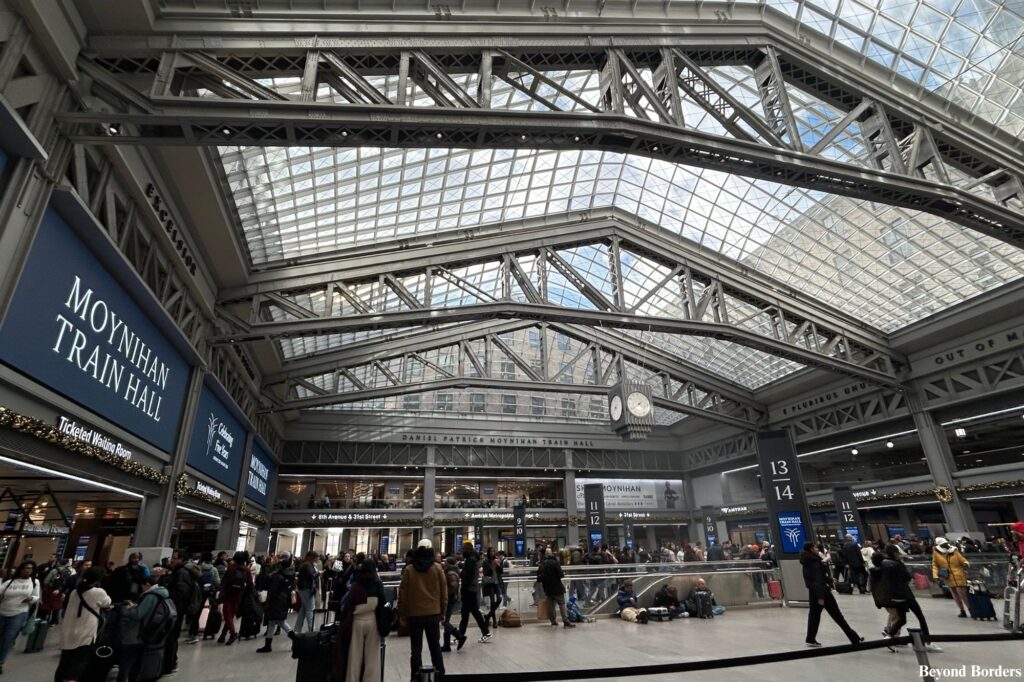
If you prefer the security of an official station service and don’t want to leave Penn Station, Amtrak offers a “Parcel Check” service. It is located within the new Moynihan Train Hall (which now serves as the main Amtrak hub and is connected to Penn Station underground). While this is the most “official” way to store your luggage, it comes with a premium price tag and particular requirements. Follow the signs in Penn Station for “Amtrak” or “Moynihan Train Hall” and look for the Baggage Office near the ticketed waiting area. Read more about Amtrak’s baggage services on their website.
Key things to know about Amtrak Baggage Services
- The Caveat: This luggage storage service is located at the baggage office in Moynihan Train Hall (adjacent to Penn Station) and is NOT a public locker service.
- For Amtrak Ticket Holders: You can store luggage for $20 per item per 24-hour period. You must present a valid Amtrak ticket (for a train arriving or departing that day).
- For Non-Ticket Holders: They sometimes offer storage to the general public for a higher fee ($30 per item per 24-hour period with a valid photo ID required), but because of the high cost and potential for being turned away, I highly recommend using one of the app-based services mentioned above instead.
My Recommendation: Even if they have space, I still recommend the app-based storage spots listed above, because you can save over 50%. Most storage spots are less than a 5-minute walk away, making them a much more budget-friendly choice.
Hotel Concierge/Bell Desk Luggage Storage (The “Sneaky” Option)
This method is the classic “Plan B” for experienced NYC travelers. While hotels are usually only required to hold bags for their guests, the bell desks at many large establishments near Penn Station (like the New Yorker Hotel or Stewart Hotel) will often perform this courtesy for a fee. However, because you are not a registered guest, this is an informal favor, not a guaranteed service.
Executing the Strategy
- The Approach: Don’t go to the front desk (where they check IDs). Walk past the desk directly to the Bell Stand.
- The Handshake: Have a $5 bill per bag visible.
- The Ask: “I’m heading to Penn Station in a few hours. Could you keep these secure for me? I’d like to take care of the gratuity now.”
- The Safety Check: If they don’t give you a physical claim check, do not leave the bag.
Tipping Etiquette (The “Fee”)
Because this is an unofficial arrangement, your tip essentially functions as the storage fee. To ensure your belongings are handled with priority and care, it is standard etiquette to provide a $5.00 tip per bag the moment the attendant accepts them. When you return to retrieve your items, a final gratuity of $2.00 to $3.00 per bag is the customary way to thank the staff for the service.
CRITICAL WARNING: Understand the Liability Risks
Before you hand over your bags, you must understand that you are effectively waiving your rights. Because you are not a guest and there is often no official transaction record, you are exposing yourself to specific risks:
- Zero Legal Recourse: If your bag is lost, stolen, or damaged, the hotel is not legally responsible. You have no contract with them. They can simply say, “We were doing you a favor,” and you will have no way to claim compensation from the hotel management.
- The “Lobby Corner” Risk: unlike paid storage apps, which vet their secure locations, a busy bell desk might just push your bag into a corner of the lobby or a hallway behind the stand. It may not be in a locked room, leaving it vulnerable to “grab-and-go” theft by passersby.
- Insurance Loopholes: If you rely on travel insurance, be aware that many policies require a formal receipt or police report to process a theft claim. If the bellman didn’t give you a claim ticket (or gave you a generic paper tag), your insurance provider may deny your claim for “unattended luggage.”
- The “Mix-Up” Danger: Without a digital booking system, human error is higher. If a bellman accidentally hands your black suitcase to another traveler, the hotel has no digital record of who took what.
The Bottom Line: Only use this method for clothes and toiletries. Never leave electronics, passports, medication, or anything you cannot afford to lose.
Navigation Procedures: “Where to Go”
Penn Station can feel like a maze. Here is where to exit the station to find storage spots according to the service you choose:
- For 8th Ave Storage (Bounce/Radical Storage/Vertoe): Exit via the Moynihan Train Hall (Western end of the station). It is much cleaner and easier to navigate than the old Penn concourses.
- For 7th Ave Storage (LuggageHero): Exit underneath Madison Square Garden.
My Insider Advice: Follow the Track Numbers Up
The easiest way to avoid getting hopelessly lost in Penn Station’s concourses is to use your arrival platform to guide your exit. If you are arriving by train and the train arrives on Tracks 1 through 12, you are already on the western side of the station complex–look for the escalators leading directly up to access 8th Avenue.
If you arrive on Tracks 13 through 21, you are on the eastern side of the station–following the signs to 7th Avenue/Madison Square Garden will get you to the street level the fastest.
Procedure for West Side/Moynihan Arrivals
Primary Service: Radical Storage or Bounce
If you are arriving via Amtrak or the LIRR, you will likely exit through the Moynihan Train Hall on 8th Avenue. Radical Storage has a high density of “Angels” (their name for host partners) on this side of the station.
- Exit West: Follow signs for “8th Avenue” or “Moynihan Train Hall.”
- The 8th Ave “Angel” Hub: Most Radical spots are located on 8th Avenue between 35th and 38th Streets (just a 3-4 minute walk north of the station).
- The “Check-In” Procedure: Radical Storage uses a very fast 3-minute check-in. Unlike other apps, you don’t always need a physical tag; the host will take a photo of your bag and your QR code to link them in their system.
- No-Limit Benefit: If you have oversized luggage (skis, golf clubs, or massive trunks), use a Radical spot. They are the only service that strictly enforces a “No Size or Weight Limit” policy for their $5.90–$6.90 flat rate.
Safety Tips & Checklist
Before you drop your bags off anywhere, run through this quick checklist to ensure your belongings stay safe and your trip stays stress-free.
- The “Valuables” Rule:
- Never, ever store your passport, medication, expensive jewelry, or any electronics. Keep these in a small backpack or tote bag that stays with you. If a storage service gets robbed or loses a bag (rare, but possible), insurance often reimburses for clothes, not the $2,000 laptop or the passport you need to fly home.
- Photo Evidence:
- Take a quick photo of your luggage inside the storage location before you walk away.
- Take a photo of your claim ticket or QR code immediately. Paper tickets get lost, and phone batteries die. Having a backup photo can save your day.
- Use a Lock:
- Even though the storage area is “secure,” use a TSA-approved padlock on your zippers. This prevents opportunistic theft or “snooping” if bags are stored in a shared room.
- AirTags/Smart Tags:
- If you have an Apple AirTag or Tile, throw it in your suitcase. It gives you incredible peace of mind to check your phone and see that your bag is exactly where you left it.
- Check the Clock:
- Double-check closing times! Many app-based locations are in gift shops or delis that might close at 8pm or 9pm. If your train leaves at 10pm, you could be locked out of your bags until the next morning.
My Insider Advice: Avoid the 34th Street Sidewalks
Once you exit the station to walk to your chosen storage host, your mapping app will likely try to direct you along 34th Street. Skip it. 34th Street is a major commercial corridor packed tight with fast-moving commuters, shopping crowds, and street vendors. Trying to navigate that specific street with a rolling suitcase or a heavy duffel is an absolute nightmare. Instead, walk along 31st, 33rd, or 35th Streets to get to your destination. These side streets have significantly less foot traffic, giving you plenty of room to roll your bags in peace.
FAQs: Luggage Storage Near Penn Station
Conclusions
Navigating New York City is an adventure, but it shouldn’t be a workout. Dragging a suitcase through the crowds of Midtown or trying to squeeze a backpack onto a rush-hour subway car is the quickest way to drain your energy. While Penn Station doesn’t make it easy with public lockers, the options above give you plenty of flexibility. For most travelers, the app-based services (like Bounce or LuggageHero) offer the best balance of price, safety, and insurance. If you are feeling lucky and have cash for a tip, the hotel bell desk method works in a pinch–just remember the risks.
Ready to hit the streets now that you’re hands-free? Make sure you’re prepared for the rest of your trip with my other local guides: Read my NYC subway safety guide and my subway navigation guide, and if you’re heading to Times Square, make sure to read my NYC scams to avoid guide.
Leaving NYC today? Don’t just follow your arrival steps in reverse! Check out my 2026 return to airport procedures to navigate the current AirTrain construction and shuttle detours at JFK and the easiest way to get to LGA.