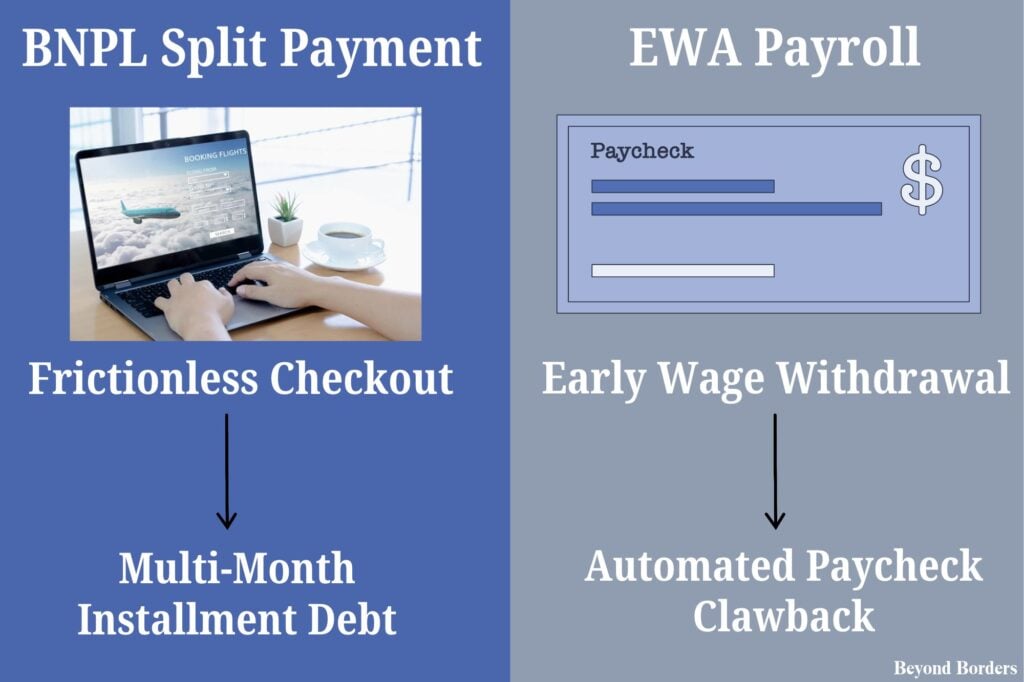
Between frictionless checkout splits and instant paycheck advances, modern fintech is turning travel into an un-returnable liability. Discover how using Buy Now, Pay Later and/or Earned Wage Access can create a cascading cycle of debt that finances your future income long after you’ve unpacked your bags.
The Cost of Buy Now Pay Later Travel:
The travel industry is an ideal market for modern fintech tools like Buy Now, Pay Later (BNPL) and Earned Wage Access (EWA), which have effectively turned travel into an un-returnable liability. Whether using checkout split payments alone or with payroll advances, travelers risk beginning a compounding debt cycle that hollows out future paychecks long after the trip is over.
Editorial and Trademark Disclosure: Beyond Borders is an independent digital publication providing educational analysis and consumer commentary on travel logistics and travel rewards, along with our independent, field-tested travel guides. All product names, trademarks, and registered trademarks mentioned on this website (including BNPL/EWA companies and OTAs) are the property of their respective owners and are used strictly for identification, educational, and comparative purposes. Reference to these brands does not imply endorsement or affiliation.
Editorial and Fair Use Disclosure: This article is an independent journalistic commentary and educational analysis of creator marketing, financial media incentives, and credit card affiliate structures. All screenshots, images, and quoted material from publicly accessible websites (including the FTC website) and third-party social media channels (including YouTube, Instagram, and/or TikTok) are included under the Fair Use doctrine (17 U.S.C. § 107) for the purpose of commentary, criticism, news reporting, and media literacy education. To preserve individual privacy and focus on broader industry practices rather than specific creators, personal identifiers, handles, and avatars have been redacted. This publication receives no compensation or affiliate revenue from any financial institutions or products discussed.
Introduction: Buy Now Pay Later Travel
For decades, the golden rule of travel budgeting was simple: if you didn’t have the money in your bank account, you stayed home. Today, that friction has been systematically engineered out of existence.
Across social media (e.g., TikTok, Instagram) and booking engine checkouts, a quick long weekend getaway to New York City, Nashville, or Montreal is no longer marketed as an expense requiring months of saving. Instead, it is packaged as an impulse purchase made “accessible” through a quiet fusion of two financial technology tools: Buy Now, Pay Later (BNPL) and Earned Wage Access (EWA).
The travel industry is a major growth market for BNPL and EWA platforms because travel purchases possess a unique psychological trap: they are high-cost, high-emotion, and completely un-returnable.
While marketed as frictionless budgeting tools designed to ease cash-flow squeezes, BNPL and Earned Wage Access create a dangerous financial illusion for younger travelers, especially Generation Z. By stripping away payment friction and converting short trips into multi-month installment plans, these apps form a compounding debt cycle that strips future paychecks long after the trip is over.
To understand how this micro-loan ecosystem is reshaping modern travel, we have to look at the mechanics of the two apps powering the trend, and why combining them is walking a financial tightrope.
Why the Micro-Loan Ecosystem Thrives on Short Getaways
Fintech apps aren’t built to fund a two-week summer vacation; they are engineered for a shorter trip (e.g., three-day weekend or holiday weekend trips). Because BNPL caps initial user limits at $300–$1,000 and EWA restricts access to single-pay-period earnings, these tools naturally attract younger travelers toward short-term getaways. The psychological trap lies in the scale: splitting a $400 weekend into four $100 payments feels like a minor budgeting hack, whereas splitting a $3,000 vacation into $750 installments breaks the illusion of affordability.
The Two Pillars of Modern Travel Micro-Debt
1. Buy Now, Pay Later (BNPL)
- What it is: Point-of-sale installment lenders that split a purchase into four equal payments (typically “Pay-in-4”), charging zero explicit interest if paid on time, but hitting users with steep late fees and automated repayment drafts if funds fall short.
- The Common Players: Klarna, Afterpay, Affirm, and PayPal Pay in 4.
- The Travel Integration: Increasingly embedded directly into major travel booking engines, flight aggregators, and OTA (online travel agency) checkouts (e.g., Expedia), making a $600 flight look like an innocuous $150 charge at midnight on a Thursday.
2. Earned Wage Access (EWA)
- What it is: Financial apps that connect directly to an employer’s payroll or a worker’s bank account to advance wages for hours already worked before official payday. While framed as “accessing your own money,” they operate as short-term liquidity injections.
- The Common Players: EarnIn, DailyPay, Dave, and Brigit.
- The Travel Integration: Increasingly tapped by younger hourly or salaried workers as a personal finance “hack” to manufacture immediate liquidity (how easily an asset can be converted into cash, ready to spend) for weekend lodging, gas, or spending money, borrowing against next week’s paycheck to fund the current weekend’s memories.
Understanding these mechanisms is essential because financing a short trip is fundamentally different from financing a physical good. Unlike a laptop or a winter coat, a three-day trip carries zero return value if your budget collapses three weeks later. The resulting debt doesn’t just outlive the memories made on a trip, it fundamentally reshapes how young consumers manage risk and credit.
The Regulatory Arbitrage: How Fintech Outpaced the Law
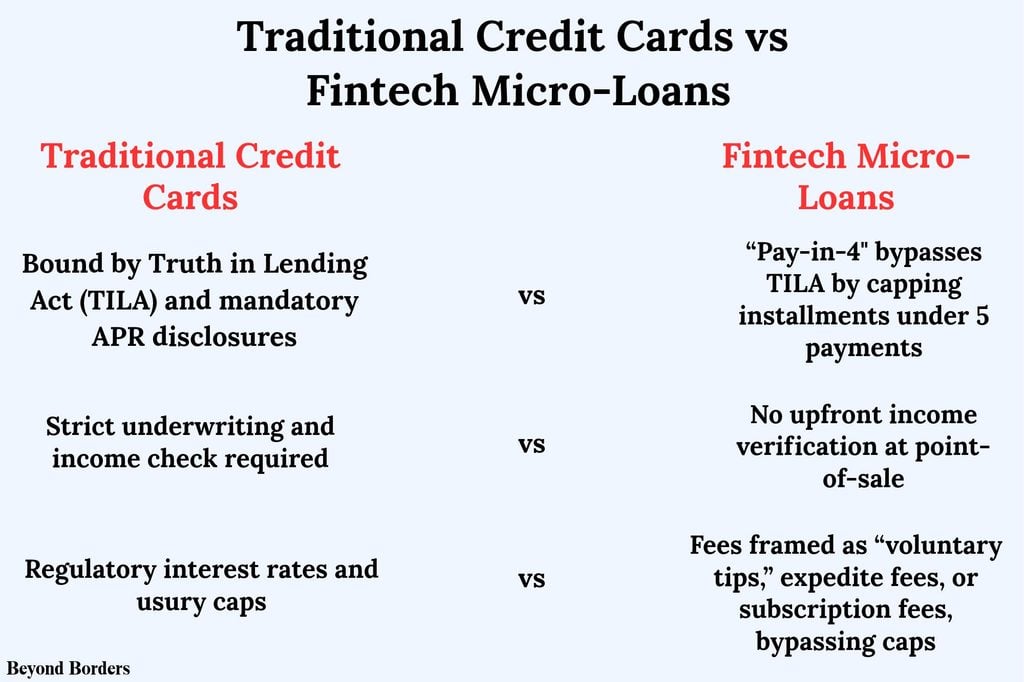
The explosion of BNPL and EWA platforms across travel checkout pages (e.g., flight/hotel online bookings) isn’t an accident of technology: it is the direct product of regulatory arbitrage. For decades, traditional consumer credit has been governed by the Truth in Lending Act (TILA), which mandates clear disclosures of annual percentage rates (APRs), standardized fee structures, and strict underwriting checks before extending credit. Read more bout TILA here.
BNPL providers bypassed these rules by structuring “Pay-in-4” plans to sit just beneath TILA’s threshold, claiming that because they charge four bi-weekly payments rather than explicit long-term interest, they aren’t technically extending consumer loans. Meanwhile, Earned Wage Access apps dodged state usury caps by reclassifying advance charges as voluntary “tips” or mandatory “expedite fees”: a loophole that allows effective APRs on a small $150 advance to reach double or triple digits without triggering payday lending oversight.
To understand why BNPL and EWA platforms proliferated across travel checkouts so rapidly, you have to look at the legal distinctions they created between traditional revolving credit and micro-debt products:
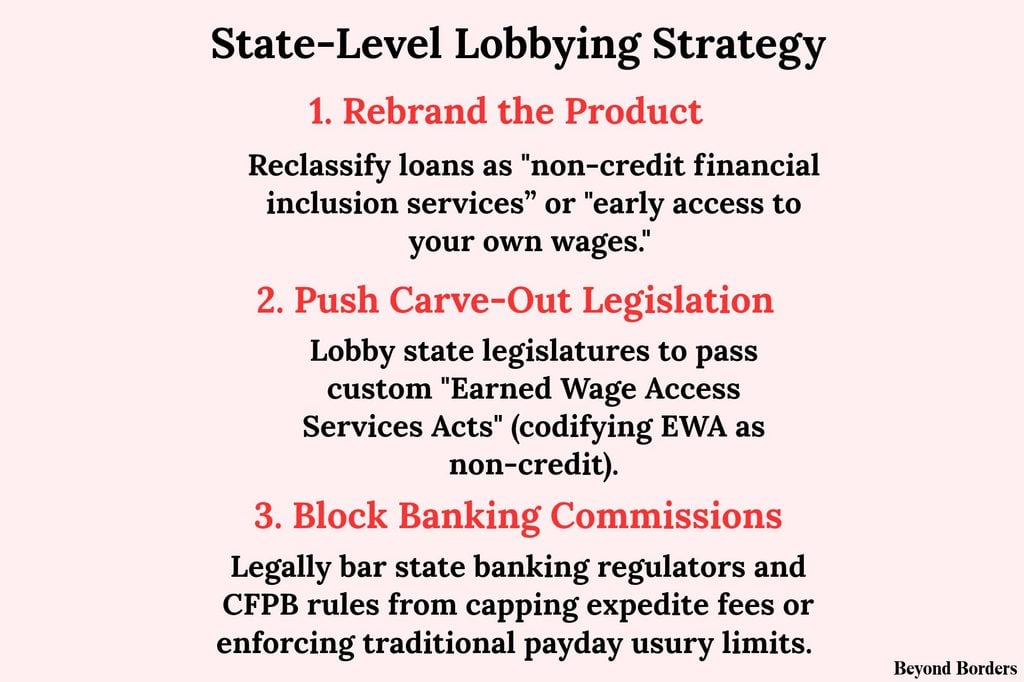
Behind this growth is a targeted state-level lobbying strategy. Fintech firms have aggressively pushed custom “Earned Wage Access Services Acts” across state legislatures, legally defining EWA as a “non-credit and non-loan service” to block state banking commissions from enforcing rate caps or debt collection rules. At the same time, platforms present themselves as consumer advocates, pitching their platforms as “financial inclusion” tools that save younger consumers from high-interest credit cards and predatory overdraft fees.
For the travel industry, this regulatory blind spot proved irresistible. Because these platforms faced no federal mandate for upfront income verification or standardized loan disclosures, flight aggregators, booking platforms, and OTAs could seamlessly integrate “Pay-in-4” widgets directly into their checkout pages. The result is a frictionless digital environment where booking a domestic flight requires no more financial vetting than buying a pair of shoes, leaving younger travelers to navigate an unregulated landscape of stacked micro-debts with zero consumer protections.
The BNPL Travel Trap: “Experience Over Debt” and the Myth of Invisible Credit
When you buy a physical item—like a new iPhone or a new mattress—using a Pay-in-4 service, you hold a tangible asset. If financial buyer’s remorse hits three weeks later, you can usually return the item, cancel the remaining installments, and recover your cash flow. However, you cannot “return” a long weekend visit to Washington, DC or a three-night Airbnb stay in Los Angeles.
When applied to experiential travel, Buy Now, Pay Later transforms fleeting memories into un-returnable liabilities. Behind this shift is a deliberate engineering effort: fintech companies employ teams of behavioral scientists, UX researchers, and choice architects to design frictionless checkout flows that exploit human cognitive biases.
The Psychology of Micro-Debts: Reducing the “Pain of Paying”
For decades, traditional budgeting relied on immediate financial friction: the psychological sting of handing over cash or seeing a large lump sum drain from your checking account. Behavioral economists call this the “Pain of Paying.”
BNPL platforms neutralize that friction through the Framing Effect. In psychology, the framing effect is a cognitive bias that occurs when we react differently to the same information depending on how it is presented to us, whether it’s positive or negative. Applying this trick to travel is frictionless: by splitting an otherwise intimidating lump-sum price of a trip into four smaller increments, BNPL apps mask the true cost of a short getaway.
For example, when a flight and hotel package costs $500, seeing a bolded price tag of “4 payments of $100” triggers a much weaker threat response in the brain than seeing the full $500 lump sum. Consumers perceive the trip as fundamentally cheaper, making them significantly more likely to complete the transaction and overspend by 20% to 30% overall.
This tricks the brain into seeing an expensive trip as something much more affordable—a dangerous illusion when browsing stays featured in my post on the best downtown NYC hotels, where rates in neighborhoods like SoHo and Tribeca often stretch visitors’ budgets.
The Travel Booking Trap
Nowhere is this cognitive bias more potent than in travel planning. When you book a $1,800 European vacation package through an online travel agency (OTA), seeing a lump sum triggers immediate hesitation. But when the checkout screen casually breaks that total into “4 interest-free payments of $450,” your brain stops evaluating whether you can comfortably afford the trip today.
Instead, you focus on the monthly increment, making you far more likely to upgrade your hotel class, add a guided excursion, or book flights you haven’t actually saved cash for. Because travel is entirely non-refundable or bound by strict cancellation penalties, you are locking your future income into a fleeting experience long after the plane has landed.
The B2B Merchant-Funded Engine
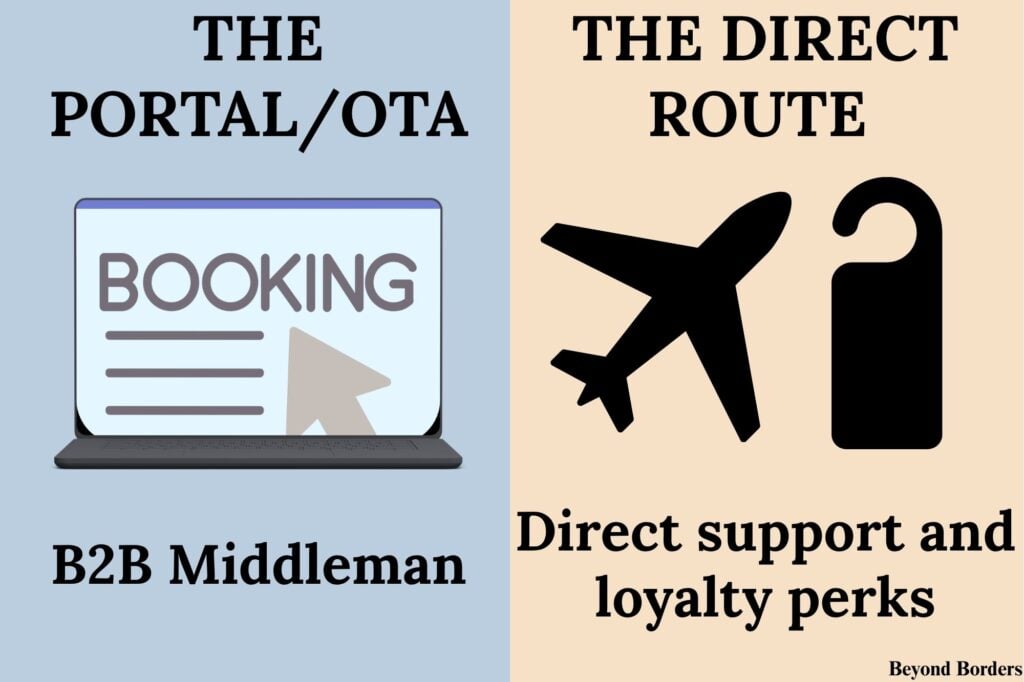
Rather than charging upfront interest like a traditional credit card, BNPL companies generate the bulk of their revenue through a B2B (business-to-business) model by charging merchants a processing fee ranging from 3% to 8% of the purchase price. Online travel agencies (OTAs) like Expedia and major airline carriers frequently integrate these split-pay options at checkout, willingly absorbing this steep cut because “Pay in 4” removes upfront sticker shock: the surprise and disbelief when seeing a product’s unexpectedly high price.
By lowering perceived costs, this frictionless design encourages travelers to book higher-tier packages and complete transactions they would have otherwise abandoned. Just as corporate SaaS subscriptions subsidize employer-backed EWA apps, these heavy merchant processing fees quietly fund the illusion of free consumer credit.
When a traveler uses a BNPL provider to book a more expensive package (like a $2,000 resort stay instead of a $500 room) the math scales directly in the BNPL provider’s favor:
- The Percentage Cut: Because BNPL platforms charge merchants the 3% to 8% fee of the total purchase price, a higher transaction value directly increases their revenue. On a $500 booking at a 4% fee, the BNPL provider earns $20. On a $2,000 booking at that same 4% rate, they pocket $80 from the travel company or OTA.
- Why OTAs and Suppliers Pay It: Platforms like Booking.com, official airline websites, and hotel chain websites (who partner with BNPL platforms) willingly pay this higher fee because BNPL framing the purchase as “Pay in 4” removes sticker shock, convincing travelers to book higher-tier packages or add-ons they would have otherwise abandoned.
This B2B model between BNPL platforms and OTAs is also seen in the B2B model between a bank’s travel booking platforms (e.g., Chase Travel) and OTAs that I explore in my Booking Directly vs Third-Party/OTA Sites post in my Beyond Your Social Media feed series.
Phantom Debt Stacking and Calendar Fragmentation
Because BNPL split-pay arrangements historically bypassed traditional credit bureau reporting (Experian, Equifax, or TransUnion), younger travelers can easily stack multiple micro-loans across several apps simultaneously without a hard credit pull, concealing their true debt obligations. This creates what consumer advocates call “phantom debt.”
This stacking leads directly to calendar fragmentation:
- The Overlap Illusion: A single $100 BNPL purchase broken into four installments feels weightless. But if a traveler uses Klarna for a flight, Afterpay for a hotel, and Affirm for an event ticket in the same month, those micro-purchases fracture into 16 distinct auto-debit dates scattered randomly across their bank calendar.
- The Silent Drain: Instead of one clean bill day, checking accounts face continuous micro-withdrawals ($12.50 here, $25 there) every few days. This constant skimming makes it nearly impossible to maintain a stable baseline cash buffer.
- The Overdraft Cascade: When one of those automated $25 BNPL pulls hits an account with a low balance, it triggers a $35 bank overdraft fee. Suddenly, a $25 purchase ends up costing $60 because of a bank penalty, forcing the user right back into looking for emergency cash.
The Credit Score Reality Check
For years, users treated Buy Now, Pay Later (BNPL) as “invisible debt,” a harmless way to split payments without touching their credit score. That era is rapidly coming to an end. With FICO launching BNPL-inclusive scoring models and major credit bureaus building tracking systems, lenders are gaining real visibility into installment habits. As industry adoption expands, Gen Zers who treat missed installments as isolated digital hiccups risk facing tangible credit dings when renting apartments, financing cars, or applying for credit cards.
The Dispute and Refund Nightmare
Finally, financing travel through a BNPL third-party middleman introduces consumer protection risks. If an airline cancels a flight or a hotel is overbooked, traditional credit cards offer robust protections under federal rules listed in the Fair Credit Billing Act (FCBA). Read more about the FCBA here.
When you book through a BNPL provider, however, you are caught in an administrative purgatory: the merchant (an airline, for example) tells you to talk to Klarna, and Klarna tells you to talk to the merchant. While you spend weeks bounced between customer service chat bots, your automated installment payments continue to drain your bank account on schedule.
This customer service blackout is likely to be amplified if you booked the trip through a third-party site in the first place, as I explored in my second post in this series, Booking Directly vs Third-Party/OTA Sites. In this post, I detail why booking through OTAs and bank travel portals can be risky for travel consumer protections, versus when using them is a smart choice. If you layer a fintech loan on top of an OTA booking, this can create a double wall of unaccountability when things go wrong down the road.
The EWA Travel Trap: Using Your Future Payroll to Pay For Your Trip
If Buy Now, Pay Later captures the point-of-sale impulse, Earned Wage Access (EWA) apps—such as EarnIn, Brigit, and Dave—feed the immediate cash-flow panic that happens right before or after a trip.
Marketed as zero-interest, “tips-based” budgeting tools that simply grant you access to money you’ve already earned, Direct-to-Consumer (D2C) EWA platforms operate under a carefully curated illusion. Despite spending millions on public relations to convince consumers and regulators that they are merely payroll-access utilities, these platforms are functionally short-term cash loans. They advance funds based on predicted income, demand repayment on a fixed schedule, and rely on automated debt collection to reclaim the balance.
By refusing to use the word “loan,” these apps bypass state usury caps, licensing requirements, and federal Truth in Lending Act (TILA) disclosures (as stated earlier), leaving their high-margin revenue machine built entirely on behavioral engineering and regulatory arbitrage.
How EWA Apps Make Their Money (Without Charging “Interest”)
Because these companies legally skirt state usury caps by refusing to call their charges “interest,” they monetize through a web of secondary fees and features:
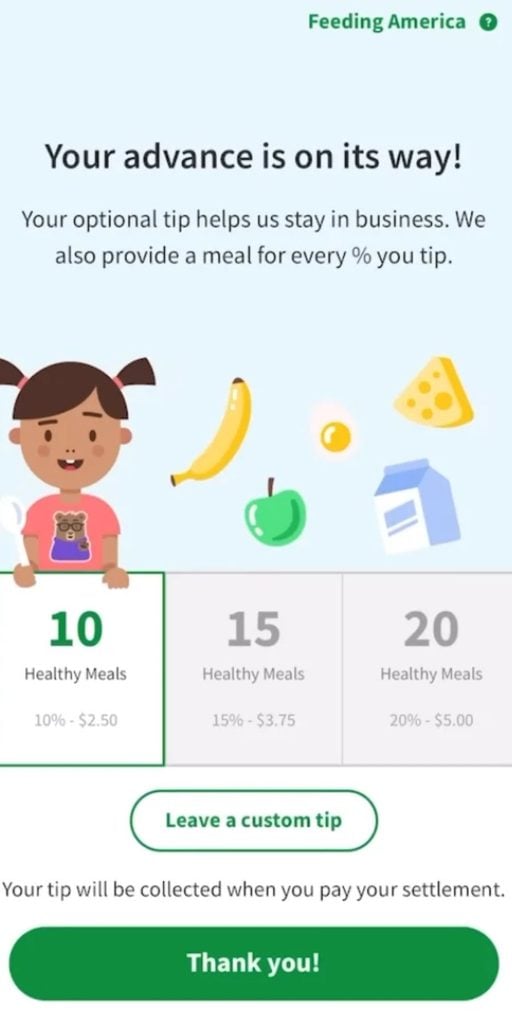
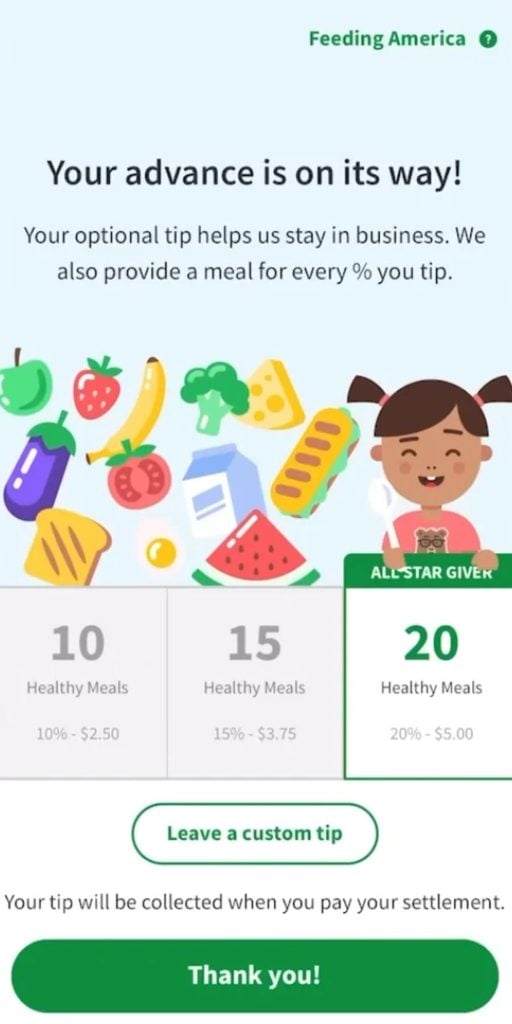
- “Voluntary” Tips (Behavioral Design): While tips are technically optional, apps use pre-set defaults (e.g., auto-selecting a $3 to $5 tip or 10% at checkout) and emotional manipulation, such as framing tips as a way to help them stay in business or even feed hungry children to trigger guilt and make $0 options difficult to find. Moreover, the EarnIn EWA app used to make consumers click 13 times to opt out of tipping, and a 2024 FTC investigation discovered that for each percentage point of a tip, the Dave EWA app only donated 10 cents to feed food-insecure children.
- Expedited Transfer Fees (“Instant Delivery”): Free ACH transfers take 1 to 3 business days. But because users requesting an advance need immediate cash to avoid a bill default, most pay the $1.99 to $5.99 “lightning speed” fee to push funds instantly via debit card rails.
- Subscription Creep (“Plus” Tiers): Bundling features like credit tracking or higher advance limits into monthly membership tiers ($9.99 to $14.99/month), draining around $120+ a year automatically from a user’s account.
- Interchange Revenue: Issuing branded debit cards that waive instant fees if funds are loaded onto the app’s native card, earning a merchant transaction fee every time the user spends.
The Corporate Pipeline: B2B EWA and Employer-Integrated Models
The Earned Wage Access market has two distinct operational models, both of which end up extracting money from the consumer, but through different pipelines. While Direct-to-Consumer (D2C) apps like EarnIn or Dave monetize heavily off individual tips and instant-transfer fees, a massive part of the EWA market operates through business-to-business (B2B) employer-integrated platforms like DailyPay or Payactiv.
These apps don’t look at your bank balance directly like D2C apps do; they look at the gross/net income you accrue each pay period. Instead of charging the worker directly, these platforms plug straight into corporate payroll and human-capital management systems. Their revenue engine shifts entirely to the employer side:
- SaaS Subscription Fees: Companies pay monthly software licensing fees to integrate the EWA platform into their payroll software, positioning it as an executive-level “financial wellness and employee retention benefit.”
- Employer-Subsidized Fees: In some models, the employer covers the transaction costs entirely, allowing workers to access their earned wages for free, masking the true administrative cost of living paycheck-to-paycheck behind corporate HR perks.
- Interchange Capture: Whether B2B or D2C, branded debit cards ensure that whenever an employee spends their advanced wages at a merchant, the EWA provider captures a cut of the merchant-paid interchange fee.
Both D2C an B2B EWA models present a risk of creating a dependency cycle, where cashing out early leaves your next actual paycheck short, forcing you to advance funds again next month.
This corporate integration creates a structural loop for travelers trying to fund a getaway. If your employer’s financial wellness app pushes early wage access directly into a branded debit card or partner portal, it often routes bookings through embedded travel aggregators built into the app’s ecosystem. This mirrors the B2B architecture of traditional bank travel portals, like those run by Chase and American Express, which I explore in my second post in this series, Booking Direct vs Third-Party. Relying only on corporate-adjacent portal perks or only third-party travel aggregators layers one B2B middleman on top of another, leaving you with much less direct merchant support if your travel plans change.
Psychological Dark Patterns and the “Trapped” Feeling
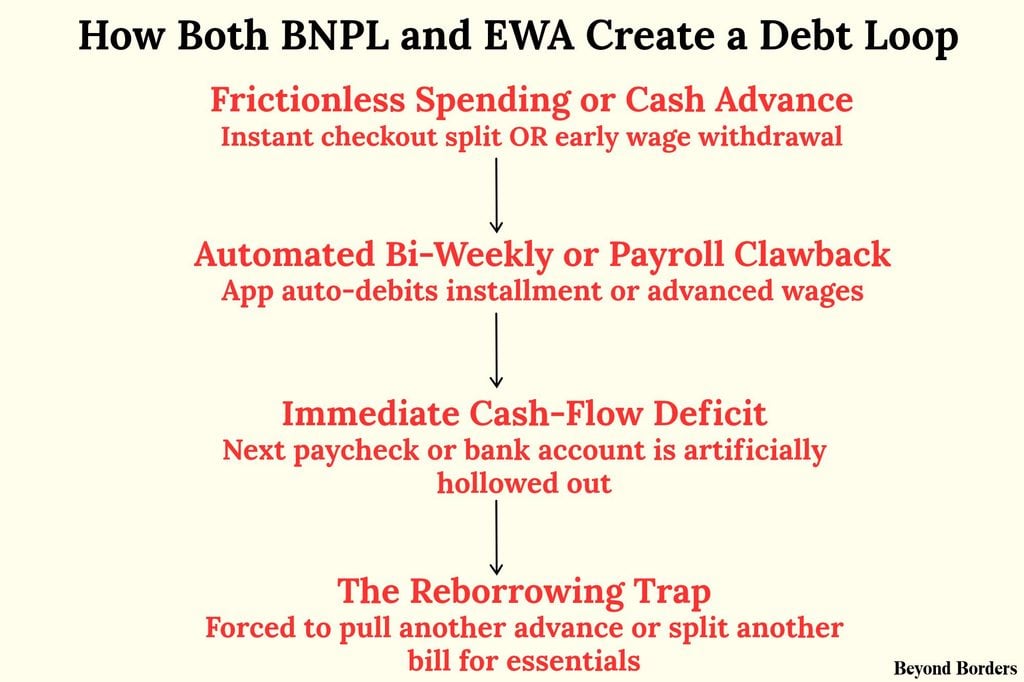
Just as BNPL companies use dark patterns to make consumers feel “trapped,” EWA makes consumers feel the same way. The structural feeling of being trapped or stuck by EWA apps is the direct result of a closed-loop system where your future income is claimed before you ever touch it. Studies by the CFPB show that 75% of EWA users take out a new advance on the same day or the day after repaying a previous one, turning a supposed “one-off emergency fix” into a continuous loop that is extremely hard to get out of.
- The Paycheck Hole: Payday arrives, and the app automatically pulls $200 (plus fees). Your take-home pay is now short, creating an immediate liquidity gap for next week.
- Immediate Reborrowing: To cover the shortfall, you are forced to take another $200 advance, resetting the cycle.
- Administrative “Hostage”: Disconnecting is deliberately complex, revoking ACH mandates requires navigating obscure menus or paying your bank a stop-payment fee, and switching direct deposit back through your employer’s HR department can take 1 to 2 pay cycles.
The Pre-Travel Liquidity Crunch
Travel expenses rarely hit all at once; they bleed your bank account weeks before you ever pack a bag. You need to pay for plane tickets, airport parking, buy transit passes, cover baggage fees, and/or have a temporary credit card pre-authorization (hold) for your hotel room. When your checking account runs dry right before your trip beings, EWA platforms market themselves as a harmless way to “access your own money” to bridge the gap.
But, pulling a $200 advance for travel incidentals creates an artificial deficit on your next payday. When your automatic payroll deduction hits two weeks later, you are suddenly short on rent or groceries, forcing you right back into the app to pull another advance just to stay afloat.
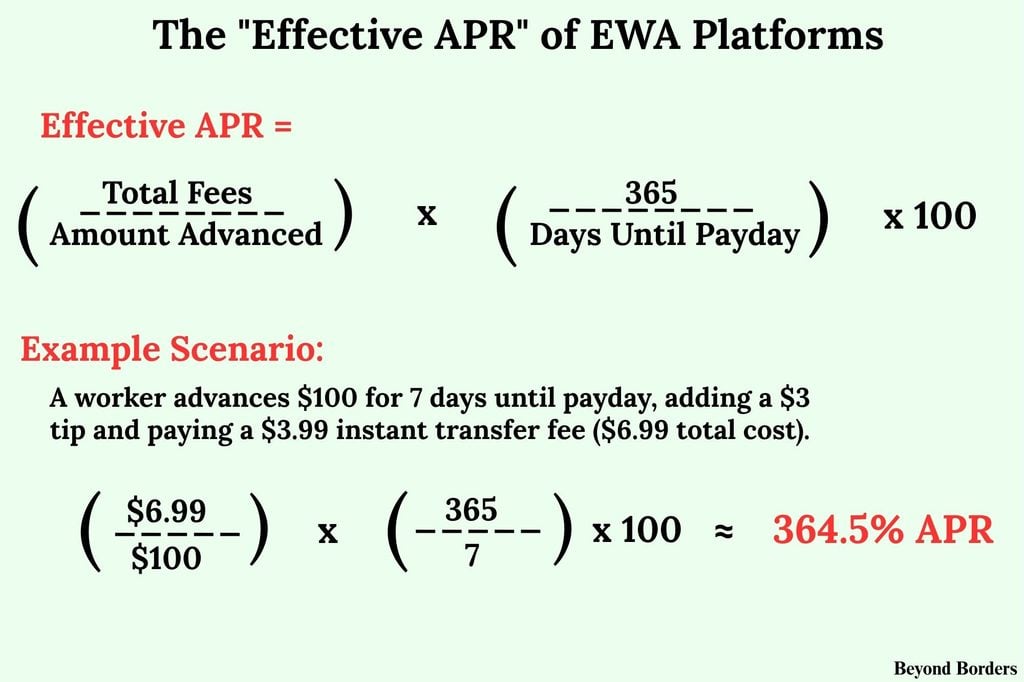
The Math: Effective APRs Over 300%
While EWA apps pitch themselves as a safe alternative to predatory payday loans, Consumer Financial Protection Bureau (CFPB) data shows that frequent users rely on them heavily, averaging over 20 to 27 advances a year.
When you calculate the math, the reality is staggering. If a user takes two advances a month and tacks on a $3.99 instant-transfer fee plus a $3 “tip” for a small $100 advance, those recurring frictional costs equate to an effective Annual Percentage Rate (APR) ranging between 100% and 330%+, often rivaling or exceeding traditional payday loan lending. Even though individual fees look like small micro-charges, their cumulative impact rivals traditional payday loan rates when annualized over short payback periods.
Open Banking Surveillance: How Apps Track Your Every Move
Because these platforms do not run traditional credit checks (like pulling a FICO score from Equifax or Experian), they require users to link their bank accounts through data aggregators or APIs (Application Programming Interfaces) such as Plaid, MX, or Yodlee. You can read more about APIs here. As outlined by the Consumer Financial Protection Bureau (CFPB), these apps utilize read-only API surveillance to continuously monitor bank account transaction histories and incoming direct deposits via these banking connections to estimate accrued wages.
CFPB and related regulatory filings highlight that D2C apps automatically schedule and initiate ACH debits for repayment on the user’s expected payday. Because these apps monitor account balances or attempt debits automatically, it frequently leads to repeated debit attempts and unexpected overdraft or non-sufficient funds (NSF) fees when funds haven’t fully cleared or balances are tight.
Once linked, the app can time their advances and repayments strategically:
- Predictive Payday Modeling: Algorithms track recurring payroll credits down to the exact hour, allowing apps to queue up automated repayment debits that settle exactly when payroll hits: getting paid before your landlord, utility company, or grocery store can process.
- Expense Vulnerability Tracking: By indexing fixed debits like rent, car payments, and subscriptions, the app knows when your balance drops. If rent hits on the 1st and your balance drops to $45 on the 28th, the algorithm fires off a precision push notification such as “Low balance alert! Unlock $150 now.”
- Dynamic Advance Limits: Instead of a static credit ceiling, advance caps fluctuate in real-time based on your account depth, temporarily expanding right before a known bill to encourage a larger advance.
The Trojan Horse: Replacing Your Bank Account
Loaning small amounts of cash carries tight margins. The ultimate goal of EWA and neo-banking platforms is not to lend you $100 until Friday, it is to replace your primary traditional checking account entirely. As documented in fintech industry analyses by groups like the Harvard Kennedy School’s Mossavar-Rahmani Center for Business and Government, the ultimate business objective for EWA platforms isn’t small fee generation, it is capturing primary payroll direct deposits by offering higher advance caps only to users who route their salary directly into app-hosted neo-banking accounts.
To convince users to route their full payroll direct deposit into an app-hosted account (backed by partner charter banks like Evolve Bank & Trust, Green Dot, or Pathward), these platforms deploy powerful lock-in mechanisms:
- Paywalling Higher Limits: Linking an outside Chase or Bank of America account caps advances at $100, but setting up direct deposit inside the app’s native checking account instantly unlocks $500 to $1,000+ limits.
- The “2-Day Early Paycheck” Hook: Routing payroll through their rails lets them credit funds up to 48 hours early, making the app feel like a financial savior.
- Waived Instant Fees: Offering 100% free instant delivery, only if the money goes into their native checking account rather than an external bank.
The Quiet Reality: Behind the Coloful UI
What makes this entire ecosystem so insidious is how quietly it operates. Branded with sleek vector graphics, friendly pastel colors, and wellness-oriented terminology, most consumers assume they are using helpful personal finance aids.
In reality, federal regulators have documented the truth:
- FTC Enforcement: The FTC and state Attorneys General have fined cash advance apps tens of millions of dollars for deceptive UI practices that trick users into tipping or hide monthly fees.
- Regulatory Gray Areas: By wrapping modern predatory lending in an app interface, substituting interest rates with “voluntary tips,” and leveraging Plaid data to monitor your bank account at 3:00am, these companies built a digital financial trap that operates entirely outside traditional consumer protection laws.
The Double-Dipping Cascade: The Harmful Impact of Using Both EWA and BNPL to Fund Travel
Imagine a traveler tries to use two different types of fintech platforms at the same time to fund a trip: using Klarna to lock in a $1,500 Airbnb stay while simultaneously pulling an EWA cash advance from DailyPay to cover your spending money while they are on the ground. T
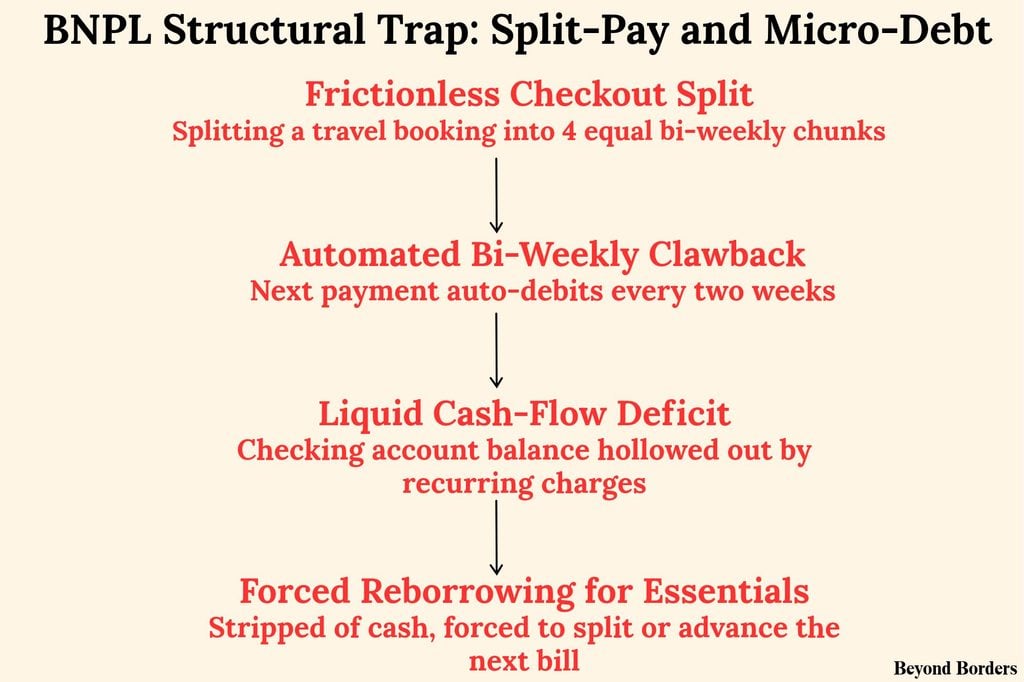
This inadvertently builds a closed-loop trap that drains their upcoming paychecks before they even arrive. Because BNPL apps break a purchase into four bi-weekly payments, and EWA apps advance your upcoming wages to cover immediate cash shortages, stacking them together creates a compounding deficit. You aren’t just financing a trip, you are funding a single vacation with two distinct layers of high-frequency debt that will automatically claw back chunks of your income on four different dates a month for the next six weeks.
Here is the exact step-by-step math and behavioral sequence of how a stack plays out in real life:
Step 1: The Initial Booking (Using BNPL for the Trip)
- The Action: You want to book a $600 weekend getaway (flights and a hotel). You use a BNPL “Pay-in-4” option at checkout.
- The Immediate Impact: Your first payment is $150 today, and you now have three future installments of $150 scheduled to automatically pull from your checking account every two weeks.
Step 2: The Cash-Flow Squeeze (The “Paycheck Hole”)
- The Action: Two weeks later, the first $150 BNPL installment hits your checking account automatically.
- The Result: Because that $150 wasn’t budgeted for alongside your regular rent, groceries, and utility bills, your checking account balance plunges close to zero right before your rent is due.
Step 3: The EWA “Rescue” (Pulling an EarnIn Advance)
- The Action: Panicking about a potential bank overdraft or a declined bill, you open an EWA app like EarnIn. You request a $200 instant cash advance to bridge the gap.
- The Catch: To get the cash instantly so your bill doesn’t bounce, you pay a $3.99 “lightning speed” delivery fee and add a $3 “voluntary” tip. The app’s algorithm (powered by your Plaid data link) notes your payday and schedules an automated repayment pull for the exact minute your direct deposit hits.
Step 4: Payday Collateral Damage (The Zero-Margin Trap)
- The Action: Payday arrives. The EWA app’s automated debit hits your account at 3:00am, pulling out your $200 principal + fees/tips. Simultaneously, your second $150 BNPL installment is also scheduled to pull that same week.
- The Result: Between the EWA payback and the overlapping BNPL payment, your take-home pay for that cycle is slashed by $350+ before you’ve even had a chance to buy groceries for the month. Your baseline checking account balance is now permanently lower than it was before you took out the advance.
Step 5: The Cycle Continues (Stacking and Reborrowing)
- The Result: Because your paycheck was drained by last month’s overlapping payments, you don’t have enough cash to cover your upcoming expenses. To survive the week, you are forced to reborrow from the EWA app (remember the statistic: over 75% of EWA users take out a new advance immediately after repaying the last one?) while your remaining BNPL installments continue to chip away in the background.
Why It’s Called “Zero Margin”
When these apps stack, they erase whatever financial breathing room (“margin”) a worker has. The consumer isn’t using an EWA app to pay for an unexpected car repair or emergency medical bill, they are using an EWA advance to service a BNPL loan, and then using future wages to service the EWA advance, turning a single vacation into a perpetual, fee-draining financial cycle.
Wall Street Fights Back: Traditional Banks Enter the Pay-in-4 Space
Right as fintech companies popularized split-pay borrowing for everyday travel and retail, legacy financial institutions realized they were losing lucrative fee revenue to third-party startups. Rather than letting companies like Klarna, Affirm, and Afterpay dominate this space, major banking institutions—including Chase, American Express, and Citi—acted on it. The rise of bank-backed installments signals a broader structural shift: micro-borrowing is no longer a fringe alternative; it has been institutionalized by Wall Street.
The Competitive Shift: How Bank-Backed Installments Work
Traditional banks leveraged their massive existing credit and checking customer bases to bypass third-party checkout integrations entirely. Instead of forcing users through a separate widget at an online checkout, banks integrated split-pay mechanisms directly into their websites and mobile apps.
- Post-Purchase Splitting: Unlike standalone BNPL platforms that intercept you at the digital checkout page, major bank payment plans like Chase Pay in 4, Amex Plan It, or Citi Flex Pay allow you to select recent eligible transactions (typically ranging from $50 to $400) retroactively right inside your mobile banking app.
- Instant Account Adjustments: When you click to convert that charge into an installment plan, the bank instantly credits that purchase amount back against your statement balance or frees up your available credit line, reformatting that single charge into structured automatic payments over 6 to 8 weeks. To the human brain, seeing your money come back or your balance increase triggers an unconscious feeling of a windfall, as if you just “made” money or recovered cash. This is known as the post-purchase refund illusion.
- In reality, no cash has entered your hands. The bank has simply shifted that debt out of your immediate revolving balance and locked it into a fixed monthly installment plan that automatically attaches to your next billing cycle’s minimum payment. By masking a lingering liability as an account “credit,” traditional banks exploit the exact same cognitive blind spot as fintech startups: tricking you into feeling richer than you are while quietly locking in your future income.
- Fee Structures over Interest: Instead of charging standard revolving credit card APRs on those specific split balances, banks often charge a fixed monthly fee or a structured installment fee, keeping the cost superficially transparent while capturing predictable recurring revenue.
Comparing BNPL to Bank Installments
| Feature/Metric | Fintech BNPL | Bank Installments (Chase, Amex, Citi) |
| Placement and Timing | Point-of-sale checkout at merchants/OTAs. | Post-purchase via banking app for recent settled charges ($50–$400). |
| Cost Structure | 0% promotional APR; revenue driven by merchant processing fees (3%–8%) and late penalties. | Fixed monthly fees, structured installment fees, or low fixed APRs. |
| Underwriting/Access | Soft credit check or instant approval; targets a broad consumer base. | Requires an existing credit line or checking account relationship. |
| Psychological Trap | Eliminates immediate checkout friction (“Framing Effect”) to encourage travel upsells. | The “Ghost Refund” illusion (credits available credit back), masking debt as a windfall. |
The Irony of Regulation and Risk: Safer Alternative or Entrenched Trap?
This begs a critical question: Are bank-backed installment plans safer than third-party BNPL apps, or are they simply a more entrenched version of the same debt trap?
The reality lies in a stark demographic divide:
- The Credit Barrier: Traditional bank installment plans require an existing credit line or checking account relationship with decent credit standing. They are built for prime or subprime consumers who already hold a traditional credit card.
- The Fintech Net: Standalone BNPL and EWA apps capture the underbanked, gig-economy workers, or lower-liquidity demographics who would never qualify for a premium travel rewards card or a high-limit Chase line.
While bank installments operate under stricter federal oversight and TILA disclosures than shadow fintech apps, they normalize the exact same psychological vulnerability. They teach consumers to view every major travel booking not as something to save for, but as an ongoing series of fractionalized automatic debits, proving that Wall Street didn’t try to fix the micro-debt trap, they just wanted a cut of it.
The Frictionless Escape Hatch: Why People Still Use BNPL and EWA Despite the Risks
If the hidden fee structures, compounding calendar fragmentation, and debt traps are becoming clearer, why do millions of travelers and everyday consumers continue to rely on BNPL and EWA to fund their lives and trips?
The answer isn’t a lack of financial literacy or naivety. Consumers aren’t falling for a marketing trick out of ignorance, they are engaged in a rationalized trade-off. They know the future financial hangover is coming, but the psychological desire for immediate experience, combined with structural financial pressure, outweighs the abstract dread of next month’s automated debit splits. Fintech companies have weaponized this exact behavioral vulnerability, building multi-billion-dollar business models on the simple premise that people will always choose the pain of tomorrow over the friction of today.
1. The “Lesser of Two Evils” Calculation
For the 50%+ of Americans living paycheck-to-paycheck, using EWA or BNPL isn’t evaluated against standard financial advice; it’s weighed against immediate, higher-cost alternatives:
- Bank Overdraft Fees: A standard bank overdraft fee averages around $35 per transaction. If an unexpected $50 expense lands when an account is nearly empty, paying a $3.99 instant-transfer fee on an EWA app feels like a rational way to avoid a punishing bank penalty.
- Late Fees and Utility Shutoffs: Missing a credit card payment triggers late fees ($25–$40+), credit score damage, and penalty APRs. Missing a utility or rent payment can mean shutoff or eviction fees.
- Traditional Payday Loans: Physical payday loan storefronts can charge annualized rates upwards of 400% to 500% alongside aggressive collection tactics. An app charging $3–$5 on a smartphone feels significantly safer and more dignified by comparison.
2. The Hard Truth About Traditional Credit
For many consumers, traditional financial products present an immediate, insurmountable wall when attempting to book a trip or cover an emergency:
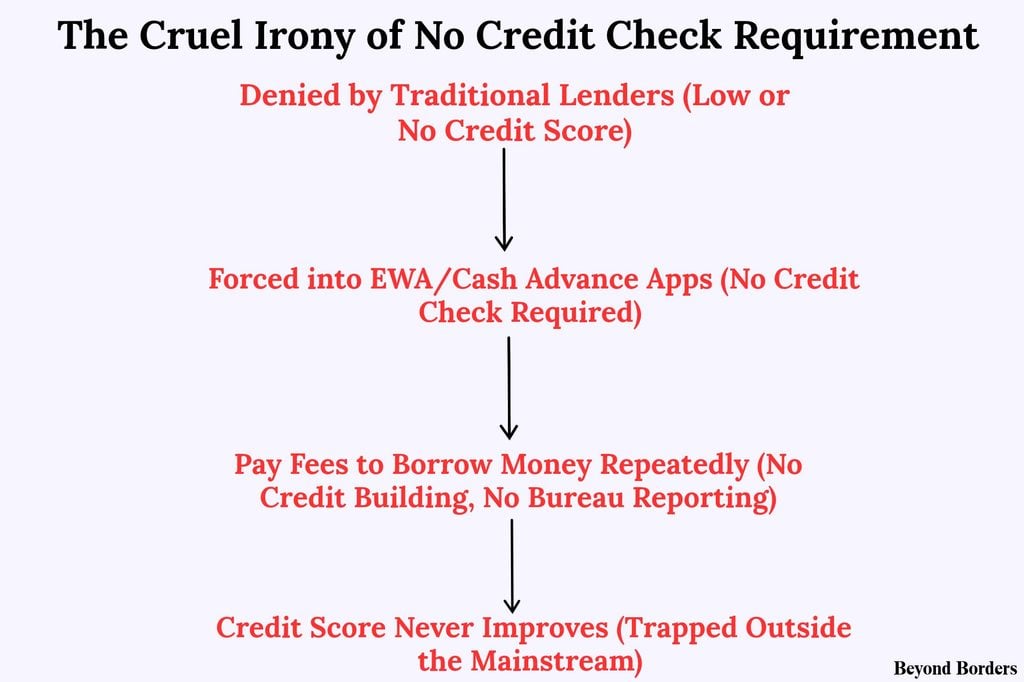
- The Credit Score Catch-22: Qualifying for a travel rewards credit card or a personal bank loan requires an established credit history and high FICO scores. If a traveler has a low score or a thin file, traditional banks either flat-out deny them or offer damaging terms of service.
- Underwriting Friction: Traditional loans require days or weeks of waiting, income verification forms, and face the potential embarrassment of a bank telling you “Denied.”
- Hard Inquiries: Traditional credit applications trigger a “hard pull” that temporarily dings a credit score.
In stark contrast, BNPL and EWA platforms offer instant gratification. Within 30 seconds, a soft-credit check (or no credit check at all) grants a virtual card or an instant deposit. All the app checks is: Do you have a bank account, and did a paycheck land in it recently? To a traveler staring at an Airbnb checkout screen on a Thursday night, these apps don’t feel like lenders, they feel like an ally.
3. Income Volatility and The Modern Economy
The shift toward hourly, shift-based, and gig-economy work has made cash flow entirely unpredictable:
- The Two-Week Lag: The traditional bi-weekly or monthly payroll system is an artifact of paper check processing. In modern life, expenses accrue daily, creating a structural cash-flow mismatch between when work is performed and when pay actually clears.
- Employer-Sponsored Normalization: Many employers actively promote B2B EWA platforms (like DailyPay or Payactiv) as a recruiting benefit. When an employer sponsors the app, workers naturally assume it is a safe, vetted financial benefit.
4. Frictionless Design and Psychological Distance
Digital interfaces intentionally lower the psychological barriers to borrowing:
- The “Micro-Transaction” Illusion: Borrowing $50 or $100 doesn’t register with the same weight as taking out a $400 loan. By breaking borrowing into tiny micro-advances, cumulative costs are obscured until payday arrives.
- “Access” Framing: EWA marketing explicitly leans into ownership language: “It’s your money, you already worked the hours, why wait for payday?” This frames the app not as a lender, but as an access tool unlocking what already belongs to the consumer.
- Normalized Checkout Environments: When “4 payments of $15” is presented as the default option next to a total retail price on major sites like Amazon or Airbnb, split-pay becomes normalized as standard consumer behavior rather than short-term debt.
Traditional Loans vs. EWA and BNPL: The Real Cost Comparison
Whether a traditional credit-checked loan or an instant fintech app is the “better” option depends entirely on loan size, frequency, and long-term financial health. While apps pitch themselves as modern upgrades to legacy banking, stacking them against traditional credit reveals stark trade-offs in transparency, cost, and legal protections.
When Traditional Loans Are the Better Choice
- For Building Credit: If you pay off a credit card balance or personal loan on time, that positive payment history is reported to credit bureaus (Equifax, Experian, TransUnion), actively raising your FICO score. EWA advances and BNPL split-pay plans historically operate outside the traditional credit system, offering zero long-term credit-building benefit.
- For Larger, Planned Expenses: If you need to borrow $1,000+ for a major travel booking or emergency repair, a traditional personal loan with a fixed 10%–15% APR and a multi-month repayment schedule is significantly safer and cheaper than attempting to piece together micro-advances across multiple apps.
- Consumer Protection and Transparency: Traditional bank loans fall squarely under the Truth in Lending Act (TILA), requiring clear, upfront APR disclosures so you know the exact cost of borrowing. EWA apps historically skirt these rules by framing fees as “voluntary tips” or instant-transfer charges.
Side-By-Side Comparison: EWA/BNPL, Traditional Loans/Financing
| Feature | EWA and BNPL (Fintech Apps) | Traditional Loans/Credit Cards |
| Credit Impact | None for EWA; mixed/limited for BNPL. Does not reliably build credit scores. | Requires a hard check. On-time payments build credit; missed payments harm it. |
| Typical Loan Amount | Micro-amounts ($50 to $200 per advance/$100–$600 split cart). | Moderate to large ($1,000 to $50,000+ personal loans / credit lines). |
| Cost Structure and Transparency | Low initial visibility. Obscured by instant fees ($1.99–$5.99), “tips,” and 0% APR split-pay late penalties. Annualized EWA APRs can exceed 100%–330%+. | High transparency. Fixed or revolving interest rates (regulated TILA APR disclosures from ~7% to 36%). |
| Repayment Control | Automated and rigid. Direct payroll debits or automatic bi-weekly card charges timed to paydays. | Discretionary and flexible. Monthly billing cycles where you choose payment timing (subject to minimums). |
| Primary Risk | The “Double-Dipping Cascade” and perpetual reborrowing cycles to cover artificial cash shortages. | Long-term interest accumulation and debt build-up if balances are carried. |
The Verdict
A traditional credit-checked loan or credit card is the healthier financial tool if you need structured, medium-to-large borrowing and want to build a verifiable credit history. EWA and BNPL apps are rarely harmless liquidity bridges; between expedited-transfer fees, suggested tips, and automated payday deductions, low-dollar advances often carry triple-digit effective APRs and trap users in a continuous cycle of reborrowing.
FAQs: Travel Now, Pay Later
Conclusions: Reclaiming Financial Autonomy To Book Travel Confidently
The fintech revolution promised to democratize finance following 2008 financial crisis, replacing the cold gatekeeping of legacy banking with friendlier interfaces and frictionless access and design. However, that frictionless access and design hasn’t democratized finance at all; it has simply democratized debt by wrapping high-frequency micro-loans in eye-catching UI.
Whether it is Buy Now, Pay Later masking consumer debt as a budgeting tool, Earned Wage Access repackaging payday loans behind “voluntary tips” and API surveillance, or traditional banks rushing to capture merchant fees through short-term installment plans, the underlying architecture is designed to monetize your cash-flow vulnerability.
If you fund a trip by using either BNPL or EWA (or both), you aren’t just paying for a vacation; you are binding your future paychecks to feed an inescapable cycle of debt. Instead of putting yourself into a cascading debt loop for an un-returnable experience, saving upfront ensures that your memories remain entirely yours rather than committing to a fintech platform.
True travel freedom is never found in instant app approvals, 30-second micro-advances, or short-term digital escapism. Instead, it is built on long-term financial health, cash-flow transparency, and refusing to let next month’s payroll get claimed before you’ve even packed your bags for your next trip.