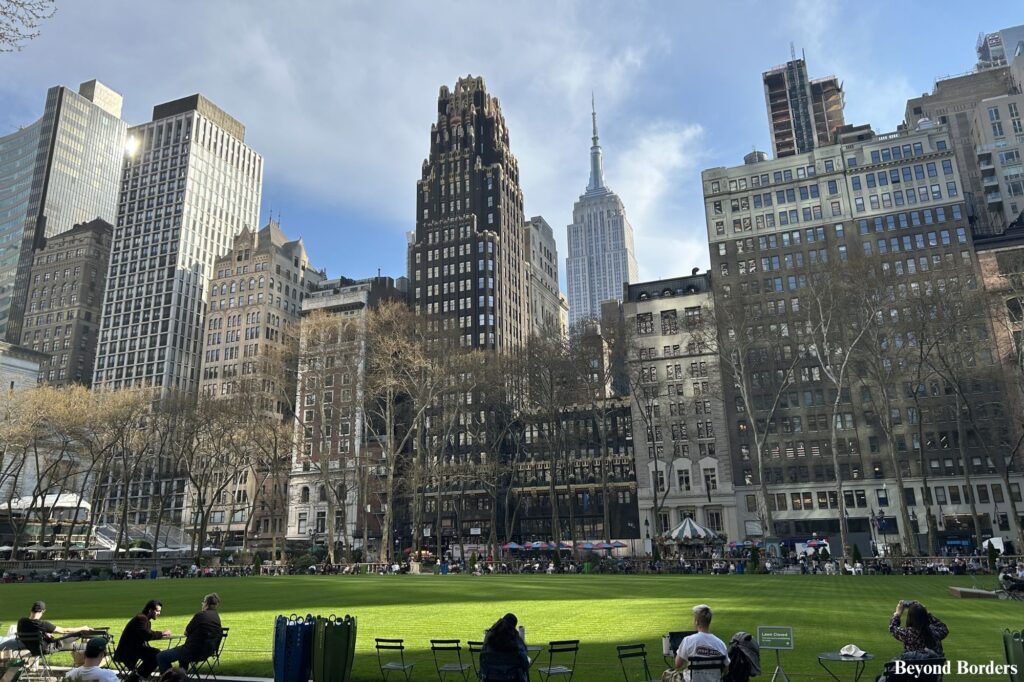
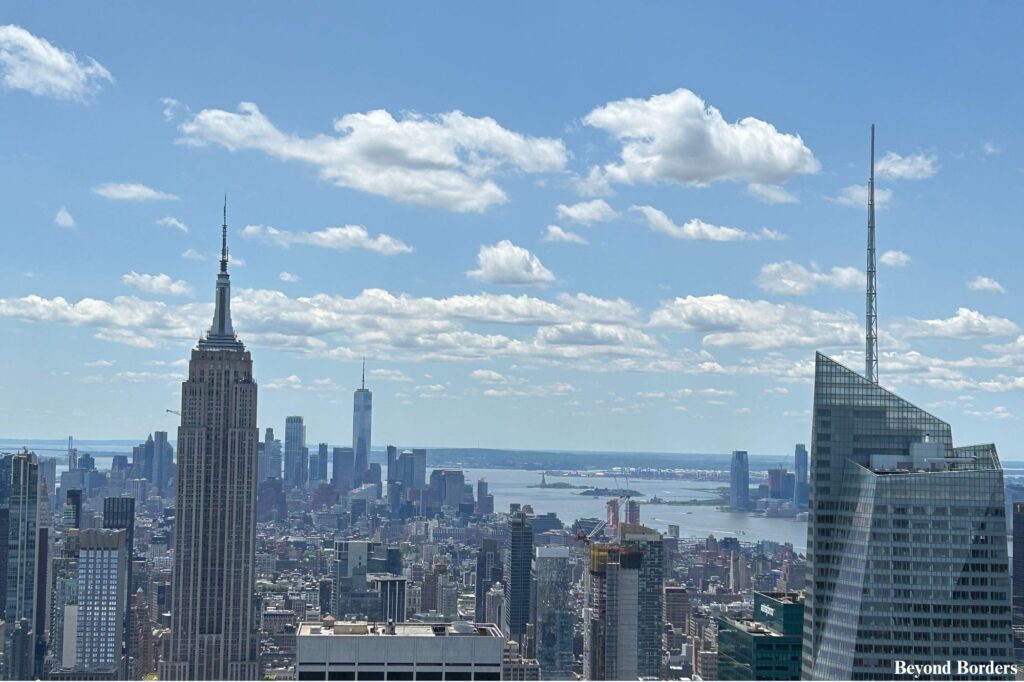
How to Take Photos of the Best NYC Architectural Photo Spots:
This guide covers exact standing locations, recommended optical zoom settings, and ideal times to shoot to avoid crowds and harsh shadows across Manhattan and Brooklyn.
- Abe Lebewohl Triangle (East Village): Rare diagonal V-wedge framing; best shot horizontally at 1x zoom.
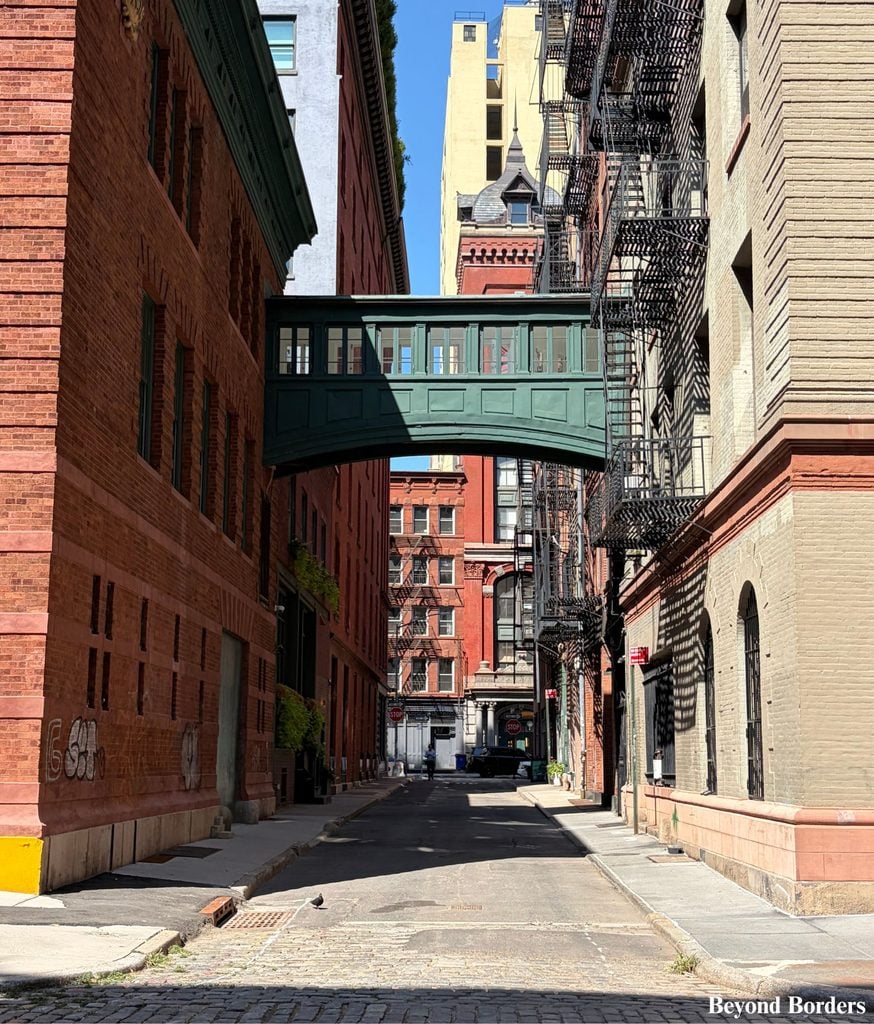
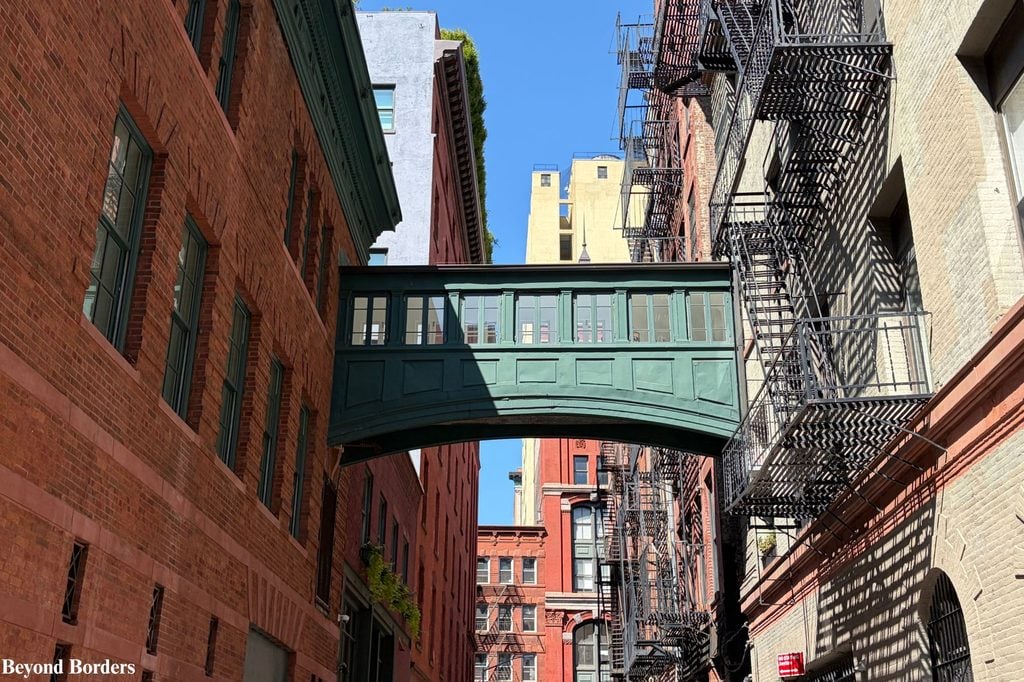
- Staple Street Skybridge (Tribeca): Historic 1907 skybridge; best shot at 1x or 2x zoom from Harrison St/Jay St in the early morning.
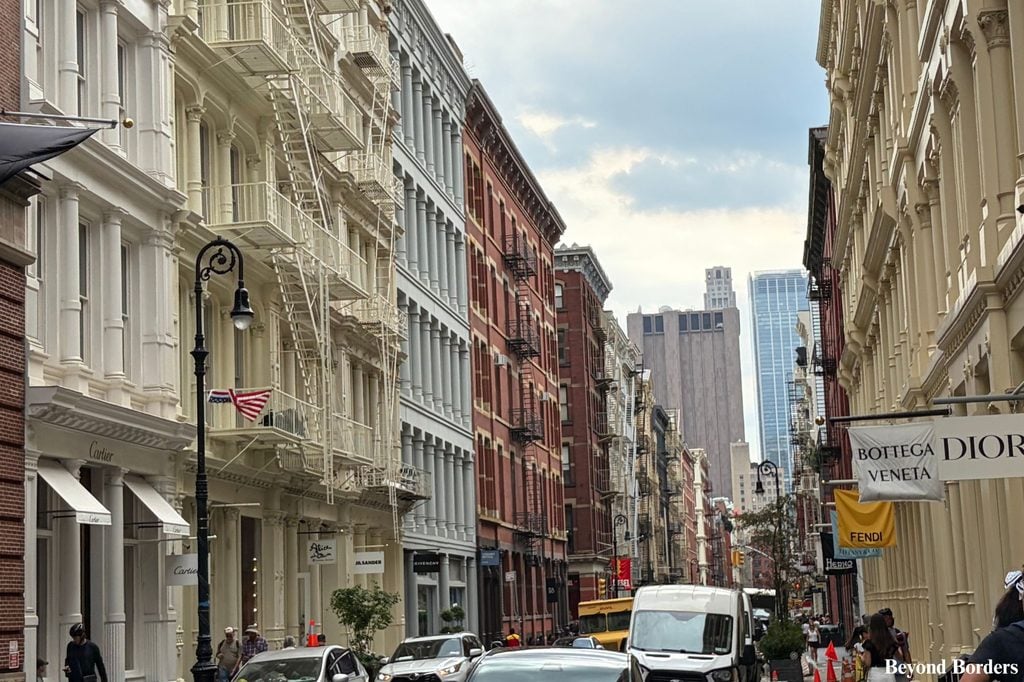
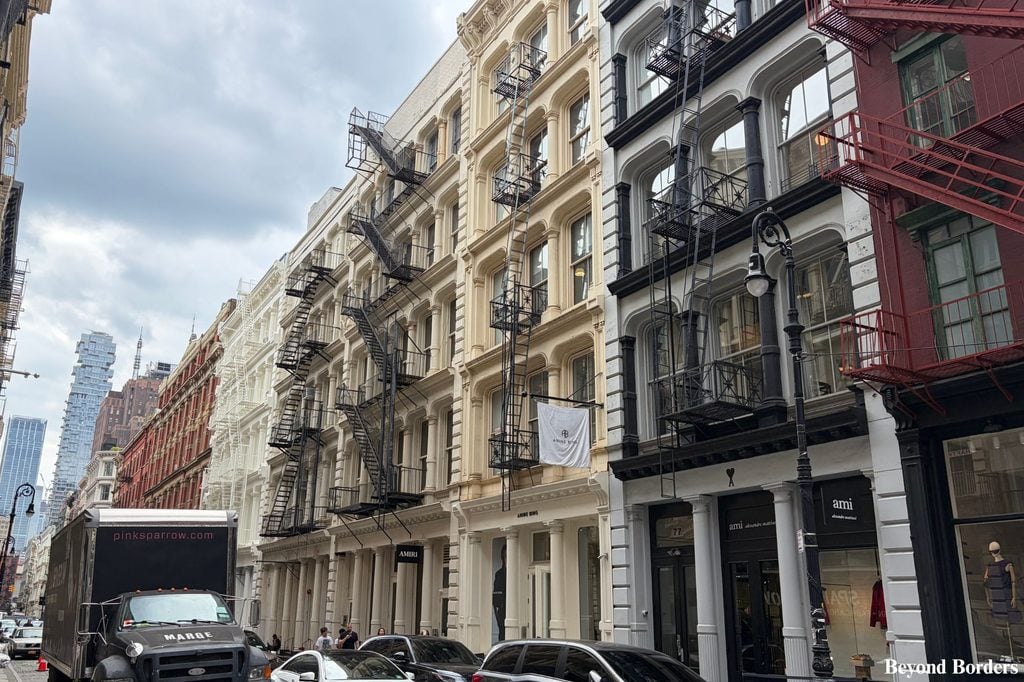
- Greene Street (SoHo): Classic cast-iron facades and fire escapes; best shot facing south at 1x zoom toward 56 Leonard.
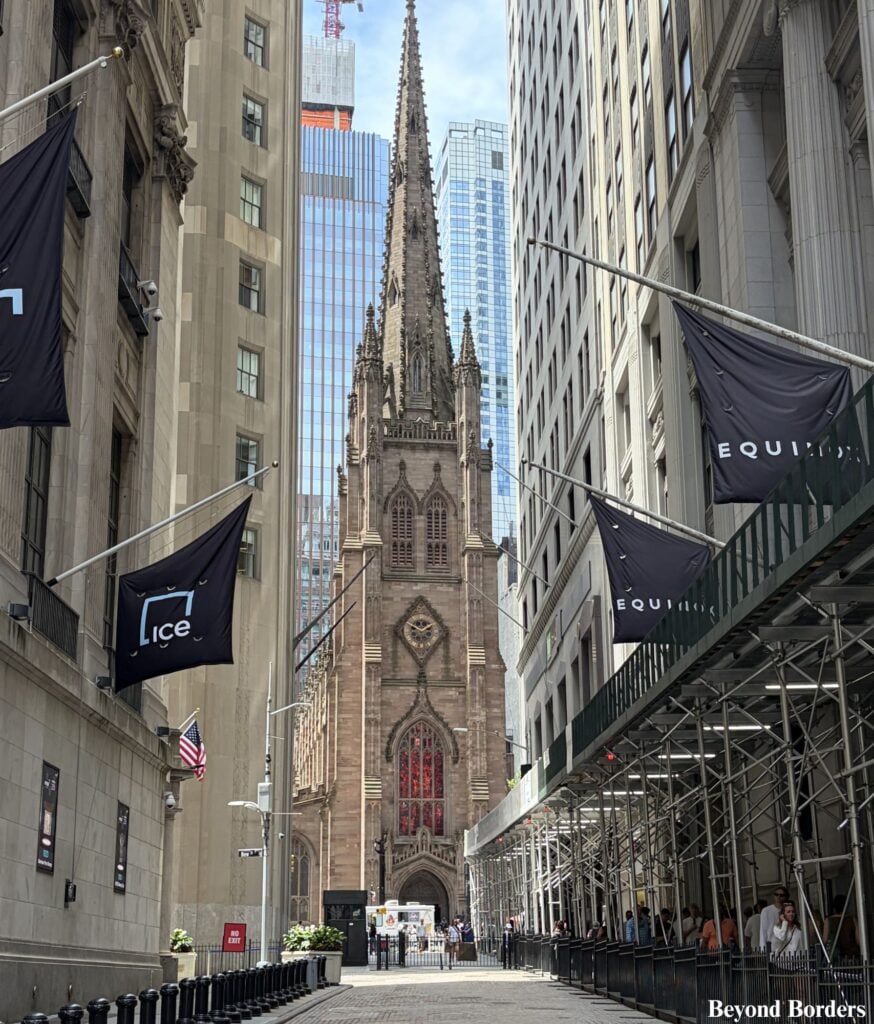
- Trinity Church (Financial District): Historic spire framed by modern skyscrapers; best shot at 2x or 3x zoom from Wall and Broad St.
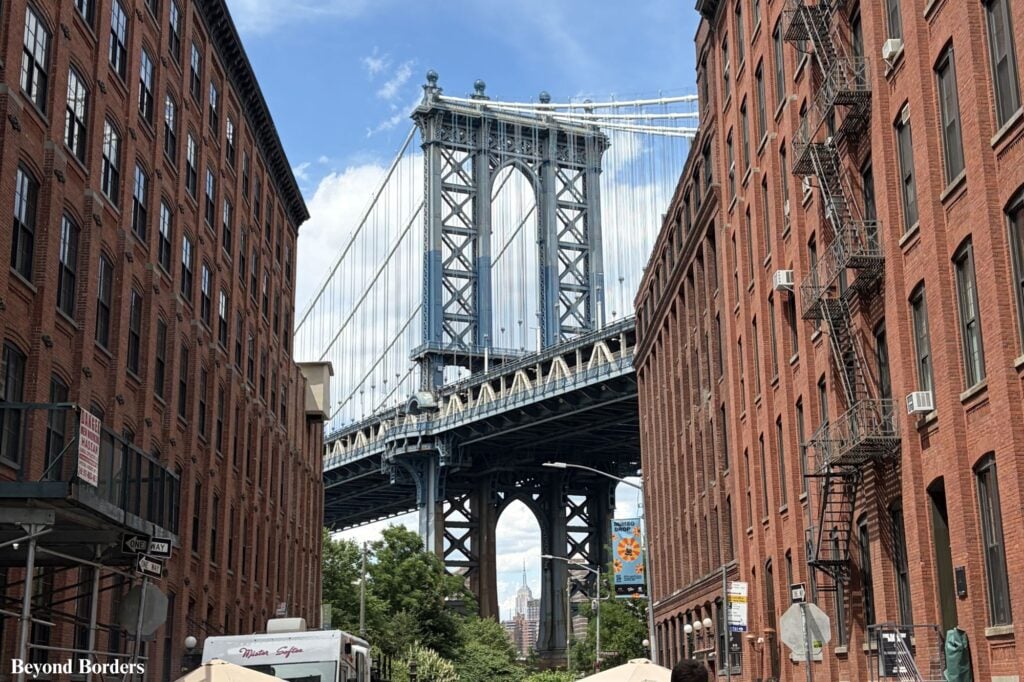
- Manhattan Bridge View (DUMBO, Brooklyn): Iconic steel arch framing the Empire State Building; best shot at 2x or 3x zoom from Washington St and Water St before 8:00am.
Introduction
There is a reason New York City is one of the most photographed places on earth, but capturing its true depth goes way beyond pointing your phone at a world-famous skyscraper. The real visual magic happens down at street level, where historic masonry, soaring steel corridors, and unusual street angles collide to create natural geometric frames.
Whether you are shooting on a pro camera or just grabbing quick shots on your phone (I actually took all of my photos below on my phone), knowing where to stand makes all the difference. This guide breaks down five of the most photogenic NYC architectural photo spots, complete with the exact street corners, lens angles, and procedural tips you need to lock in classic framing every single time. All of the locations in this list are listed north-to-south, plus I have a 1-day itinerary at the end of this post if you want to visit all in one day.
Jump to my Quick-Reference FAQs ↓ at the bottom of this guide if you have a specific question!
Map
I have pinned these architectural photo spots below in purple and exactly where to stand to get the best photos in red.
How to Use & Save This Map
To make your trip to NYC’s best architectural photo spots even easier, you can save this custom map directly to your Google Maps app:
- Open the Map: Click the [ ] icon in the top right corner of the map above to open it in full-screen mode.
- Save to Your Account: If you are signed into your Google account, the map will automatically be saved to your “Your Places” or “Saved” list.
- Access on the Go: On your phone, open the Google Maps app, tap the “Saved” (or “You”) tab at the bottom, scroll down to “Maps,” and select “NYC Best Architectural Photo Spots” to see all these pins while you’re walking!
- Pro-Tip: If you have limited data or a spotty connection, you can download the “NYC” area for offline use in your Google Maps settings so you never lose your way.
Abe Lebewohl Triangle: East Village, Manhattan
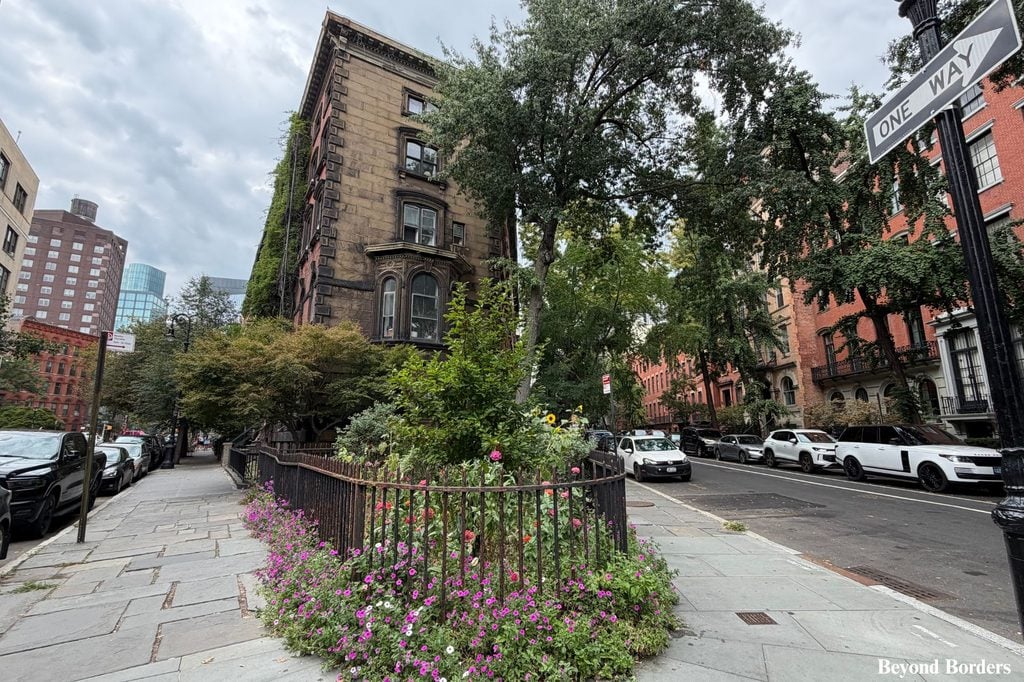
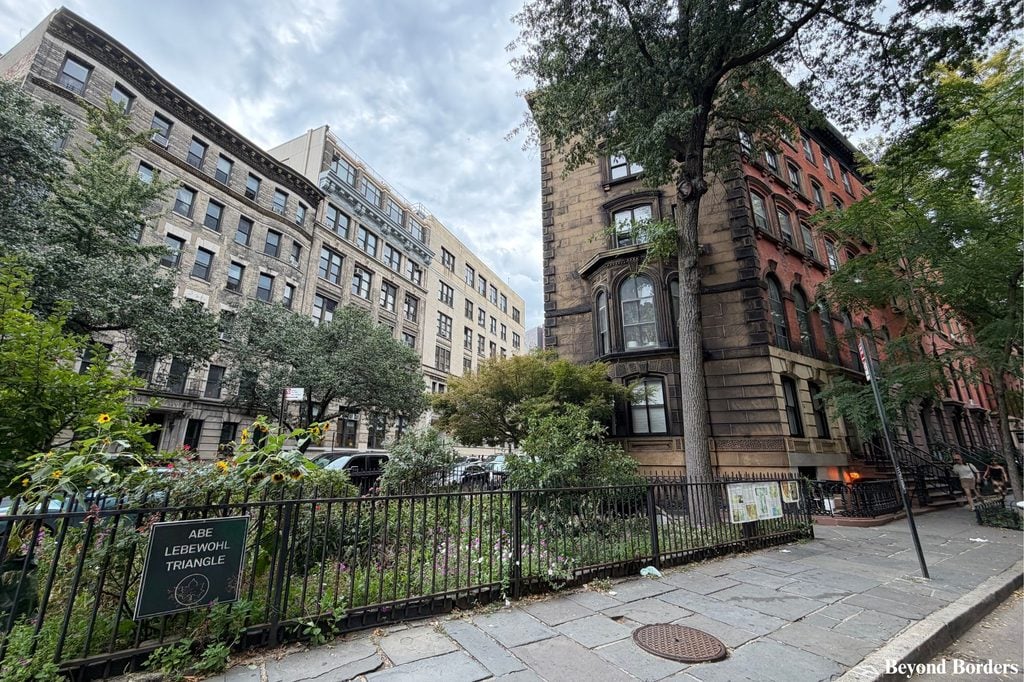
As one of the few streets in Manhattan that completely ignores the Commissioners’ Plan of 1811, Stuyvesant Street cuts diagonally through the East Village. At Abe Lebewohl Triangle, this angled path creates a striking V-shaped wedge formed by historic brownstones and row houses, anchored by the iconic 1861 Anglo-Italianate building (designed by James Renwick Jr.) right at its point. You can read more about the 1811 grid plan on the Museum of the City of New York official website.
How to Get Here: Take the R or W train (or the N on weekends) to 8 St–NYU or take the 6 train to Astor Pl. Walk east onto Astor Pl and cross 3rd Ave, walking onto Stuyvesant Street. Walk on Stuyvesant Street until you reach the intersection of Stuyvesant Street and East 10th St.
Quick Shooting Guide
- Exact Spot: Abe Lebewohl Triangle (Intersection of Stuyvesant St and East 10th St).
- Composition Style: Horizontal V-Grid Separation & Symmetrical Wedge Framing.
- Best Time to Shoot: Overcast days or early mornings (8:00am–9:30am) to avoid heavy pedestrian crowds, delivery vans, and harsh sun shadows across the brick facades. I took my photos during a slight overcast just after 2:30pm.
How to Get the Shot on Your Phone
- Position Yourself at the Triangle Tip: Stand on the sidewalk along Abe Lebewohl Triangle, facing west toward the wedge-shaped Renwick building. If there are no cars coming, walk a little bit onto the street to get a wider photo; this is actually what I did.
- Rotate to Horizontal (Landscape Mode): Turn your phone sideways. While vertical shots capture height, a horizontal frame is essential here to pull in the full split of the street grid on both the left and right sides.
- Use 1x Optical Zoom at Chest Level: Keep your lens at standard 1x. Hold your phone steady at chest height so the top of the fence line and the Abe Lebewohl Triangle sign sit cleanly in the lower left foreground, guiding the eye up toward the building.
- Frame the Symmetrical Split: Align the sharp corner of the brownstone directly in the center-right of your frame, using the surrounding tree canopy to create an organic archway along the top third of your shot.
Greene Street: SoHo Cast-Iron Historic District, Manhattan
SoHo has the largest collection of cast-iron architecture in the world, and Greene Street itself holds the highest concentration in New York City. Walking down this block feels like stepping into an open-air gallery of 19th-century design. Decorative fire escapes zig-zag down multi-colored facades, creating a repeating linear pattern that draws your eye down the cobblestone street–with modern Tribeca landmarks like 56 Leonard (known as the “Jenga Building”) peeking through in the background. While I highlighted SoHo’s cast-iron architecture in my NYC downtown walking itinerary, here I tell you exactly how to take the best photos of it.
How to Get Here: Take the B, D, F, or M train to Broadway–Lafayette St and walk west on W Houston St until you reach Greene St and make a left onto Greene St.
Quick Shooting Guide
- Exact Spot: 77 Greene Street, between Spring St and Broome St, looking south. The cast-iron architecture on Greene St between Prince St and Spring St is also worth seeing.
- Composition Style: Linear Corridor & Receding Perspective Framing.
- Best Time to Shoot: Early morning before 9:00am to avoid delivery trucks, racks of clothing, and crowded sidewalks in your photos. I visited just after 3pm, and while there was traffic and the sidewalks were crowded with shoppers, I was still able to get some great photos.
How to Get the Shot on Your Phone
- Position Yourself on the Western Sidewalk: Stand near 77 Greene Street along the curb, facing south toward Broome Street.
- Tilt Up Slightly with 1x Optical Zoom: Keep your phone at standard 1x zoom, but tilt the camera upward slightly. This captures the full height of the cream and black cast-iron buildings without warping the vertical lines.
- Use Fire Escapes as Leading Lines: Align your frame so the alternating fire escape staircases run down the upper half of your shot, creating a rhythmic visual path from foreground to background.
- Anchor the Background Sky: Frame the shot so the historic facades channel your eye directly toward 56 Leonard in the distance, establishing a clean contrast between historic cast-iron and modern architecture.
Staple Street Skybridge: Tribeca, Manhattan
Tucked away in Tribeca, this narrow two-block alley features an iconic 1907 skybridge connecting two historic brick buildings. Originally built for a hospital to transfer patients between them, the bridge now serves as a striking focal point. The extreme vertical compression of the alley creates a built-in architectural frame that isolates the skybridge high above the cobblestones.
How to Get Here: Take the 1, 2, or 3 train to Chambers St. Walk onto Hudson St and walk north until you reach Harrison St. Make a left onto Harrison St, and you will see Staple St and the skybridge on your left.
Quick Shooting Guide
- Exact Spot: Harrison St and Staple St (looking south down Staple Street). Standing at Jay St and Staple St (looking north) is fine too.
- Composition Style: Overhead Horizontal Frame & Alley Parallel Lines.
- Best Time to Shoot: Early morning (7:30am–9:00am) for soft, even light down the narrow alley without harsh shadows or parked delivery vehicles. I actually got lucky; when I visited just after 2:30pm, there was no vehicle traffic or crowds!
How to Get the Shot on Your Phone
- Position Yourself at Harrison Street: Stand right at the northern entrance of Staple Street on Harrison Street, facing south toward Jay Street.
- Switch to 1x or 2x Optical Zoom: Tap the 1x or 2x lens button in your Camera app. Avoid using the 0.5x ultra-wide lens here, as it warps the narrow alley walls. Using 1x or 2x compresses the historic brick facades on either side, making the skybridge feel tightly anchored between the buildings.
- Use Grid Lines to Center the Alley: Turn on your phone’s grid lines (Settings > Camera > Grid) and align the left and right building edges so they lead your eye straight up to the dark metal skybridge spanning the top third of your frame.
- Tilt Up & Adjust Exposure: Hold your phone at chest level and tilt up slightly to capture the texture of the cobblestones in the foreground. Tap on the skybridge on your screen, then slide the exposure sun icon down slightly to keep the brick textures rich and avoid blowing out the sky above.
Trinity Church: Financial District, Manhattan
Standing directly at the western terminus of Wall Street, Trinity Church provides one of Lower Manhattan’s most dramatic architectural contrasts. Designed in the Gothic Revival style and completed in 1846, the brown sandstone church and its soaring spire are completely surrounded by modern glass-and-steel skyscrapers behind it. Looking down the narrow street, the historic church acts as a brilliant, unexpected anchor at the end of it.
How to Get Here: Take the 2 or 3 train to Wall St. Exit the station via William St and make a right onto Wall St. Walk down Wall St until you reach the intersection of Wall St and Broad St. Look ahead and you will see Trinity Church framed right in between the NYSE and 14 Pine St! Don’t be afraid to step into the middle of the street for a centered shot; pedestrian barricades block vehicle traffic along this section of Wall Street, giving you a completely safe, clear path to line up Trinity Church in your frame.
Quick Shooting Guide
- Exact Spot: Corner of Wall St & Broad St (stand to the right of the New York Stock Exchange, looking west down Wall Street).
- Composition Style: Urban Canyon Framing & Compressed Perspective.
- Best Time to Shoot: Mid-morning (9:30am–11:00am) when light hits the east-facing church tower and filtering sunlight illuminates the Wall Street corridor. I took my photo just before 2pm.
How to Get the Shot on Your Phone
- Position Yourself at Broad Street: Stand on the northern pedestrian side of Wall Street at the Broad Street intersection. This gives you enough distance down the canyon to frame both sides of the street evenly.
- Switch to 2x or 3x Optical Zoom: Avoid the 1x standard lens here, as it makes the church look tiny at the end of the block. Tapping 2x or 3x optical zoom pulls Trinity Church forward, compressing the canyon walls so the surrounding skyscrapers frame the church spire tightly.
- Use Wall Street’s Buildings as Vertical Framing: Hold your phone vertically in Portrait orientation. Position the dark canyon walls of Wall Street on the left and right thirds of your frame, allowing the eye to funnel straight down the center toward the church tower.
- Lock Exposure on the Sandstone: Tap the church spire on your phone screen to set the focus point. If the sky above the spire looks washed out, slide the sun exposure icon down slightly to bring back the warm brown tones of the stone facades.
Manhattan Bridge: DUMBO, Brooklyn
Arguably the most well-known spot on this list, the Manhattan Bridge view from DUMBO brings in thousands of visitors per year lining up to take photos. This classic view down Washington Street frames the steel archway of the Manhattan Bridge perfectly between two red-brick buildings. On a clear day, if you position yourself just right, you can even catch the Empire State Building framed directly beneath the bridge’s lower support tower in the distance. I even include this famous view in my NYC 5-day itinerary after walking across the Brooklyn Bridge.
How to Get Here: Take the A or C train to High St and walk down Cadman Plaza East. Continue onto Washington St until you reach the intersection of Washington St and Water St. Or, take the F train to York St and walk down Jay St and make a left onto Water St. Walk under the Manhattan Bridge until you reach the intersection of Water St and Washington St.
Quick Shooting Guide
- Exact Spot: The intersection of Water Street & Washington Street.
- Composition Style: Symmetric Industrial Arch & Empire State Building Compression.
- Best Time to Shoot: Early morning before 8:00am if possible. This is easily the most heavily visited photo spot on the list, so arriving early is crucial if you want a clean frame without large crowds. I visited around 2:30pm and there were heavy crowds, but I was still able to get some great photos.
How to Get the Shot on Your Phone
- Position Yourself on Washington Street: Walk halfway down the block on Washington Street between Front Street and Water Street, keeping yourself centered in the middle of the cobblestones.
- Switch to 2x or 3x Optical Zoom: Avoid shooting at 1x here, as it makes the bridge look far away and loses the Empire State Building detail. Tapping 2x or 3x pulls the bridge arch forward and compresses the buildings on either side.
- Align the Empire State Building: Crouch down slightly to chest height and shift your position left or right until the spire of the Empire State Building sits cleanly inside the central archway beneath the bridge tower.
- Expose for the Sky: Tap the sky framed under the bridge tower, then slide the brightness sun icon down slightly so the blue sky and cloud detail don’t wash out behind the dark steel girders.
The Ultimate 1-Day NYC Architectural Photo Itinerary
If you want to capture all five locations in a single outing, this self-guided route flows naturally from North to South through Lower Manhattan before wrapping up across the river in Brooklyn.
Stop 1: Abe Lebewohl Triangle (East Village)
- Time: 8:00am–8:30am
- Why Start Here: Kick off your morning when the streets are quiet and sunlight softly filters through the canopy around Stuyvesant Street.
- Transit to Next Spot: Walk west down East 10th St toward Broadway, turn left onto Broadway heading south, then turn right onto Prince St or Spring St to reach Greene Street in SoHo (about a 20-minute walk).
Stop 2: Greene Street Cast-Iron Historic District (SoHo)
- Time: 9:00am–9:45am
- Location: Greene Street (between Spring St and Broome St)
- Why This Time Slot: Commercial delivery trucks and retail crowds start filling SoHo around 10:00am, so getting your leading line shots before mid-morning is essential.
- Transit to Next Spot: Walk south down Greene St and when you reach Canal St, cross onto Church St. Walk down Church St and make a right onto Worth St. Make a left onto Hudson St and then a right onto Jay St, looking north, or you can make a right onto Hudson St and a left onto Harrison St, looking south (about a 22-minute walk).
Stop 3: Staple Street Skybridge (Tribeca)
- Time: 10:15am–10:30am
- Location: Staple Street Skybridge (Harrison St/Jay St and Staple St)
- Why This Time Slot: The tall surrounding buildings shade the alley, keeping the light even and eliminating harsh glare across the metallic bridge structure.
- Transit to Next Spot: Walk south on Hudson St to Chambers St and take the 2 or 3 train downtown from Chambers St station to Wall St station (or enjoy a pleasant 20-minute walk south along Greenwich St, passing the World Trade Center and the Oculus, making a left onto Liberty St and then a right onto Broadway).
Pro-Tip:
If you have to use the restroom at this point in the itinerary, I recommend going to The Oculus. If you decide to walk to Trinity Church instead of taking the subway, you will pass the Oculus; it is between Greenwich St and Church St. Read my guide on the best public restrooms in NYC to learn where to find them!
Stop 4: Trinity Church (Financial District)
- Time: 11:00am–11:45am
- Location: Wall St and Broad St (facing Trinity Church)
- Why This Time Slot: By late morning, bright sunlight hits the upper half of the Gothic sandstone spire while casting high-contrast dramatic shadows along Wall Street.
- Transit to Next Spot: Walk north along Broadway to the Fulton St station and take the A or C train one stop across the East River to High St in Brooklyn. Make a right onto Prospect St and then a left onto Washington St, and walk down Washington St toward the water until you reach Water St (about 20 minutes total).
Stop 5: Manhattan Bridge View (DUMBO)
- Time: 12:15pm–1:00pm
- Location: Water St and Washington St
- Why Finish Here: End your shooting marathon in DUMBO! Once you lock in your shot of the Manhattan Bridge framing the Empire State Building, you’re steps away from Time Out Market food hall and Brooklyn Bridge Park to grab lunch and relax. Make sure to check out my best NYC food halls post for recommended vendors, seating availability, and restroom locations!
FAQs: NYC’s Top Architectural Photo Spots
Conclusions
Capturing New York City’s architectural character doesn’t require expensive camera equipment or hours of technical training–just an eye for perspective, a bit of intentional timing, and knowing where to stand. By stepping away from standard, straight-on tourist angles and leaning into natural geometric frames, leading lines, and light-and-shadow contrasts, you can turn everyday street corners into striking visual stories.
Whether you spend an entire day following the full north-to-south itinerary or simply drop into one or two of these spots during a casual stroll, framing these historic locations will change how you see the city’s built environment. Next time you step out onto the pavement, keep your phone at chest height, toggle to your optical zoom lenses, and let the natural lines of the city do the heavy lifting.